
Blog
3,000 Years of Psilocybin History: Evolution to Clinics


Psilocybin is a serotonin-acting compound produced by more than 200 species of fungi, and it converts in the body to its active form, psilocin. Humans have used psilocybin-containing mushrooms in ritual and healing contexts for at least 3,000 years, Western science essentially ignored them until the 1950s, and a 1970 federal ban shut down research for decades before a clinical revival brought them back into hospitals and universities. Because mushroom tissue is mostly water, almost none of that early history survives as physical artifacts. It survives instead in stone carvings, painted codices, and colonial-era manuscripts.
TL;DR:
- Psilocybin originated in fungi for ecological purposes such as defense and spore dispersal, long before humans began to use it ritually.
- Archaeological evidence of ancient use is indirect, including carved stone effigies and colonial texts describing ceremonial mushroom consumption in Mesoamerica.
- Modern scientific research on psilocybin restarted after its chemical isolation in 1958, but was criminalized in 1970, halting most clinical studies for decades.
- Current clinical trials show promise for psilocybin in treating depression, anxiety, and addiction, though larger studies and long-term data are still needed.
- Authentic, lab-tested psilocybin products and guided protocols are recommended over unverified sources, and consulting a healthcare professional before use remains essential.
Table of Contents
- Psilocybin History: What the Compound Is and Why It Matters
- Where Psilocybin Came From: Origins and Evolutionary Origins
- Stone, Codex, and Chronicle: The Archaeological Record
- The Fungi Behind the History: Taxonomy and Chemistry
- When Europeans Wrote It Down: Colonial Contact and Early Chemistry
- Scientific Curiosity Meets a Federal Ban
- Psilocybin in Modern Therapy: The Research Renaissance
- Beyond Mesoamerica: Psilocybin and Shamanism Worldwide
- Psilocybin Across the Eras: From Sacred Rite to Clinical Protocol
- From Countercultural Icon to Cultural Mainstay
- Before the Clinical Trials: Early Chemistry and Pharmacology
- Reading History Without Romanticizing or Dismissing It
- Explore a selection of lab-tested mushrooms and related products
- Sources
- FAQ
Psilocybin History: What the Compound Is and Why It Matters
Psilocybin itself does very little on its own. Once ingested, the body strips off a phosphate group and converts it into psilocin, the molecule that actually binds to serotonin receptors in the brain and produces the altered perception, mood shifts, and visual effects people associate with “magic mushrooms.” That prodrug relationship, psilocybin as an inactive carrier and psilocin as the active agent, is one of the first things anyone researching psilocybin mushrooms history needs to understand before the archaeology and the clinical trials make sense.
The word itself is comparatively modern. Albert Hofmann and Roger Heim named the compound in 1958 after isolating it from Psilocybe mexicana, but the fungi that produce it are far older than any human record of using them. What is publicly documented is a species distribution spanning multiple continents, a genomic signature that shows up in fungi separated by tens of millions of years of evolution, and a human relationship with these mushrooms that predates writing itself in some regions. The rest of this piece works through that timeline in order: deep evolutionary time, the archaeological and colonial record, the chemistry, the mid-century rediscovery, the ban, and the research renaissance now underway.
Where Psilocybin Came From: Origins and Evolutionary Origins
Psilocybin is far older than any ceremony that ever used it. Genomic research shows that the biosynthetic gene cluster responsible for producing psilocybin appears in at least eight distantly related fungal genera, a distribution pattern that is difficult to explain through ordinary inheritance alone. Researchers studying the evolutionary role of psilocybin in nature argue that horizontal gene transfer, essentially one fungal lineage picking up genetic material from another unrelated lineage sharing the same decaying log or dung pile, better explains why the same gene cluster keeps turning up in fungi that otherwise share little evolutionary history.
That timing matters. Phylogenomic work on Psilocybe and related genera places the key divergence and transfer events for these gene clusters well before any human involvement, likely tied to shared wood-decay and dung-associated ecological niches rather than to any interaction with animals seeking altered states. The fungi were not making psilocybin for anyone. They were making it because it did something useful in their own environment.
What that something is remains genuinely unsettled. Three competing explanations dominate the ecological literature:
- Antifeedant defense. Psilocybin may deter insects and other invertebrates from consuming fungal fruiting bodies before spores mature, functioning similarly to other fungal toxins.
- Behavior modification for spore dispersal. Some researchers propose that altering invertebrate behavior could help spread spores further than passive dispersal would allow, though this is harder to test than simple deterrence.
- Nitrogen management. A less publicized hypothesis suggests the compound plays a role in nitrogen cycling within the fungus itself, independent of any effect on animals.
Early experimental work lends some support to the defensive hypothesis. Studies exposing fruit fly larvae to Psilocybe extracts recorded reduced survival and altered development, and metabarcoding of invertebrate communities around psilocybin-producing mushrooms shows distinct patterns compared to non-producing species nearby. None of this is conclusive. A 2023 review of psilocybin’s ecology and evolution is candid that the compound’s precise ecological function is still experimentally unresolved, even as the genomic evidence for its ancient wood and dung-decay origins keeps getting stronger.
Stone, Codex, and Chronicle: The Archaeological Record
You will not find a preserved psilocybin mushroom from 1,000 BCE in any museum. Mushroom tissue is roughly 80 to 90 percent water, so it breaks down almost immediately after death, leaving archaeologists to reconstruct ancient use from indirect evidence: carved stone effigies, painted manuscripts, and the written testimony of colonizers who witnessed ceremonies firsthand. That indirect chain of evidence is exactly why claims about psilocybin use in ancient cultures carry date ranges rather than precise years.
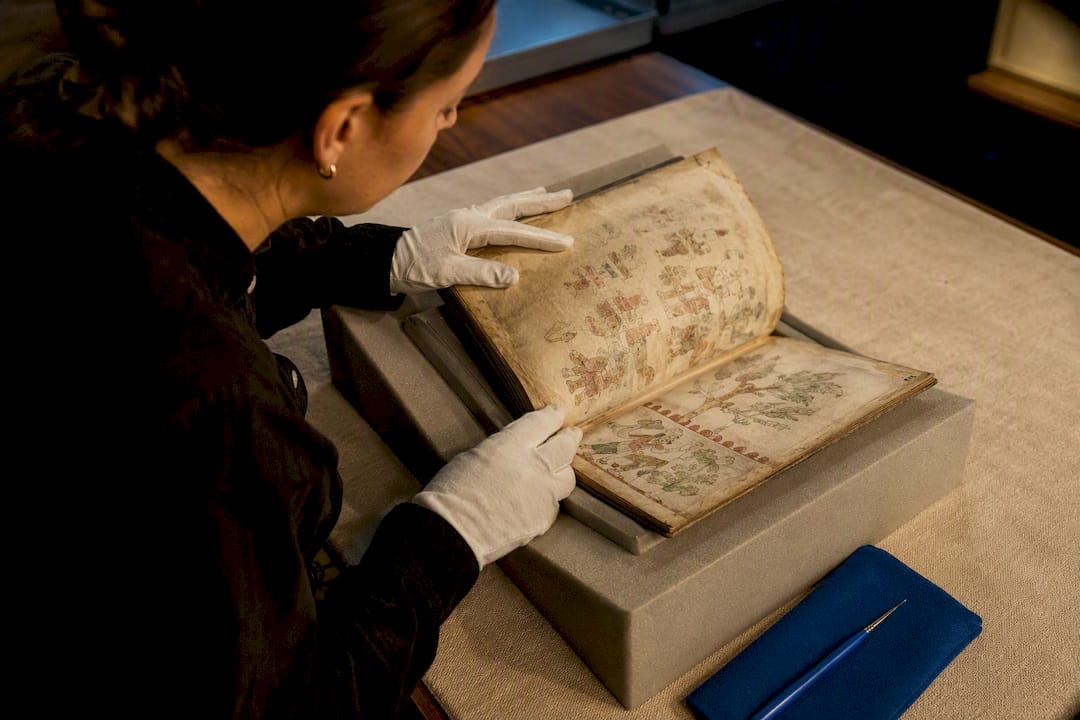
The strongest physical artifacts are “mushroom stones,” carved effigies found across Guatemala and highland Mexico that depict fungi, some dated to as early as 1000 BCE. Mixtec codices, including the Codex Vindobonensis, contain painted scenes interpreted by scholars as mushroom deities or ceremonial mushroom use. The most detailed textual evidence comes from the Florentine Codex, compiled under the Franciscan friar Bernardino de Sahagún in the 16th century. Book IX of that codex describes Nahua merchants consuming mushrooms called teonanácatl, mixed with honey or chocolate, during rites involving dancing and shared visionary experiences.
Sahagún’s informants described participants eating the mushrooms at gatherings, then singing, weeping, or seeing visions together, with some able to retain command of their senses throughout. The picture that emerges is not one of isolated intoxication but of structured, communal ceremony with recognized social rules.
That detail, participants often remaining lucid and socially engaged rather than incapacitated, is one of the more underappreciated findings in this whole record. Combined with the archaeological and codex evidence, researchers place documented ritual use in Mesoamerica at roughly 3,000 to 3,500 years, spanning Mixtec, Nahua, Maya, Mazatec, and Zapotec cultures. The recorded ceremonial purposes fall into a few consistent categories:
- Divination, using visionary states to answer questions about illness, theft, or the future.
- Healing rituals, often led by a curandero or ritual specialist who guided the experience.
- Communal bonding ceremonies, tied to merchant guilds or specific social occasions rather than solitary use.
Because none of this survives as physical fungal material, historians have to weigh colonial accounts against the biases of the colonizers writing them down, which is a real interpretive limitation worth keeping in mind before treating any single chronicle as a complete record.
The Fungi Behind the History: Taxonomy and Chemistry
Psilocybe is the genus most people picture when they hear “magic mushroom,” and it accounts for the majority of documented historical and modern use, but it is not the only genus that makes the compound. Psilocybin production has been confirmed across a taxonomically scattered group of fungi, which is part of what makes the horizontal gene transfer explanation so compelling:
- Psilocybe — the largest and most historically significant genus, found across the Americas, Europe, and Asia, including species like Psilocybe mexicana, Psilocybe cubensis, and Psilocybe semilanceata.
- Panaeolus — a genus of dung-loving mushrooms found on most continents, some species of which produce psilocybin.
- Gymnopilus — wood-decaying fungi with a more scattered global distribution.
- Inocybe and Pluteus — smaller genera with fewer confirmed psilocybin-producing species, but present in the biosynthetic gene cluster research nonetheless.
Chemically, the mushroom does not produce the psychoactive molecule directly. It produces psilocybin, a phosphorylated prodrug, which the human body dephosphorylates after ingestion into psilocin, the compound that actually binds serotonin 2A receptors. That two-step relationship explains a lot of the confusion in casual conversation about “psilocybin” versus “psilocin,” when in practical terms the fungus makes one and the body makes the other active.
Potency is not uniform across species, or even within the same species collected from different locations. Factors affecting how much psilocybin and psilocin a given mushroom contains, and how stable that content remains, include growing substrate, harvest timing, drying method, and storage conditions after harvest. That variability is one of the more practical reasons historical dosing accounts from colonial chronicles are hard to translate into precise modern equivalents, and it is also why lab testing of cultivated product matters more than folklore ever could.
When Europeans Wrote It Down: Colonial Contact and Early Chemistry
Sahagún’s Florentine Codex is valuable precisely because of how it was compiled. He worked with bilingual Nahua informants over years, cross-checking testimony rather than relying on a single secondhand account, which gives his descriptions of teonanácatl rites more credibility than typical colonial reporting, even accounting for the missionary lens he brought to the material.
Four centuries later, the practice resurfaced in Western consciousness almost by accident. In 1955, banker and amateur ethnomycologist R. Gordon Wasson traveled to Oaxaca and participated in a mushroom ceremony led by the Mazatec curandera María Sabina. His 1957 Life magazine account introduced millions of American readers to psilocybin mushrooms for the first time, and it triggered a wave of interest from scientists, tourists, and eventually countercultural figures that María Sabina herself later said disrupted her community’s traditional practice.
Wasson sent mushroom samples to Swiss chemist Albert Hofmann, already famous for synthesizing LSD, who isolated and named psilocybin and psilocin in 1958 and synthesized both compounds shortly after. That chemical isolation opened the door to the first wave of legitimate laboratory and clinical studies:
- Hofmann’s 1958 isolation gave researchers a stable, synthesizable compound rather than a variable natural product.
- Early psychiatric studies in the late 1950s and 1960s explored psilocybin for treating alcoholism, anxiety in terminal patients, and depression.
- Harvard’s Psilocybin Project, run by Timothy Leary and Richard Alpert starting in 1960, produced some legitimate data alongside growing institutional controversy.
Scientific Curiosity Meets a Federal Ban
The sequence that took psilocybin from laboratory curiosity to banned substance ran remarkably fast. Academic researchers spent the late 1950s and early 1960s running legitimate psychiatric trials. Media coverage, magazine features, and Leary’s own public advocacy for “turning on” turned a niche compound into a symbol of countercultural rebellion by the mid-1960s. That symbolism collided with a political backlash against the counterculture broadly, and psilocybin got swept into the same regulatory response aimed at LSD and cannabis.
- 1955 to 1958: Wasson’s Oaxaca trip and Hofmann’s chemical isolation establish psilocybin as a legitimate subject for Western science.
- 1960 to 1962: Harvard’s Psilocybin Project runs controlled studies, including the Concord Prison Experiment and the Marsh Chapel Experiment, alongside growing institutional concern over methodology and unsupervised use.
- 1962 to 1965: Leary and Alpert are dismissed from Harvard; media coverage shifts from scientific curiosity to countercultural spectacle.
- 1966 to 1969: Recreational use spreads well beyond research settings, feeding a moral panic that treats psychedelics as a symptom of social breakdown rather than a subject for study.
- 1970: The Controlled Substances Act places psilocybin in Schedule I, the most restrictive category, alongside heroin, defining it as having no accepted medical use and a high potential for abuse.
Historians examining this period describe the scheduling decision as driven at least as much by political reaction to counterculture as by pharmacological evidence. The practical consequence was severe: Schedule I status made federal funding and institutional approval for psilocybin research nearly impossible to obtain, and legitimate psychiatric trials that had shown early promise simply stopped for roughly three decades. Public perception shifted just as sharply, from “experimental psychiatric tool” to “dangerous street drug,” a framing that outlasted the scientific evidence that had originally supported the former.
Psilocybin in Modern Therapy: The Research Renaissance
Clinical research on psilocybin resumed in earnest starting in the early 2000s, after decades of near-total dormancy following the 1970 ban. The results since have been consistent enough to reshape how psychiatry talks about treatment-resistant conditions. Trials on psilocybin-assisted therapy for major depressive disorder, end-of-life anxiety in cancer patients, and substance use disorders including alcohol and tobacco dependence have reported meaningful improvements, typically delivered alongside structured psychological support rather than as a standalone pill.
Pro Tip: If you’re evaluating a psilocybin study, check whether it used a fixed protocol with trained facilitators and psychological preparation sessions before and after dosing. Studies that skip that structure tend to produce noisier, less comparable results.
The neuroscience behind these effects centers on the 5-HT2A serotonin receptor, the same receptor psilocin binds after conversion in the body. Activating this receptor appears to temporarily loosen the brain’s default mode network, the set of regions associated with self-referential thought and rigid thinking patterns. Neuroimaging studies describe a period of increased connectivity between brain regions that don’t normally communicate much, which researchers think may underlie the shifts in perspective that patients report during and after guided sessions.
None of this makes psilocybin a settled clinical tool yet. Several real limitations keep showing up across the research:
- Sample sizes remain small relative to standard psychiatric drug trials, which limits how confidently results generalize.
- Blinding is nearly impossible. Patients almost always know whether they received psilocybin or a placebo, given how distinct the subjective effects are.
- Long-term outcome data is thin. Most published trials track patients for weeks or months, not years.
- Study populations skew narrow, often underrepresenting older adults, people with complex psychiatric histories, and non-Western populations.
Reviewers are candid that the evidence base, while genuinely promising, is still emerging and needs larger controlled trials before psilocybin-assisted therapy becomes standard practice rather than an experimental protocol available mainly through clinical trials or, in limited jurisdictions, supervised legal programs. Readers curious about how these findings translate into dosing conversations can look at dosing guidance for magic mushrooms for a more practical breakdown, though nothing there substitutes for supervision from a qualified clinician.
Beyond Mesoamerica: Psilocybin and Shamanism Worldwide
Mesoamerica has the richest documented archaeological record, but it is far from the only culture with a historical relationship to psychoactive fungi. Siberian ethnography describes indigenous groups across Kamchatka and the broader Russian Far East using Amanita muscaria, a different psychoactive mushroom, in shamanic ritual contexts, and some ethnobotanists have proposed that the practice reflects a broader circumpolar pattern of fungal use tied to shamanic trance traditions, though Amanita’s chemistry differs substantially from psilocybin.
Ethnomycologists have also documented psilocybin-specific traditions among groups beyond the well-known Mazatec, including practices recorded among other Mexican Indigenous communities where mushroom use overlapped with broader healing and divinatory frameworks rather than existing as an isolated ritual. What ties these traditions together is not identical chemistry or shared origin, but a recurring pattern: societies across unrelated regions independently arrived at psychoactive fungi as tools for healing, divination, and communication with forces beyond ordinary experience.
That pattern matters for how we frame psilocybin in indigenous rituals generally. It was rarely treated as recreational. Across documented traditions, from Mesoamerican curanderos to Siberian shamanic practice, use tended to be structured, supervised by a designated specialist, and embedded in a specific social or spiritual purpose rather than left to individual discretion. Modern conversations about psychedelics sometimes flatten this diversity into a single “ancient shamanic use” narrative, which undersells how differently these traditions actually operated from one region to the next.
Psilocybin Across the Eras: From Sacred Rite to Clinical Protocol
The role psilocybin has played in human ritual life has shifted dramatically depending on the era, even when the underlying chemistry stayed the same. In pre-colonial Mesoamerica, mushroom ceremonies functioned within an established religious framework, tied to specific deities, calendar events, and the authority of a ritual specialist. Colonial suppression pushed these practices underground for centuries. Spanish missionaries actively worked to eliminate teonanácatl rites as pagan, and much of what survived did so in isolated rural communities like the Mazatec highlands, largely outside colonial oversight.
The 20th-century rediscovery reframed psilocybin again, this time as a subject of Western scientific inquiry rather than Indigenous religious practice. That reframing carried its own tensions. The same ceremonies that had persisted quietly for centuries were suddenly subject to outside visitors, media attention, and eventually a wave of tourism that María Sabina considered disruptive to the sacred function the mushrooms had always served in her community.
Today’s clinical protocols represent a third distinct mode entirely: supervised, secular, and designed around measurable psychiatric outcomes rather than spiritual cosmology. Some researchers and therapists have started incorporating elements borrowed from historical ritual structure, dim lighting, music, a trained guide present throughout, not because those elements are mystically necessary, but because the historical record suggests supportive context measurably shapes the experience. History and clinical science, in this narrow sense, are starting to talk to each other again.
From Countercultural Icon to Cultural Mainstay
Psilocybin’s cultural footprint after the 1960s counterculture didn’t disappear when the Controlled Substances Act took effect. It went underground and diversified. Through the 1970s, 80s, and 90s, mushroom use persisted in music festival culture, rave scenes, and a growing network of amateur mycologists who kept cultivation knowledge alive largely outside institutional science.
The 2010s and 2020s brought a second, very different wave of cultural visibility. Documentaries, bestselling books on psychedelic science, and a wave of city and state decriminalization measures shifted public conversation from “dangerous street drug” back toward something closer to the scientific curiosity of the 1950s. Microdosing, taking sub-perceptual amounts on a regular schedule for reported mood or focus benefits, became a recognizable cultural phenomenon in tech and creative industries, even though rigorous evidence for microdosing’s specific benefits still lags behind the enthusiasm surrounding it.
What makes this second wave different from the 1960s is the institutional backing. Universities, veteran nonprofits, and licensed clinical programs now drive much of the public conversation, rather than countercultural figures operating outside mainstream science. That shift in who is telling the story has done a lot to change how psilocybin gets covered in the media, and by extension how the public perceives it, even though the compound itself hasn’t changed at all.
Before the Clinical Trials: Early Chemistry and Pharmacology
Long before psilocybin became a subject of controlled psychiatric trials, it went through a distinct earlier phase of pharmacological curiosity. Hofmann’s 1958 isolation and synthesis at Sandoz Laboratories gave researchers something they had never had before: a stable, pure, reproducible compound rather than a variable dried mushroom sample of unknown potency.
That chemical stability enabled the first wave of formal pharmacology. Researchers ran early studies establishing basic dose response relationships, comparing psilocybin’s subjective effects to LSD, and testing it in small clinical contexts including anxiety in dying patients and treatment-resistant alcoholism. Sandoz distributed synthesized psilocybin under the brand name Indocybin to researchers throughout the early 1960s, which is part of why so much of the initial pharmacological literature traces back to a fairly small, interconnected group of European and American labs.
This period matters historically because it establishes that psilocybin’s clinical promise isn’t a recent discovery dressed up as a “renaissance.” Researchers in the late 1950s and early 1960s were already documenting the same core signal, meaningful shifts in mood and perspective under supervised conditions, that modern trials are now confirming with better methodology and imaging technology that simply didn’t exist sixty years ago. The 1970 ban didn’t interrupt a new field. It interrupted one that had already produced a real body of pharmacological groundwork.
Reading History Without Romanticizing or Dismissing It
The temptation with psilocybin’s history runs in two opposite, equally lazy directions: treating ancient use as proof of some timeless mystical truth, or dismissing it as primitive superstition now superseded by modern neuroscience. Neither holds up against the actual record. Mesoamerican ceremonial use was structured, supervised, and socially embedded in ways that deserve real scholarly respect, and the genomic evidence for psilocybin’s evolutionary origins is fascinating on its own terms, independent of any human meaning layered onto it later.
What the historical and scientific record actually supports is more interesting than either extreme: a compound that fungi evolved for reasons still not fully understood, that multiple human cultures independently recognized as significant, and that modern medicine is now studying with more rigor than at any point since Hofmann’s lab bench in 1958. Respecting Indigenous context and pursuing careful clinical research aren’t competing goals. Getting the history right is what makes both possible.
— Alex
Explore a selection of lab-tested mushrooms and related products
Reading about a compound’s history is one thing. Getting a version of it you can actually trust is another. Many vendors emphasize lab testing to ensure product quality, helping avoid reliance on folklore or guesswork about potency the way colonial chroniclers had to.
Whether you’re drawn to a high-potency option like Copelandia cyanescens or you’re starting with the educational side of things, dosing guides, cultivation kits, strain comparisons, the goal is the same: give you accurate information and a tested product instead of forcing you to piece it together from secondhand accounts. None of this replaces a conversation with a licensed clinician, especially if you’re considering psilocybin for a mental health condition. If you’re ready to look at strain options, browse the current selection at Fungipsilocybinmushroom and start with whichever category, tested mushrooms, edibles, or grow kits, fits what you’re actually trying to learn or experience.
This article is general information, not a substitute for advice from a qualified doctor. Consult a qualified healthcare professional about your own circumstances before acting on anything here.
Sources
- Ritual and religious uses of Psilocybe mushrooms in Mesoamerica
- Wherefore the Magic? The Evolutionary Role of Psilocybin in Nature
- Psilocybin history, action and reaction: A narrative clinical review
- The evolution and ecology of psilocybin in nature
FAQ
What food has psilocybin in it?
Psilocybin doesn’t occur in any conventional food; it’s produced naturally by certain fungi, primarily species in the genus Psilocybe, along with a smaller number of species in genera like Panaeolus and Gymnopilus.
Did psilocybin help humans evolve?
There’s no evidence that psilocybin shaped human evolution. The genomic evidence shows psilocybin evolved in fungi for their own ecological reasons, likely tied to wood and dung decay niches, long before humans had any interaction with it.
What is the oldest psychedelic?
There’s no single confirmed “oldest” psychedelic, but psilocybin-containing mushrooms rank among the earliest documented, with archaeological and ethnographic evidence placing Mesoamerican ritual use at roughly 3,000 to 3,500 years old.
Why did psilocybin become illegal?
Psilocybin was placed in Schedule I under the 1970 Controlled Substances Act, a decision historians link more to political backlash against 1960s counterculture than to pharmacological evidence, and that scheduling halted most clinical research for decades.
Is psilocybin used in modern therapy today?
Psilocybin-assisted therapy is currently studied in clinical trials for depression, anxiety, and addiction, with promising but still emerging results; it remains a Schedule I substance federally in the United States outside of approved research and limited state or local programs, so anyone considering therapeutic use should consult a licensed clinician and verify local law first.