Blog
Minus 12.3 MADRS: Psilocybin Trial Evidence for Clinicians


Randomized clinical trials show that a single 25 mg dose of psilocybin, paired with structured psychological support, produces clinically meaningful drops in depressive symptoms for many adults with major depressive disorder or treatment-resistant depression. Benefits often show up within days and can persist for weeks to months. The evidence is real but still incomplete: trials are small, blinding is imperfect, and some studies report increased suicidal ideation on dosing days, which is why every trial has kept psilocybin inside supervised medical settings.
TL;DR:
- Psilocybin shows faster onset of antidepressant effects, often within days, with peak benefits typically appearing between one and six weeks after dosing.
- The most effective dose consistently used in trials is 25 mg, with lower doses showing smaller and less reliable symptom reductions.
- A 4% rate of suicidal ideation on dosing days in some trials justifies supervised medical settings and thorough psychiatric screening.
- Small sample sizes and blinding issues across studies limit the certainty of long-term safety and efficacy data, emphasizing the need for larger, more rigorous trials.
- Clinical support, including preparation and integration sessions, likely plays a crucial role in maintaining treatment benefits beyond the primary dosing session.
Table of Contents
- What Do Clinical Trials Show About Psilocybin and Depression?
- How Might Psilocybin Actually Relieve Depression?
- How Is Psilocybin Therapy Actually Delivered in Trials?
- What Are the Safety Risks and Who Should Avoid Psilocybin?
- Who Tends to Respond Best to Psilocybin Treatment?
- What Are the Biggest Gaps in the Current Evidence?
- Where Fungipsilocybinmushroom Fits Into Informed and Safe Use
- Primary Sources and Further Reading
- An Honest Read on Where This Research Actually Stands
- Buy Lab-Tested Mushrooms and Learn Safe, Informed Use
- Sources
- FAQ
What Do Clinical Trials Show About Psilocybin and Depression?
Three trials anchor most of what we currently know about psilocybin for depression, and the numbers are specific enough to actually evaluate.
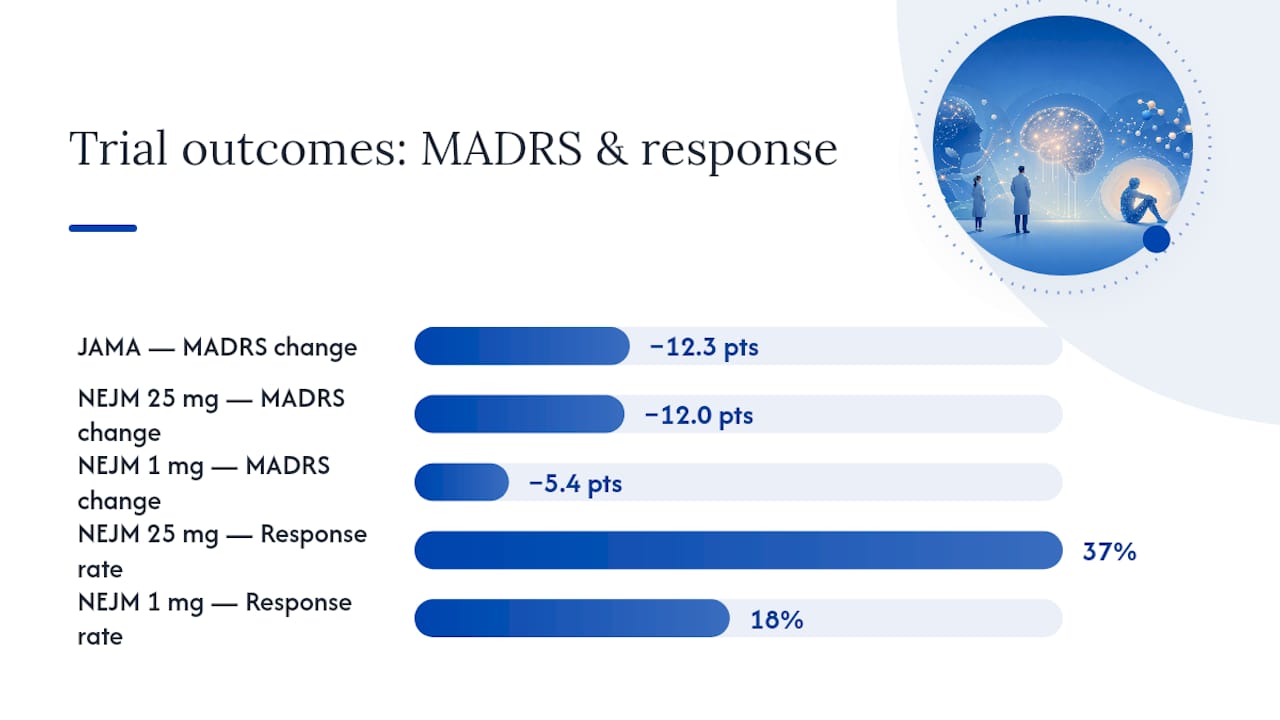
The JAMA multi-site phase 2 trial randomized adults with major depressive disorder to 25 mg psilocybin or a niacin placebo. By day 43, the psilocybin group showed a mean MADRS score difference of −12.3 compared to placebo, a gap large enough to represent the difference between moderate depression and near remission on that scale. Sustained response rates were also higher in the psilocybin arm, meaning the benefit wasn’t just a one-week spike that faded.
The NEJM trial took a different comparison approach, testing 25 mg against a 1 mg near-inactive dose in people with a treatment-resistant depressive episode. At week 3, the 25 mg group had a least-squares mean MADRS change of −12.0, versus −5.4 for the 1 mg group. Response rates told a similar story: 37% of the high-dose group responded compared to 18% on the near-placebo dose. Adverse events were mostly headache and nausea, though the trial also recorded some reports of suicidal ideation.
Then there’s the EPISODE trial, a phase 2b study focused specifically on treatment-resistant depression, and it’s the one that keeps the field honest. With 144 adults randomized, the primary endpoint at week 6 (measured on the HAMD17 scale) did not reach statistical significance. That’s a real result, not a footnote. But secondary outcomes and within-participant analyses still pointed toward clinically meaningful benefit for the 25 mg group, and 4% of participants reported suicidal ideation on dosing days compared to 1 to 2% in the comparator arms.
Here’s the pattern across all three trials:
- Effects tend to appear fast, often within days of the dosing session, not weeks like conventional antidepressants.
- Peak differences between psilocybin and control groups usually show up somewhere between 1 and 6 weeks post-dose.
- Durability varies. Some trials show benefit holding at day 43 or later; others see effects narrowing over time.
- Response and remission rates consistently favor higher doses (25 mg) over low-dose comparators, even when the primary endpoint misses significance.
The MADRS gap that matters: A −12.3 point difference on the Montgomery-Åsberg Depression Rating Scale, as seen in the JAMA trial, is roughly the clinical distance between “moderately depressed” and “mostly recovered.” That’s the number worth remembering when someone tells you psilocybin’s effects are marginal.
A systematic review pooling multiple controlled trials found a consistent direction of benefit across the literature, with moderate-to-large effect sizes. The same review is equally clear about the catch: small sample sizes and blinding problems run through nearly every study in this field, which limits how confidently anyone can generalize the results yet.
How Might Psilocybin Actually Relieve Depression?
Psilocybin itself is a prodrug. Once ingested, the body converts it into psilocin, the compound that actually crosses into the brain and binds to serotonin receptors, most notably the 5-HT2A receptor. That binding triggers a cascade tied to short-term neuroplasticity, essentially a window where neural connections can reorganize more freely than usual.
Neuroimaging work adds a second layer to the story. fMRI studies from researchers at UCL describe a pattern now commonly called the “reset hypothesis”:
- Acutely, psilocybin disrupts the default mode network, the brain circuit associated with self-referential thinking and, in depression, often with rumination.
- Blood flow to the amygdala decreases during the acute phase, and that decrease correlates with reduced depressive symptoms afterward.
- In the days and weeks following dosing, certain default mode network connections and vmPFC to posterior cingulate circuits show increased connectivity, a pattern that tracks with clinical improvement.
- The rigid, repetitive thought loops common in depression appear to loosen temporarily, giving therapy and reflection more traction than usual.
None of this happens in a vacuum. The subjective experience itself, what researchers call a mystical-type or emotionally intense experience, seems to matter for outcomes. Clinical guidance on psychedelic-assisted therapy consistently points to set and setting, meaning the person’s mental state going in and the physical and emotional safety of the room, as a real driver of what happens during the session and how someone processes it afterward.
Worth saying plainly: mechanism research here is convergent, not conclusive. Much of the connectivity data is correlational, not causal, and the “reset” framing is a working hypothesis that fits the data well rather than a settled biological fact.
How Is Psilocybin Therapy Actually Delivered in Trials?
Every major trial follows roughly the same skeleton, even though the details vary by protocol. Understanding that structure matters more than fixating on the dose alone.
- Screening. Candidates go through psychiatric and medical evaluation to rule out contraindications like a personal or family history of psychosis or mania.
- Preparation sessions. Before any dosing, participants meet with trained facilitators to build trust, set intentions, and understand what physical and emotional sensations to expect.
- The dosing session. Most efficacy trials use 25 mg as the high, active dose, administered in a monitored clinical setting with trained staff present for the several hours the acute effects last. Lower-dose arms (1 mg in the NEJM trial, niacin in the JAMA trial) consistently show smaller symptom reductions.
- Integration sessions. Multiple follow-up therapy sessions after dosing help participants process what came up. Some researchers argue this step, not the dosing session itself, drives much of the sustained benefit.
Medication status complicates all of this. SSRIs and SNRIs can downregulate 5-HT2A receptor responsiveness, which may blunt psilocybin’s acute effects. That’s why trials typically require a supervised taper off these medications before dosing rather than an abrupt stop, which carries its own withdrawal and relapse risk.
Pro Tip: If you’re on an SSRI or SNRI and thinking about psilocybin down the road, the tapering conversation belongs with a prescribing clinician, not a calendar app. Stopping cold on your own timeline is one of the more avoidable risks in this whole picture.
Plenty remains unresolved: how often a dose should be repeated, whether synthetic psilocybin performs differently than the natural compound, and who can legally access supervised treatment in the first place, since regulatory frameworks vary widely by country and even by region within a country.
What Are the Safety Risks and Who Should Avoid Psilocybin?
Most adverse events in these trials are short-lived. Headache, nausea, dizziness, and transient anxiety or dysphoria during the dosing window show up consistently across studies, and they typically resolve within hours.
The more serious signals deserve direct attention rather than a footnote. The EPISODE trial recorded suicidal ideation in 4% of participants on 25 mg dosing days, compared to 1 to 2% in comparator groups. That’s not a reason to dismiss the treatment outright, but it is precisely why every trial keeps a clinician in the room during dosing and monitors participants closely afterward. Rare hallucinogen persisting perception disorder (HPPD) has also been reported in the broader psychedelic literature, though it shows up infrequently in controlled trial settings.
The number that shapes every protocol: A 4% rate of suicidal ideation on dosing days, documented in the EPISODE trial, is the exact reason supervised administration isn’t optional in this research. It’s also why home use for depression treatment sits entirely outside what the evidence currently supports.
Trials exclude people with:
- A personal or family history of psychosis, schizophrenia, or bipolar disorder with mania.
- Uncontrolled cardiovascular disease or other unstable medical conditions.
- Current substance use disorders that could complicate monitoring or interpretation of results.
These exclusions exist because psilocybin’s acute effects can intensify existing psychiatric vulnerabilities, and researchers need a clean signal to interpret results responsibly. Good clinical practice in this space includes thorough psychiatric screening, monitored sessions with trained staff, a clear emergency plan, and medication changes handled by a clinician rather than the patient alone.
Who Tends to Respond Best to Psilocybin Treatment?
Trials generally enroll two overlapping but distinct populations: people with major depressive disorder and people with treatment-resistant depression, meaning they’ve already failed multiple standard antidepressant trials. That distinction matters for interpreting results, since TRD populations tend to be harder to treat across the board, which makes the effect sizes in trials like EPISODE more notable, not less.
A few patterns show up repeatedly in trial analyses:
- People who report more intense subjective experiences during dosing, including emotional breakthrough or mystical-type qualities, tend to show larger symptom improvements afterward.
- Certain post-dose changes in brain connectivity correlate with better outcomes, though this research is still exploratory.
- Comorbid psychiatric conditions, active substance use, and unstable medical illness all reduce suitability and are consistently screened out in trial protocols.
None of this replaces an actual clinical evaluation. The trials that generated these findings ran inside supervised research settings with trained staff on hand for exactly this reason.
What Are the Biggest Gaps in the Current Evidence?
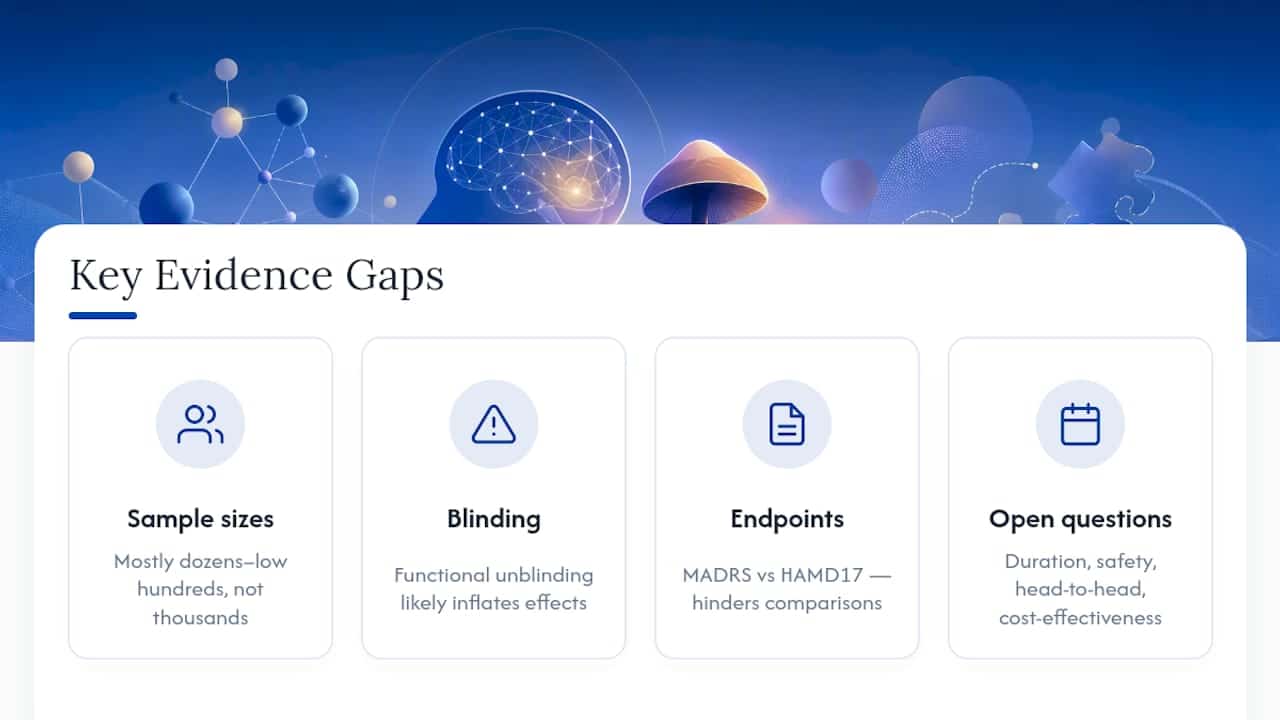
The honest caveats matter as much as the promising numbers. Sample sizes across these trials remain small by pharmaceutical standards, often in the dozens to low hundreds of participants rather than the thousands typically required for a new antidepressant approval.
Blinding is a persistent problem. It’s difficult to convince a participant they received an inactive placebo when the active dose produces hours of perceptual change, so “functional unblinding” likely inflates some reported benefits through expectancy effects alone. Endpoints also vary across trials (some use MADRS, others HAMD17), which makes cross-study comparison messier than it should be.
Open questions that still need answers include how long benefits actually last beyond a few months, whether psilocybin is safe across broader and more diverse populations than current trials include, how it stacks up against existing antidepressants and psychotherapy in head-to-head comparisons, and whether the treatment model is cost-effective at scale. Readers following this space should watch for larger phase 3 trials, pragmatic real-world studies, and longer safety follow-up before treating psilocybin as a settled clinical answer.
Where Fungipsilocybinmushroom Fits Into Informed and Safe Use
Fungipsilocybinmushroom exists to give people accurate information alongside lab-tested products, not to replace clinical care. Every strain listed, from Golden Teacher to Penis Envy, goes through lab testing before sale, and the site’s educational guide on Golden Teacher mushrooms and depression walks through strain-level differences that trial data alone doesn’t cover.
This page is educational, not medical advice. Nothing here substitutes for a licensed clinician’s evaluation, particularly given the psychiatric screening and monitored dosing that every trial cited above required. Readers exploring dosing questions can check the practical guide on how to dose magic mushrooms for harm-reduction context, and those weighing microdosing against the macrodose protocols used in trials can compare approaches in the microdosing psychedelics resource. For treatment decisions specifically, talk to a clinician.
Primary Sources and Further Reading
For readers who want to check the trial data directly: the JAMA phase 2 randomized trial and NEJM treatment-resistant depression trial sit behind journal paywalls, while the EPISODE trial and the systematic review of psilocybin for major depressive disorder are both open access through PMC. The UCL fMRI mechanism study is also freely available and worth reading for the neuroimaging detail alone.
An Honest Read on Where This Research Actually Stands
The conventional pitch you’ll hear about psilocybin depression treatment tends to oversell certainty in one direction. Advocates point to the JAMA and NEJM numbers as though the case is closed; skeptics point to EPISODE’s nonsignificant primary endpoint as though the whole field collapsed. Both readings miss what the data actually supports: a genuinely promising but still-forming treatment, hemmed in by small trials and blinding problems that no amount of enthusiasm fixes.
What gets underweighted in most coverage is the integration piece. The dosing session gets all the attention because it’s dramatic, but the research on psychological support during psychedelic therapy suggests the follow-up therapy sessions may carry as much weight as the mushroom itself. Treating psilocybin as a pill that does the work alone misreads every protocol that produced these results.
If you take one thing from this research, prioritize the safety screening and the supervised structure over the dose number. A 25 mg benchmark means nothing without the clinical oversight the trials built around it.
— Alex
Buy Lab-Tested Mushrooms and Learn Safe, Informed Use
This vendor offers lab-tested products and evidence-based educational materials to support informed use, rather than relying on vague marketing claims about mood and wellness.
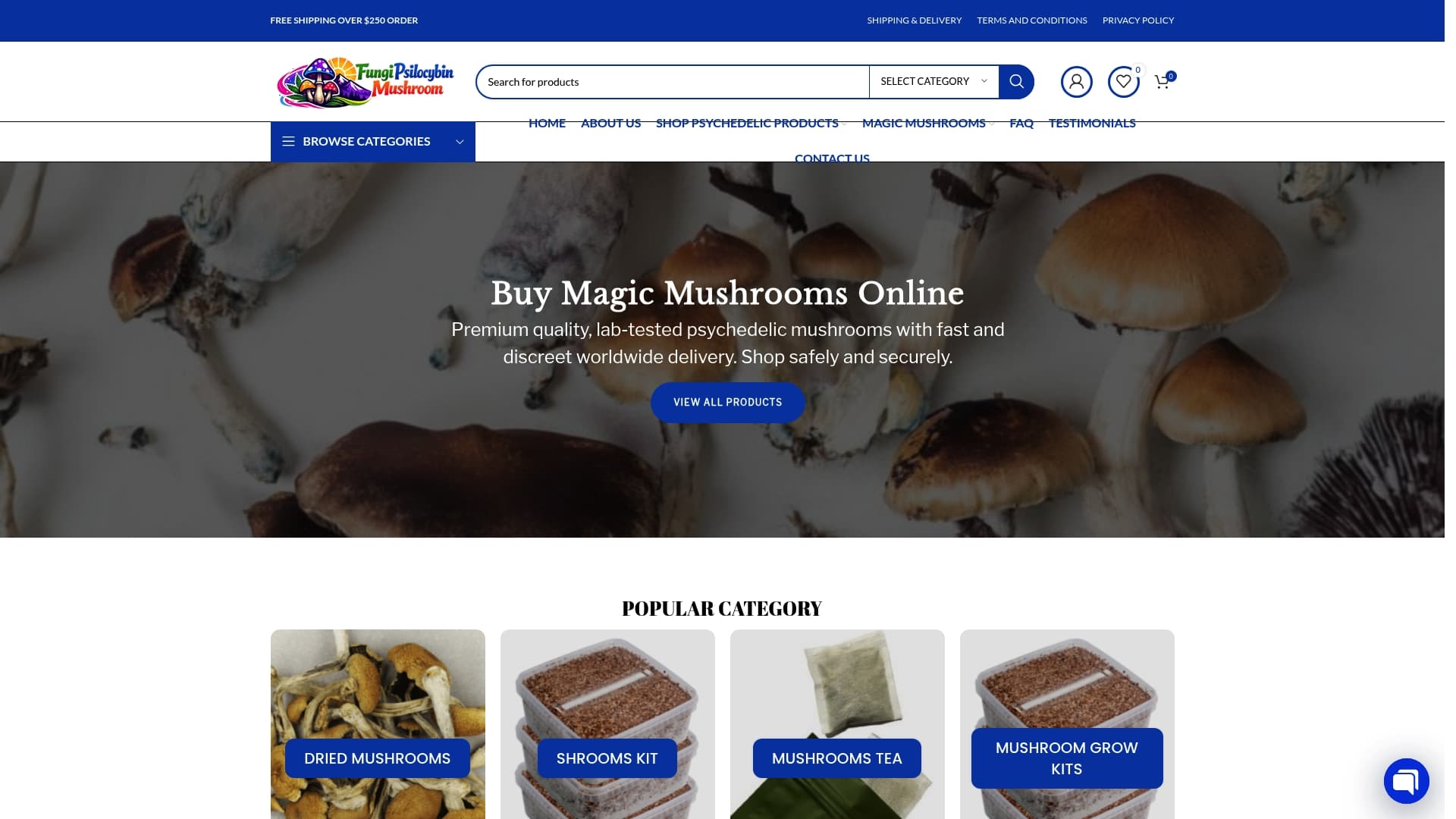
The catalog includes various strains, capsules, edibles, teas, and grow kits for home cultivation. Products are tested before shipping, and orders are shipped with discretion and privacy in mind. If you’re an adult exploring psilocybin for personal or therapeutic use and want a source that treats safety and lab verification as the baseline rather than an upsell, browse the full product catalog to see current strains and formats, or check the guide on buying mushroom capsules in the USA if capsules fit your routine better than dried product.
This article is general information, not a substitute for advice from a qualified doctor. Consult a qualified healthcare professional about your own circumstances before acting on anything here.
Sources
- Single-Dose Psilocybin Treatment for Major Depressive Disorder: A Randomized Clinical Trial | JAMA
- Single-Dose Psilocybin for a Treatment-Resistant Episode of Major Depression | NEJM
- Psilocybin for treatment-resistant depression: fMRI-measured brain mechanisms (UCL discovery)
FAQ
Does Psilocybin Actually Help With Depression?
Clinical trials show psilocybin combined with psychological support can produce clinically meaningful reductions in depression, with a mean MADRS difference of −12.3 versus placebo at day 43 in one major trial. Results vary by study, and not every trial has hit statistical significance on its primary endpoint.
How Long Do Psilocybin’s Antidepressant Effects Last?
Benefits often appear within days and can persist for weeks to months, with peak differences between treatment and control groups typically showing up between week 3 and day 43 across major trials. Durability beyond a few months is still an open research question.
Is Psilocybin Safe for Treating Depression?
Common side effects like headache, nausea, and transient anxiety are typically short-lived, but some trials have reported increased suicidal ideation on dosing days, including in 4% of EPISODE trial participants on the 25 mg dose. This is why psilocybin depression research happens exclusively in supervised medical settings with psychiatric screening beforehand.
What Dose of Psilocybin Is Used in Depression Trials?
Most major trials use 25 mg as the high, active therapeutic dose, compared against much lower doses like 1 mg or an inactive placebo like niacin. Lower-dose comparison arms consistently show smaller symptom reductions in trials like the NEJM study.
Can I Buy Lab-Tested Psilocybin Mushrooms From Fungipsilocybinmushroom?
Yes, Fungipsilocybinmushroom sells lab-tested dried mushrooms, capsules, edibles, teas, and grow kits, including strains like Golden Teacher and Penis Envy, with worldwide discreet delivery. Current pricing and available strains are listed directly on the product catalog.
Recommended
- Psilocybin Depression Treatment California: Your Complete Guide to Legal Mushroom Delivery Services and Therapeutic Options 2025
- How to Dose Magic Mushrooms
- Microdosing Psychedelics: Unveiling Remarkable Health Benefits and Therapeutic Potential 2026
- Blue Meanie vs Penis Envy Magic Mushrooms – Best Strain for Depression & Anxiety Relief (Buy Online at Psychedelic Today) 2026