
Blog
Peyote Legality in the US: Native Exemption, Texas Sales, Conservation

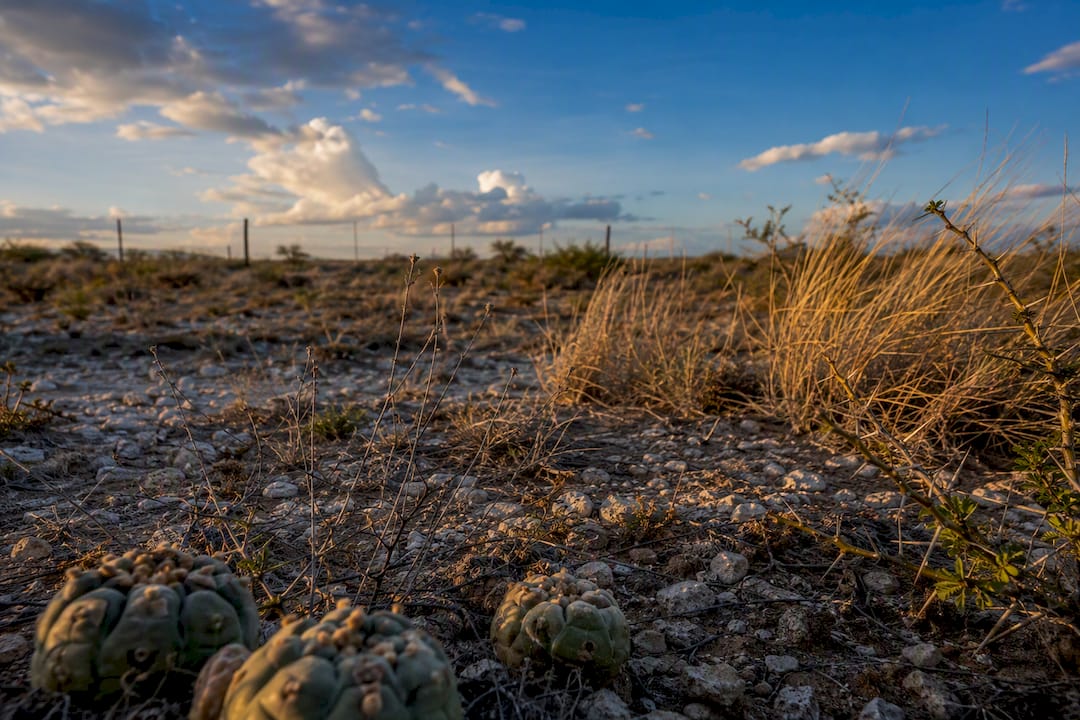
Peyote is a Schedule I controlled substance under federal law, which technically makes possession illegal for everyone. But 42 U.S.C. §1996a carves out a narrow exception: an Indian using or possessing peyote for bona fide traditional ceremonial purposes cannot be prosecuted under federal or state law for that specific use. Cultivation and sale to the general public remain illegal almost everywhere, and state law adds another layer of variation on top of the federal baseline.
TL;DR:
- Peyote possession by Native Americans for traditional ceremonies is protected only if their practice predates the 1994 law and involves bona fide religious purposes.
- Cultivation, sale, or transport of peyote outside specific licensed systems, especially for non-ceremonial or commercial purposes, remains illegal across all states.
- Texas stands out as the only state where selling peyote legally occurs through a regulated distribution chain, primarily serving verified Native American Church members.
- Most states criminalize planting, harvesting, drying, or processing peyote, with penalties varying from misdemeanors to felonies, especially in California.
- Alternatives like lab-grown psilocybin mushrooms or legal research compounds are available for those interested in psychedelic use without risking federal or state laws.
Peyote Legality Under Federal Law: The CSA and the Indian Exemption
Mescaline, the psychoactive compound in peyote, sits on Schedule I of the Controlled Substances Act, the same category as heroin and LSD. The DEA’s Orange Book lists mescaline and peyote-related substances there, meaning federal law presumes the plant has no accepted medical use and a high potential for abuse. That presumption drives every enforcement decision at the federal level, and it’s the reason peyote legality confuses so many people: the plant is simultaneously illegal and, for a specific group of people, legally protected.
The protection comes from a single, carefully worded statute: Congress passed 42 U.S.C. §1996a in 1994 specifically to settle a legal fight that had been dragging through the courts for years. The operative language states that the use, possession, or transportation of peyote by an Indian for bona fide traditional ceremonial purposes in connection with the practice of a traditional Indian religion is lawful, and shall not be prohibited by the United States or any state. That’s the entire exemption. It doesn’t legalize peyote outright. It protects a specific act, by a specific population, tied to a specific religious practice.
The DEA’s implementing regulation, 21 C.F.R. §1307.31, formalizes this by exempting the Native American Church and its members from prosecution for peyote used in bona fide religious ceremonies. A Department of Justice Office of Legal Counsel opinion goes further, clarifying just how tightly the exemption is drawn. According to the DOJ’s own analysis, the exemption was built around the Native American Church and religions with a comparable, documented history of peyote use. It was never intended as a blanket religious freedom pass for any group that adopts peyote ceremonies.
Pro Tip: If you’re trying to figure out whether a religious group’s peyote use is federally protected, ask whether that specific tradition has a documented history predating the statute. Newly formed groups claiming the exemption face a much steeper legal hurdle than the Native American Church does.
Here’s what the exemption does not cover, and this is where a lot of confusion sets in:
- General manufacturing or commercial distribution of peyote to the public
- Possession by non-Indians, even in a genuine spiritual context, absent a separate legal basis
- Cultivation for sale, gifting, or non-ceremonial personal use
- Transport across state lines for any purpose other than the protected ceremonial use
- Use by Indian individuals outside the context of a bona fide traditional religious ceremony
The legislative history behind §1996a, preserved in the U.S. Code’s preliminary text, shows Congress meant to protect traditional religious practice while still allowing reasonable regulation of how peyote gets grown, harvested, and moved. That balancing act is why cultivation and sale laws exist even in a country that has technically legalized ceremonial possession for one group. The exemption protects the ceremony. It does not protect the supply chain, except through one specific state mechanism discussed below.
Where Peyote Is Legal: State Laws, Texas, and Tribal Lands
Federal law sets the floor, but states decide how much further to go, and the differences are significant. Some states mirror the federal religious exemption almost word for word in their own controlled substances codes, explicitly protecting Native American Church members. Others say nothing about peyote at all beyond listing it as a controlled substance, which leaves practitioners relying entirely on federal preemption if state authorities ever push back. A handful of states have language broad enough to create real ambiguity about how local prosecutors would actually handle a ceremonial possession case.
Texas stands apart from every other state in one specific way: it’s the only place where selling peyote is legal, through a licensed and regulated distribution chain. Reporting from KUT Public Media documents how a small number of registered “peyoteros” in South Texas hold state licenses to harvest wild peyote and sell it to verified Native American Church members. This isn’t an open market. Buyers typically need to demonstrate tribal enrollment or documented NAC membership, and the whole system exists because South Texas happens to sit on top of most of the peyote habitat remaining in the country.
California takes the opposite approach on cultivation. California Health & Safety Code §11363 makes it a crime to plant, cultivate, harvest, dry, or process any plant of the genus Lophophora, which includes peyote, with no carve-out for personal or religious cultivation by non-tribal members. The federal exemption still applies to bona fide ceremonial possession for Indians even in California, but growing your own plant is a separate offense under state law regardless of intent.
Tribal lands complicate the picture further. Enforcement on reservations often falls under tribal law and, in some cases, federal jurisdiction rather than state authority, which can change how a ceremonial use case gets handled entirely. That doesn’t mean cultivation becomes automatically permissible on tribal land. It means the enforcing authority and applicable code may differ from the surrounding state.
| Jurisdiction type | Ceremonial possession by Indians | Cultivation | Sale/distribution |
|---|---|---|---|
| Federal baseline | Protected under §1996a | Not addressed by the exemption | Generally illegal |
| Texas | Protected, supported by licensing | Wild harvest only, by licensed peyoteros | Legal through registered sellers to verified NAC members |
| California | Protected by federal law | Explicitly criminalized under HSC §11363 | Illegal |
| Most other states | Varies by state code language | Generally illegal or unaddressed | Generally illegal |
State statutes change, and legislatures amend controlled substances schedules more often than most people realize. Treat any state-specific summary, including this one, as a starting point for your own search of the current code rather than a final answer.
What Conduct Gets Prosecuted: Cultivation, Sale, and Possession Explained
Peyote statutes generally target a specific sequence of acts rather than the plant’s mere existence. California’s §11363 spells this out clearly by naming five distinct actions as criminal: planting, cultivating, harvesting, drying, and processing. Each one can be charged separately, and prosecutors don’t need to prove intent to sell for a cultivation charge to stick.
- Planting or cultivating the plant, even for ornamental or personal spiritual reasons, triggers criminal liability in states like California regardless of whether you ever harvest it.
- Harvesting wild or cultivated peyote is treated as its own act under statutes modeled on California’s approach, separate from cultivation.
- Drying and processing the harvested plant into a usable form adds additional exposure, since these steps show intent to prepare the substance for consumption or distribution.
- Distribution or sale to anyone outside a licensed, verified channel is illegal in every state except Texas’s narrow registered system.
- Simple possession of prepared or dried peyote by a non-exempt individual is prosecuted differently than cultivation. Enforcement tends to focus more heavily on cultivation and distribution, since those acts touch supply rather than a single act of ceremonial use.
California’s cultivation offense is a “wobbler,” meaning prosecutors can charge it as either a misdemeanor or a felony depending on the circumstances, the defendant’s history, and the quantity involved. A misdemeanor conviction can carry county jail time and fines, while felony charges expose a defendant to state prison. That flexibility gives prosecutors significant discretion, which is exactly why cultivation cases are riskier to predict than straightforward possession cases.
One area that trips people up: seeds and small ornamental plants sold as botanical curiosities occupy a legal gray zone in some states, since a dormant seed isn’t the same as a prepared, consumable substance. That distinction doesn’t hold up everywhere, and several states treat the living plant itself, not just processed material, as the controlled substance. Anyone considering purchasing peyote seeds or buying a peyote cactus for collection needs to check their specific state code before assuming an ornamental sale is automatically lawful.
How Native Americans Access Peyote Legally, and What Non-Native Practitioners Face
For Native American Church members, lawful access runs almost entirely through two channels: NAC chapters that organize ceremonies and coordinate supply, and the licensed Texas peyoteros who sell to verified members under state registration. This system works because it keeps the entire chain, harvest, sale, and ceremonial use, inside a documented, bona fide religious context. Break that chain (buy from an unlicensed source, use outside a ceremony, resell to a non-member) and the federal protection no longer applies.
Non-Native individuals face a much harder legal path. Court decisions including Employment Division v. Smith and Gonzales v. O Centro Espírita Beneficente União do Vegetal shape how far religious freedom claims can stretch for substances outside the specific §1996a exemption. The DOJ’s OLC opinion discusses this history directly, and the upshot is sobering: RFRA claims have succeeded for other substances in narrow cases, but peyote’s exemption remains statutorily tied to Indian religious practice in a way that’s difficult for other groups to access through litigation.
Practical, lawful alternatives exist for people drawn to the broader tradition without qualifying for the exemption:
- San Pedro cactus, which contains mescaline but occupies different legal territory in most U.S. states since the plant itself isn’t scheduled
- Synthetic mescaline, available only through narrow research or clinical contexts, never as a consumer product
- Ceremonial retreats held in countries with different legal frameworks around mescaline-containing plants, though travelers need to research the destination country’s actual law rather than assume tolerance equals legality
Pro Tip: San Pedro’s legal status hinges on the plant being unscheduled, not on any exemption. Confirm your specific state hasn’t separately scheduled the plant before assuming that distinction protects you.
Enforcement Trends and Why Psychedelic Reform Rarely Includes Peyote
Federal prosecutors focus resources overwhelmingly on distribution and cultivation cases rather than ceremonial possession by verified Indian practitioners, since the latter carries almost no prosecutorial upside given the statutory exemption. States generally follow that same pattern, though enforcement intensity against unlicensed cultivation varies a lot by jurisdiction and by how aggressively local prosecutors treat wobbler offenses.
The bigger trend worth understanding: the wave of psychedelic decriminalization sweeping through states in recent years has largely carved peyote out entirely. Oregon’s psilocybin services program and Colorado’s Natural Medicine Health Act both focus on other substances, and explainers tracking these reforms note that peyote is routinely excluded from the plants and fungi covered by decriminalization measures. That exclusion isn’t an oversight. Tribal advocacy groups have pushed specifically to keep peyote out of broader reform, worried that expanded legal access would accelerate demand on an already strained wild supply.
A few points worth remembering:
- Tribal nations, including the Navajo Nation, have taken active conservation positions on peyote harvest, separate from any state or federal drug policy debate
- Broader psychedelic reform measures at the state level almost never extend legal access to peyote, even when they legalize psilocybin or other substances
- The practical outcome for readers: don’t assume a state’s psilocybin decriminalization law says anything at all about peyote’s legal status there
How to Verify Peyote’s Legal Status Before You Act
Getting this wrong carries real criminal exposure, so treat verification as a real step, not a formality.
- Pull the current text of your state’s controlled substances code directly from your state legislature’s official website, and note the statute number and its last amendment date. Secondhand summaries, including this one, can lag behind actual amendments.
- Cross-check the federal statute and DEA regulation. Read 42 U.S.C. §1996a and the DEA’s Schedule I listing directly rather than relying on paraphrases, since the exact wording determines what conduct is actually protected.
- Contact your state attorney general’s office if the statutory language is ambiguous about how cultivation, possession, or religious exemptions apply in your situation.
- If you’re claiming the religious exemption, consult NAC leadership or tribal religious authorities first. They can speak to whether your specific practice and community meet the “bona fide traditional ceremonial purposes” standard the statute requires.
- Retain counsel experienced in tribal and federal drug law before taking any action involving cultivation, transport, or distribution, even in a religious context.
Pro Tip: Never start cultivating, transporting, or supplying peyote based on an assumption about your legal standing. Get explicit clearance in writing from counsel or a tribal authority first. The wobbler penalties in states like California make guessing an expensive mistake.
Until you’ve done that homework, treat cultivation and sale as closed doors. That’s the safest working assumption for anyone outside a licensed Texas peyotero or a documented NAC ceremonial chain.
The Conservation Problem Behind Peyote’s Legal Restrictions
Peyote grows slower than almost any other cactus harvested for consumption, often taking a decade or more to mature. That biology is a big part of why cultivation and unauthorized harvest carry criminal penalties in states like California: unregulated demand can outpace the plant’s ability to regenerate in the wild, and South Texas habitat, the primary wild source supplying licensed peyoteros, has already shown signs of strain from overharvesting.
Native communities, particularly the Native American Church, view peyote as sacred rather than recreational, and many tribal leaders have spoken out against commercial exploitation or casual use by outsiders as a threat to both the plant’s survival and the integrity of the ceremony itself.
Tribal advocacy around peyote conservation isn’t about restricting access for its own sake. It reflects a concern that expanded non-ceremonial demand could permanently damage the wild populations that Native American Church practitioners depend on for a practice with no substitute material.
If you’re drawn to this plant’s history or its chemistry, the more responsible path runs through legal, ceremonial channels or through legal alternatives that don’t pressure an already limited wild supply. Fungi Psilocybin Mushroom’s broader guide to psychedelic legal frameworks covers how peyote’s legal treatment compares with psilocybin, which faces a very different regulatory trajectory in the U.S. right now.
- Peyote’s slow growth cycle limits how fast supply can recover from overharvesting
- The Native American Church and other tribal voices have actively opposed commercial or casual peyote use by non-practitioners
- Legal plant alternatives and research contexts exist for people who want to explore mescaline’s effects without pressuring wild peyote populations
What I’d Tell a Friend Asking About This
The gap between what people assume about peyote legality and what the statute actually says is enormous, and it’s not a small technicality. People hear “Native Americans can legally use peyote” and assume that means peyote is basically legal with an asterisk. It’s the reverse. Peyote is federally illegal with one extremely narrow, carefully bounded exception, and everything else, cultivation, sale, non-ceremonial possession, use by non-exempt individuals, remains squarely illegal in nearly every state.
What actually surprises most readers is Texas. A state famous for strict drug enforcement runs the only legal peyote sales chain in the country, purely because it happens to sit on the habitat and built a licensing system around supplying the Native American Church responsibly. That’s not a loophole. It’s a deliberate regulatory compromise that took decades to build, and it’s fragile precisely because the wild supply it depends on is shrinking.
If there’s one thing worth internalizing here, it’s that peyote’s legal story is really a conservation story wearing a drug-law costume. The restrictions on cultivation exist as much to protect a slow-growing plant from disappearing as they do to control a Schedule I substance. Treat that distinction seriously before treating peyote like just another substance with a legal gray area to exploit. Check your statute. Talk to a tribal authority or attorney if you have any real claim to the exemption. Do not guess.
— Alex
Legal, Lab Tested Alternatives Worth Exploring
Peyote’s legal path is narrow by design, and this article doesn’t encourage anyone around that. Instead, lawful, transparent alternatives exist for people interested in psychedelic exploration without the criminal exposure that comes with unauthorized peyote cultivation or purchase: lab-tested psilocybin mushrooms, grow kits, and microdosing products shipped with discreet, secure delivery.

If therapeutic use is what drew you to this topic in the first place, a guide to psilocybin’s legal therapeutic landscape in California walks through where mushroom-based options currently stand under state law, including delivery services built around compliance rather than guesswork. Lab testing behind products ensures you know what you’re getting before it arrives. Browse current selections and see which lawful option fits what you’re actually looking for.
This article is general information, not a substitute for advice from a qualified lawyer. Consult a qualified legal professional about your own circumstances before acting on anything here.
Sources
- 42 U.S.C. § 1996a — LII / Legal Information Institute
- Department of Justice — Peyote exemption (OLC opinion)
- California Health & Safety Code §11363 — California Legislative Information
- KUT Public Media — In the only state where selling peyote is legal, the cactus is threatened and still controversial
- DEA — Controlled Substances Alphabetical List (Orange Book)