
Monthly Archives: August 2026
2:1:1 PF Tek Substrate Ratio for Beginners That Colonizes Reliably

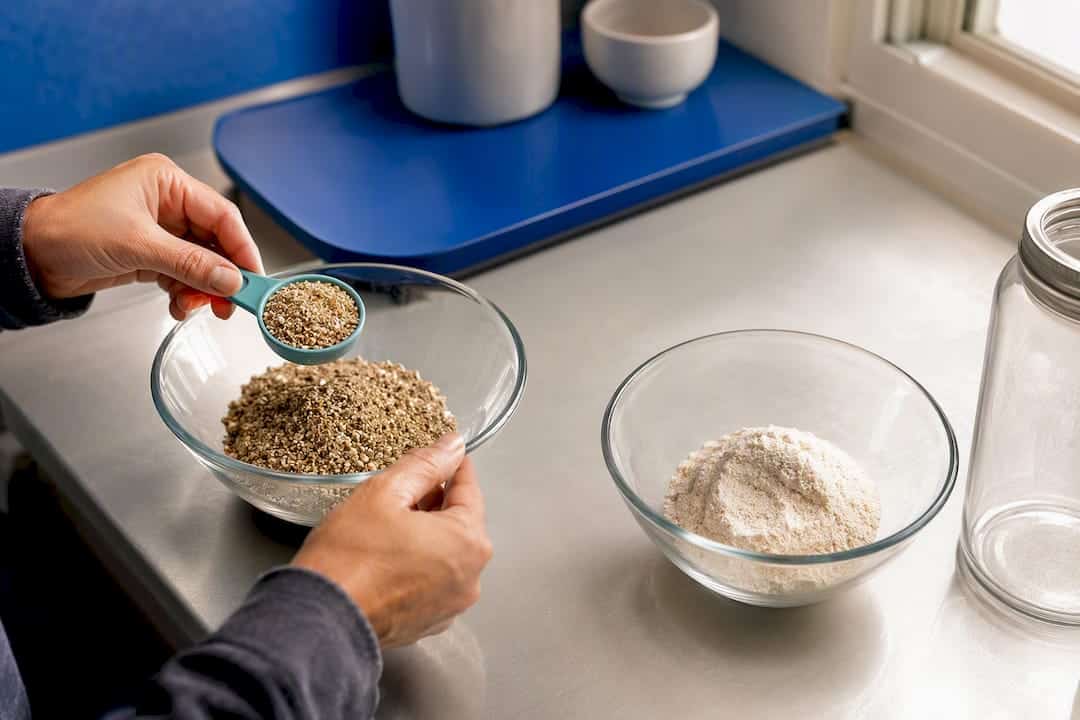
The classic PF Tek substrate ratio is 2 parts vermiculite to 1 part brown rice flour to 1 part water. For a standard half-pint jar, that works out to about 1/2 cup vermiculite, 1/4 cup brown rice flour, and 1/4 cup water. Mix the wet vermiculite first, fold in the flour, fill jars loosely, cap with a 1/2 inch dry vermiculite layer, sterilize, cool completely, inoculate, and let the jars sit in the dark.
TL;DR:
- Using organic brown rice flour reduces the risk of fungicide residue that can halt colonization, making it worth the extra cost.
- Proper mixing involves soaking vermiculite, testing its moisture, then folding in the flour gradually to avoid clumps and dead zones.
- Sterilization with a pressure cooker at 15 psi for 45 minutes is more reliable than steaming, which risks contamination due to uneven heat.
- Inoculate with 1 to 2 cc of spores per jar, working in a sterile environment, and seal injection sites with micropore tape for optimal results.
- Full colonization typically takes 2 to 4 weeks at 70°F to 80°F, with healthy mycelium appearing as fluffy white growth and contamination showing as colored patches.
Table of Contents
- What Goes Into a PF Tek Substrate Recipe?
- How Do You Mix and Fill PF Tek Jars?
- Pressure Cooker vs. Steam Pot: Which Sterilization Method Works Better?
- How Much Spore Solution Do You Inject Per Jar?
- How Long Does PF Tek Take to Colonize?
- Dunking, Rolling, and Setting Up for Fruiting
- What Should You Do When Something Goes Wrong?
- Why PF Tek Still Beats Fancier Methods for Beginners
- Want Fewer Steps and Higher Success Odds?
- Where to Read More on PF Tek Technique
- Sources
What Goes Into a PF Tek Substrate Recipe?
That 2:1:1 ratio isn’t arbitrary. Vermiculite holds water and creates air pockets mycelium needs to breathe; brown rice flour (BRF) supplies the nutrient base fungi actually digest. Get the water content wrong in either direction and you’re either drowning the substrate or starving it, both of which stall colonization before it starts. This exact recipe and its per-jar breakdown show up consistently across step-by-step PF Tek guides, which is why it’s become the default starting point for anyone new to jar cultivation.
Here’s the exact breakdown for a single half-pint (8 oz) wide-mouth jar:
- Vermiculite: 1/2 cup (roughly 120 ml)
- Brown rice flour: 1/4 cup (roughly 60 ml)
- Water: 1/4 cup (roughly 60 ml), plus a bit more for the wet vermiculite portion before mixing
- Dry vermiculite for the top layer: an additional 2 to 3 tablespoons per jar, kept separate and never wetted
Most beginners don’t stop at one jar. Once you know you’ll be running a batch, scale the recipe up rather than mixing single jars over and over.
A few ingredient notes make a real difference in outcome. Organic brown rice flour is worth the extra cost when you can find it, since some growers report conventional flour occasionally carries trace fungicide residue that can slow or inhibit colonization. Use coarse or medium vermiculite rather than the fine horticultural grade sold for seed starting; it holds structure better and won’t compact into mud. Tap water is fine in most municipal systems, but if your water is heavily chlorinated, let it sit out overnight or use filtered water instead.
Gypsum and coffee grounds show up in some advanced PF Tek variations as small nutrient boosters. Neither is required, and for a first run, skip both. Get the base recipe working before you start experimenting with additives. Jar shape matters more than most beginners realize, too. Half-pint, wide-mouth jars without shoulders release finished cakes cleanly; jars with a lip or shoulder near the top tend to trap the cake and cause tearing when you try to dunk and roll it later.

Pro Tip: Measure your dry ingredients before adding water, not after. Once vermiculite is wet, it’s nearly impossible to eyeball how much BRF you’re actually adding by volume.
How Do You Mix and Fill PF Tek Jars?
Mixing order matters more than most first-timers expect, and getting it backward is one of the most common reasons a batch never colonizes.
- Wet the vermiculite first. Combine your measured vermiculite with the water in a bowl and let it sit for a couple of minutes so it absorbs evenly.
- Run the squeeze test. Grab a handful and squeeze firmly. You want only a few drops of water to escape, no more. If water streams out, you’ve added too much; add a spoonful of dry vermiculite to correct it. If nothing comes out at all and the mix feels crumbly, add water a teaspoon at a time.
- Fold in the brown rice flour gradually. Add it in two or three stages, mixing between each addition, rather than dumping it all in at once. This avoids the dense flour clumps that create dead zones mycelium can’t colonize.
- Fill jars loosely. Spoon the mixture in without pressing or tamping. Packing substrate tightly is one of the most common beginner mistakes because compacted substrate blocks gas exchange and mycelium simply stalls inside a jar that looks fine from the outside.
- Leave headspace and wipe the rims. Stop filling about 1/2 inch below the jar’s shoulder, then wipe any substrate off the rim and threads with a clean, damp cloth. Substrate on the rim becomes a contamination bridge once the lid goes back on.
- Add the dry vermiculite cap. Spoon a 1/2 inch layer of dry (unwetted) vermiculite on top and level it gently. Don’t compress this layer either; it needs to stay loose to do its job.
- Prepare the lids. Drill or punch three to four holes around the lid, about 1/4 inch in diameter, spaced evenly. Cover each hole with a small piece of micropore tape or a folded strip of aluminum foil before sterilizing, then screw the lids on loosely, not fully tight, to allow steam to enter during the cook.
Pressure Cooker vs. Steam Pot: Which Sterilization Method Works Better?
A pressure cooker running at 15 psi for 45 minutes is the preferred sterilization method for PF Tek jars, and for good reason: it hits a temperature and pressure combination that reliably kills contaminant spores throughout the substrate, not just on the surface.
Stovetop steaming is the low-equipment fallback. Set jars on a rack or folded towel inside a large pot, so they never touch the metal bottom directly, add a few inches of water, cover tightly, and steam for 60 to 90 minutes. It works, but it carries a higher contamination risk because steaming doesn’t reach the same sustained internal temperature a pressure cooker does. If you go this route, check the water level periodically; a pot that runs dry mid-cook is one of the most common causes of a failed steam sterilization.
A few operational details separate a clean cook from a wasted batch:
- Never let jars touch the pressure cooker or pot’s metal bottom directly. Temperature shock is the leading cause of cracked jars.
- Let pressure release naturally after the timer ends. Venting too fast causes a sudden pressure drop that can crack glass or blow substrate through the lid holes.
- Let jars cool completely to room temperature before inoculating. Warm substrate creates condensation inside the jar, and that moisture is exactly what contaminants need to establish.
- Loosely cover cooling jars with foil to keep airborne dust and mold spores off the lids while they sit.
Colonization timelines run 2 to 4 weeks under ideal conditions, and ideal incubation sits between 70°F and 80°F (21°C to 27°C). Cooking your substrate properly is what makes that window achievable instead of aspirational.
How Much Spore Solution Do You Inject Per Jar?
Inoculation is the step where sterile technique either pays off or falls apart, so treat it with the same care you gave sterilization.
- Sterilize your needle. Flame it with a lighter until it glows, then let it air cool for 10 to 15 seconds. A hot needle will kill your spores on contact.
- Shake the syringe. Spores settle at the bottom of the solution, so agitate the syringe well before drawing or injecting to distribute them evenly.
- Inject 1 to 2 cc per jar, split across the available holes so mycelium establishes from multiple points rather than one corner.
- Work in a still-air box or a draft-free room. A dedicated still-air box (SAB) cuts down airborne contamination significantly compared to open-air inoculation, though a clean, closed room with no fans running is workable for a first attempt.
- Reseal each injection hole with a fresh piece of micropore tape immediately after injecting.
The dry vermiculite cap you added earlier isn’t just filler. It functions as a physical filter and humidity buffer, trapping airborne contaminants before they reach the substrate below while keeping the surface consistently humid for mycelium to push through. That’s also why disturbing it, tapping the jar hard, or scraping the top layer during handling is a leading contamination vector for beginners. Leave it alone once it’s in place.
How Long Does PF Tek Take to Colonize?
Expect visible white growth around the injection sites within 3 to 7 days. Full colonization of the jar typically takes 2 to 4 weeks, and the entire process from inoculation to first harvest usually runs 6 to 8 weeks when temperatures stay in range.
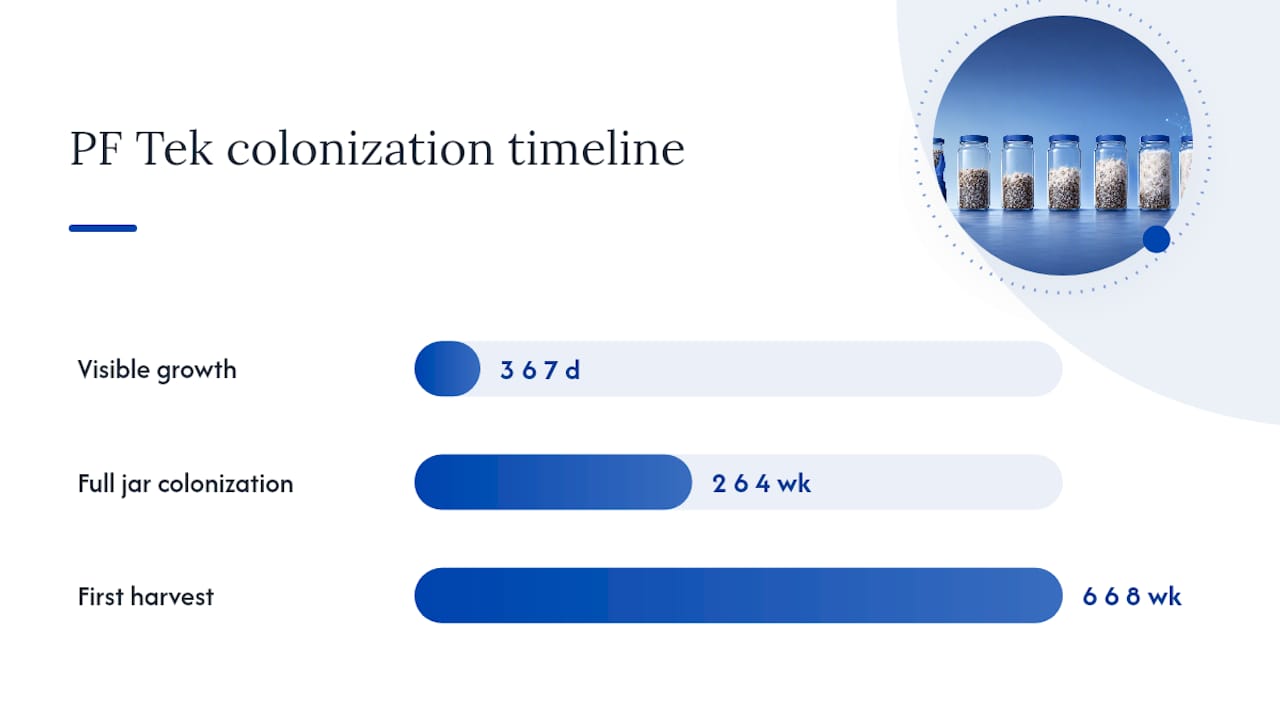
That temperature range, 70°F to 80°F (21°C to 27°C), isn’t a suggestion. Colder incubation slows growth and gives contaminants more time to establish before mycelium can outcompete them. Hotter than 80°F speeds colonization but raises the odds of bacterial issues, especially in a substrate that’s slightly too wet.
Healthy colonization looks like consistent, fluffy white growth radiating outward from each injection point, eventually connecting into a solid white mass. You’ll often see thicker white cords called rhizomorphs pushing through the substrate; that’s a strong sign of vigorous growth, not a problem.
Contamination shows up as color, and color is the tell:
- Green, blue-green, or black fuzzy patches usually mean Trichoderma or Penicillium mold.
- Bright pink or orange slime typically signals bacterial contamination, often from a substrate that was too wet.
- Gray, web-like growth that spreads fast and thin is cobweb mold, a common but usually manageable contaminant if caught early.
If a jar shows no growth and no contamination after two weeks, check your temperature and moisture before assuming the jar failed. Colonies that stall from cold or dryness often resume once conditions are corrected. Never open the jar to “help” mycelium along; that’s an open invitation for contamination. If you see any spreading color, discard that jar rather than trying to salvage it.
Dunking, Rolling, and Setting Up for Fruiting
Once a jar is fully colonized, white mycelium wall to wall with no dry substrate visible, it’s ready to come out and become a fruiting cake.
- Dunk the cake for 12 to 24 hours in cool, non-chlorinated water, refrigerating it during the soak. This rehydrates the cake and typically improves yield on later flushes. If the cake floats, weigh it down gently with a clean plate; don’t force it under with pressure that could crack it.
- Roll the wet cake in dry vermiculite, coating it evenly on all sides, about 1/8 inch thick. This holds moisture at the surface without smothering it.
- Set up a shotgun fruiting chamber. A clear plastic tote with a few inches of moist perlite in the bottom, holes drilled around the sides, provides the humidity and fresh air exchange cakes need to pin. Mist the chamber walls once or twice daily and fan it briefly to exchange stale air.
- Give it indirect light on a normal day/night cycle; mushrooms don’t need bright light, but a schedule helps trigger pinning.
Most cakes produce two to three flushes, with each flush a week or two apart. Dunk again between flushes to rehydrate.
What Should You Do When Something Goes Wrong?
Most PF Tek failures trace back to one of a handful of repeatable mistakes, and catching them early saves the rest of your batch.
- See green, black, or pink growth? Isolate that jar immediately, seal it in a bag before opening anywhere near your other jars, and discard it. Don’t try to cut out contamination and save the substrate; PF Tek jars are small enough that it’s rarely worth the risk.
- Substrate feels compacted or waterlogged? Use less water next batch and stop tamping the substrate down while filling. This is one of the most frequently repeated errors among first-time growers.
- Growth has stalled with no contamination visible? Check incubation temperature first, then moisture. A jar sitting in a chilly closet will colonize far slower than one held at 75°F.
- Cobweb mold (gray, thin, fast-spreading) is manageable if you catch it in the first day or two; some growers scrape it out carefully, though isolating the jar is the safer call for beginners.
- Bacterial blotch (yellow or orange wet-looking patches with a sour smell) almost always means the substrate was too wet going into sterilization. Adjust your water ratio down slightly next time.
A few hygiene habits reduce contamination rates across the board: wipe down your work surface with isopropyl alcohol before every session, wash hands thoroughly, and avoid working near open windows, fans, or high-traffic areas of the house.
Pro Tip: Keep a simple log of your water measurements and sterilization times for each batch. When something goes wrong, that log is the fastest way to figure out what changed.
Why PF Tek Still Beats Fancier Methods for Beginners
PF Tek gets dismissed by more advanced growers who’ve moved on to monotubs and bulk substrate, and for higher-volume growing, they’re right to make that switch. But writing off PF Tek as outdated for a beginner misses the actual point of the method. It’s forgiving. Low-nutrient substrate, small jar volumes, and basic kitchen equipment mean a mistake in ratio or timing costs you one jar, not an entire tub of substrate.
The mistake I see repeated most isn’t a measurement error. It’s impatience. People check jars daily, tap the glass, hold jars up to grow lights every few hours looking for progress, and in doing so they introduce far more contamination risk than a slightly-off water ratio ever would. Colonization on a good jar looks almost boring for the first ten days. That’s normal.
The other thing worth saying plainly: laws around psilocybin cultivation and possession vary significantly by country, state, and even city, so check your local regulations before starting any grow. Fungipsilocybinmushroom’s grow kit guide and lab-tested product line exist precisely because plenty of home growers want a proven, quality-controlled starting point rather than reinventing the wheel with each batch.
— Alex
Want Fewer Steps and Higher Success Odds?
If measuring vermiculite and babysitting a pressure cooker sounds like more equipment risk than you want on your first run, a ready-to-fruit grow kit skips the substrate prep entirely. Fungipsilocybinmushroom’s 100% mycelium grow kit ships fully colonized, so you’re starting at the fruiting stage instead of the inoculation stage, with far less exposure to the contamination risks that trip up first-time PF Tek growers.
The kit arrives with clear setup instructions and the accessories needed to get your first flush going, and it’s built specifically for beginners who want a tested, consistent result without troubleshooting a failed jar mid-batch. If you’ve already run PF Tek and want to compare notes on colonization speed and flush size, the B+ mycelium grow guide walks through what a faster-colonizing strain looks like in practice. Check current availability and place your order through the grow kit product page to get your next batch started with less guesswork than a first PF Tek run typically involves.
Where to Read More on PF Tek Technique
The PF Tek v2 thread on Shroomery remains the most detailed original source for troubleshooting stalled jars and reading incubation timelines correctly. DoubleBlind Magazine’s guide adds historical context on why the method became the standard entry point for home cultivation. For side-by-side photos of substrate consistency and jar setups, Mushroom Growing Tips’ PF Tek walkthrough is worth bookmarking, and SporeLab’s technique page covers sterilization variations in more depth than most beginner guides attempt.
This article is general information, not a substitute for advice from a qualified lawyer. Consult a qualified legal professional about your own circumstances before acting on anything here.
Sources
- Shroomery
- A Mycologist’s Guide to the PF Tek Method — DoubleBlind Magazine
- PSILOCYBE CUBENSIS GROWING TECHNIQUES (PF TEK) — SporeLab
- Growing mushrooms at home — Mother Earth News
Recommended
Psilocybin and PTSD: A Consumer’s Safety and Dosing Guide
Consumer psilocybin and PTSD self-care, taken outside a clinical setting, can be a reasonable option for some adults managing symptoms through self-directed healing—but only after ruling out serious health risks first. If you have a personal or family history of psychosis, bipolar disorder, or you take lithium or an MAOI, psilocybin and PTSD recovery is not a safe combination right now, full stop. For everyone else, three powerful steps unlock your path forward:
Screen yourself honestly against the contraindications below, and talk to a doctor if anything applies to you. Use a lab-tested product with a certificate of analysis, or wait until you have one. Plan your set and setting in advance, including who (if anyone) will be with you.
TL;DR:
Individuals with a personal or family history of psychosis, bipolar disorder, or taking lithium or MAOIs should avoid psilocybin and PTSD treatment entirely due to severe mental health risks. Microdosing doses are generally 0.1 to 0.3 grams, but current research shows limited evidence of consistent benefits for psilocybin and PTSD or anxiety symptom relief. Ensuring a lab-tested product with a certificate of analysis and a safe, private setting with a trusted sitter are crucial steps before any psilocybin and PTSD journey.
High blood pressure, heart arrhythmias, seizure disorders, pregnancy, or breastfeeding raise significant safety concerns and require medical consultation before exploring psilocybin and PTSD options. Dosing accuracy relies on dry weight measurement with a precise scale, and home-grown mushrooms can vary significantly in potency, risking unpredictable effects that undermine safe psilocybin and PTSD self-care.
Psilocybin PTSD Safety: Contraindications and Medication Risks
Some adults with PTSD-related symptoms should not use psilocybin under any circumstances. A personal or family history of psychosis, schizophrenia, or bipolar I disorder tops that list. Psilocybin can trigger a manic episode or a psychotic break in someone predisposed to either, and that risk does not shrink at a low dose.
Medication interactions matter just as much. Lithium combined with psilocybin is considered a severe interaction risk and should be avoided, and clinicians flag it as one of the more dangerous pairings in psychedelic use, according to Psychiatric Times. MAOIs carry similar severity. SSRIs and SNRIs, common first-line PTSD medications, tend to blunt psilocybin’s effects rather than cause acute danger, but the interaction is still unpredictable enough that stopping cold on your own is a bad idea. Tramadol raises seizure risk when mixed with psilocybin and should be avoided entirely during a session.
A few more flags worth knowing:
- Uncontrolled high blood pressure or a history of heart arrhythmia (psilocybin transiently raises heart rate and blood pressure).
- A seizure disorder of any kind.
- Pregnancy or breastfeeding, where there’s no safety data at all.
Watch for a racing heart that doesn’t settle, chest pain, or a panic response that isn’t resolving with grounding techniques. Those are reasons to stop, call for help, and treat it as a medical event, not just a rough trip. The NCCIH notes that psilocybin’s effects are genuinely variable person to person, and supervised clinical dosing is a different context entirely from taking it alone at home.
Dosing Psilocybin for PTSD Symptom Relief: Ranges and Microdosing Evidence
Dry weight is the only unit that matters for dosing dried Psilocybe cubensis. Fresh mushroom weight is meaningless because moisture content varies wildly between batches. Common consumer ranges break down roughly like this, according to harm-reduction dosing guides from Rave Wellness:
- Threshold dose: 0.25 to 0.5 grams dried, enough to notice subtle mood or perceptual shifts.
- Common/moderate dose: 1 to 2.5 grams dried, the range most people associate with a full experience.
- Strong dose: 3.5 grams and above, reserved for experienced users in a controlled setting.
- Microdose: 0.1 to 0.3 grams dried, sub-perceptual by design.
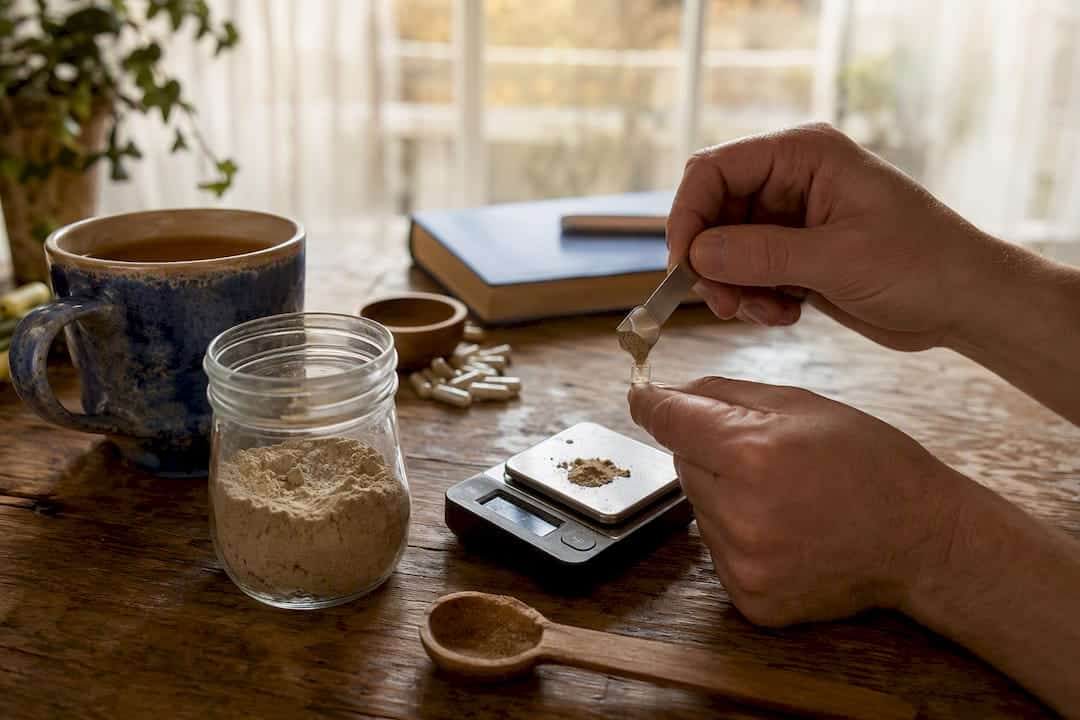
Potency swings dramatically by species and even by batch within the same species, so treat any chart as a starting point, not gospel. A milligram scale accurate to 0.01 to 0.1 grams is non-negotiable if you’re microdosing. Start at the lowest end of any range, wait at least two hours before deciding whether to redose, and never stack doses out of impatience.
On the evidence: microdosing for anxiety or PTSD symptoms is popular, but the science is thin. A randomized, placebo-controlled trial found subjective effects without consistent cognitive or wellbeing benefits, meaning people felt something, but measurable improvement in mood or thinking didn’t hold up against placebo. A 2026 systematic review reached a similar conclusion: heterogeneous practices and low-certainty evidence across studies. If you microdose, favor an encapsulated product with a certificate of analysis so your dose is at least consistent, even if the benefit remains unproven. Our dosing guide covers measurement tools and schedules in more depth.
Set, Setting, and Integration for a PTSD-Focused Session
Preparation matters more for someone processing trauma than for a recreational user, because psilocybin can intensify whatever emotional material is already close to the surface. Set your intention beforehand: what are you hoping to work through, and what would a “good enough” outcome look like? Choose a day with nothing scheduled after, and check that your baseline mood is stable rather than in active crisis.
Setting checklist:
- A private, familiar indoor space with a lock on the door.
- Water, a blanket, snacks, and a calm playlist queued up in advance.
- Phone off or in another room, except for an emergency contact method.
- A trusted sitter present, ideally someone who has done this before or at least knows basic grounding language.
A sitter’s job is mostly to stay quiet and available. If things get difficult, a simple script works better than improvised comfort: “You’re safe. This is temporary. I’m right here.” Crowdsourced research on first psychedelic experiences found that exactly this kind of preparation, dose measurement, and sitter presence correlates with fewer challenging experiences and better outcomes overall.
Pro Tip: If a wave of fear or grief hits hard, don’t fight it. Harm-reduction counselors call this “surrender, don’t fight” for a reason: resisting a difficult emotion during the experience tends to intensify it, while sitting with it usually lets it pass faster.
Integration is not optional. Journal within 24 hours while the material is fresh, then again weekly for two to four weeks. If you’re already in therapy, bring specific memories or images from the session into your next appointment rather than letting them fade. Peer integration circles, even informal ones, help normalize what came up.
Sourcing Safer Psilocybin Products: Lab Testing and Legal Checks
A real certificate of analysis (COA) lists psilocybin and psilocin content by weight percentage, plus a screen for heavy metals, pesticides, and microbial contamination. If a seller can’t produce one, or the COA looks generic and undated, treat that as a hard pass.
Product form changes your risk profile. Whole dried mushrooms let you weigh your own dose but vary in potency stalk to stalk. Edibles and capsules standardize the dose per unit, assuming the manufacturer’s testing is legitimate, but onset can be slower and less predictable than a mushroom eaten on an empty stomach.
Harm-reduction basics worth building into every purchase:
- Use reagent test kits when a COA isn’t available, especially for anything sold as a blend.
- Avoid products marketed as mystery “trip mixes” with undisclosed ingredients.
- Store dried product in an airtight container, away from light and moisture, to preserve potency.
- Check your local jurisdiction’s laws before ordering, growing, or possessing psilocybin. Rules shift by country and by state or province, and enforcement varies even within legal gray zones.
Harm-reduction organizations consistently recommend testing your substance, sticking to one substance per session, and skipping alcohol or cannabis on top of psilocybin, according to guidance from Here to Help.
Growing Your Own: Cultivation Basics and When to Buy Instead
A grow kit is the lowest-effort entry point into cultivation. Spores and live culture demand more sterile technique and patience, and in many places the legal status of spores differs from that of the mushrooms themselves, so check local law before ordering either.
- Sterilize everything that touches your substrate: pressure cook grain or use a still-air box for any open transfers.
- Keep humidity around 90 percent during fruiting and maintain fresh-air exchange, since stale, high-CO2 air produces long, thin stems instead of healthy caps.
- Watch for green or black mold, which almost always means a contamination during setup, not a fixable growing condition.
- Harvest just before the cap fully flattens, then dry thoroughly with a fan or dehydrator before storage.
Beginner failures trace almost entirely to sloppy sterile technique, according to Fungi Academy’s cultivation guide. If you want a consistent, known dose without troubleshooting mold, a vendor-tested product beats a first grow kit every time. Our grow kit FAQ walks through the common failure points in more detail.
Psilocybin and PTSD Medications: What Else Can Interact
Beyond the lithium and MAOI red flags, several PTSD medications interact with psilocybin in subtler ways that are easy to miss. SSRIs and SNRIs, the most commonly prescribed class for PTSD, tend to dampen psilocybin’s subjective effects because both act on serotonin pathways. Someone on a stable SSRI dose may find a typical dose barely registers, which sometimes tempts people to take more, and that’s where things get risky. Escalating dose to compensate for medication blunting removes the predictability that makes dosing charts useful in the first place.

Prazosin, frequently prescribed for PTSD-related nightmares, works on a different receptor system and doesn’t carry the same acute interaction risk, but it can lower blood pressure, and psilocybin’s own cardiovascular effects stack on top of that. Benzodiazepines, sometimes used short-term for PTSD anxiety, can blunt or shorten a psilocybin experience if taken close together, and combining the two to “manage” anxiety during a session works against the process rather than helping it.
Atypical antipsychotics, occasionally prescribed off-label for PTSD nightmares or hypervigilance, share mechanisms with the psychosis-risk contraindications mentioned earlier and deserve the same caution.
None of this is a complete list, and drug interactions vary by individual metabolism and dose. If you’re on any prescribed medication for PTSD, the responsible move is a conversation with the prescribing clinician before introducing psilocybin, not a forum post or a guess. Stopping a psychiatric medication abruptly to “clear it out” before a session carries its own withdrawal risks and should never be done without medical guidance.
Is Psilocybin Right for You? A Personal Readiness Checklist
Suitability comes down to three questions answered honestly, not optimistically. First: does anything on the contraindication list apply to you, directly or in your immediate family? If yes, this isn’t the right avenue, at least not without a clinician’s involvement.
Second: is your current life stable enough to absorb an intense emotional experience? PTSD symptoms can flare unpredictably during and after a session. If you’re in active crisis, mid housing move, freshly grieving, or otherwise stretched thin, wait. A psilocybin session doesn’t pause for convenient timing once it starts.
Third: do you have the actual infrastructure in place? That means a tested product, a private and safe setting, at least 6 to 8 hours with nothing else demanding your attention, and ideally someone available if things get hard. “I’ll figure it out in the moment” is not a plan.
A useful gut check: if you wouldn’t feel comfortable telling a doctor you’re planning to do this, that discomfort is worth examining before you proceed, not after. It usually points to either a contraindication you’re minimizing or a lack of preparation you already sense. None of this requires perfection. It requires that you can answer all three questions with a real yes, not a hopeful one.
Integration Techniques for PTSD Symptom Management After a Session
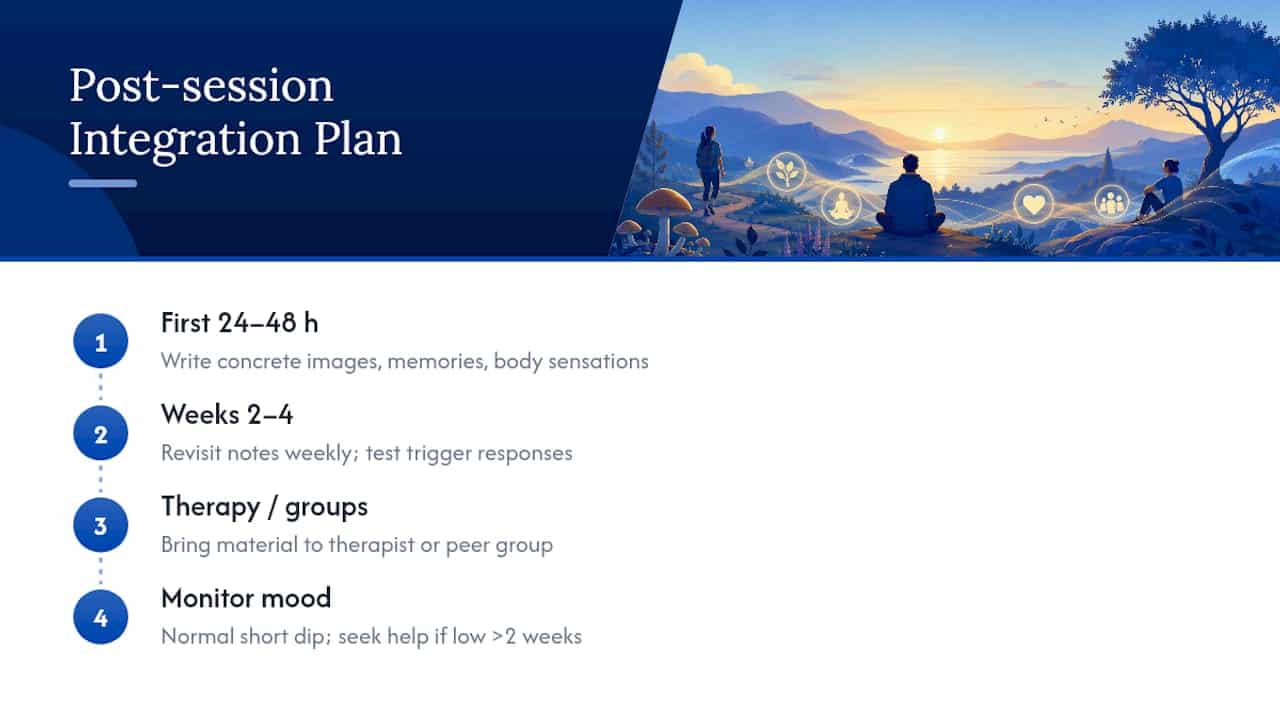
Generic integration advice (“journal about it”) undersells what actually helps when the material involves trauma specifically. In the first 24 to 48 hours, write down concrete images, memories, or body sensations that surfaced, not just your overall impression of the experience. Trauma-related insights during psilocybin sessions often arrive as fragments, and those fragments fade fast if not captured close to the source.
Over the following two to four weeks, revisit those notes on a set schedule, weekly works for most people, rather than only when symptoms flare. If a specific memory became less charged during the session, test that gently in daily life: does the trigger that used to spike your heart rate still hit as hard? Tracking that shift, or lack of one, gives you real data instead of a vague sense that “something changed.”
Bring the material into existing therapy if you have a therapist, even if they don’t specialize in psychedelics. EMDR practitioners and trauma-focused CBT clinicians can often work with what surfaced without needing to be a psychedelic specialist themselves. Peer integration groups fill the gap when professional support isn’t accessible, and simply saying the experience out loud to someone who won’t flinch has value on its own.
Watch for a rebound effect: some people feel a temporary low in the days after a session, sometimes called an “afterglow” that swings the wrong direction. That’s a normal part of the process for some, but if low mood persists past two weeks or intensifies, that’s a signal to loop in a mental health professional rather than wait it out alone.
Home Cultivation Reality Check: Yield and Potency Variability
Home-grown mushrooms are inherently less predictable than a tested product, and that unpredictability is the single biggest risk factor cultivation adds to self-care use. Two flushes from the same grow kit can differ in potency by a meaningful margin, driven by substrate quality, temperature swings, and even which flush number you’re harvesting (later flushes often run weaker).
This matters enormously for dosing accuracy. A gram of home-grown Psilocybe cubensis from flush one might hit noticeably harder than a gram from flush three off the same kit. If you’re using home-grown product for anything beyond casual exploration, weigh each batch separately, start at the very low end of your usual range with new material, and treat every fresh harvest as an unknown quantity until you’ve calibrated against it.
Drying technique adds another variable. Under-dried mushrooms mold in storage; over-dried or inconsistently dried batches can throw off your dry-weight dosing math entirely. A food dehydrator with a consistent low setting gives more reliable results than air drying, which depends heavily on ambient humidity.
If consistent, predictable dosing matters for your self-care routine, a lab-tested vendor product removes this variability entirely. Cultivation rewards patience and a tolerance for trial and error; it doesn’t reward anyone who needs to know exactly what they’re taking.
What the Research Actually Supports, and What Doesn’t Hold Up
The honest read on psilocybin and PTSD self-care is less exciting than most headlines suggest, and that’s not a bad thing. The strongest evidence in this space isn’t about psilocybin’s effects at all. It’s about harm reduction working: preparation, dose measurement, and having a sober person present measurably reduce challenging experiences. That’s a boring, unsexy finding, and it’s also the most actionable one in this entire guide.
Microdosing gets oversold constantly, often by people selling microdosing products. The controlled research doesn’t back the wellness claims circulating online, and conflating “I felt different” with “this measurably helped my PTSD symptoms” is where a lot of well-meaning advice goes wrong. That doesn’t mean microdosing is worthless for every individual, only that nobody can promise it will work for you specifically.
What the reader should prioritize first isn’t dose size or mushroom strain. It’s the screening step everyone wants to skip. Contraindications aren’t bureaucratic caution, they’re the difference between a difficult session and a genuinely dangerous one. Get that right before anything else on this list.
— Alex
Buying Tested Psilocybin Products Through Fungipsilocybinmushroom
Once you’ve screened for contraindications and mapped out your set and setting, the next real decision is where the product itself comes from. Fungipsilocybinmushroom exists for exactly that step: every product ships with lab-testing documentation instead of a seller’s word, which is the single biggest variable this guide keeps coming back to.
The catalog covers the range this guide walks through: microdose capsules for readers who want a standardized, low-dose option; edibles like the Seremoni chocolate bar line for consistent per-piece dosing; whole dried strains for readers who prefer to weigh their own dose; and grow kits for anyone choosing the cultivation route instead. Discreet worldwide shipping means the product arrives without drawing attention, and the site’s dosing resources, including a detailed dosing guide, stay available after purchase, not just before it.
If dosing precision is where you’re stuck, start there. Check the dosing guide, pick a product with a certificate of analysis attached, and order with your set and setting already planned.
Key Takeaways
Consumer psilocybin can support PTSD-related self-care for some adults, but only when medical screening, lab-tested sourcing, and structured integration all happen in that order.
| Point | Details |
|---|---|
| Screen contraindications first | Rule out psychosis history, bipolar disorder, and lithium or MAOI use before considering any dose. |
| Dose by dry weight only | Use a 0.01 to 0.1 gram scale and start at the threshold range, since potency varies by batch. |
| Treat microdosing claims cautiously | Controlled trials show subjective effects but no consistent cognitive or wellbeing benefit over placebo. |
| Plan integration, not just the session | Journal within 24 hours and revisit weekly for two to four weeks to make insights durable. |
| Choose tested products over guesswork | Fungipsilocybinmushroom provides lab-tested capsules, edibles, dried strains, and grow kits with dosing guidance included. |
This article is general information, not a substitute for advice from a qualified doctor. Consult a qualified healthcare professional about your own circumstances before acting on anything here.
Sources
- Psilocybin for mental health and addiction: what you need to know | NCCIH
- Controlled microdosing study — subjective effects without clear cognitive benefits | PMC9346139
- Psilocybin: A clinician’s guide to pharmacological interactions | Psychiatric Times
- Systematic review of psilocybin microdosing (Frontiers in Psychiatry, 2026)
Recommended
- How to Dose Magic Mushrooms – Fungi Psilocybin Mushroom 2026
- The Ultimate Guide to Finding Quality Psilocybin Mushrooms in California: Top 5 Trusted Sources
- Importance of San Diego Psilocybin Society: Community, Healing & Conscious Growth | 1 oz Psilocybin Mushroom
- Psilocybin Depression Treatment California: Your Complete Guide to Legal Mushroom Delivery Services and Therapeutic Options 2025 | mushroom delivery San Diego | mushroom for sale

Set and Setting: A Harm-Reduction Guide to Safer Trips
Set and setting means your mindset (set) and your physical, social, and cultural environment (setting) together determine whether a psychedelic experience is beneficial or harmful. Get either one wrong and even a moderate dose can turn frightening. Get both right and you dramatically improve your odds of a safe, meaningful session.
Before any session, three things matter more than the substance itself: screen yourself or the person you’re sitting for, secure a calm and private environment, and have a sober, capable person present who knows what to do if things go sideways. A systematic review of clinical trials confirms that participant screening, environmental management, and monitor presence are the components researchers consistently flag as essential, even though they’re not always reported consistently.
- Screen for psychiatric history, medications, and mental state before dosing.
- Prepare a private, comfortable, hazard-free physical space.
- Arrange a sober sitter or guide who is briefed on your intentions and limits.
Pro Tip: Agree on a “trip killer” protocol before you start, not during. Decide in advance what substance or intervention you’ll use if distress becomes unmanageable, who administers it, and at what threshold. Deciding this mid-session, when judgment is already altered, is how simple problems become emergencies.
Key Takeaways
Set and setting together determine psychedelic outcomes more reliably than dose alone, and deliberate preparation of both is the strongest safety intervention available to you.
| Point | Details |
|---|---|
| Definitions matter | “Set” is your internal mindset; “setting” is your physical, social, and cultural environment. |
| Screening comes first | Assess medications, psychiatric history, and current mood before any session, not during. |
| Consensus is forming | The 2025 ReSPCT Delphi identified 30 setting variables experts agree deserve standard reporting. |
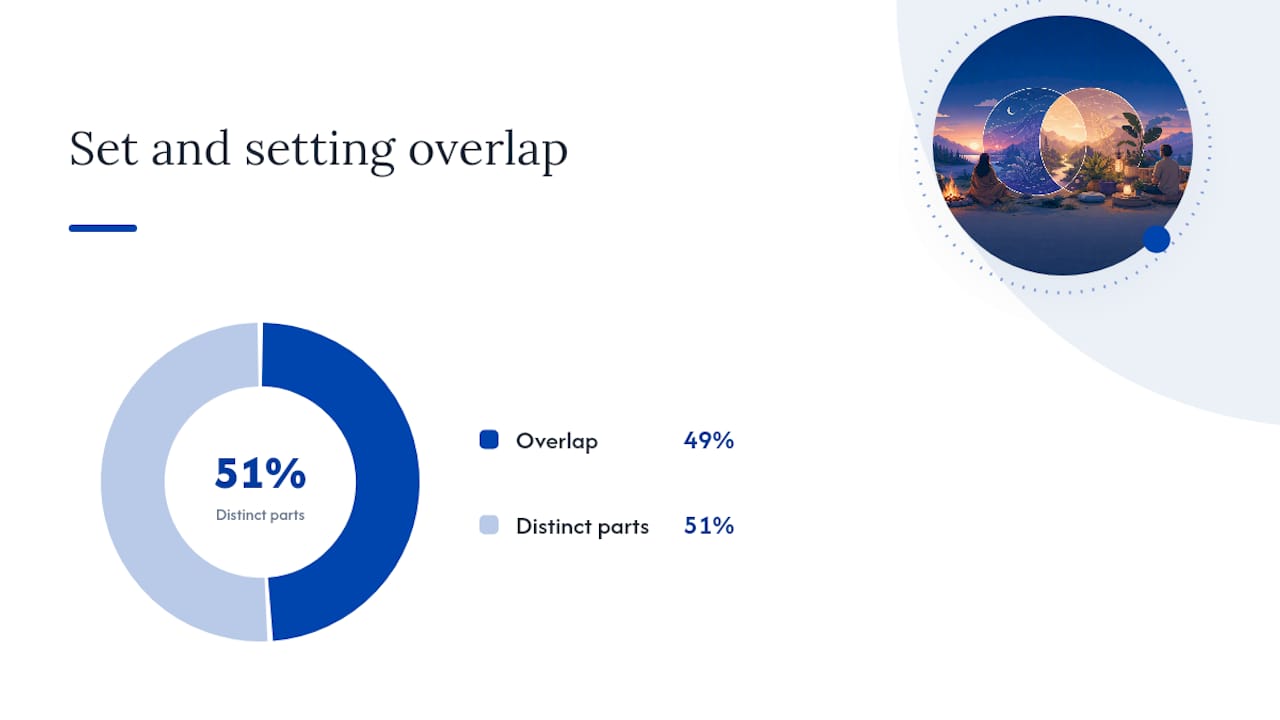
| Overlap is real | Experts estimate roughly 49 percent conceptual overlap between set and setting, so plan both together. |
| Integration extends the benefit | Journaling, professional support, and concrete behavior changes convert insight into lasting change. |
Ready to apply these principles with a product you can trust? Explore lab-tested mushroom strains chosen for therapeutic use and pair careful sourcing with the preparation steps above for the safest possible experience.
Table of Contents
- What Is Set and Setting, Exactly?
- Where Did the Term “Set and Setting” Come From?
- What Does the Research Actually Show?
- How Should You Prepare Your Mindset Before a Session?
- How Do You Design a Safe Physical and Social Setting?
- How Does Set and Setting Differ Across Therapeutic, Ritual, and Recreational Use?
- What Should Your Pre-Session Checklist Look Like?
- What Should Happen During the Session Itself?
- How Do You Integrate the Experience Afterward?
- What Mistakes and Red Flags Should You Watch For?
- What Questions Are Researchers Still Trying to Answer?
- A Practical Note From Someone Who Has Watched This Field Evolve
- Frequently Asked Questions
- Sources
What Is Set and Setting, Exactly?
“Set” refers to everything you bring into the experience internally. That includes your mood going in, your expectations about what will happen, your personality traits, your intentions for the session, and any recent life stress or trauma that might surface. Someone grieving a loss, going through a divorce, or nursing untreated anxiety carries a very different “set” than someone who is rested, curious, and emotionally stable. According to the conventional definition popularized through decades of psychedelic research, set is the psychological frame the substance acts on, not a passive backdrop.
“Setting” covers the external world during the experience: the physical room, who else is present, the music playing, the lighting, and the broader cultural context in which the session takes place. A sterile hospital room communicates something different to your nervous system than a softly lit living room with familiar objects around you.
- Set includes mood, expectations, intentions, personality, screening history, and recent stressors.
- Setting includes physical space, social company, sensory design, and cultural framing.
- The boundary between them blurs constantly. A loud, chaotic setting can generate anxious expectations before the substance even takes effect.
These two forces don’t operate in separate lanes. They interact continuously across three phases: preparation, the session itself, and integration afterward.
Experts who study this field don’t even fully agree on where set ends and setting begins. When surveyed for the ReSPCT Delphi consensus, researchers estimated the conceptual overlap between the two terms at roughly 49 percent on average. That’s not a footnote. It means even the people writing clinical guidelines treat this as a blended, not binary, concept.
Where Did the Term “Set and Setting” Come From?
The phrase entered common use in the 1960s, largely through psychologist Timothy Leary and his collaborators at Harvard, who observed that identical doses of the same substance produced wildly different outcomes depending on who took it and where. Al Hubbard, an early and unconventional figure in psychedelic research, independently emphasized environmental design decades before it became standard clinical language, favoring natural settings and careful preparation for his subjects. The concept was later formalized in Norman Zinberg’s 1984 book Drug, Set, and Setting, which remains a foundational reference in addiction and harm-reduction literature.
- Timothy Leary and Harvard-era researchers popularized the terminology in the 1960s.
- Al Hubbard’s early sessions emphasized deliberate environmental design before the term was widely used.
- Norman Zinberg’s Drug, Set, and Setting gave the concept its lasting academic framework.
- Indigenous and shamanic traditions used structured ritual, music, and communal roles long before Western researchers named the phenomenon, a continuity documented in evolutionary analyses of psychedelic ritual.
The idea persisted because it kept proving true in practice. Every generation of researchers who tried to isolate the pharmacological effect of psilocybin or LSD from context found that context refused to stay separate. That stubborn fact is why modern clinical trials now build screening, room design, and therapist presence directly into their protocols instead of treating them as background detail.
What Does the Research Actually Show?
The evidence for set and setting isn’t anecdotal folklore passed down from festival culture. It’s increasingly formalized in clinical research, and the biggest recent development is a 2025 international consensus effort that tried to pin down exactly which environmental variables matter enough to report.
A systematic review of setting components across clinical trials found that researchers consistently track four things: how participants are selected and screened, how the physical environment is managed, whether a trained monitor or guide is present, and what post-session support looks like. The problem is that reporting on these variables remains inconsistent from study to study, which makes it hard to compare outcomes across trials or build firm clinical recommendations. One team’s “comfortable room” might mean a hospital suite with art on the walls; another’s might mean an unremarkable exam room with a couch.
That inconsistency is exactly what prompted the ReSPCT Delphi consensus, published in Nature Medicine in 2025. Researchers convened an international panel of experts and worked toward agreement on which extra-pharmacological variables actually deserve standardized reporting in psychedelic trials. The panel reached consensus on 30 distinct items, ranging from room design to therapist training to music protocols, that they classified as “important” or “very important” to document.
The overlap number worth remembering: when the same Delphi panel was asked how separable “set” and “setting” really are as concepts, their average estimate put the conceptual overlap at approximately 49 percent. Nearly half. That’s a striking admission from the people writing the field’s guidelines: the terms are useful shorthand, but the line between them is genuinely blurry even to specialists.
Separately, a mechanism-first research proposal argues that the field’s biggest weakness isn’t disagreement about definitions. It’s vagueness. Instead of studying “setting” as one giant, undifferentiated variable, researchers are increasingly pushing to isolate specific, testable components, music choice, ambient lighting, degree of therapist directiveness, and measure each one’s effect independently. That shift matters for you as a reader because it means the checklist-style guidance later in this article isn’t guesswork. It reflects where the actual research is heading.
- Clinical trial reporting on set/setting variables remains inconsistent across studies.
- The 2025 ReSPCT Delphi consensus identified 30 reportable setting components.
- Experts estimate roughly 49 percent conceptual overlap between “set” and “setting.”
- A mechanism-first approach is replacing vague, catch-all definitions with testable variables.
How Should You Prepare Your Mindset Before a Session?
Preparing your “set” isn’t about hyping yourself up or forcing a specific emotional state. It’s an honest inventory of where you currently stand, mentally and physically, before you introduce a substance that will amplify whatever is already there.
- Assess your current mood. Are you anxious, depressed, grieving, or unusually stressed this week? Strong negative states don’t disqualify you outright, but they change how much support you need on hand.
- Review medications and psychiatric history. Certain antidepressants, mood stabilizers, and a personal or family history of psychosis or bipolar disorder are serious red flags that warrant professional consultation before proceeding.
- Clarify your intention. Are you seeking insight, processing grief, exploring curiosity, or something else? Vague or absent intentions tend to produce more confusing, harder-to-integrate experiences.
- Check for major life disruptions. A recent breakup, job loss, or unresolved conflict will surface during the session whether you plan for it or not.
- Identify recent substance use. Alcohol, stimulants, and certain prescription drugs can interact unpredictably; if you’re researching how dosing works, review interaction risks as part of that process, not as an afterthought.
If you’re screening someone else as a sitter or guide, ask directly: Have you ever experienced psychosis or mania? Are you currently on psychiatric medication? Has anything happened recently that you’re still processing? Answers that suggest active suicidal ideation, unmanaged psychosis, or a personal history of severe dissociation are reasons to pause and refer to a mental health professional instead of proceeding. Mood disorders and anxiety are common reasons people seek these experiences in the first place, and understanding how mushrooms interact with anxiety is worth doing before, not during, a session.
- Write your intention down the day before, not the morning of.
- Avoid scheduling a session during an already high-stress week.
- Don’t ignore anticipatory anxiety; naming it out loud to your sitter reduces its grip.
Pro Tip: If you notice anticipatory anxiety spiking the night before, don’t suppress it or try to “push through.” Name it to your sitter or write it down as its own intention: “I want to understand why I’m afraid of this.” Fear you acknowledge tends to soften; fear you fight tends to escalate mid-session.
How Do You Design a Safe Physical and Social Setting?
The room you’re in does more psychological work than most people realize. A cluttered, unfamiliar, or exposed space primes the nervous system for vigilance, which is the opposite of what supports a beneficial psychedelic state.
Start with the physical basics: choose a private space where you won’t be interrupted, control the temperature so you’re neither shivering nor overheated, remove sharp objects, breakable items, and anything you could trip over, and make sure a bathroom and water are easily accessible without navigating stairs or unfamiliar hallways. Soft, adjustable lighting beats harsh overhead fixtures. Comfortable seating and the option to lie down both matter more than people expect.

Social setting requires equal attention. Decide in advance who will be present and why. A qualified sitter isn’t necessarily someone with clinical credentials, but they should be sober, emotionally steady, familiar with what psychedelics can do, and someone you trust enough to be vulnerable in front of. Supportive presence during a session measurably shapes its course, and a poorly chosen sitter, someone anxious, judgmental, or unfamiliar with the substance, can inject exactly the kind of social tension that turns a manageable experience into a distressing one. Establish consent and boundaries beforehand: can the sitter touch you if you’re distressed? Are they allowed to play music without asking? Small unspoken assumptions become large problems when someone is in an altered state.
Music deserves its own planning. Curated playlists are a standard part of favorable session design, and the research increasingly treats music as a specific, testable lever rather than incidental atmosphere. Some sessions benefit from sensory minimization, such as an eye mask and instrumental music that blocks external distraction. Others benefit from sensory augmentation, natural light, art, or nature sounds that ground the experience in the present. Neither approach is universally correct; it depends on your intention and your history with anxiety or dissociation. If you’re drawing on cultural or ceremonial traditions for inspiration, do so with awareness that those practices carry meaning beyond aesthetics, and borrowing surface elements without context can feel hollow or even disrespectful.
- Remove hazards, secure privacy, and control temperature and lighting before dosing.
- Choose a sitter based on emotional steadiness and familiarity with the substance, not just availability.
- Set explicit consent boundaries around touch, conversation, and music before the session starts.
- Build a playlist in advance rather than choosing music in the moment.
Pro Tip: Do a “dry run” walk through your space sober, the day before. Sit in each spot you might occupy during the session and ask whether it feels safe and comfortable. What seems fine in an ordinary state of mind can feel completely different once perception shifts.
How Does Set and Setting Differ Across Therapeutic, Ritual, and Recreational Use?
The same core principles apply everywhere, but the emphasis shifts dramatically depending on context. A harm-reduction framework covering these modalities maps out how goals and safety priorities change from one setting to the next.
In therapeutic or clinical contexts, screening is rigorous and often involves formal psychiatric evaluation, the environment is deliberately controlled, and licensed or trained facilitators guide the session with structured preparation and integration built into the protocol. Medical oversight and emergency planning aren’t optional here; they’re the infrastructure the entire model depends on.

In ritual or ceremonial contexts, communal roles and shared cultural framework do much of the work that a clinical protocol would otherwise handle. Participants often defer to an experienced facilitator or elder whose role is partly spiritual and partly practical, managing group energy, timing, and individual distress within a tradition-specific structure.
In recreational or social contexts, screening is frequently informal or skipped entirely, and this is where the highest proportion of preventable bad experiences occurs. Recreational settings still benefit enormously from applying the same core discipline, a trusted sitter, a safe space, and basic screening, even without formal infrastructure behind it.
- Therapeutic settings require medical oversight, structured screening, and formal integration support.
- Ritual settings rely on communal roles, tradition, and an experienced facilitator’s judgment.
- Recreational settings carry the highest risk from skipped screening but still benefit from basic harm-reduction discipline.
- Any context involving a participant with psychiatric risk factors needs professional infrastructure regardless of the setting’s informality.
What Should Your Pre-Session Checklist Look Like?
Preparation works best as a timeline, not a single burst of planning the night before.
Days before:
- Confirm your intention in writing and share it with your sitter.
- Review medications with a doctor or pharmacist if you take anything that could interact, particularly SSRIs, lithium, or MAOIs.
- Choose your strain or product thoughtfully. Potency varies significantly, and understanding differences between mushroom strains helps you calibrate dose to your experience level.
- Arrange transportation for after the session; you should not drive for the remainder of the day.
- Notify one person outside the session (a friend or family member) of your general plans and timing, without necessarily disclosing details, as a safety backstop.
Day of:
- Eat a light meal several hours beforehand; a completely empty stomach can worsen nausea.
- Clear your calendar entirely. Nothing should be scheduled for the following 12 to 24 hours.
- Do a final space check: hazards removed, temperature comfortable, water and snacks accessible.
- Confirm your sitter is sober, present, and briefed on your trip-killer protocol.
Immediately before dosing:
- Weigh or measure your dose carefully rather than eyeballing it; dosing guidance matters more than most people assume, especially with potent strains.
- State your intention out loud one more time.
- Confirm your sitter knows your emergency contact and has a phone charged and accessible.
Medication interactions deserve special weight here. Combining psilocybin with lithium carries a documented seizure risk, and MAOIs can dangerously potentiate certain substances. If you’re on any psychiatric medication, pausing the session and consulting a prescriber first isn’t overcaution, it’s the responsible default. Laws governing psychedelic substances vary enormously by country and even by state or region, so understand your local legal status before proceeding; this article isn’t legal guidance, and ignorance of local law doesn’t reduce your actual legal exposure.
Build a recovery day into your plan. Block the day after the session for rest, gentle food, and no major obligations. Trying to jump straight back into work or high-stakes decisions the next morning undermines the entire preparation you just did.
- Never combine sessions with alcohol or unplanned recreational substances.
- Keep a written emergency contact list accessible to your sitter, not just yourself.
- Document dosage and timing in case medical questions arise later.
What Should Happen During the Session Itself?
A sitter’s job is presence, not performance. The most useful thing they can do most of the time is simply stay calm, stay nearby, and resist the urge to talk unless spoken to or unless something requires intervention.
- Maintain calm, quiet presence for the bulk of the session. Over-talking or over-managing tends to pull people out of valuable internal experiences unnecessarily.
- Check in periodically with simple, low-demand questions: “How are you doing?” rather than open-ended prompts that require complex thought.
- Watch for physical safety issues, unsteady movement, choking risk, or attempts to leave the space, and intervene only when necessary.
- Use grounding techniques for acute distress: slow the breathing pace out loud together, adjust lighting or temperature, offer a hand to hold if consented to beforehand, or shift music to something calmer.
- Deploy the trip-killer protocol if distress escalates beyond what grounding resolves, exactly as agreed upon in advance. Effective use depends entirely on prior training, not improvisation in the moment.
Red flags requiring emergency medical attention include chest pain, seizure activity, loss of consciousness, or signs of serotonin syndrome such as high fever combined with muscle rigidity, especially in anyone who may have combined substances against advice. Document the timeline of doses, symptoms, and interventions if a medical response becomes necessary; that information helps responders act faster.
Pro Tip: Resist the instinct to fix a difficult moment immediately. Sitting quietly alongside someone in distress, without rushing to solve it, often resolves more than active intervention. Reserve directive action for genuine safety concerns, not emotional discomfort that’s simply part of processing. For a deeper breakdown of de-escalation specifics, see this guide on avoiding a bad trip.
How Do You Integrate the Experience Afterward?
The hours immediately following a session call for rest, not analysis. Hydrate, eat something gentle, and avoid jumping into major decisions or difficult conversations while your nervous system resettles.
In the days that follow, journaling becomes one of the most useful tools available. Write down what you remember, including images, emotions, and any insights, even if they feel incomplete or strange in the light of ordinary consciousness. Patterns often become clearer a few days out than they did in the moment.
Over the following weeks, consider whether professional integration support makes sense, particularly if the session surfaced trauma, grief, or material that feels too heavy to process alone. A therapist familiar with psychedelic integration can help translate insight into actual behavioral change, which is where a lot of potential benefit otherwise gets lost.
- Hours after: rest, hydrate, eat lightly, avoid major decisions.
- Days after: journal freely, talk with your sitter about what came up, avoid over-analyzing too quickly.
- Weeks after: identify one or two concrete behavior changes suggested by the experience and schedule an integration session with a professional if the content was difficult.
- Ask yourself: What is one thing I want to do differently because of this?
- Revisit your written intention and compare it to what actually happened.
- Build a support routine, whether that’s therapy, a trusted friend, or a community integration group, rather than processing entirely alone.
What Mistakes and Red Flags Should You Watch For?
The most common mistake isn’t dosing error. It’s skipping screening entirely because the session feels casual or the substance feels familiar. Familiarity breeds complacency, and complacency is where preventable harm creeps in.
A persistent myth worth debunking directly: the idea that the substance alone determines the outcome regardless of context. That belief is precisely what the entire body of set and setting research contradicts. Identical doses in different environments with different mindsets produce measurably different experiences, which is the whole reason this framework exists.
Other frequent errors include choosing a sitter based on convenience rather than emotional steadiness, dosing in an unfamiliar or high-traffic location, and ignoring warning signs like active suicidal ideation or a personal history of psychosis because “it’s just mushrooms.” These aren’t minor oversights.
- Red flag: active suicidal ideation or recent self-harm, regardless of how stable someone otherwise seems.
- Red flag: personal or close family history of psychosis, schizophrenia, or bipolar disorder.
- Red flag: an unpredictable environment, public spaces, unreliable sitters, or unclear legal risk in your jurisdiction.
- Red flag: combining substances, especially alcohol, stimulants, or MAOIs, without professional guidance.
If any of these apply, pause and consult a mental health professional before proceeding rather than adjusting the dose or setting to compensate.
What Questions Are Researchers Still Trying to Answer?
The field is moving away from treating “setting” as one vague, catch-all variable and toward isolating specific, measurable components, music, lighting, therapist directiveness, that can each be tested independently for their actual causal effect.
The push toward mechanism-first research exists because vagueness has real costs: when “setting” means everything, it’s nearly impossible to say which specific ingredient actually produced a given outcome, or to replicate it reliably in a new trial.
The ReSPCT Delphi’s 30-item consensus gives researchers a shared checklist for what to report, which should make future trials far easier to compare against each other. Open questions remain substantial: how much does music specifically contribute versus general sensory calm? Do therapeutic outcomes generalize across cultures with very different ritual traditions? And how much of the “49 percent overlap” between set and setting reflects genuine conceptual blur versus simply imprecise measurement tools.
- Which specific setting components causally drive outcomes, independent of others?
- How well do findings from controlled clinical settings generalize to ritual or recreational contexts?
- Can standardized reporting reduce the current inconsistency across trials?
A Practical Note From Someone Who Has Watched This Field Evolve
The research on set and setting keeps confirming something that harm-reduction communities have argued for decades before it became academically fashionable: context isn’t decoration around the substance, it’s a variable you can actually control. That’s the empowering part often lost in more sensational coverage of psychedelics. You can’t change how a compound binds to a receptor, but you can absolutely change who’s in the room, what the lighting looks like, and whether you’ve thought through your intention beforehand.
What frustrates me most about casual psychedelic culture is how often the “setting” half of the equation gets treated as an afterthought, music playlists thrown together an hour before, sitters chosen because they happened to be free that weekend. The research increasingly rewards people who treat preparation as seriously as the dose itself. Fungipsilocybinmushroom’s educational resources on psilocybin exist precisely because informed preparation, not just product quality, determines whether an experience helps or harms.
Frequently Asked Questions
What does “set and setting” actually mean in simple terms?
Set is your mindset going into a psychedelic experience: mood, expectations, and intentions. Setting is the physical and social environment you’re in during the experience. Both shape the outcome as much as the substance itself.
Who coined the term “set and setting”?
Timothy Leary and colleagues popularized the phrase in the 1960s, though early researchers like Al Hubbard emphasized environmental design before the term became standard. Norman Zinberg’s 1984 book Drug, Set, and Setting later formalized the concept academically.
How much does setting really affect a psychedelic experience?
Substantially. Research consistently links environment, screening, and social support to outcome quality, and the 2025 Delphi consensus identified 30 distinct setting variables experts consider important enough to standardize in clinical reporting.
Do I need a professional guide, or can a trusted friend serve as a sitter?
For recreational or personal use, a sober, emotionally steady, and well-informed friend can serve well as a sitter. For anyone with psychiatric history, current medication concerns, or trauma they intend to process, a trained therapist familiar with psychedelic integration is strongly advisable instead.
What’s a “trip killer” and when should it be used?
It’s a pre-agreed intervention or substance used to reduce the intensity of a difficult psychedelic experience.
Is set and setting equally important for microdosing?
Mindset and environment matter less dramatically at sub-perceptual microdosing levels than during a full session, but consistent routine, mood tracking, and avoiding stressful triggers still support better outcomes.
This article is general information, not a substitute for advice from a qualified doctor. Consult a qualified healthcare professional about your own circumstances before acting on anything here.
Sources
For readers who want to go deeper than this guide, a few sources stand out as genuinely worth your time.
- An international Delphi consensus for reporting of setting in psychedelic clinical trials | Nature Medicine
- What are set and setting: Reducing vagueness to improve research and clinical practice – PMC
- Set and Setting for Psychedelic Harm Reduction
- Set and setting
Recommended
- How to Avoid a Bad Mushroom Trip: Complete Guide to Safe Psychedelic Experiences 2026
- Psilocybin Mushroom – Powerful Insights on DMT, Shrooms, LSD & More | Buy Psilocybin Mushroom Online 2026
- How to Dose Psilocybin Safely | Psilocybin Dosing Guide for Magic Mushrooms 5-10mg
- The Ultimate Guide to Finding Quality Psilocybin Mushrooms in California: Top 5 Trusted Sources
Psilocybin for Cluster Headaches: What the Trials Actually Show
Psilocybin Cluster Headaches research represents one of the most promising frontiers in pain medicine, though it remains investigational. The strongest controlled evidence for psilocybin cluster headaches treatment comes from a blinded extension trial where a repeat psilocybin pulse regimen cut attack frequency by roughly 50%, from 18.4 to 9.8 attacks per week. That result carried real statistical weight (p=0.013)—a rare achievement in a headache disorder this brutal and difficult to study.
That said, “promising” and “proven” are different words for a reason. Every trial behind psilocybin cluster headaches data is small, exploratory, and short in follow-up.
Bottom line: Psilocybin cluster headaches research shows a real signal for reducing attacks, but it remains investigational, not standard care.
Strongest evidence: the blinded extension study, with a nearly 50% drop in weekly attacks under repeat dosing.
Safety and legal note: Psilocybin cluster headaches trial dosing was medically supervised, and legal status varies by country and region. Self-treating outside research or clinical settings carries risks these studies were specifically designed to control for.
If you’re living with cluster headache and searching for options beyond what your neurologist has offered, this article walks through what the science says, what a dosing “pulse” or “busting” protocol actually looks like, and how to think about psilocybin cluster headaches access without stepping outside safe, informed decision-making boundaries.
Key Takeaways
Psilocybin cluster headaches trials show a real, statistically significant reduction in attack frequency, but treatment remains investigational and requires medical supervision.
| Point | Details |
|---|---|
| Strongest trial result | A repeat psilocybin pulse cut attacks from 18.4 to 9.8 per week (p=0.013) in a blinded extension study. |
| Regimen tested | Three oral doses of 0.143 mg/kg or a fixed ~10 mg, spaced about five days apart, under supervision. |
| Safety profile | No unexpected serious adverse events reported, but long-term data and larger samples don’t exist yet. |
| Where it fits in care | Studied as a preventive option for refractory chronic cluster headache, not as an acute attack treatment. |
| Product access | Fungipsilocybinmushroom offers lab-tested psilocybin products and educational resources for adults in legal contexts, separate from clinical treatment. |
What the Clinical Trials on Psilocybin Cluster Headaches Found
Two trials anchor most of what is currently known about psilocybin for cluster headaches, and a systematic review ties the wider picture together.
The first was an exploratory randomized, double-blind, placebo-controlled pilot testing a weight-based dose of 0.143 mg/kg (roughly equivalent to 10 mg per 70 kg of body weight) against placebo in chronic cluster headache patients. Researchers gave three oral doses as a “pulse,” and measured changes in attack frequency and intensity. In the chronic-patient subgroup, the effect size was large, d=1.25, meaning the difference between psilocybin and placebo was substantial in practical terms. But the sample was tiny, around 14 evaluable patients, and the overall efficacy outcome across the full study population did not reach statistical significance. Small numbers make it hard to separate a real drug effect from noise, even when the effect looks big on paper.
The second study, a blinded extension of that same trial, is where the evidence gets more compelling. Patients who received a repeat psilocybin pulse saw attack frequency drop from an average of 18.4 attacks per week down to 9.8, a reduction of about half, with a p-value of 0.013 and an effect size (d’) of 0.97. Those are strong numbers for any headache trial, let alone one testing a psychedelic. What makes this finding particularly interesting: some patients who did not respond to their first pulse still improved on a repeat dose, suggesting nonresponse the first time around does not necessarily predict failure on a second attempt.
A 2023 systematic review pulled together the available studies on psilocybin and headache disorders, cluster headache included. Its conclusion was measured: several small studies reported decreases in attack frequency or intensity, but the overall body of evidence is limited and inconsistent in design. That’s an honest summary, not a dismissal.
Key limitations across all of this research:
- Sample sizes are small, often fewer than 20 patients per arm.
- Study designs are exploratory, meaning they’re built to generate hypotheses, not confirm them.
- Follow-up periods are short, so nobody yet knows how durable the benefit is beyond a few months.
- Results may not generalize to every cluster headache subtype (episodic vs. chronic) or to patients with complex psychiatric or cardiac histories.
The headline statistic worth remembering: attacks per week fell from 18.4 to 9.8 in the blinded extension, the single most statistically robust number in the current literature on psilocybin for headaches.
The Pulse or Busting Regimen Tested in Research
Patients researching mushrooms for cluster headaches often encounter the term “busting,” a patient-coined phrase for using low, spaced doses of psilocybin (or LSD) to interrupt a cluster cycle. Clinical trials formalized this idea into what researchers call a pulse regimen, and the protocol details matter if you want to understand what’s actually been studied versus what’s discussed anecdotally online.
- Dose: either a weight-based dose of 0.143 mg/kg or a fixed dose around 10 mg, both intended to produce a moderate, not maximal, psychedelic effect.
- Number of doses: three oral doses per pulse, matching the protocol registered on Clinicaltrials.
- Spacing: doses were given approximately five days apart, not daily and not weekly.
- Setting: every dose was administered in a supervised clinical environment with vitals monitoring and psychiatric screening beforehand, not at home.
- Outcome tracking: researchers measured time to first attack, time to last attack, and percent change in both frequency and intensity, exactly the outcomes listed in the trial’s own registered protocol.
The dosing details in these trials were partly informed by patient reports of self-directed busting protocols, which is part of why researchers describe them as “patient-informed.” But there’s a meaningful gap between a supervised, monitored dose in a research setting and the same substance taken alone, without cardiovascular or psychiatric screening.
Pro Tip: If you’re trying to understand the numbers behind these protocols before talking to a specialist, our guide on how to dose magic mushrooms covers general dosing math, but it is not a substitute for the screening and monitoring built into a clinical trial. Cluster headache dosing decisions belong in a supervised setting, not a solo experiment.
Is Psilocybin Safe for Cluster Headache Patients?
Tolerability data from the trials is genuinely reassuring, with a caveat: reassuring at small scale is not the same as reassuring at large scale.
Across the pilot RCT and its extension, researchers did not report unexpected serious adverse events. Patients experienced the expected acute effects of a moderate psilocybin dose, altered perception, transient anxiety, nausea in some cases, but nothing outside what’s typically seen in supervised psilocybin research for other conditions.
One of the more counterintuitive findings: clinical benefit did not track with how intense the psychedelic experience felt. Patients who had a milder trip did not necessarily see less benefit than those who had a more intense one. That hints at a possible separation between psilocybin’s acute psychotropic effects and whatever is driving the drop in attack frequency, though researchers stop short of calling this settled science.
What trial-based screening typically checks for:
- Personal or family history of psychosis or bipolar disorder, both considered contraindications for psilocybin exposure.
- Cardiovascular risk factors, given psilocybin’s mild effects on heart rate and blood pressure.
- Current medications, particularly SSRIs, SNRIs, and MAOIs, which can interact with psilocybin’s serotonergic activity.
- Baseline psychiatric evaluation before any dosing session.
Pro Tip: If you’re on a daily preventive migraine or headache medication, don’t assume it’s compatible with psilocybin just because it’s common. Bring your full medication list to any specialist or trial coordinator conversation before considering psilocybin for headaches in any form.
What remains unknown is arguably more important than what’s been confirmed: long-term safety data doesn’t exist yet, and tolerability in larger, more diverse populations hasn’t been tested.
Why Might Psilocybin Help Cluster Headache? The Neuroscience So Far
Cluster headache has long been linked to the hypothalamus, the brain region that regulates circadian rhythms, which explains why attacks often cluster at the same time of day or year. Imaging research offers a plausible reason psilocybin might interrupt that cycle.
- Studies have found that changes in hypothalamic-diencephalic functional connectivity after psilocybin correlate with reductions in attack frequency. The more connectivity shifted, the bigger the drop in attacks.
- Preclinical research on psilocybin points to increased neuroplasticity, the brain’s capacity to form new connections, as a possible reason effects might outlast the drug’s presence in the body.
- None of this proves causation. These are correlations observed in small imaging studies, suggestive of a mechanism rather than confirmation of one.
The honest takeaway is that psilocybin appears to interact with the same hypothalamic circuitry implicated in cluster headache pathophysiology, but nobody has proven exactly how that translates into fewer attacks.
Where Psilocybin Fits Alongside Standard Cluster Headache Care
Psilocybin research is aimed at a preventive or transitional role, not an acute one. That distinction matters when you’re weighing it against what’s already available.
For an active attack, high-flow oxygen and subcutaneous sumatriptan remain the fastest, most established abortive options. Psilocybin pulse regimens are not designed to stop an attack in progress. They’re studied as a way to reduce how often attacks happen in the first place, more comparable in intent to preventive medications like verapamil or CGRP-targeting drugs than to a rescue treatment.
- Consider psilocybin research primarily if standard preventives have failed. Refractory chronic cluster headache, meaning verapamil, CGRP therapies, and other standard preventives haven’t worked, is the population most trials have focused on.
- Get a cardiac evaluation first. Verapamil itself carries cardiac considerations, and any new intervention should be screened against your cardiovascular baseline.
- Complete psychiatric screening before considering enrollment. A personal or family history of psychotic disorders is a common exclusion criterion in psilocybin trials.
- Ask your neurologist directly about ongoing trial opportunities rather than assuming none exist in your region.
- Flag any medication that affects serotonin. SSRIs and MAOIs in particular need a specialist’s review before any psilocybin research trial will consider you.
Pro Tip: If a clinician dismisses the question of psilocybin for headaches outright without discussing the trial data, consider getting a second opinion from a headache specialist at an academic center, where awareness of this research tends to run higher.
Red flags that should stop the conversation entirely: unstable psychiatric illness, active substance use disorder, or medications with known dangerous interactions with serotonergic compounds.
How to Find Legitimate Psilocybin Cluster Headache Trials
ClinicalTrials.gov is the primary public registry for finding active or completed studies, including protocols like NCT02981173, which outlines the exact pulse dosing and outcome measures used in published research.
- Check that a trial lists a named academic or hospital affiliation, not just a private clinic.
- Confirm the protocol references institutional review board (IRB) or ethics committee approval.
- Look for a published or registered protocol you can cross-reference against the trial’s actual claims.
- Contact the listed study coordinator directly rather than a third-party recruiter.
Legal status of psilocybin varies significantly by country, and in some places by state or region. Nothing in this article should be read as encouragement to source or use psilocybin outside a legal, supervised research context. Cluster headache is severe enough that self-experimentation carries real risk, both medical and legal.
What Cluster Headache Patients Should Take From This Research
The gap between what psilocybin promises for cluster headache and what’s actually confirmed is wide, and that gap is exactly where informed patients get the most value out of paying close attention.
Here’s the part that gets underplayed: the most statistically solid finding in this entire body of research came from a repeat dose, not a first attempt. That’s a detail patient communities have known intuitively for years through informal busting reports, but it took a blinded extension trial to actually put a number on it. If you tried a single psilocybin pulse once, years ago, and felt nothing, that outcome doesn’t necessarily predict how you’d respond to a properly repeated, monitored regimen.
The other underappreciated point is the dissociation between trip intensity and clinical benefit. A lot of psychedelic-curious patients assume a bigger, more intense experience means a stronger therapeutic effect. The cluster headache data doesn’t support that assumption, and it’s a useful corrective for anyone tempted to self-escalate a dose hoping for more relief.
None of this changes the fact that psilocybin for cluster headaches is still investigational. But “investigational” doesn’t mean ignore it. It means the smartest move for a patient with refractory disease is pushing your neurologist for a real conversation about trial referral, not quietly experimenting alone based on a forum post.

A Note on Product Quality From Fungipsilocybinmushroom
Fungipsilocybinmushroom focuses on lab-tested psilocybin products and educational resources for adults exploring psychedelics, including detailed guides on dosing, strain selection, and safe use practices. None of that changes the core message of this article: cluster headache is a severe neurological condition, and psilocybin’s role in treating it is still being defined through supervised clinical research, not personal experimentation. If you’re weighing psilocybin as part of a broader conversation about therapeutic use, our guide on strains selected for therapeutic contexts offers useful background, but a cluster headache diagnosis calls for a specialist and, ideally, a registered trial first.
Buying Lab-Tested Psilocybin Responsibly
If you’re an adult in a legal jurisdiction exploring psilocybin for wellness or research literacy rather than as a cluster headache treatment, product quality is where most of the real risk hides. Unregulated markets are full of mislabeled potency and unknown contamination, which is a very different problem than what any clinical trial is testing for.
Fungipsilocybinmushroom lab-tests every batch before it ships, giving you a verified potency and purity profile instead of a guess. That distinction is the whole reason lab testing exists: a trial-grade dose only means something if you actually know what’s in it. Browse the Amazonian psilocybin mushroom collection to see verified lab results and strain details, and use that information to have a more informed conversation with your clinician, not as a replacement for one. If cluster headache is what brought you here, the right next step is still a referral to supervised research. But if you’re learning about psilocybin more broadly, that page is where to start.
Frequently Asked Questions
Does psilocybin actually reduce cluster headache attacks?
Controlled trial data shows a significant reduction in attack frequency with a repeat psilocybin pulse regimen, roughly a 50% drop in one blinded extension study. The evidence is promising but comes from small samples and needs replication in larger trials.
What dose of psilocybin was used in cluster headache research?
Trials used either a weight-based dose of 0.143 mg/kg or a fixed dose around 10 mg, given as three oral doses roughly five days apart under clinical supervision.
Is psilocybin legal to use for cluster headaches?
Legal status varies by country and, in some places, by state or region. Access to psilocybin for cluster headache currently exists mainly through registered clinical trials, not general medical prescription.
How does psilocybin compare to standard cluster headache treatments?
Standard acute treatments like high-flow oxygen and sumatriptan stop an attack in progress. Psilocybin pulse regimens are studied as a preventive approach, more comparable to preventives like verapamil, aimed at reducing how often attacks occur.
Who should not consider psilocybin for cluster headache research?
Trial screening typically excludes people with a personal or family history of psychosis or bipolar disorder, unmanaged cardiovascular risk, or current use of serotonergic medications like SSRIs or MAOIs without specialist clearance.
Sources
- Psilocybin pulse regimen reduces cluster headache attack frequency in the blinded extension phase of a randomized controlled trial
- Exploratory investigation of a patient-informed low-dose psilocybin pulse regimen in the suppression of cluster headache: Results from a randomized, double-blind, placebo-controlled trial
- A systematic review to assess the use of psilocybin in the treatment of headaches
- Clinicaltrials
Recommended
- How to Dose Magic Mushrooms – Fungi Psilocybin Mushroom 2026
- Mushrooms for Anxiety – Natural, Calming, and Powerful Support for a Healthier Mind 2025 | mushrooms for anxiety relief for sale
- Psilocybin Depression Treatment California: Your Complete Guide to Legal Mushroom Delivery Services and Therapeutic Options 2025 | mushroom delivery San Diego | mushroom for sale
- Microdosing Psychedelics: Unveiling Remarkable Health Benefits and Therapeutic Potential 2026

Psilocybin Anxiety Relief: What the Evidence Actually Shows
Psilocybin Anxiety Relief has produced rapid, sustained results in clinical settings, according to the landmark 2016 Griffiths et al. randomized trial. A single supervised dose, combined with psychotherapy, delivered dramatic drops in anxiety among people facing serious illness. A later systematic review of mechanistic and clinical literature backs the same conclusion, and Johns Hopkins has built an entire research program around replicating and extending those psilocybin anxiety relief outcomes.
That is the real headline: this is not folk medicine dressed up in new language. It is a compound with actual trial data behind psilocybin anxiety relief, tested mostly in people facing cancer-related distress or treatment-resistant depression.
The caution matters just as much as the promise. Most of the strong evidence for psilocybin anxiety relief comes from small, tightly screened trials—not from someone buying mushrooms online and dosing alone in a bedroom. The research applies specifically to:
- Anxiety tied to a life-threatening diagnosis, particularly cancer
- Treatment-resistant depression with a significant anxiety component
- Patients who underwent psychiatric screening and received supervised, in-person sessions with trained clinicians
Roughly 60 to 80% of participants in the Griffiths trial maintained clinically significant psilocybin anxiety relief at 6.5 months. That is a striking number for psychiatry, where relapse is the norm rather than the exception. It is also a number earned inside a controlled clinical setting, with medical oversight and careful preparation—not a casual trip.
Key Takeaways
Psilocybin anxiety relief shows a consistent, replicated anxiolytic signal in supervised clinical trials for illness-related anxiety, but it is not a proven treatment for generalized anxiety disorder used outside medical supervision.
| Point | Details |
|---|---|
| Trial evidence is real but narrow | The Griffiths 2016 trial showed 60 to 80% of cancer patients maintained anxiety relief at 6.5 months, but the population was illness-specific. |
| Mechanism centers on the DMN | Psilocybin binds 5-HT2A receptors and appears to downregulate default mode network activity, which is linked to reduced rumination. |
| Acute anxiety is a real risk | The 2024 iScience study found psilocybin can trigger acute anxiety and amygdalar changes during the session itself. |
| Screening is non-negotiable | Personal or family history of psychosis, unstable bipolar disorder, and MAOI use are established contraindications requiring clinician review. |
| Fungipsilocybinmushroom supports informed use | The site offers lab-tested products and educational resources so readers researching psilocybin for anxiety can make better-informed decisions. |
Key Primary Sources and Further Reading
- NCCIH psilocybin overview: federal guidance on risks and research status
- Johns Hopkins Center for Psychedelic and Consciousness Research: ongoing clinical trial summaries
- PMC mechanistic review: neuroplasticity, serotonin, and microdosing evidence gaps
- University of Wisconsin School of Pharmacy explainer: academic framing of anxiolytic mechanisms
Does Psilocybin Help Anxiety? The Clinical Trial Evidence
The strongest data on psilocybin for anxiety comes from a small number of trials, most of them built around people facing serious illness rather than generalized anxiety disorder as most readers experience it. That distinction shapes everything else in this section.
The 2016 Griffiths trial at Johns Hopkins remains the reference point. Researchers gave a single moderate dose of psilocybin to patients with cancer-related psychological distress, paired with psychotherapy before and after the session. Anxiety and depression scores dropped fast, often within a day or two, and the effect held up at follow-up months later. A parallel trial at NYU used a similar design and found comparable results in a separate patient group, reinforcing that the Hopkins findings were not a fluke tied to one research team.
Systematic reviews since then have tried to pool this data and ask a harder question: how big is the effect, really, and how confident should we be in it? A comprehensive review of psilocybin’s neurobiological and clinical evidence found consistent signals for anxiolytic and antidepressant effects across the macrodose trials, while flagging that microdosing research remains thin, mostly self-reported, and not powered the same way. That gap between macrodose and microdose evidence quality comes up again and again in the literature, and it is worth holding onto as you read claims elsewhere.
Here is how the key trials compare on design and outcome:
| Trial | Year | Population | Design | Primary outcome | Follow-up |
|---|---|---|---|---|---|
| Griffiths et al. (Johns Hopkins) | 2016 | Cancer patients with anxiety/depression | Randomized, double-blind, crossover | Rapid, sustained drop in anxiety and depression scores | 6.5 months |
| NYU cancer-distress trial | 2016 | Cancer patients with existential distress | Randomized, double-blind, crossover | Reduced anxiety and depression, improved quality of life | 6.5 months |
| Open-label depression studies | Various | Treatment-resistant depression | Open-label, no placebo control | Reduced depressive symptoms, secondary anxiety improvement | Weeks to months |
| Systematic review synthesis | Ongoing | Pooled trial populations | Meta-analytic and narrative review | Consistent anxiolytic signal in macrodose studies | Varies by trial |
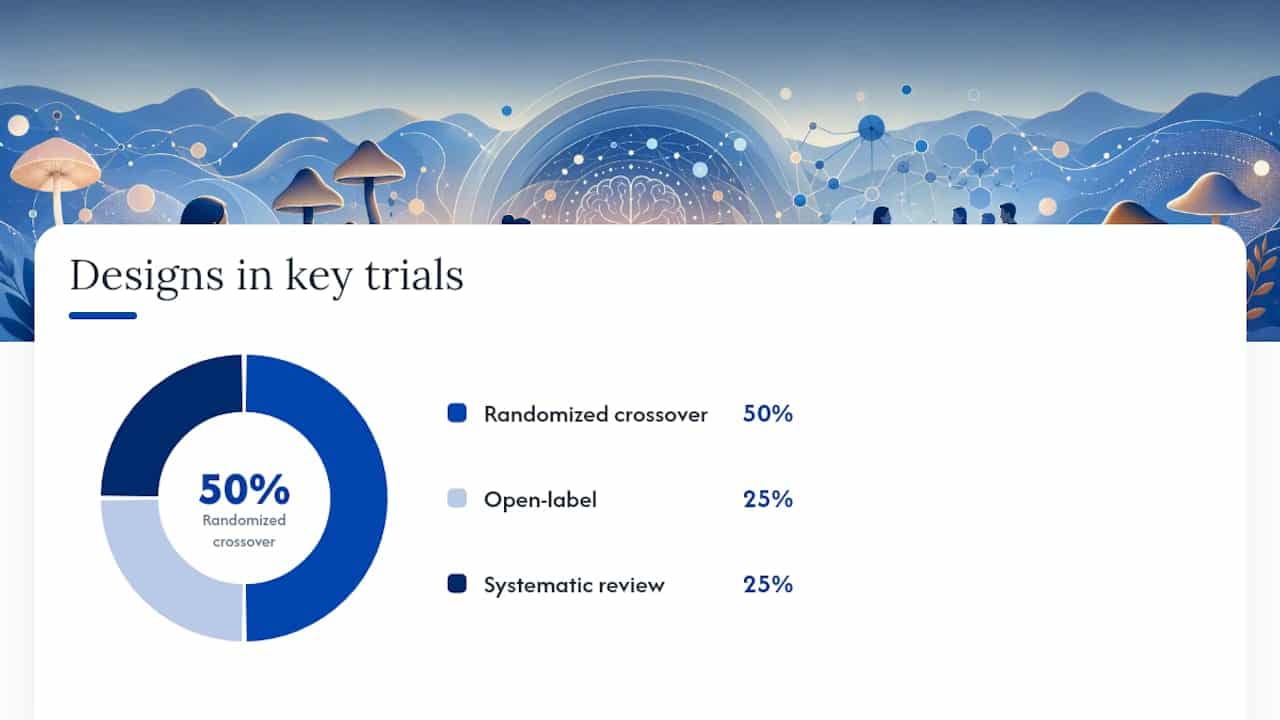
A few things jump out when you sit with that table. First, almost every rigorous trial uses a crossover or waitlist design rather than a true parallel-group placebo comparison, because blinding is nearly impossible when one group visibly experiences a psychedelic state and the other does not. Second, follow-up periods rarely extend past six or seven months, so claims about multi-year durability are not yet backed by the data. Third, populations skew heavily toward people already facing a life-threatening or treatment-resistant condition, which means results do not automatically generalize to someone with generalized anxiety disorder and no comorbid illness.
The limitations are not minor footnotes. They shape what a responsible reader should take from this evidence:
- Sample sizes in the landmark trials run from a few dozen to around a hundred participants, small by pharmaceutical standards.
- Nearly all rigorous data comes from people with cancer-related distress or treatment-resistant depression, not generalized anxiety in otherwise healthy adults.
- Blinding is compromised because participants and researchers can usually tell who received the active dose.
- Long-term data beyond six to twelve months is sparse, so claims about permanent remission outrun what trials have actually measured.
None of this erases the signal. It just means the honest claim is “promising and repeatedly replicated in narrow populations,” not “proven cure for anxiety.” You can read more about how these findings apply specifically to anxiety relief from psilocybin and how researchers frame the evidence for psychedelic mushrooms and anxiety more broadly.
How Does Psilocybin Reduce Anxiety in the Brain?
Psilocybin works by binding to the 5-HT2A serotonin receptor, which triggers a cascade of downstream effects tied to mood and cognition. Once metabolized into psilocin, it acts as a serotonin agonist that appears to increase neuroplasticity and quiet the default mode network, a network of brain regions associated with self-referential thought and rumination, according to a detailed mechanistic review.
Picture it this way: the default mode network (DMN) is the brain’s inner narrator, the voice that loops over worries, replays past mistakes, and rehearses future catastrophes. Anxiety disorders are, in part, a hyperactive version of that loop. Imaging research suggests psilocybin temporarily quiets DMN activity, and when that quieting happens inside a supportive, well-prepared session, patients often report a shift away from rigid, anxious thought patterns toward something more flexible. Reduced DMN chatter appears to translate into less rumination, which in turn seems to open space for the kind of emotional flexibility that anxious minds struggle to access.
The mechanisms researchers point to fall into a few overlapping categories:
- Serotonergic agonism at 5-HT2A receptors, which appears to be the primary trigger for psilocybin’s acute subjective and neurological effects.
- Increased neuroplasticity, giving the brain more capacity to form new associative patterns rather than defaulting to entrenched anxious ones.
- Default mode network downregulation, linked to reduced rumination and a looser grip on habitual, anxious self-narratives.
- Changes in amygdala reactivity, the brain’s threat-detection center, though a 2024 iScience study found some of these amygdalar molecular changes happen independently of 5-HT2A activation, meaning the full mechanistic picture is more tangled than a single-receptor story.
- Possible anti-inflammatory effects, an emerging area of interest that remains less established than the serotonergic and neuroplasticity pathways.
There is also a psychological layer that pure neuroscience cannot fully explain. Patients who experience what researchers call a “mystical” or peak experience, a sense of unity, ego dissolution, and transcendence during the session, tend to report stronger and longer-lasting anxiety relief. Patients who have a difficult or fragmented session, without that peak quality, often see weaker or shorter-lived benefit. This correlation between subjective experience and outcome is one reason clinicians treat the session itself, not just the molecule, as the active ingredient.
Microdosing sits outside almost all of this evidence because sub-perceptual doses do not typically produce the ego-dissolution experience linked to durable outcomes, and because microdosing research relies heavily on self-report rather than controlled trials, the mechanistic story above mostly does not apply to it. If you are curious how the two approaches diverge in evidence and intent, the microdosing psychedelics comparison breaks down where the data is thin.
What Are the Short-Term Risks of Taking Psilocybin?
Psilocybin sessions commonly produce nausea, headache, elevated heart rate and blood pressure, and in some cases a wave of transient anxiety or paranoia rather than the calm, insightful state people expect. The NCCIH lists these as recognized short-term effects, alongside a rare risk of persistent psychosis in vulnerable individuals.
The paradox here deserves attention: a substance studied for its anxiety-reducing potential can also cause acute anxiety during the experience itself. A 2024 study published in iScience documented exactly this, finding that psilocybin triggered acute anxiety in a subset of participants and identified molecular changes in the amygdala that help explain why. Some of these changes occurred independently of the 5-HT2A receptor pathway usually credited with psilocybin’s therapeutic effects, suggesting the anxiety-relief and anxiety-inducing pathways may not be as separable as clinicians would like.
Common short-term effects reported across trials and reviews include:
- Nausea and occasional vomiting, especially in the first 30 to 60 minutes
- Headache, both during and in the hours after the session
- Elevated heart rate and blood pressure, generally mild and self-limiting
- Transient anxiety, fear, or paranoia during the peak of the experience
- Perceptual distortions that can feel disorienting without proper preparation
Severity in supervised trials tends to be manageable. Clinicians trained in psychedelic-assisted therapy use grounding techniques, verbal reassurance, and a calm, low-stimulation environment to help a participant move through a frightening wave rather than escalate it. This is precisely why unsupervised use carries more risk: there is no trained person present to recognize a challenging reaction early and intervene before it spirals into panic or unsafe behavior.
Pro Tip: A “bad trip” during a clinical session is often managed successfully within the room through breathing, reassurance, and a change in music or lighting. Outside a supervised setting, that same reaction has no safety net.
Who Should Avoid Psilocybin for Anxiety?
Psilocybin is contraindicated for people with a personal or family history of psychosis or schizophrenia, and for those with unstable bipolar disorder, because the drug’s disruption of ordinary cognitive filtering can trigger or worsen psychotic symptoms. The NCCIH explicitly flags this population as higher risk.
Cardiovascular conditions matter too. Because psilocybin can raise heart rate and blood pressure, people with uncontrolled hypertension or certain heart conditions need clinician evaluation before considering a session, supervised or otherwise.
Medication interactions add another layer of complexity. Combining psilocybin with MAOIs can produce dangerous, unpredictable reactions, and mixing it with certain SSRIs or SNRIs may blunt the psychedelic effect or interact in ways that are not yet fully mapped out in the research. This is not a case where a quick internet search substitutes for a conversation with a prescribing clinician who knows the full medication history.
A responsible screening process, the kind used in clinical trials, typically covers:
- Full psychiatric history, including any personal or family history of psychosis, schizophrenia, or bipolar disorder
- Complete medication review, with particular attention to MAOIs, SSRIs, and SNRIs
- Cardiovascular assessment, including blood pressure and any history of heart disease
- Informed consent covering the nature of the experience, potential for acute anxiety, and the limits of what the research actually shows
- Assessment of current life stressors and readiness, since an unstable personal situation can amplify a difficult session
This is the part of the conversation that gets skipped in casual online discussion, and it is the part that separates a clinical protocol from a gamble.
How Is Psilocybin Delivered in a Therapeutic Setting?
Clinical psilocybin therapy follows a three-phase structure: preparation, the supervised dosing session, and integration afterward. Skipping any one of these phases is where most of the risk in “solo” psilocybin use for anxiety actually comes from.
- Preparation. Patients meet with a therapist beforehand to build rapport, discuss intentions, and get a clear picture of what the experience might involve. This phase is also where screening happens, ruling out contraindications and setting expectations honestly.
- The supervised session. Doses in trials for anxiety and depression have typically fallen in the range associated with a strong but manageable psychedelic effect, administered in a calm, controlled room with one or two trained sitters present throughout, often four to six hours.
- Integration. Follow-up sessions help patients process what happened, connect insights from the experience to daily life, and work through anything unresolved, including a difficult or frightening moment during the session itself.
Dosing in the landmark trials was deliberately conservative relative to recreational use, aimed at producing a meaningful psychedelic experience without pushing into territory more likely to cause overwhelming distress. Higher doses generally correlate with a stronger mystical-type experience and, per the correlational data mentioned earlier, potentially stronger anxiolytic outcomes, but they also raise the odds of a challenging psychological reaction. This is the tradeoff clinicians manage directly rather than leaving to chance. Readers curious about how these ranges compare to typical recreational use can review dosing guidance for magic mushrooms.
Microdosing takes a fundamentally different approach: small, sub-perceptual amounts taken on a schedule, often aiming for subtle mood or focus benefits rather than a full psychedelic experience. The evidence gap matters here. Full supervised doses have real randomized trial support behind their anxiety outcomes; microdosing has enthusiastic self-report but no equivalent controlled trial base. People drawn to microdosing chocolate formats, for example, are often chasing a gentler, everyday-life-compatible experience rather than the intensive clinical protocol described above, a distinction worth understanding before assuming the research applies equally to both.
What actually makes a session safe has less to do with the mushroom and more to do with who is in the room. Therapist training, a clear emergency protocol for medical or psychiatric complications, and a physically comfortable, low-stimulation environment are the three pillars every credible clinical program builds around, echoing what Johns Hopkins researchers describe as central to their protocol design.

Is Psilocybin Legal for Treating Anxiety?
Legal status varies enormously by country and even by region within a country, and nothing here should be read as legal advice for your specific location. Some places have decriminalized personal possession, a small number have regulated therapeutic or supervised-use programs, and in most of the world psilocybin remains a controlled substance with no legal therapeutic pathway at all.
Access generally falls into a few categories:
- Clinical trials, run through universities or research institutions, which offer supervised access but require meeting strict enrollment criteria
- Licensed therapy or supervised-use programs, available in a limited number of jurisdictions and typically requiring medical screening
- Private clinics, operating legally only where local law explicitly permits them
- Informal or unregulated access, which carries no medical oversight, no screening, and no emergency protocol if something goes wrong
Where legal supervised programs do exist, cost and availability are real barriers. A resource-intensive model involving trained therapists, extended session times, and follow-up integration care is expensive to run, which keeps many programs limited in capacity and out of reach for people without significant financial resources or trial access. Readers exploring regional programs, such as those covered in the California psilocybin treatment guide, should confirm current local law directly, since regulations shift.
How Can You Reduce Risk If You’re Exploring Psilocybin?
If you are researching psilocybin for anxiety outside a formal clinical trial, the gap between a safe experience and a dangerous one usually comes down to preparation, not the substance itself.
Start by evaluating any provider or facilitator with the same scrutiny you would apply to any other health decision:
- Confirm licensing or formal training in psychedelic-assisted therapy, not just general wellness credentials.
- Ask directly about medical oversight, including whether a physician reviews health history and current medications beforehand.
- Ask what the emergency protocol is if someone has a severe psychological or physical reaction.
- Confirm that informed consent covers realistic risks, including the chance of acute anxiety or a difficult psychological experience.
Beyond provider vetting, a handful of practical steps reduce risk regardless of setting:
- Review your current medications with a clinician, especially MAOIs, SSRIs, and SNRIs, before any session.
- Arrange for a sober, trusted person to be physically present the entire time.
- Control the environment: a quiet, comfortable, familiar space lowers the odds of a frightening reaction.
- Eat lightly beforehand and stay hydrated, since nausea is common in the first hour.
If a session takes a difficult turn, the immediate priorities are the same ones used in clinical settings: recognize the warning signs (severe confusion, chest pain, extreme agitation, or loss of physical control), keep the environment calm and low-stimulation, offer verbal reassurance rather than argument, and call emergency services without hesitation if physical symptoms suggest a medical emergency rather than a psychological one.
What Don’t We Know Yet About Psilocybin and Anxiety?
The honest answer is that researchers are still working out how far these findings generalize. Key open questions include:
- How psilocybin performs in generalized anxiety disorder specifically, separate from illness-related or existential anxiety
- Head-to-head comparisons against standard treatments like SSRIs or cognitive behavioral therapy, which barely exist yet
- Long-term relapse rates beyond the six to twelve month window most trials cover
- Optimal dosing schedules, including whether repeated sessions outperform a single high dose
- Whether microdosing has any measurable clinical effect beyond placebo, given the current lack of large double-blind trials
- Safety and efficacy in people with common comorbidities, such as substance use history or complex medication regimens
Future trials need larger sample sizes, better blinding strategies despite the inherent challenge of blinding a psychedelic experience, and follow-up windows stretching well past a year. Watch for Phase 3 trial results and any regulatory shifts tied to the FDA’s breakthrough therapy designations for psilocybin-assisted psychotherapy, which signal where the clinical pathway is likely headed next.
What the Landmark Cancer-Anxiety Trial Really Proved
The 2016 Griffiths trial remains the single most cited piece of evidence in this entire field, and it deserves a closer look on its own terms.
- A single moderate dose of psilocybin, combined with psychotherapy, produced rapid reductions in anxiety and depression among patients facing cancer-related distress.
- Between 60% and 80% of participants maintained clinically significant improvement at the 6.5-month follow-up mark, an unusually durable result for a single-session psychiatric intervention.
- The effect sizes reported were large by psychiatric research standards, though the sample size was modest, consistent with an early-phase trial rather than a large-scale confirmatory study.
What this trial does prove: a single supervised psilocybin session, embedded in psychotherapy, can produce a lasting reduction in anxiety tied to a life-threatening diagnosis. What it does not prove: that the same protocol works the same way for generalized anxiety disorder in someone without a serious illness, or that the benefit holds indefinitely beyond the studied window. Existential anxiety tied to mortality and illness is psychologically distinct from chronic, free-floating anxiety, and conflating the two is one of the more common misreadings of this research floating around online. The original trial data, available through Griffiths et al., 2016, remains the primary source anyone citing this study should actually read rather than paraphrase secondhand.
A Publisher’s Note on This Research
Fungipsilocybinmushroom approaches this topic from an evidence-first, harm-reduction stance: we would rather readers understand the real limits of the data than oversell what psilocybin can do. As a retailer of lab-tested Amazonian mushrooms and other psychedelics, we have a direct stake in this conversation, which is exactly why we point readers toward licensed clinicians and legitimate research before anything else. Nothing here replaces a conversation with a qualified medical or mental health provider.
Get Lab-Tested Psilocybin Products From Fungipsilocybinmushroom
Reading the clinical evidence is one thing. Finding a product you can actually trust is another problem entirely, and it is where most people researching psilocybin for anxiety hit a wall: sketchy sourcing, no lab verification, and zero transparency about potency. Fungipsilocybinmushroom solves that specific problem. Every product ships with lab testing behind it, discreet worldwide delivery, and a catalog built for both first-timers and people with years of experience, from milder Golden Teacher varieties to more intense options for experienced users.
If dosing precision matters to you, which it should given everything the research says about dose and outcome, the Seremoni psilocybin chocolate bar offers consistent, measurable dosing in an edible format, useful for anyone trying to replicate a controlled, deliberate approach rather than guessing at a dried mushroom’s potency. Pair that with our educational guides on strains suited to therapeutic use to match a product to your goals. Browse the current catalog and place an order through our secure checkout to get started.
Frequently Asked Questions
Does psilocybin actually help anxiety, or is that overstated online?
Clinical trials show real, measurable anxiety reduction, particularly in people facing cancer-related distress, but the strongest data comes from supervised sessions with psychotherapy, not casual use.
How long does psilocybin’s anxiety relief typically last?
In the Griffiths trial, most participants who improved held that improvement at 6.5 months. Data beyond that window remains limited.
Can psilocybin make anxiety worse instead of better?
Yes. Acute anxiety and paranoia during the session are recognized short-term risks, documented in both NCCIH guidance and a 2024 iScience study.
Is microdosing effective for anxiety?
The evidence is much weaker than for supervised full doses. Microdosing research relies mostly on self-report rather than controlled trials, according to a comprehensive mechanistic review.
Who should never take psilocybin for anxiety?
People with a personal or family history of psychosis or schizophrenia, unstable bipolar disorder, certain cardiovascular conditions, or those taking MAOIs should avoid it without direct clinician guidance.
How does psilocybin compare to SSRIs or CBT for anxiety?
Direct head-to-head trials against SSRIs or cognitive behavioral therapy are still lacking. Current evidence suggests psilocybin can work faster in specific populations, but standard treatments have far more long-term safety data.
This article is general information, not a substitute for advice from a qualified doctor. Consult a qualified healthcare professional about your own circumstances before acting on anything here.
Sources
- Mushrooms, microdosing, and mental illness: The effect of psilocybin on neurotransmitters, neuroinflammation, and neuroplasticity (PMC review)
- Psilocybin for mental health and addiction: What you need to know (NCCIH)
- Johns Hopkins Center for Psychedelic and Consciousness Research — summary page
Recommended
How Long Does MDMA Stay in Your System
How Long Does MDMA Stay in Your System
If you’ve recently taken MDMA and you’re wondering how long it stays in your system — whether for an upcoming drug test, health reasons, or just curiosity — you’re in the right place. This guide is written for anyone who wants straight, honest answers without the medical jargon.
Here’s what we’ll cover: how your body actually breaks down MDMA, how long it shows up across different drug tests (urine, blood, saliva, and hair), and what personal factors — like your age, metabolism, and how much you took — can change the timeline for you specifically.
Understanding What MDMA Does in the Body
MDMA (3,4-methylenedioxymethamphetamine), commonly known as Ecstasy or Molly, is an illegal synthetic drug combining stimulant and hallucinogenic properties. Users experience euphoria, well-being, and altered perception, with effects typically:
-
Beginning: 30–45 minutes after ingestion
-
Peaking: 15–30 minutes after onset
-
Lasting: 4–6 hours, sometimes extending days or weeks
> ⚠️ Street Ecstasy and Molly frequently contain contaminants — methamphetamine, ketamine, or caffeine — and sometimes no MDMA at all.
How the Liver Breaks Down MDMA
MDMA has a half-life of approximately 8 hours, meaning the body reduces its bloodstream concentration by 50% every 8 hours. Using the standard five half-life rule:
| Half-Lives Completed | Time Elapsed | MDMA Remaining |
|---|---|---|
| 1 | ~8 hours | ~50% |
| 3 | ~24 hours | ~12.5% |
| 5 | ~40 hours | ~5% |
Roughly 95% of MDMA is cleared within 40 hours.
Key Factors That Affect Metabolism Speed
How long does MDMA stay in your system? It varies based on:
-
Dose and frequency of use
-
Age, weight, and gender
-
Overall physical health
-
Fluid intake and exercise levels
-
Dietary factors
-
Genetic variations in metabolizing enzymes
How Long MDMA Stays in Each Type of Drug Test
Urine Tests and Detection Windows
Urine testing is the most common method used to detect MDMA. How long does MDMA stay in your system via urine? It can be detected for up to 120 hours (5 days), though some sources suggest a shorter window of 2 to 4 days.
Blood Tests and How Quickly MDMA Clears
Blood tests offer a shorter detection window compared to urine. MDMA typically clears from the bloodstream within approximately 71 hours (3 days) after last use, making blood tests more useful for identifying very recent consumption.
Saliva Tests and Short Detection Periods
Similar to blood testing, saliva tests detect MDMA for up to 71 hours (roughly 3 days). These tests are often used for roadside or on-site screening due to their convenience.
Hair Follicle Tests and Long-Term Detection
Hair follicle testing provides the longest detection window. MDMA can be identified in hair samples for months after last use, with the exact duration depending on:
-
Hair length
-
Sample location on the head
| Test Type | Detection Window |
|---|---|
| Urine | Up to 5 days |
| Blood | Up to ~3 days |
| Saliva | Up to ~3 days |
| Hair Follicle | Several months |
Key Factors That Influence How Long MDMA Stays in Your System
A. Dosage and Frequency of Use
Higher doses and repeated use mean more MDMA accumulates in the body, extending the detection window significantly.
B. Body Weight and Fat Percentage
MDMA and its metabolites can bind to fatty tissue. Individuals with higher body fat percentages may retain traces longer, directly affecting how long MDMA stays in your system.
C. Age and Overall Metabolic Rate
Metabolic rate slows with age. Older individuals typically process and eliminate MDMA more slowly than younger people with faster metabolism.
D. Kidney and Liver Health
The liver and kidneys are central to breaking down and flushing out MDMA. Compromised organ function reduces clearance efficiency, prolonging detection times.
E. Hydration Levels and Lifestyle Habits
Several lifestyle factors influence elimination speed:
| Factor | Effect on MDMA Clearance |
|---|---|
| High hydration | Supports faster renal excretion |
| Regular exercise | May boost metabolic processing |
| Poor diet | Can slow overall metabolism |
| Low fluid intake | Slows elimination via urine |
With this in mind, genetic variations in the enzymes responsible for metabolizing MDMA also play a notable role — individuals with less active enzyme variants may clear the substance more slowly, regardless of other lifestyle factors.
Common Symptoms While MDMA Leaves Your System
Physical Side Effects During Clearance
As your body works to eliminate MDMA, you may experience a range of physical symptoms, including:
-
Nausea and appetite loss
-
Hot flashes, chills, and sweating
-
Dehydration and elevated heart rate
-
Increased muscle tension, tremors, and teeth clenching
-
In severe cases: fainting, seizures, kidney failure, or loss of consciousness
These physical effects reflect the significant strain MDMA places on your body’s systems during clearance.
Emotional and Psychological Effects After Use
Beyond physical symptoms, MDMA affects your mental state both during and after use. Common psychological effects include:
-
During use: Euphoria, confusion, and paranoia
-
After use: Anxiety, panic attacks, and strong cravings for more MDMA
These emotional swings occur as brain chemistry attempts to rebalance after MDMA-induced depletion of key neurotransmitters.
How Long Comedown Symptoms Typically Last
Now that we’ve covered the immediate effects, it’s important to understand that some symptoms persist well beyond how long MDMA stays in your system. Extended comedown effects can last days to weeks and include:
| Symptom Category | Examples |
|---|---|
| Mood | Depression, irritability, aggression |
| Cognitive | Poor attention, memory issues |
| Behavioral | Poor impulse control, decreased appetite |
| Sleep | Disturbances and insomnia |
How to Support Your Body in Clearing MDMA Faster
Staying Hydrated to Aid Kidney Function
Proper hydration supports kidney filtration, helping your body process and eliminate MDMA metabolites more efficiently. Aim for consistent water intake throughout the day rather than excessive amounts at once.
Eating Nutritious Foods to Support Liver Health
Since the liver is the primary organ responsible for metabolizing MDMA, nourishing it matters. Focus on:
-
Antioxidant-rich foods – fruits and vegetables that reduce oxidative stress
-
Lean proteins – support enzyme production needed for metabolism
-
Whole grains – provide steady energy during recovery
Avoiding heavily processed or fatty foods reduces the liver’s workload during this period.
Getting Adequate Sleep to Speed Up Recovery
Sleep is when your body performs critical repair and detoxification processes. Prioritizing consistent, quality sleep allows your metabolism to function optimally, which directly influences how long MDMA stays in your system.
-
Maintain a regular sleep schedule
-
Limit screen exposure before bed
-
Create a calm, dark sleeping environment
Avoiding Other Substances That Slow Metabolism
Combining MDMA with alcohol or other drugs can burden the liver and slow metabolic clearance. With this in mind, eliminating additional substances during recovery gives your body the best opportunity to process MDMA without added interference.
Important Health and Safety Considerations
A. Risks of Frequent or High-Dose MDMA Use
Frequent or high-dose MDMA use significantly elevates health risks, including:
-
Dangerous spikes in blood pressure and heart rate
-
Hyperthermia (dangerously high body temperature)
-
Seizures, delirium, and loss of consciousness
-
Severe dehydration and kidney failure
-
Brain swelling and, in rare cases, death
-
Long-term risks include heart arrhythmias, heart damage, and heart disease
B. When to Seek Medical Help After MDMA Use
Seek immediate medical attention if someone experiences:
-
Unconsciousness or suspected overdose
-
Seizures or severe delirium
-
Life-threatening changes in vital signs
-
Physical injury following use
Professional addiction treatment and detox programs are available to manage acute intoxication, withdrawal symptoms, and long-term abuse patterns.
C. Understanding Legal Consequences of Positive Drug Tests
Now that we’ve covered health risks, it’s equally important to understand the legal weight of a positive result. MDMA is classified as a Schedule I substance, indicating a high potential for abuse and no accepted medical use.
Positive drug tests carry serious consequences across multiple settings:
| Setting | Potential Consequence |
|---|---|
| Workplace | Termination or suspension |
| Schools | Disciplinary action |
| Sports organizations | Disqualification or ban |
| Courts | Legal penalties or probation violations |
7 FAQ
How long does MDMA stay in your system?
MDMA typically clears from blood within 1–2 days, urine within 3–5 days, saliva within 1–2 days, and hair up to 90 days.
Can you speed up how fast MDMA leaves your body?
Not dramatically. Staying hydrated, sleeping well, and eating nutritious food supports your liver and kidneys, but there’s no shortcut that significantly cuts detection time.
Does drinking water flush MDMA out faster?
Water helps your kidneys process waste, but drinking excessive amounts won’t meaningfully shorten detection windows and can actually be dangerous.
Why did MDMA show up in my urine test after 5 days?
Heavy or repeated use, slow metabolism, kidney issues, or high body fat can all extend how long MDMA stays in your system beyond the typical range.
Can a urine test tell the difference between MDMA and other substances?
Standard immunoassay tests can produce false positives. A confirmatory GC-MS test is needed to specifically identify MDMA.
Does a single dose clear faster than repeated use?
Yes. A one-time dose clears much quicker than multiple doses taken over a weekend, which can extend detection windows noticeably.
Is MDMA detectable in hair after 90 days?
Generally no. Hair tests typically cover a 90-day window, though this depends on hair length and growth rate.
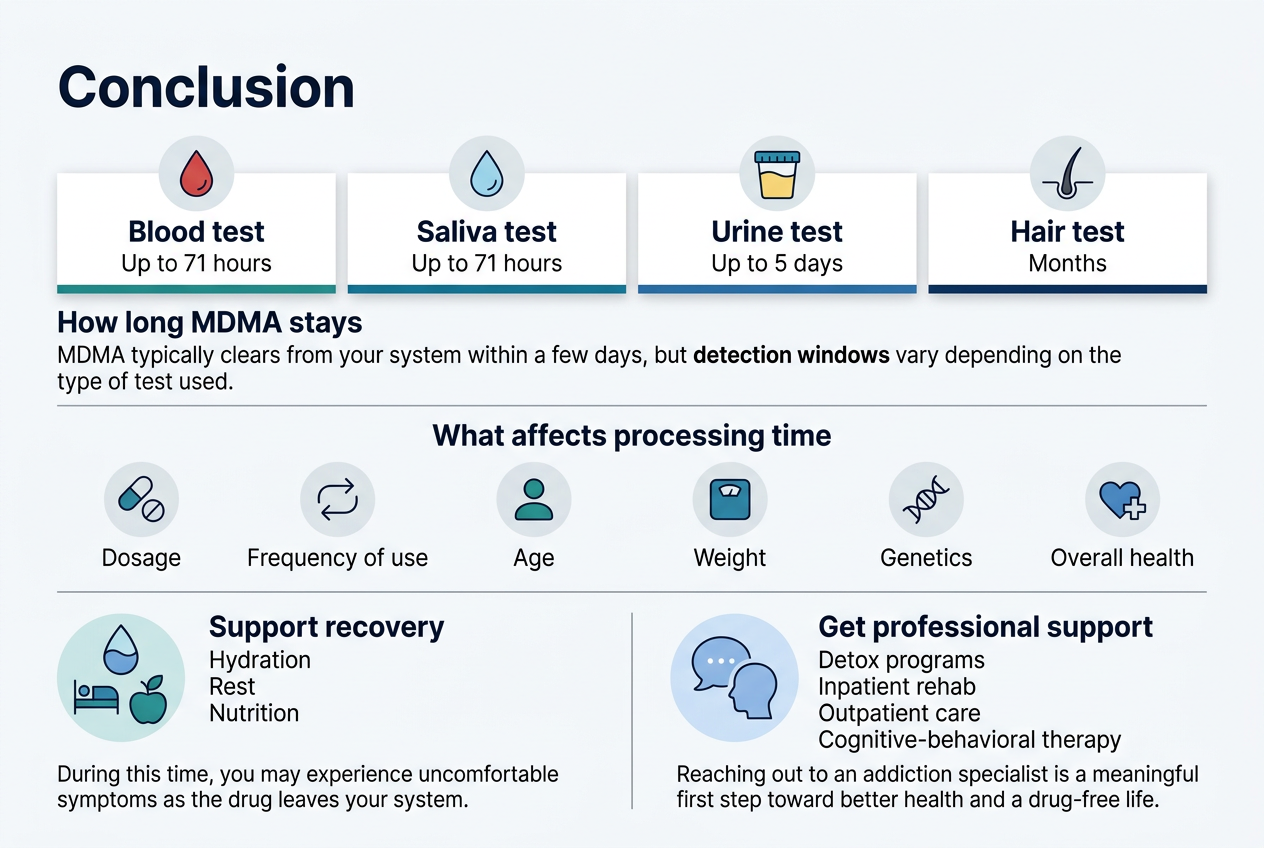
MDMA typically clears from your system within a few days, but detection windows vary depending on the type of test used. Blood and saliva tests can detect it for up to 71 hours, urine tests for up to 5 days, and hair tests for months. How quickly your body processes MDMA depends on factors like dosage, frequency of use, age, weight, genetics, and overall health. During this time, you may experience uncomfortable symptoms as the drug leaves your system, making proper hydration, rest, and nutrition important for supporting your recovery.
If concerns about MDMA use go beyond passing a drug test, it may be time to seek professional support. Treatment options such as detox programs, inpatient rehab, and outpatient care can help address dependency and any co-occurring substance use. Cognitive-behavioral therapy has shown to be especially effective in treating ecstasy addiction. Reaching out to an addiction specialist is a meaningful first step toward better health and a drug-free life.
How Long Does MDMA Stay in Your System | How Long Does MDMA Stay in Your System | How Long Does MDMA Stay in Your System | How Long Does MDMA Stay in Your System | How Long Does MDMA Stay in Your System | How Long Does MDMA Stay in Your System | How Long Does MDMA Stay in Your System
How to Dose Magic Mushrooms
How to Dose Magic Mushrooms

How to Dose Magic Mushrooms (Without Ruining Your Day)
Getting the dose right is probably the most important thing you can do before taking magic mushrooms. Too little and you barely feel anything. Too much and you’re in way deeper than you planned. This guide is for anyone approaching psilocybin for the first time, or anyone who wants to feel more confident about what they’re actually taking.
Here’s what we’ll cover:
-
What’s actually happening in your body — psilocybin isn’t the compound that gets you high, and knowing the difference matters for understanding how dosing works
-
How much to take — from a light 0.5g social dose all the way up to a full 3.5g experience, with clear descriptions of what to expect at each level
-
What affects how strong it hits — your metabolism, the freshness of the mushrooms, your mental state, and a handful of other factors can all shift the experience significantly
One thing worth saying upfront: psilocybin is a controlled substance in most places. This guide is written for harm reduction purposes, aimed at people in regions where it’s legal or decriminalized, and anyone curious about how clinical research is shaping what we know about safe dosing.
Understanding the Active Compound in Magic Mushrooms
What Psilocybin Is and How It Works in the Body
Psilocybin is a prodrug — a biologically inactive compound that requires metabolic conversion before it produces any effect. On its own, psilocybin does nothing. Only after the body processes it does the psychedelic experience begin.
How Psilocybin Converts to Psilocin for Psychedelic Effects
Once consumed, the body rapidly metabolizes psilocybin into psilocin, the compound responsible for all psychedelic effects. Psilocin works because its chemical structure closely resembles serotonin, a key neurotransmitter. This similarity allows it to bind to serotonin receptors, producing the altered perception and mood changes associated with magic mushrooms.
Why Psilocybin Content Varies Between Species and Samples
Understanding this variability is critical when learning how to dose magic mushrooms accurately. Potency differs considerably across species and even between harvests of the same species:
| Species/Variable | Psilocybin Content (Dry Weight) |
|---|---|
| General range (dried mushrooms) | 0.1% – 2.0% |
| Psilocybe cubensis (typical) | ~0.5% – 1.0% total psilocin (~1% psilocybin) |
Because chemical content fluctuates even within a single harvest, lab testing remains the only reliable method to determine a sample’s exact potency.
Factors That Influence the Intensity of Your Experience
A. Type of Mushroom Species and Strain Potency
Potency varies significantly across species and strains. For instance, Enigma can be 1.5x to 2x stronger than standard cubensis strains, making strain selection critical when learning how to dose magic mushrooms.
B. Freshness, Storage, and Preparation of Mushrooms
Degraded or improperly stored mushrooms lose psilocybin content, directly affecting intensity. Always use properly dried, well-stored mushrooms for consistent, predictable results.
C. Individual Differences Including Metabolism and Tolerance
Key personal factors include:
-
Metabolism and serotonin receptor density
-
Body weight (a minor factor compared to metabolism)
-
Prior psychedelic experience
-
Tolerance, which builds rapidly with repeated use, requiring progressively higher doses for equivalent effects
D. Set and Setting: Mental State and Environment
-
Set: Avoid dosing during stressful or negative mental states
-
Setting: Choose familiar, comfortable, and safe environments
Both elements profoundly shape the quality and intensity of the experience.
E. Food, Medications, and Other Substances
| Factor | Effect |
|---|---|
| Recent large meal | Slows onset |
| Empty stomach | Intensifies/accelerates effects |
| Alcohol or medications | Can interact negatively with psilocybin |
Always review any concurrent substance use before dosing.
Essential Tools for Accurate Dosing
A. Why a Micro Digital Scale Is a Must-Have
When learning how to dose magic mushrooms, precision is non-negotiable. A micro digital scale is essential for accurately measuring doses, whether you’re microdosing or macrodosing. Without one, even small miscalculations can significantly alter your experience.
> Exception: Pre-measured products may eliminate this requirement.
B. Understanding Wet vs. Dried Mushroom Weight Differences
Now that we’ve covered the importance of a scale, understanding weight differences between wet and dried mushrooms is equally critical.
| State | Water Content | Weight Impact |
|---|---|---|
| Wet mushrooms | High | Heavier, lower potency per gram |
| Dried mushrooms | Low | Lighter, more concentrated potency |
Always confirm whether your mushrooms are wet or dried before dosing, as treating them interchangeably leads to inaccurate dosing.
C. Knowing Your Mushroom Species and Sourcing From Trusted Suppliers
With this in mind, identifying your specific mushroom species is vital. Potency varies considerably between species, making generic dosing assumptions unreliable.
Sourcing from trusted suppliers protects against:
-
Contamination — molds and bacteria
-
Misidentification — toxic species mistaken for psilocybin mushrooms
Always verify your source before consuming.
Complete Magic Mushroom Dosage Guide
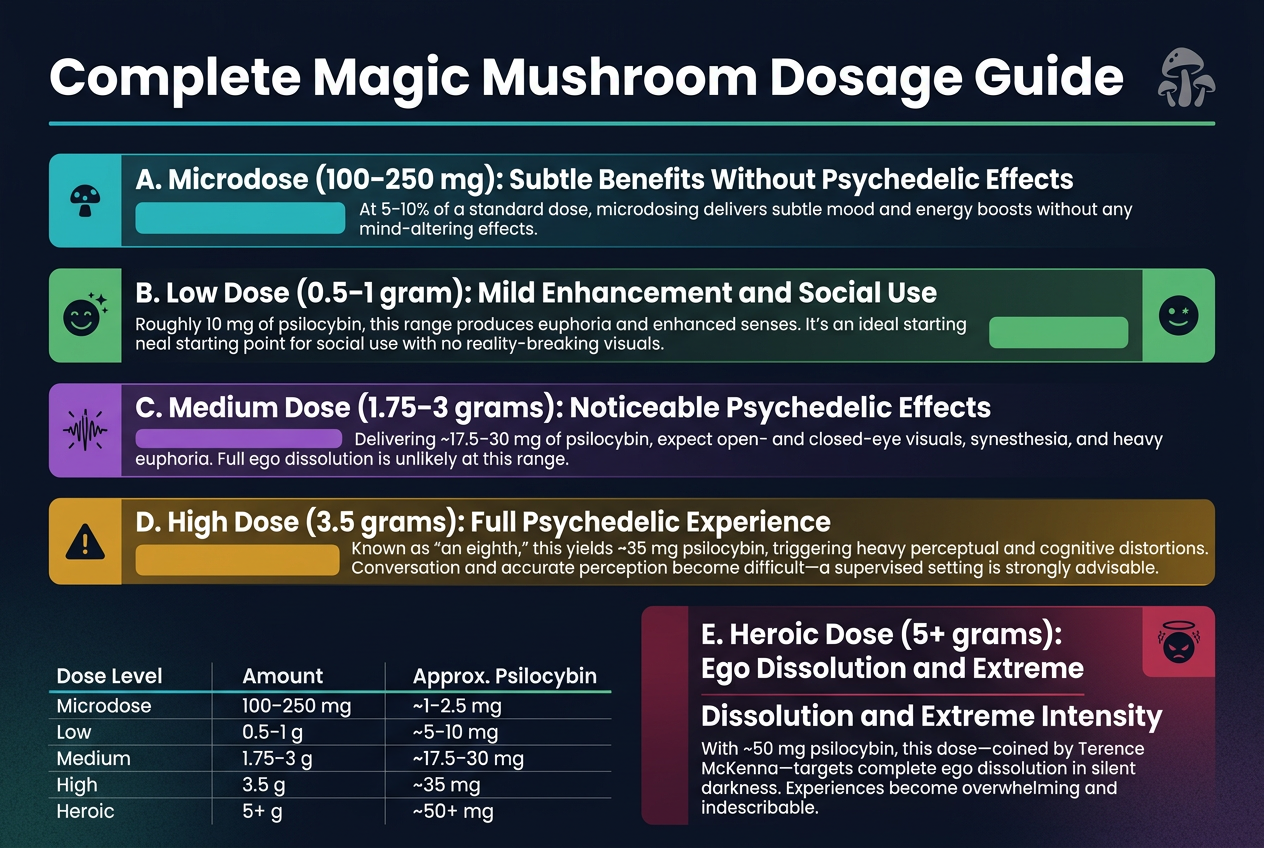
A. Microdose (100–250 mg): Subtle Benefits Without Psychedelic Effects
At 5–10% of a standard dose, microdosing delivers subtle mood and energy boosts without any mind-altering effects.
B. Low Dose (0.5–1 gram): Mild Enhancement and Social Use
Roughly 10 mg of psilocybin, this range produces euphoria and enhanced senses. It’s an ideal starting point for social use with no reality-breaking visuals.
C. Medium Dose (1.75–3 grams): Noticeable Psychedelic Effects
Delivering ~17.5–30 mg of psilocybin, expect open- and closed-eye visuals, synesthesia, and heavy euphoria. Full ego dissolution is unlikely at this range.
D. High Dose (3.5 grams): Full Psychedelic Experience
Known as “an eighth,” this yields ~35 mg psilocybin, triggering heavy perceptual and cognitive distortions. Conversation and accurate perception become difficult—a supervised setting is strongly advisable.
E. Heroic Dose (5+ grams): Ego Dissolution and Extreme Intensity
With ~50 mg psilocybin, this dose—coined by Terence McKenna—targets complete ego dissolution in silent darkness. Experiences become overwhelming and indescribable.
| Dose Level | Amount | Approx. Psilocybin |
|---|---|---|
| Microdose | 100–250 mg | ~1–2.5 mg |
| Low | 0.5–1 g | ~5–10 mg |
| Medium | 1.75–3 g | ~17.5–30 mg |
| High | 3.5 g | ~35 mg |
| Heroic | 5+ g | ~50+ mg |
How Clinical Research Informs Safe Dosing
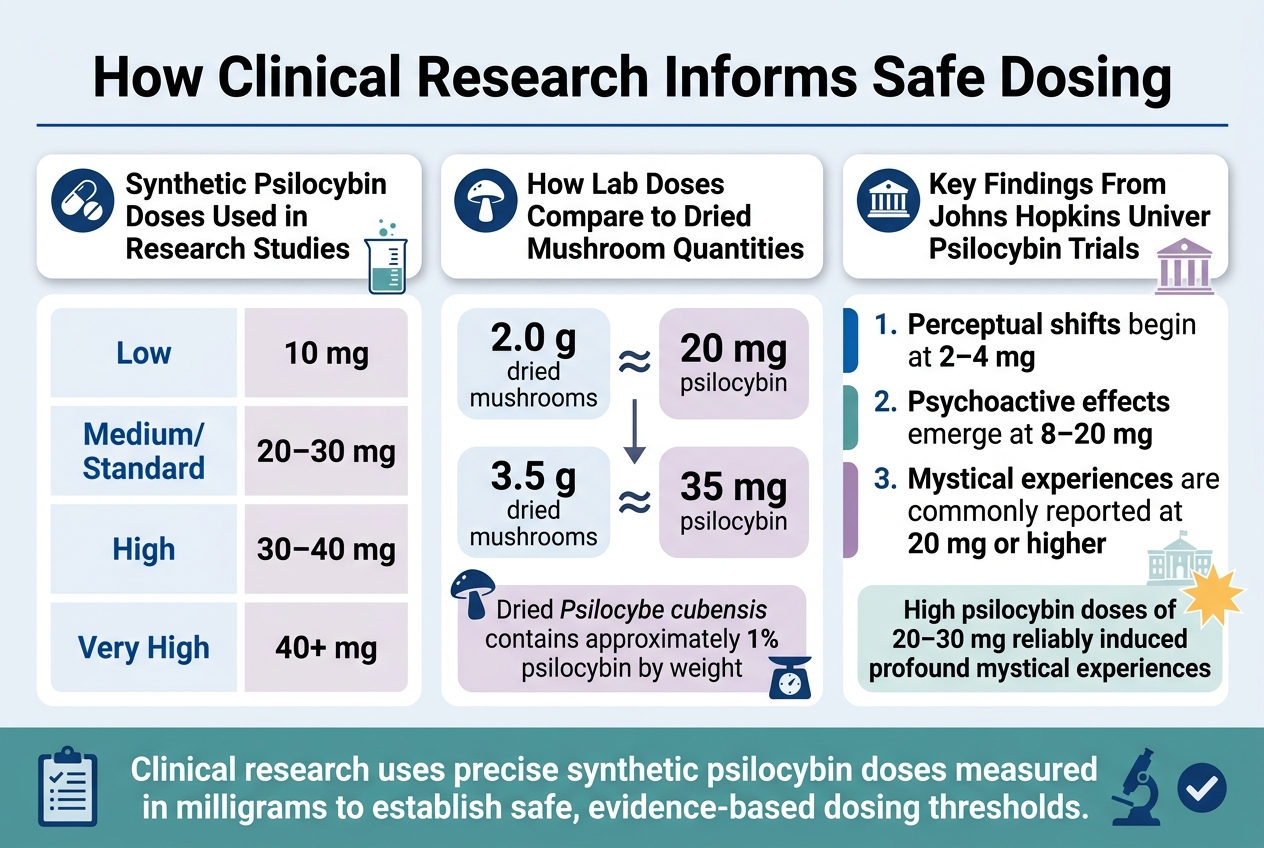
Synthetic Psilocybin Doses Used in Research Studies
Clinical research uses precise synthetic psilocybin doses (measured in milligrams) rather than dried mushrooms:
| Dose Level | Synthetic Psilocybin |
|---|---|
| Low | 10 mg |
| Medium/Standard | 20–30 mg |
| High | 30–40 mg |
| Very High | 40+ mg |
Perceptual shifts begin at 2–4 mg, psychoactive effects emerge at 8–20 mg, and mystical experiences are commonly reported at 20 mg or higher.
How Lab Doses Compare to Dried Mushroom Quantities
With this in mind, translating lab doses to real-world mushroom quantities is essential for understanding how to dose magic mushrooms safely. Dried Psilocybe cubensis contains approximately 1% psilocybin by weight, meaning:
-
2.0 g dried mushrooms ≈ 20 mg psilocybin (standard dose)
-
3.5 g dried mushrooms ≈ 35 mg psilocybin (high dose)
Key Findings From Johns Hopkins University Psilocybin Trials
Pioneering trials at Johns Hopkins University established that high psilocybin doses of 20–30 mg reliably induced profound mystical experiences in participants. These findings provide a critical scientific foundation for understanding dosage thresholds and their psychological effects.
Best Practices for a Safe Dosing Experience
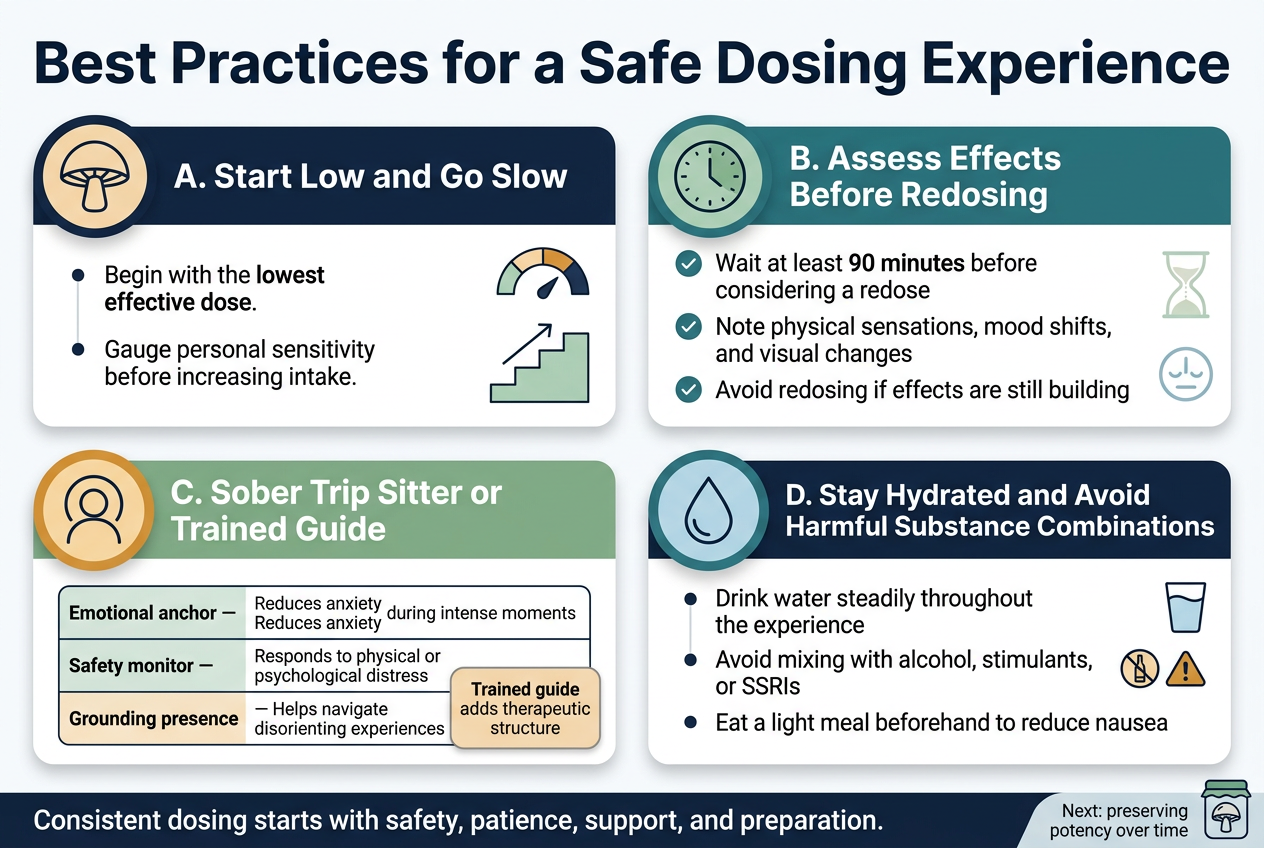
A. Start Low and Go Slow: The Golden Rule for Beginners
When learning how to dose magic mushrooms, always begin with the lowest effective dose. This minimizes risk and lets you gauge personal sensitivity before increasing intake.
B. How to Assess Effects Before Redosing
-
Wait at least 90 minutes before considering a redose
-
Note physical sensations, mood shifts, and visual changes
-
Avoid redosing if effects are still building — patience prevents accidental overconsumption
C. The Importance of a Sober Trip Sitter or Trained Guide
A trusted, sober companion provides:
| Role | Benefit |
|---|---|
| Emotional anchor | Reduces anxiety during intense moments |
| Safety monitor | Responds to physical or psychological distress |
| Grounding presence | Helps navigate disorienting experiences |
A trained guide adds therapeutic structure, particularly at moderate-to-high doses.
D. Staying Hydrated and Avoiding Harmful Substance Combinations
-
Drink water steadily throughout the experience
-
Avoid mixing with alcohol, stimulants, or SSRIs, which can unpredictably alter or dampen effects
-
Eat a light meal beforehand to reduce nausea
Now that we have covered best practices, the next section explores how to preserve mushroom potency over time for consistent dosing results.
Tips for Preserving Mushroom Potency Over Time
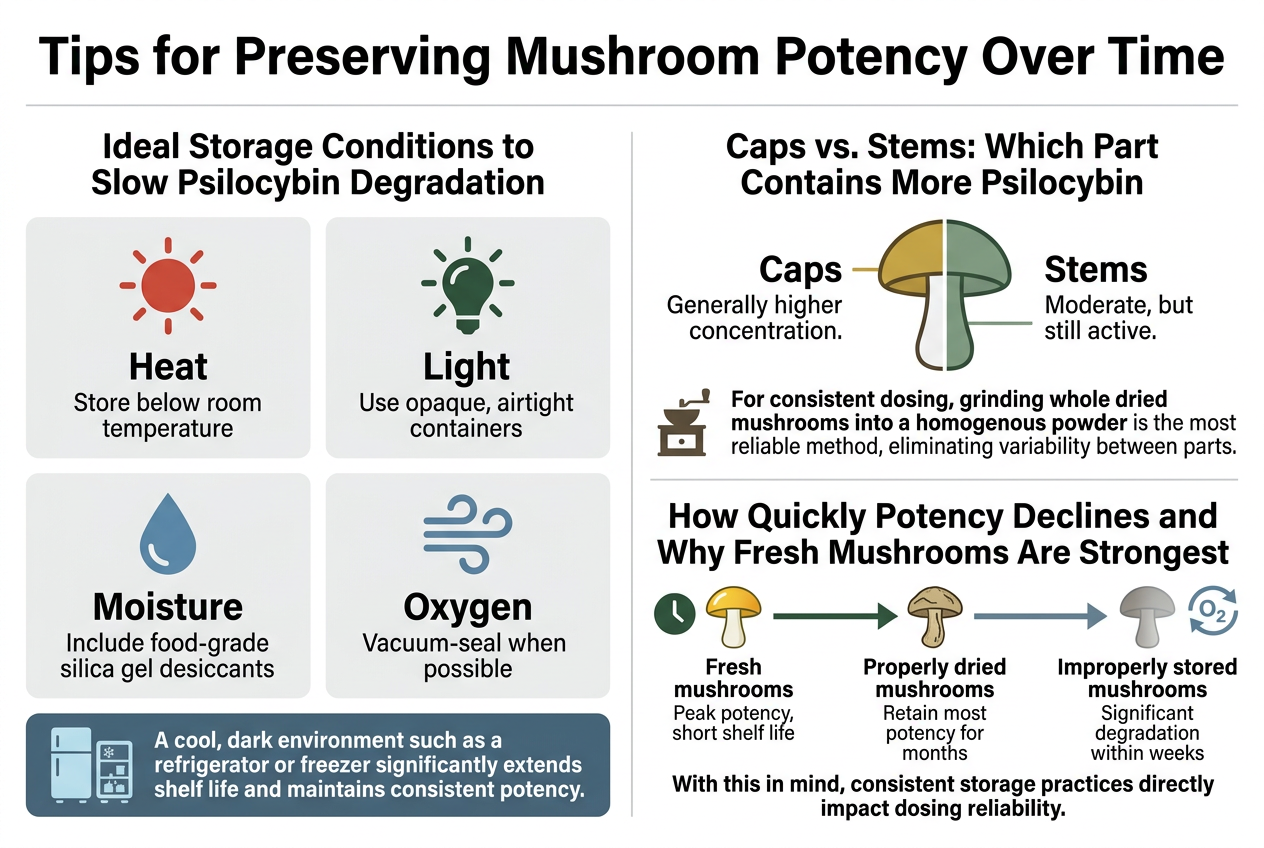
Ideal Storage Conditions to Slow Psilocybin Degradation
Proper storage is critical when considering how to dose magic mushrooms accurately. Psilocybin degrades when exposed to:
-
Heat – Store below room temperature
-
Light – Use opaque, airtight containers
-
Moisture – Include food-grade silica gel desiccants
-
Oxygen – Vacuum-seal when possible
A cool, dark environment such as a refrigerator or freezer significantly extends shelf life and maintains consistent potency.
Caps vs. Stems: Which Part Contains More Psilocybin
Psilocybin distribution varies across mushroom anatomy:
| Part | Relative Psilocybin Content |
|---|---|
| Caps | Generally higher concentration |
| Stems | Moderate, but still active |
For consistent dosing, grinding whole dried mushrooms into a homogenous powder is the most reliable method, eliminating variability between parts.
How Quickly Potency Declines and Why Fresh Mushrooms Are Strongest
Fresh mushrooms contain the highest psilocybin levels, but potency begins declining almost immediately after harvest due to enzymatic activity and oxidation.
Key points:
-
Fresh mushrooms – Peak potency, short shelf life
-
Properly dried mushrooms – Retain most potency for months
-
Improperly stored mushrooms – Significant degradation within weeks
With this in mind, consistent storage practices directly impact dosing reliability.
7 FAQ How to Dose Magic Mushrooms
What’s the right starting dose for beginners?
Start with 1–1.5g of dried mushrooms. This range is gentle enough to avoid overwhelming sensations while still offering a noticeable shift in perception.
How long does it take for magic mushrooms to kick in?
Typically 20–60 minutes, depending on your metabolism and whether you’ve eaten recently. An empty stomach speeds things up considerably.
Can I redose during a session?
Redosing mid-trip rarely works the way people expect. Your brain quickly becomes less responsive to psilocybin during an active experience, so a second dose usually adds little effect.
How do I dose magic mushrooms accurately?
Use a digital scale that measures to 0.01g. Eyeballing is unreliable — even experienced users get it wrong.
Does body weight affect the dose?
Surprisingly, not much. Sensitivity, mental state, and stomach contents matter far more than body weight when figuring out how to dose magic mushrooms.
How often can I take magic mushrooms?
Leave at least 2–3 weeks between sessions. Tolerance builds fast and fades slowly, so spacing trips out keeps the experience meaningful.
Are dried and fresh mushrooms dosed the same way?
No. Fresh mushrooms are roughly 90% water. Multiply your dried dose by 10 for an equivalent fresh amount — so 2g dried equals about 20g fresh.
Dosing magic mushrooms safely comes down to understanding several key factors working together. Psilocybin content varies between species and even individual mushrooms, making accurate measurement with a digital scale essential. Your set and setting, mental state, metabolism, and tolerance all influence how strongly you’ll feel the effects — sometimes more than the dose itself. Whether you’re exploring a low 1-gram dose for subtle effects or a full 3.5-gram experience, clinical research from institutions like Johns Hopkins confirms that even medium-range doses can produce profoundly meaningful experiences.
The golden rule remains simple: start low and go slow. Store your mushrooms properly at room temperature in the dark to preserve potency, have a trusted sober friend nearby if you’re inexperienced, and avoid mixing psilocybin with other substances. Take time to set clear intentions, journal your experiences, and educate yourself on harm reduction practices. Approaching magic mushrooms with patience, preparation, and respect is the most reliable path to a safe and meaningful experience.