Blog
Psilocybin and PTSD: A Consumer’s Safety and Dosing Guide

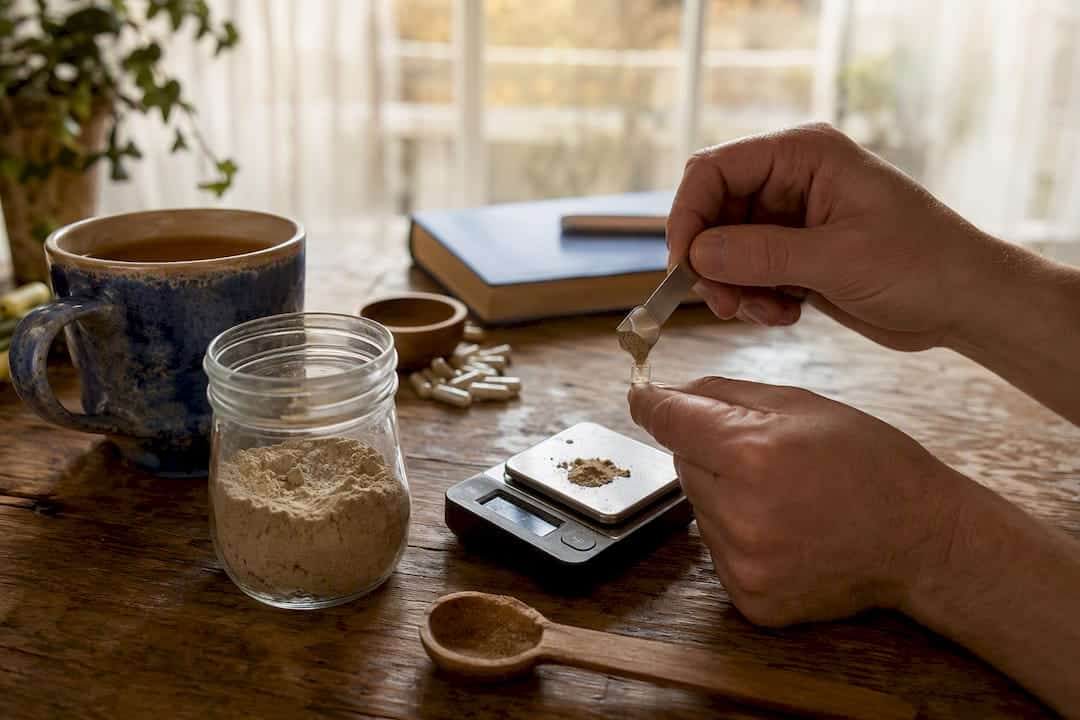
Consumer psilocybin and PTSD self-care, taken outside a clinical setting, can be a reasonable option for some adults managing symptoms through self-directed healing—but only after ruling out serious health risks first. If you have a personal or family history of psychosis, bipolar disorder, or you take lithium or an MAOI, psilocybin and PTSD recovery is not a safe combination right now, full stop. For everyone else, three powerful steps unlock your path forward:
Screen yourself honestly against the contraindications below, and talk to a doctor if anything applies to you. Use a lab-tested product with a certificate of analysis, or wait until you have one. Plan your set and setting in advance, including who (if anyone) will be with you.
TL;DR:
Individuals with a personal or family history of psychosis, bipolar disorder, or taking lithium or MAOIs should avoid psilocybin and PTSD treatment entirely due to severe mental health risks. Microdosing doses are generally 0.1 to 0.3 grams, but current research shows limited evidence of consistent benefits for psilocybin and PTSD or anxiety symptom relief. Ensuring a lab-tested product with a certificate of analysis and a safe, private setting with a trusted sitter are crucial steps before any psilocybin and PTSD journey.
High blood pressure, heart arrhythmias, seizure disorders, pregnancy, or breastfeeding raise significant safety concerns and require medical consultation before exploring psilocybin and PTSD options. Dosing accuracy relies on dry weight measurement with a precise scale, and home-grown mushrooms can vary significantly in potency, risking unpredictable effects that undermine safe psilocybin and PTSD self-care.
Psilocybin PTSD Safety: Contraindications and Medication Risks
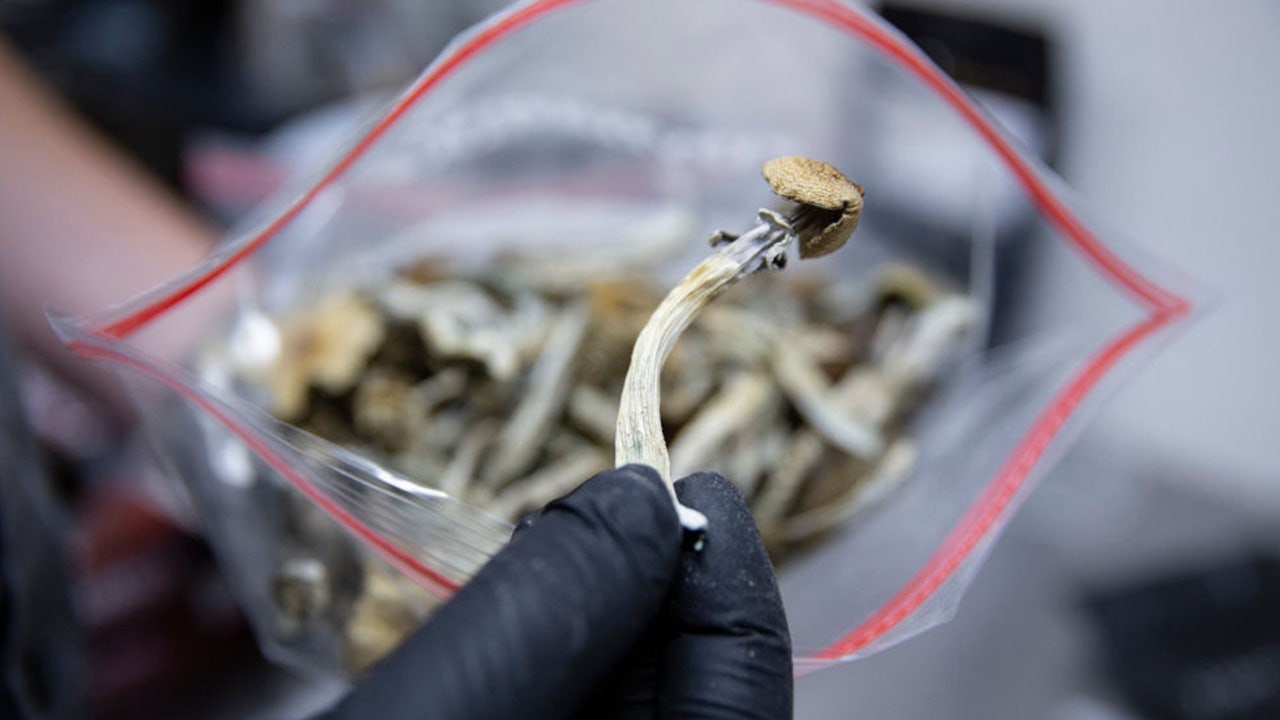
Some adults with PTSD-related symptoms should not use psilocybin under any circumstances. A personal or family history of psychosis, schizophrenia, or bipolar I disorder tops that list. Psilocybin can trigger a manic episode or a psychotic break in someone predisposed to either, and that risk does not shrink at a low dose.
Medication interactions matter just as much. Lithium combined with psilocybin is considered a severe interaction risk and should be avoided, and clinicians flag it as one of the more dangerous pairings in psychedelic use, according to Psychiatric Times. MAOIs carry similar severity. SSRIs and SNRIs, common first-line PTSD medications, tend to blunt psilocybin’s effects rather than cause acute danger, but the interaction is still unpredictable enough that stopping cold on your own is a bad idea. Tramadol raises seizure risk when mixed with psilocybin and should be avoided entirely during a session.
A few more flags worth knowing:
- Uncontrolled high blood pressure or a history of heart arrhythmia (psilocybin transiently raises heart rate and blood pressure).
- A seizure disorder of any kind.
- Pregnancy or breastfeeding, where there’s no safety data at all.
Watch for a racing heart that doesn’t settle, chest pain, or a panic response that isn’t resolving with grounding techniques. Those are reasons to stop, call for help, and treat it as a medical event, not just a rough trip. The NCCIH notes that psilocybin’s effects are genuinely variable person to person, and supervised clinical dosing is a different context entirely from taking it alone at home.
Dosing Psilocybin for PTSD Symptom Relief: Ranges and Microdosing Evidence
Dry weight is the only unit that matters for dosing dried Psilocybe cubensis. Fresh mushroom weight is meaningless because moisture content varies wildly between batches. Common consumer ranges break down roughly like this, according to harm-reduction dosing guides from Rave Wellness:
- Threshold dose: 0.25 to 0.5 grams dried, enough to notice subtle mood or perceptual shifts.
- Common/moderate dose: 1 to 2.5 grams dried, the range most people associate with a full experience.
- Strong dose: 3.5 grams and above, reserved for experienced users in a controlled setting.
- Microdose: 0.1 to 0.3 grams dried, sub-perceptual by design.
Potency swings dramatically by species and even by batch within the same species, so treat any chart as a starting point, not gospel. A milligram scale accurate to 0.01 to 0.1 grams is non-negotiable if you’re microdosing. Start at the lowest end of any range, wait at least two hours before deciding whether to redose, and never stack doses out of impatience.
On the evidence: microdosing for anxiety or PTSD symptoms is popular, but the science is thin. A randomized, placebo-controlled trial found subjective effects without consistent cognitive or wellbeing benefits, meaning people felt something, but measurable improvement in mood or thinking didn’t hold up against placebo. A 2026 systematic review reached a similar conclusion: heterogeneous practices and low-certainty evidence across studies. If you microdose, favor an encapsulated product with a certificate of analysis so your dose is at least consistent, even if the benefit remains unproven. Our dosing guide covers measurement tools and schedules in more depth.
Set, Setting, and Integration for a PTSD-Focused Session
Preparation matters more for someone processing trauma than for a recreational user, because psilocybin can intensify whatever emotional material is already close to the surface. Set your intention beforehand: what are you hoping to work through, and what would a “good enough” outcome look like? Choose a day with nothing scheduled after, and check that your baseline mood is stable rather than in active crisis.
Setting checklist:
- A private, familiar indoor space with a lock on the door.
- Water, a blanket, snacks, and a calm playlist queued up in advance.
- Phone off or in another room, except for an emergency contact method.
- A trusted sitter present, ideally someone who has done this before or at least knows basic grounding language.
A sitter’s job is mostly to stay quiet and available. If things get difficult, a simple script works better than improvised comfort: “You’re safe. This is temporary. I’m right here.” Crowdsourced research on first psychedelic experiences found that exactly this kind of preparation, dose measurement, and sitter presence correlates with fewer challenging experiences and better outcomes overall.
Pro Tip: If a wave of fear or grief hits hard, don’t fight it. Harm-reduction counselors call this “surrender, don’t fight” for a reason: resisting a difficult emotion during the experience tends to intensify it, while sitting with it usually lets it pass faster.
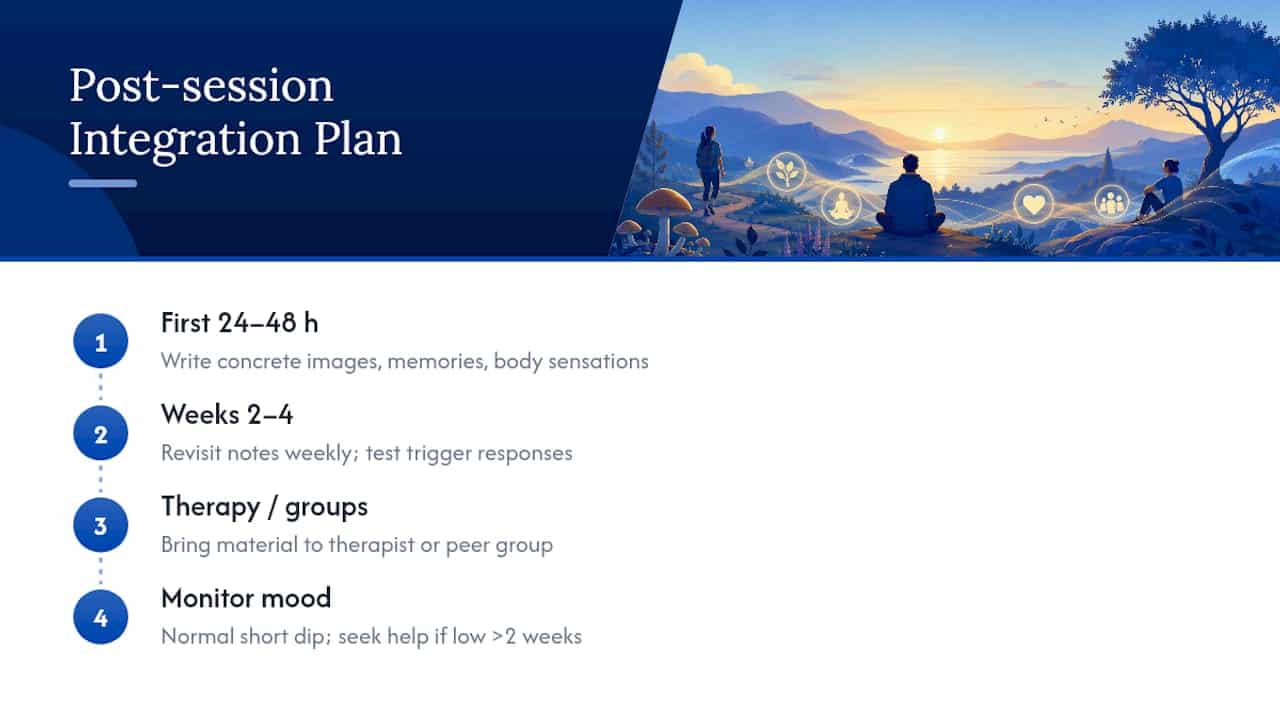
Integration is not optional. Journal within 24 hours while the material is fresh, then again weekly for two to four weeks. If you’re already in therapy, bring specific memories or images from the session into your next appointment rather than letting them fade. Peer integration circles, even informal ones, help normalize what came up.
Sourcing Safer Psilocybin Products: Lab Testing and Legal Checks
A real certificate of analysis (COA) lists psilocybin and psilocin content by weight percentage, plus a screen for heavy metals, pesticides, and microbial contamination. If a seller can’t produce one, or the COA looks generic and undated, treat that as a hard pass.
Product form changes your risk profile. Whole dried mushrooms let you weigh your own dose but vary in potency stalk to stalk. Edibles and capsules standardize the dose per unit, assuming the manufacturer’s testing is legitimate, but onset can be slower and less predictable than a mushroom eaten on an empty stomach.
Harm-reduction basics worth building into every purchase:
- Use reagent test kits when a COA isn’t available, especially for anything sold as a blend.
- Avoid products marketed as mystery “trip mixes” with undisclosed ingredients.
- Store dried product in an airtight container, away from light and moisture, to preserve potency.
- Check your local jurisdiction’s laws before ordering, growing, or possessing psilocybin. Rules shift by country and by state or province, and enforcement varies even within legal gray zones.
Harm-reduction organizations consistently recommend testing your substance, sticking to one substance per session, and skipping alcohol or cannabis on top of psilocybin, according to guidance from Here to Help.
Growing Your Own: Cultivation Basics and When to Buy Instead
A grow kit is the lowest-effort entry point into cultivation. Spores and live culture demand more sterile technique and patience, and in many places the legal status of spores differs from that of the mushrooms themselves, so check local law before ordering either.
- Sterilize everything that touches your substrate: pressure cook grain or use a still-air box for any open transfers.
- Keep humidity around 90 percent during fruiting and maintain fresh-air exchange, since stale, high-CO2 air produces long, thin stems instead of healthy caps.
- Watch for green or black mold, which almost always means a contamination during setup, not a fixable growing condition.
- Harvest just before the cap fully flattens, then dry thoroughly with a fan or dehydrator before storage.
Beginner failures trace almost entirely to sloppy sterile technique, according to Fungi Academy’s cultivation guide. If you want a consistent, known dose without troubleshooting mold, a vendor-tested product beats a first grow kit every time. Our grow kit FAQ walks through the common failure points in more detail.
Psilocybin and PTSD Medications: What Else Can Interact
Beyond the lithium and MAOI red flags, several PTSD medications interact with psilocybin in subtler ways that are easy to miss. SSRIs and SNRIs, the most commonly prescribed class for PTSD, tend to dampen psilocybin’s subjective effects because both act on serotonin pathways. Someone on a stable SSRI dose may find a typical dose barely registers, which sometimes tempts people to take more, and that’s where things get risky. Escalating dose to compensate for medication blunting removes the predictability that makes dosing charts useful in the first place.

Prazosin, frequently prescribed for PTSD-related nightmares, works on a different receptor system and doesn’t carry the same acute interaction risk, but it can lower blood pressure, and psilocybin’s own cardiovascular effects stack on top of that. Benzodiazepines, sometimes used short-term for PTSD anxiety, can blunt or shorten a psilocybin experience if taken close together, and combining the two to “manage” anxiety during a session works against the process rather than helping it.
Atypical antipsychotics, occasionally prescribed off-label for PTSD nightmares or hypervigilance, share mechanisms with the psychosis-risk contraindications mentioned earlier and deserve the same caution.
None of this is a complete list, and drug interactions vary by individual metabolism and dose. If you’re on any prescribed medication for PTSD, the responsible move is a conversation with the prescribing clinician before introducing psilocybin, not a forum post or a guess. Stopping a psychiatric medication abruptly to “clear it out” before a session carries its own withdrawal risks and should never be done without medical guidance.
Is Psilocybin Right for You? A Personal Readiness Checklist
Suitability comes down to three questions answered honestly, not optimistically. First: does anything on the contraindication list apply to you, directly or in your immediate family? If yes, this isn’t the right avenue, at least not without a clinician’s involvement.
Second: is your current life stable enough to absorb an intense emotional experience? PTSD symptoms can flare unpredictably during and after a session. If you’re in active crisis, mid housing move, freshly grieving, or otherwise stretched thin, wait. A psilocybin session doesn’t pause for convenient timing once it starts.
Third: do you have the actual infrastructure in place? That means a tested product, a private and safe setting, at least 6 to 8 hours with nothing else demanding your attention, and ideally someone available if things get hard. “I’ll figure it out in the moment” is not a plan.
A useful gut check: if you wouldn’t feel comfortable telling a doctor you’re planning to do this, that discomfort is worth examining before you proceed, not after. It usually points to either a contraindication you’re minimizing or a lack of preparation you already sense. None of this requires perfection. It requires that you can answer all three questions with a real yes, not a hopeful one.
Integration Techniques for PTSD Symptom Management After a Session
Generic integration advice (“journal about it”) undersells what actually helps when the material involves trauma specifically. In the first 24 to 48 hours, write down concrete images, memories, or body sensations that surfaced, not just your overall impression of the experience. Trauma-related insights during psilocybin sessions often arrive as fragments, and those fragments fade fast if not captured close to the source.
Over the following two to four weeks, revisit those notes on a set schedule, weekly works for most people, rather than only when symptoms flare. If a specific memory became less charged during the session, test that gently in daily life: does the trigger that used to spike your heart rate still hit as hard? Tracking that shift, or lack of one, gives you real data instead of a vague sense that “something changed.”
Bring the material into existing therapy if you have a therapist, even if they don’t specialize in psychedelics. EMDR practitioners and trauma-focused CBT clinicians can often work with what surfaced without needing to be a psychedelic specialist themselves. Peer integration groups fill the gap when professional support isn’t accessible, and simply saying the experience out loud to someone who won’t flinch has value on its own.
Watch for a rebound effect: some people feel a temporary low in the days after a session, sometimes called an “afterglow” that swings the wrong direction. That’s a normal part of the process for some, but if low mood persists past two weeks or intensifies, that’s a signal to loop in a mental health professional rather than wait it out alone.
Home Cultivation Reality Check: Yield and Potency Variability
Home-grown mushrooms are inherently less predictable than a tested product, and that unpredictability is the single biggest risk factor cultivation adds to self-care use. Two flushes from the same grow kit can differ in potency by a meaningful margin, driven by substrate quality, temperature swings, and even which flush number you’re harvesting (later flushes often run weaker).
This matters enormously for dosing accuracy. A gram of home-grown Psilocybe cubensis from flush one might hit noticeably harder than a gram from flush three off the same kit. If you’re using home-grown product for anything beyond casual exploration, weigh each batch separately, start at the very low end of your usual range with new material, and treat every fresh harvest as an unknown quantity until you’ve calibrated against it.
Drying technique adds another variable. Under-dried mushrooms mold in storage; over-dried or inconsistently dried batches can throw off your dry-weight dosing math entirely. A food dehydrator with a consistent low setting gives more reliable results than air drying, which depends heavily on ambient humidity.
If consistent, predictable dosing matters for your self-care routine, a lab-tested vendor product removes this variability entirely. Cultivation rewards patience and a tolerance for trial and error; it doesn’t reward anyone who needs to know exactly what they’re taking.
What the Research Actually Supports, and What Doesn’t Hold Up
The honest read on psilocybin and PTSD self-care is less exciting than most headlines suggest, and that’s not a bad thing. The strongest evidence in this space isn’t about psilocybin’s effects at all. It’s about harm reduction working: preparation, dose measurement, and having a sober person present measurably reduce challenging experiences. That’s a boring, unsexy finding, and it’s also the most actionable one in this entire guide.
Microdosing gets oversold constantly, often by people selling microdosing products. The controlled research doesn’t back the wellness claims circulating online, and conflating “I felt different” with “this measurably helped my PTSD symptoms” is where a lot of well-meaning advice goes wrong. That doesn’t mean microdosing is worthless for every individual, only that nobody can promise it will work for you specifically.
What the reader should prioritize first isn’t dose size or mushroom strain. It’s the screening step everyone wants to skip. Contraindications aren’t bureaucratic caution, they’re the difference between a difficult session and a genuinely dangerous one. Get that right before anything else on this list.
— Alex
Buying Tested Psilocybin Products Through Fungipsilocybinmushroom
Once you’ve screened for contraindications and mapped out your set and setting, the next real decision is where the product itself comes from. Fungipsilocybinmushroom exists for exactly that step: every product ships with lab-testing documentation instead of a seller’s word, which is the single biggest variable this guide keeps coming back to.
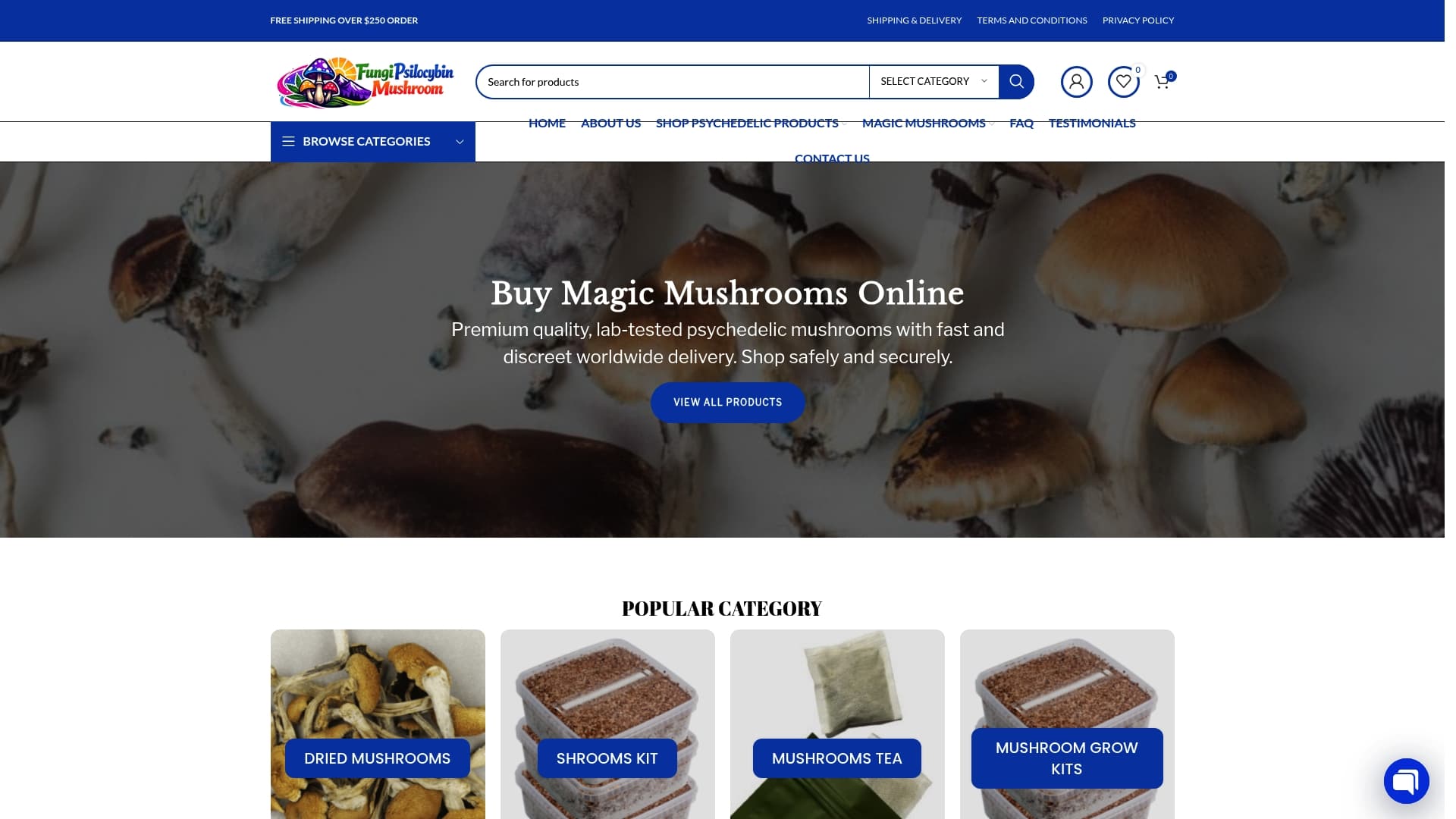
The catalog covers the range this guide walks through: microdose capsules for readers who want a standardized, low-dose option; edibles like the Seremoni chocolate bar line for consistent per-piece dosing; whole dried strains for readers who prefer to weigh their own dose; and grow kits for anyone choosing the cultivation route instead. Discreet worldwide shipping means the product arrives without drawing attention, and the site’s dosing resources, including a detailed dosing guide, stay available after purchase, not just before it.
If dosing precision is where you’re stuck, start there. Check the dosing guide, pick a product with a certificate of analysis attached, and order with your set and setting already planned.
Key Takeaways
Consumer psilocybin can support PTSD-related self-care for some adults, but only when medical screening, lab-tested sourcing, and structured integration all happen in that order.
| Point | Details |
|---|---|
| Screen contraindications first | Rule out psychosis history, bipolar disorder, and lithium or MAOI use before considering any dose. |
| Dose by dry weight only | Use a 0.01 to 0.1 gram scale and start at the threshold range, since potency varies by batch. |
| Treat microdosing claims cautiously | Controlled trials show subjective effects but no consistent cognitive or wellbeing benefit over placebo. |
| Plan integration, not just the session | Journal within 24 hours and revisit weekly for two to four weeks to make insights durable. |
| Choose tested products over guesswork | Fungipsilocybinmushroom provides lab-tested capsules, edibles, dried strains, and grow kits with dosing guidance included. |
This article is general information, not a substitute for advice from a qualified doctor. Consult a qualified healthcare professional about your own circumstances before acting on anything here.
Sources
- Psilocybin for mental health and addiction: what you need to know | NCCIH
- Controlled microdosing study — subjective effects without clear cognitive benefits | PMC9346139
- Psilocybin: A clinician’s guide to pharmacological interactions | Psychiatric Times
- Systematic review of psilocybin microdosing (Frontiers in Psychiatry, 2026)
Recommended
- How to Dose Magic Mushrooms – Fungi Psilocybin Mushroom 2026
- The Ultimate Guide to Finding Quality Psilocybin Mushrooms in California: Top 5 Trusted Sources
- Importance of San Diego Psilocybin Society: Community, Healing & Conscious Growth | 1 oz Psilocybin Mushroom
- Psilocybin Depression Treatment California: Your Complete Guide to Legal Mushroom Delivery Services and Therapeutic Options 2025 | mushroom delivery San Diego | mushroom for sale