
Blog
Get Cracker Dry to Keep Magic Mushrooms Potent 1–2 Years

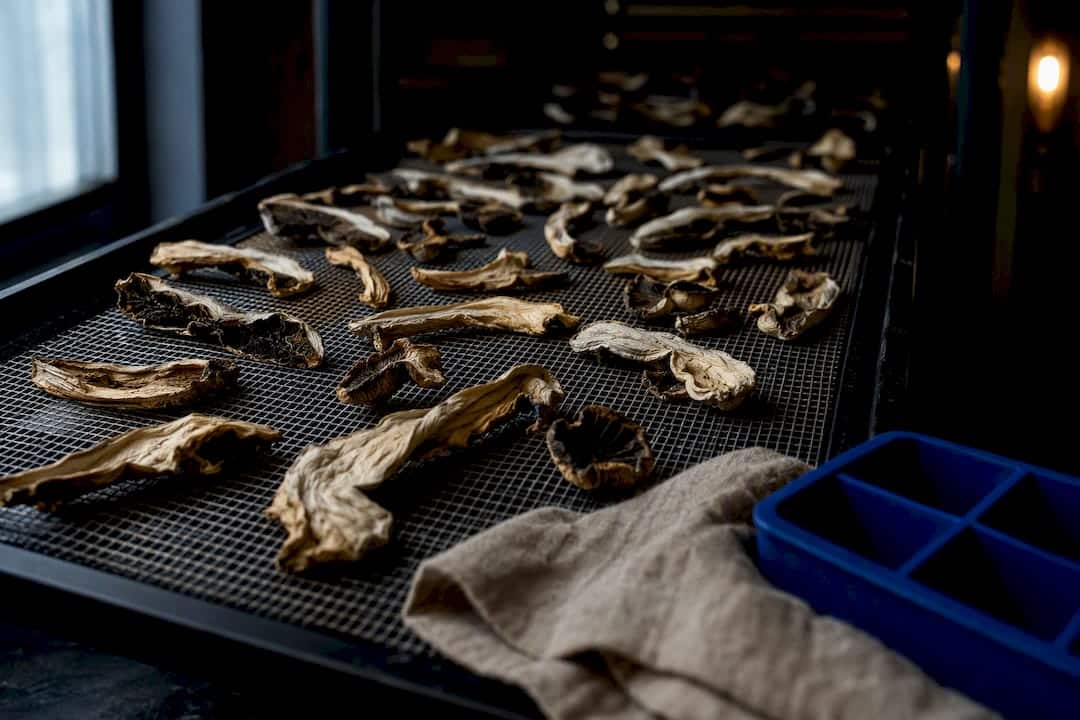
The fastest way to preserve potency is to get your mushrooms “cracker-dry” (snapping clean at roughly 5% moisture) using a gentle dehydrator or a staged desiccant setup, then seal them airtight with a fresh desiccant pack and store them cool and dark. Dry first, always. Never freeze fresh mushrooms hoping to preserve them later. Heat, light, moisture, and oxygen are the four things working against you from the moment you harvest.
TL;DR:
- Using a dehydrator at 95°F to 115°F and achieving a snap or crack test is essential for long-term potency preservation.
- Leave small mushrooms whole and slice larger ones into quarter-inch pieces to ensure even drying and prevent mold.
- Storing dried mushrooms in airtight, dark containers with desiccant packs greatly extends shelf life compared to loose jars or plastic bags.
- Reaching cracker-dry with about 5% moisture content reduces mold risk and chemical degradation, making the drying process critical.
- Avoid water rinsing, excessive heat, and storing fresh or improperly dried mushrooms to prevent enzymatic degradation, mold, and potency loss.
Table of Contents
- How Do You Prepare Mushrooms Before Drying?
- What’s the Best Way to Dry Magic Mushrooms?
- What Are the Alternatives to a Dehydrator?
- Why Are My Mushrooms Overheating, Under-Drying, or Molding?
- How Should You Store Dried Mushrooms for Maximum Shelf Life?
- How Long Do Dried Mushrooms Actually Stay Potent?
- What Mistakes Ruin a Dried Mushroom Batch?
- What Actually Separates a Good Dry From a Great One?
- An Editor’s Take on Getting This Right
- Want Lab-Tested Dried Mushrooms Without the Guesswork?
- Sources
How Do You Prepare Mushrooms Before Drying?
Harvest at the right window and get mushrooms into a drying setup the same day. Enzymatic activity starts breaking down compounds the moment a mushroom is picked, and every hour of delay before drying begins works against you.
Skip the rinse. Water introduces moisture you’ll spend hours trying to remove later, and it invites mold before drying even starts. Instead, brush off substrate with a soft, dry brush or a clean paper towel, and trim away any dark, dirt packed root ends.
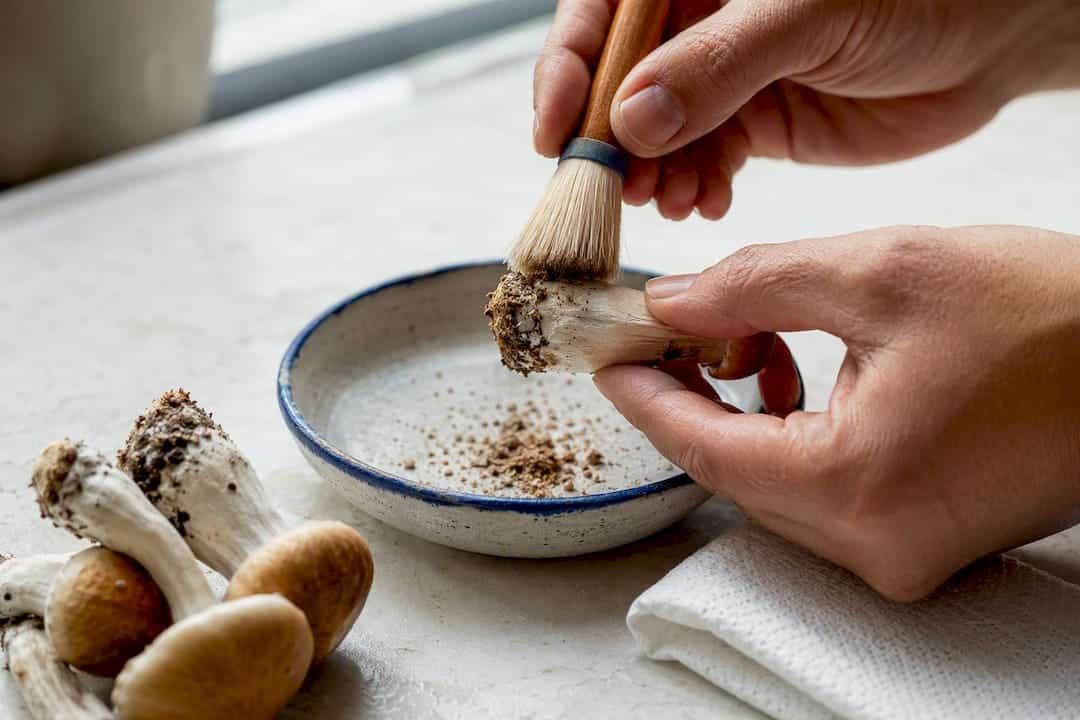
The whole-versus-sliced decision matters more than most guides admit. Research on tryptamine stability found that drying whole in the dark at room temperature produces biomass with comparable tryptamine levels to fresh material, while powdered or heavily damaged mushrooms degrade faster once in storage. That’s a strong argument for leaving smaller specimens intact.
That said, thick caps and dense stems dry slowly, and a slow dry is a moldy dry. The practical compromise:
- Leave small to medium mushrooms whole whenever possible to limit oxidation surface area.
- Slice larger caps and thick stems into pieces roughly a quarter inch thick so moisture escapes evenly.
- Handle everything gently. Bruising and crushing accelerate the enzymatic conversion that eats into your final potency.
- Lay pieces cap side up initially so gills aren’t crushed against a tray.
If you grew your own batch, the timing and handling steps in a grow kit FAQ cover harvest windows that line up directly with when drying should begin.
What’s the Best Way to Dry Magic Mushrooms?
A food dehydrator is the most reliable home method because it holds a steady low temperature and keeps air moving across every piece at once. Grower guides consistently point to a range of roughly 95°F to 115°F (35°C to 46°C) as the sweet spot. Below that, drying drags on and risks mold. Above it, you start cooking off the compounds you’re trying to preserve.
Setup and timing:
- Line dehydrator trays with mesh liners or parchment with holes punched through for airflow.
- Arrange mushrooms in a single layer with space between each piece. Crowding traps moisture and creates uneven drying.
- Set the dehydrator to 95°F (35°C) for the first few hours, then you can nudge toward 115°F (46°C) once the surface moisture is gone.
- Check trays every 2 to 3 hours for the first stretch, rotating them if your unit runs hotter on one side.
- Small caps and thin stems typically finish in 6 to 12 hours. Thicker specimens or whole large mushrooms can take 18 to 24 hours.
- Test a stem by bending it. If it flexes at all, it needs more time.
- Once it snaps clean instead of bending, pull a few pieces and let them sit at room temperature for 20 to 30 minutes before the final check.
- Snap-test again after cooling. Trapped internal moisture sometimes shows up only after the piece has cooled fully.
That snap, not a squeeze or a bend, is the benchmark growers rely on. It’s commonly called “cracker dry”, and it corresponds to a moisture content of around 5% or less. Below that threshold, mold has almost nothing to grow on and chemical degradation slows considerably.
Pro Tip: Keep a small bowl of uncooked rice or a food-safe silica packet next to your finished trays while you’re still checking other batches. It pulls ambient humidity away from mushrooms that are already dry, so they don’t reabsorb moisture while waiting on their slower neighbors.
What Are the Alternatives to a Dehydrator?
Not everyone owns a dehydrator, and several other methods work fine if you respect their limits.
- Fan and air drying: Spread mushrooms on a mesh screen or paper towel with a box fan running nearby, in a room with humidity below 50% if you can manage it. This is slow, often 2 to 4 days, and it only works reliably in dry climates. Damp environments turn this into a mold incubator.
- Desiccant chamber: Pre-dry mushrooms with a fan for 12 to 24 hours to knock out surface moisture, then transfer them into a sealed container lined with food-grade silica gel packets (never let mushrooms touch industrial or non-food silica directly). This finishes the job over another day or two with almost no heat exposure, which some growers consider the gentlest approach outside of a dehydrator.
- Oven drying: Treat this as a last resort. Set the oven to its lowest possible setting, prop the door open a few inches, and place a thermometer inside the door to confirm you’re staying under 115°F (46°C). Ovens run hot and uneven, and it’s easy to scorch a batch without noticing.
- Freeze-drying: This preserves texture and nutritional quality better than hot-air drying, but it requires equipment most home users don’t have and isn’t practical for a single harvest. Worth knowing about, not worth chasing unless you already have access to a freeze-dryer.
Combining a fan pre-dry with a desiccant finish is a smart middle path. It cuts total drying time while keeping mushrooms out of direct heat for most of the process.
Why Are My Mushrooms Overheating, Under-Drying, or Molding?
Heat and light are the two fastest ways to wreck a batch before storage even begins. Peer-reviewed stability research on Psilocybe cubensis found that thermal degradation becomes significant above 100°C, and separately, drying whole mushrooms in the dark at room temperature preserved tryptamine levels comparable to fresh biomass. The lesson is consistent across both findings: low, steady temperature beats speed every time.

Overheated mushrooms turn brittle, dark, and sometimes slightly scorched at the edges or stem base. Once that happens, the damage is done. There’s no fixing it. Drop your dehydrator temperature and watch the next batch more closely.
Under-dried mushrooms feel flexible instead of snapping, or show soft spots on thicker caps and stems. The fix is simple: put them back in for more time and recheck every hour rather than guessing.
Mold shows up as fuzzy patches, usually gray, white, or black, sometimes with a sour or musty smell. There’s no salvaging a moldy batch. Discard the contaminated pieces, disinfect trays and tools with a diluted bleach solution or high-proof alcohol, and let everything dry completely before the next run.
One stark data point underscores why drying matters so much: freezing fresh mushrooms at -80°F without drying first caused roughly 90% loss of tryptamines. Cold does not substitute for drying. Ever.
How Should You Store Dried Mushrooms for Maximum Shelf Life?
Let dried mushrooms cool to room temperature for at least 30 minutes before sealing anything. Packing warm mushrooms into a jar traps residual heat, which condenses into moisture on the container walls and undoes the entire drying process.
From there, you have three realistic packaging routes:
- Mason jars with silica packets are the simplest option. Drop in a food-grade desiccant packet, seal, and store somewhere dark. Good for shorter-term storage, but the jar still holds air, and oxygen is one of the four things driving degradation.
- Vacuum sealing removes most of that air and is the better choice for anything you want to keep more than a year. A basic vacuum sealer and food-safe bags handle this in under a minute per batch.
- Inert gas flushing (using argon or nitrogen in the headspace before sealing) pushes oxygen exposure even lower, but it requires gear most home users won’t bother buying for a personal supply.
Skip the fridge unless the bag is fully vacuum-sealed. Refrigerators cycle humidity constantly, and an improperly sealed jar in a fridge will pull in moisture over weeks. If you do freeze fully cracker-dry, vacuum-sealed mushrooms, let the sealed bag come to room temperature before opening it. Opening a cold bag straight from the freezer invites condensation onto the exact material you worked to dry.
Label every container with the strain, harvest date, and drying method. Portion into smaller vacuum bags by dose before sealing rather than breaking open your entire stash every time you need a gram.
Pro Tip: Keep your main supply sealed and untouched, and portion a small rotating amount into a separate jar for near-term use. Every time you open a container, you expose the whole batch to fresh air and ambient humidity.
How Long Do Dried Mushrooms Actually Stay Potent?
Storage method changes the timeline dramatically, and the numbers are more specific than most people expect.
| Storage method | Expected shelf life | Notes |
|---|---|---|
| Pantry jar with desiccant | 6 to 12 months | Good for near-term supply; monitor for moisture regularly |
| Vacuum sealed, room temperature | Up to 1 year | Oxygen removal is the main advantage over a loose jar |
| Vacuum sealed and frozen | 1 to 2 years | Best long-term option if sealing is done properly before freezing |
These ranges come from practical cracker-dry storage benchmarks that growers and preservation guides rely on. Degradation doesn’t stop at any point, it just slows to a crawl under cool, dark, dry conditions.
Powdered mushrooms lose potency noticeably faster than whole pieces because grinding exposes far more surface area to oxygen and light at once. If you plan to store for more than a few months, keep material whole and grind only right before use. Check jars every two to three months for any sign of moisture beading on the glass or a musty smell, both early warnings that something is going wrong inside.
What Mistakes Ruin a Dried Mushroom Batch?
Most ruined batches trace back to one of a handful of avoidable errors. Storing mushrooms before they’re truly cracker-dry is the single biggest one. Drying at excessive heat to save time is a close second. Washing mushrooms with water before drying and sealing containers while any residual moisture remains round out the list.
- Never store a batch that only feels dry. Snap-test every piece, not just the biggest one.
- Inspect stored mushrooms periodically: look for spotting or fuzz, feel for any softness that wasn’t there before, and smell for anything musty or sour.
- If anything about a batch seems off, discard it. A few dollars of lost mushrooms is a far better outcome than a contaminated one.
What Actually Separates a Good Dry From a Great One?
Home drying setups vary enormously, which is exactly why lab verification matters when you’re not doing it yourself. Fungipsilocybinmushroom runs its own products through lab testing before they’re listed, so buyers aren’t relying on a stem snap and a guess. That same rigor shapes the educational resources the site maintains around cultivation and safe handling.
If you’re drying your own harvest, the grow-at-home guidance walks through how growing conditions set up the drying stage that follows. One caveat worth stating plainly: psilocybin’s legal status varies enormously by country and even by region within a country. Check your local laws before you harvest, dry, or store anything.
An Editor’s Take on Getting This Right
Most drying guides treat “cracker dry” as a nice-to-have detail buried halfway down the page. It shouldn’t be. It’s the entire game. Everything else, tray layout, temperature range, whether you use a dehydrator or a box fan, is just a means of getting to that one snap test reliably and without scorching your batch.
Here’s what I think gets underweighted: people obsess over the drying method and treat storage as an afterthought, when the data suggests the opposite matters more over time. A mediocre dry followed by a genuinely airtight, dark, desiccant-backed seal will likely outlast a perfect dry stuffed into a loosely closed jar on a sunny windowsill. Oxygen and light do slow, patient damage that most people never notice until the batch is noticeably weaker than they remember.
If you take one habit from this guide, make it this: get to cracker-dry, then obsess over sealing out air and light. That single combination does more for long-term potency than any temperature tweak or gadget upgrade ever will.
— Alex
Want Lab-Tested Dried Mushrooms Without the Guesswork?
If drying your own harvest sounds like more equipment and trial-and-error than you want to take on, Fungipsilocybinmushroom offers an alternative: lab-tested products that arrive already at the potency and quality you’re after, with discreet worldwide shipping so you skip the dehydrator entirely.

Beyond raw dried mushrooms, the shop carries options for readers who’d rather not manage storage at all, including dosed edibles like the Seremoni psilocybin chocolate bar, which sidesteps the entire drying and sealing process since potency is locked in at production. Every product listed goes through lab verification before it’s offered for sale, so you’re not relying on a snap test and a hope.
If you’d rather explore a specific variety than build your own drying setup from scratch, take a look at the Amazonian psilocybin mushroom selection and place an order with confidence that the testing and handling were done right the first time.
This article is general information, not a substitute for advice from a qualified doctor. Consult a qualified healthcare professional about your own circumstances before acting on anything here.
Sources
- Stability of psilocybin and its four analogs in the biomass of the psychotropic mushroom Psilocybe cubensis
- Cracker Dry: How to Dry & Store Magic Mushrooms (2026)
- Storage & Degradation — iMicrodosing Research
- Novel Perspective of Medicinal Mushroom Cultivations: A Review Case for ‘Magic’ Mushrooms (MDPI review)
Recommended
- How to Grow Magic Mushrooms at Home: The Secret Method Experts Don’t Want You to Know 2day
- Magic Mushroom Grow Kit FAQ: All Questions & Solutions 2026
- How Long Do Magic Mushrooms Stay in Your System New York? Complete Guide 2025
- Top 7 magic mushroom strains and their effects | magic mushroom For Sale