
Blog
Clinicians: Which Psilocybin Mechanism Links Are Proven in Humans

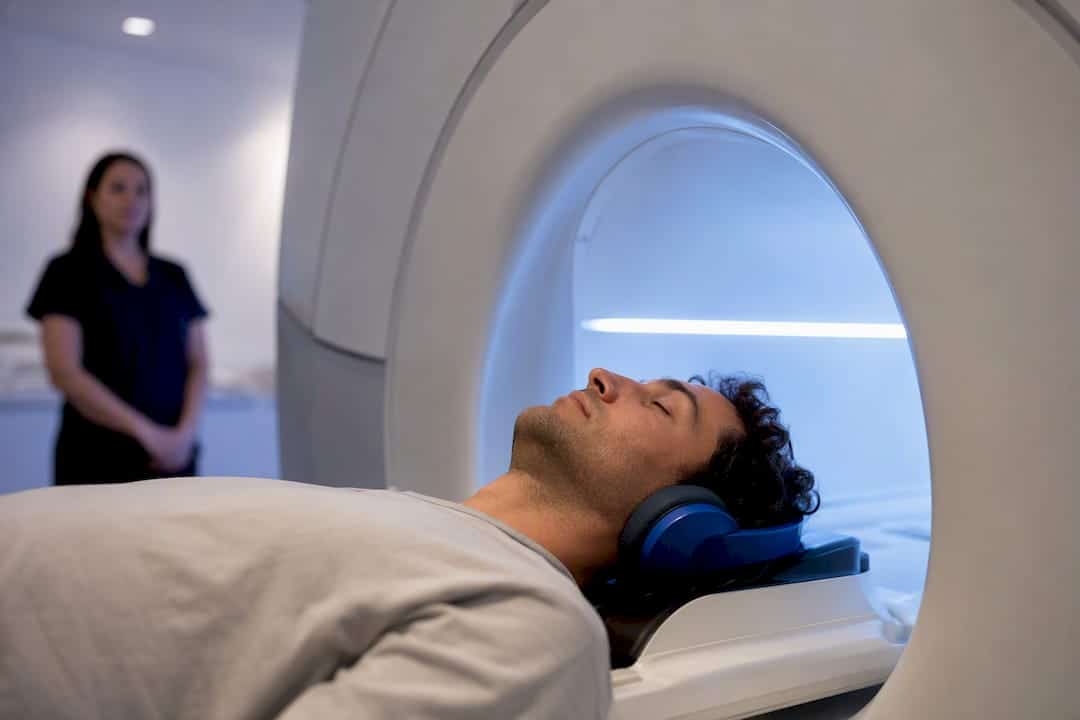
Psilocybin itself does almost nothing. Once swallowed, it converts to psilocin, which binds cortical 5-HT2A receptors and triggers a fast cascade: cortical excitability rises, the default mode network loses its usual coherence, and signal entropy climbs across the brain. That acute disruption appears to open a window for molecular plasticity, involving BDNF and related signaling, that may outlast the trip itself and help explain why a single dose can shift mood and outlook for weeks.
TL;DR:
- Psilocybin is rapidly converted into psilocin in the gut, with peak plasma levels reaching around two hours after dosing, but subjective effects often peak slightly later.
- Differences in metabolism due to genetic variations in UGT, CYP2D6, and CYP3A4 enzymes lead to significant individual variability in psilocin levels, even with identical doses.
- Activation of 5-HT2A receptors on cortical pyramidal neurons causes acute brain network disruptions, including loss of default mode network coherence and increased inter-network connectivity.
- Neuroplasticity markers like BDNF and mTOR increase after dosing, but their role in long-term clinical benefits is still less certain than receptor-level and network effects.
- Combining precise pharmacokinetic, imaging, and electrophysiological data is critical for understanding psilocybin’s mechanisms and optimizing clinical protocols.
Table of Contents
- Psilocybin Mechanism 101: From Prodrug to Psychedelic Effect
- Metabolism and Pharmacokinetics: How Psilocybin Becomes Psilocin
- Receptor Pharmacology: Why 5-HT2A Sits at the Center
- Network-Level Disruption: The Default Mode Network Comes Apart
- Brainwave and Electrophysiology Signatures Under Psilocybin
- Neuroplasticity Beyond the Trip: BDNF and Synaptic Growth
- What Animal Models and PBPK Simulations Reveal
- From Receptor to Recovery: How Mechanism Shapes Clinical Protocols
- Safety Profile, Individual Variability, and Drug Interactions
- Grading the Evidence: What We Know and What’s Still Guesswork
- What the Evidence Actually Adds Up To
- Key Studies and Reviews Worth Reading
- Sources
Psilocybin Mechanism 101: From Prodrug to Psychedelic Effect
Every explanation of the psilocybin mechanism starts with a simple pharmacological fact: psilocybin is a prodrug. It has to be converted before it does anything to the brain. That conversion, receptor activation, and the downstream neural reorganization it triggers form a chain with three well-supported links and at least two genuine gaps, and understanding where solid data ends and hypothesis begins matters if you’re trying to reason about this substance rather than just repeat talking points about it.
The first link is metabolic: dephosphorylation of psilocybin into psilocin, largely completed in the gut before the molecule ever reaches systemic circulation. The second is receptor pharmacology: psilocin’s affinity for 5-HT2A on cortical pyramidal neurons, which drives the acute subjective and electrophysiological effects. The third is network-level reorganization, visible on functional MRI as a marked loosening of the default mode network (DMN) and a corresponding increase in connectivity between networks that normally stay segregated. Layered on top of all three is a slower, less understood process: molecular plasticity that may persist long after psilocin has cleared the bloodstream.
Each of these stages has a different evidentiary weight. The metabolism and receptor pharmacology are grounded in decades of pharmacokinetic and radioligand-binding data. The network effects have strong, recent human imaging support. The plasticity story is compelling in animal models but still largely inferential in humans. That distinction runs through everything below.
Metabolism and Pharmacokinetics: How Psilocybin Becomes Psilocin
Psilocybin doesn’t cross into the brain as psilocybin. Non-specific alkaline phosphatases and esterases in the intestinal wall strip a phosphate group almost immediately after ingestion, a process largely completed in the jejunum and colon before the drug reaches systemic circulation in meaningful amounts. What arrives in the bloodstream, and eventually the brain, is psilocin, the actual psychoactive molecule.
Human PK-PD studies give a fairly consistent kinetic picture. Oral psilocin typically reaches peak plasma concentration (Tmax) around two hours after dosing, with concentrations rising in a dose-proportional fashion. A controlled dosing study using 15, 25, and 30 mg doses recorded mean peak psilocin concentrations of 11, 17, and 21 ng/mL, respectively, with elimination half-lives clustering between 1.4 and 1.8 hours and subjective effects lasting roughly 5.5 to 6.4 hours. Notably, body weight didn’t significantly shift these numbers in that cohort, which runs counter to the common assumption that dosing should scale tightly with body mass.
Pro Tip: If you’re trying to map a session’s timeline against the pharmacokinetics, remember Tmax and peak subjective intensity don’t align perfectly. Subjective effects tend to build for another 30 to 60 minutes after psilocin peaks in plasma, which is one reason session planning benefits from a dosing guide rather than a flat mg-per-kg formula.
Psilocin doesn’t just disappear once metabolized. It’s cleared through two main routes, and where those routes diverge is where individual variability enters the picture.
- Phase II glucuronidation by UGT enzymes, particularly UGT1A9 and UGT1A10, is the dominant clearance pathway, producing psilocin glucuronide as the major inactive metabolite.
- CYP2D6 and CYP3A4 contribute smaller Phase I oxidative pathways, and genetic polymorphisms in these enzymes can meaningfully shift exposure in either direction.
- A minor fraction of psilocin metabolism may involve monoamine oxidase, though this pathway is far less characterized than glucuronidation.
A systematic review of psilocybin pharmacokinetics confirms this UGT-dominant, CYP-assisted metabolic profile and flags substantial interindividual variability in clearance rates as a real confound in dose-response research. Two people taking an identical dose can land in noticeably different plasma ranges, which complicates any effort to standardize psilocybin dosing purely by weight or milligrams.
The pharmacodynamic payoff of all this kinetic detail is straightforward: plasma psilocin level correlates with the intensity of the experience. Studies pairing plasma sampling with subjective ratings and imaging find that as plasma psilocin rises, so does self-reported drug intensity, alongside measurable reductions in brain network integrity. The kinetics aren’t just pharmacological trivia; they’re a direct predictor of what’s happening in the network data covered further down.
Receptor Pharmacology: Why 5-HT2A Sits at the Center
Psilocin binds a handful of serotonin receptor subtypes, but 5-HT2A agonism is the receptor interaction that matters most for the acute psychedelic state. That’s not a guess; it’s demonstrated through pharmacological blockade experiments where pretreatment with 5-HT2A antagonists blunts or eliminates the subjective effects almost entirely, which is about as close to causal proof as receptor pharmacology gets.
Psilocin also binds 5-HT1A and 5-HT2C with meaningfully lower affinity than 5-HT2A. These secondary interactions likely modulate the overall response, particularly aspects of mood and anxiety during the session, but they don’t drive the core hallucinogenic signature the way 5-HT2A does.
The anatomical detail worth knowing: 5-HT2A receptors are densely expressed on layer V pyramidal neurons in the cortex, the large excitatory neurons that project both locally within cortical columns and to distant regions. Activating these receptors increases cortical excitability and appears to disrupt normal top-down signaling patterns, the kind of predictive, expectation-driven processing the cortex normally relies on to interpret sensory input efficiently. That disruption is a plausible cellular basis for why the psychedelic state feels less filtered and more raw.
- 5-HT2A agonism is the proximal, pharmacologically validated driver of acute hallucinogenic effects.
- 5-HT1A and 5-HT2C contribute secondary modulation, likely affecting mood and anxiety responses rather than perceptual intensity.
- Layer V pyramidal neurons carry the highest cortical density of 5-HT2A, making them the anatomical hub for psychedelic drug action.
- Activation here increases excitability and appears to loosen normal predictive, top-down cortical processing.
The frontier research question is whether all of this needs to happen together. 5-HT2A signals primarily through Gq protein coupling, but receptors like it can also engage alternative intracellular pathways, sometimes called biased signaling. Emerging work explores whether the Gq pathway can be pharmacologically separated from whatever downstream signaling drives lasting plasticity, essentially asking whether a molecule could trigger the therapeutic cascade without producing hallucinations at all.
That question isn’t academic curiosity. If biased signaling at 5-HT2A really does separate perceptual effects from plasticity-driving effects, it opens the door to non-hallucinogenic drug candidates built on the same receptor target. Whether that’s a net positive for psychedelic medicine, given how much of the therapeutic literature ties subjective intensity to outcome, is genuinely unresolved and worth watching over the next several years of pharmacology research.
Network-Level Disruption: The Default Mode Network Comes Apart

The clearest, most reproducible imaging finding in psychedelic neuroscience is what happens to the default mode network under psilocybin. The DMN, the set of interconnected regions active during self-referential thought and mind-wandering, loses internal coherence, while connectivity between networks that normally operate somewhat independently spikes upward.
A recent longitudinal high-frequency MRI study put actual numbers on the scale of this disruption: functional connectivity changes under high-dose psilocybin were more than three times greater than those observed under methylphenidate, a striking magnitude for a single-session pharmacological intervention. That same study tracked participants over weeks and found reduced hippocampus–DMN connectivity persisting well beyond the acute drug window, a detail with real clinical weight given the hippocampus’s role in memory and mood regulation.
- Within-network coherence in the DMN drops sharply during acute psilocin exposure.
- Between-network connectivity rises, effectively blurring boundaries that are normally well maintained.
- Hippocampus–DMN connectivity reductions have been observed persisting for weeks post-dose.
- The magnitude of connectivity change correlates with plasma psilocin level and subjective intensity ratings.
This is where the pharmacokinetics and the imaging data connect directly. Studies pairing plasma sampling with resting-state fMRI find that plasma psilocin level correlates negatively with DMN integrity and positively with the degree of network desegregation, giving researchers a rare direct line from a measurable blood concentration to a measurable brain-state change.
None of this happens in a vacuum, though. Task state, prior expectation, and the physical and social environment (the “set and setting” language common in psychedelic research) modulate how large these connectivity shifts turn out to be. A person lying still in an MRI scanner with headphones and a research assistant nearby is not experiencing the same context as someone in an unfamiliar setting, and network-level effects appear sensitive to that context in ways researchers are still working to quantify precisely.
Brainwave and Electrophysiology Signatures Under Psilocybin
Functional MRI shows where connectivity changes; electrophysiology shows how fast they happen. EEG and MEG studies of the acute psilocybin state consistently report broadband reductions in alpha power, the dominant resting rhythm typically strongest over posterior cortical regions during relaxed wakefulness. Alongside that, measures of neural signal complexity and entropy tend to rise, a pattern some researchers interpret as the brain moving away from its usual, more predictable oscillatory patterns toward a less constrained state.
Preclinical electrophysiology fills in cellular-level detail that human scalp recordings can’t capture. Local field potential and single-unit recordings in animal models show altered firing patterns and disrupted synchrony following 5-HT2A receptor activation, generally consistent with the desynchronization seen at the network level in human imaging. This is where the temporal resolution advantage of electrophysiology earns its place in the mechanistic story: fMRI captures network states averaged over seconds, while LFP recordings can track millisecond-scale shifts in firing and phase relationships that plausibly explain how a receptor-level event cascades into a network-level one so quickly.
- Alpha power reductions are among the most consistently replicated EEG findings during acute psilocybin effects.
- Increases in signal entropy and complexity metrics accompany that alpha suppression.
- Animal LFP and single-unit studies show altered firing synchrony tied directly to 5-HT2A activation.
- Electrophysiology’s fine temporal resolution helps bridge millisecond receptor events to slower network-level imaging findings.
The gap here is translational rather than conceptual. Researchers have a reasonably clear picture of what 5-HT2A activation does to cortical neurons and a reasonably clear picture of what happens to large-scale networks, but the precise electrophysiological signature that predicts a specific subjective experience, ego dissolution versus visual distortion versus emotional release, remains largely unmapped. Closing that gap is one of the more tractable near-term research goals in the field.
Neuroplasticity Beyond the Trip: BDNF and Synaptic Growth
The acute hallucinogenic signaling described above is fast and receptor-driven. What may sustain benefits after the drug clears is a slower, molecular process, and this is where the psilocybin mechanism story shifts from electrophysiology to cell biology.
Animal studies and some human biomarker proxies point toward increased brain-derived neurotrophic factor (BDNF) expression and mTOR pathway activation following psychedelic dosing, both associated with synaptic growth and dendritic spine formation. Reviews synthesizing this literature describe these neurotrophic cascades as mechanistically distinct from the acute 5-HT2A signaling that produces the trip itself, meaning the molecule that gets someone high and the molecule pathway that potentially helps their depression may not be the same thing wearing different hats.
That distinction matters for a practical reason: sustained mood improvement likely depends on more than the biology alone. Structured psychotherapeutic integration around the dosing session appears to compound whatever plasticity window the drug opens, which is consistent with why most clinical protocols pair dosing with preparation and follow-up therapy rather than treating the substance as a standalone intervention.
- Preclinical studies report elevated BDNF and mTOR activity following psychedelic exposure, both linked to synaptic growth.
- These neurotrophic mechanisms appear distinct from the acute 5-HT2A hallucinogenic pathway.
- Durable mood benefits likely depend on plasticity cascades combined with psychotherapeutic integration, not the drug alone.
- Dose and frequency thresholds required for lasting plastic change in humans remain undefined.
Pro Tip: Don’t conflate “neuroplasticity” with “the trip felt profound.” The molecular plasticity markers researchers track (BDNF expression, dendritic spine density) are measured independently of subjective reports, and the two don’t always move in lockstep in animal models, a reminder that intensity of experience and depth of biological change aren’t guaranteed to be the same thing.
What’s genuinely unresolved is dosing frequency for durable change. A single high dose, repeated moderate doses, and microdosing regimens likely engage these plasticity pathways differently, and human data mapping dose and frequency directly onto structural brain change is still thin. That gap sits near the top of most researchers’ priority lists.
What Animal Models and PBPK Simulations Reveal
Physiologically based pharmacokinetic (PBPK) models take PK data a step further by simulating drug concentration across multiple body compartments simultaneously rather than just tracking plasma levels. A recent PBPK model spanning mice, rats, and humans structures the simulation around eight compartments, including brain, liver, kidney, gut, and adipose tissue, and incorporates UGT-mediated metabolic parameters fitted from in vitro enzyme kinetics data.
One notable output from that modeling: predicted brain psilocin concentrations can exceed plasma concentrations, consistent with psilocin’s lipophilicity and its efficient crossing of the blood-brain barrier. That’s a useful correction for anyone assuming plasma levels are a direct proxy for brain exposure; the model suggests brain tissue may actually be more concentrated than blood at certain time points.
- PBPK models use multi-compartment structures to simulate concentration in brain, liver, kidney, and other tissues simultaneously.
- Predicted brain concentrations of psilocin can exceed plasma concentrations at relevant time points.
- Cross-species scaling relies on allometric adjustments, which introduce real uncertainty when extrapolating rodent findings to human dosing.
- Several minor Phase I metabolic pathways remain undercharacterized, leaving gaps in even well-built PBPK frameworks.
Translation from animal to human data always carries a cost, and psilocybin research is no exception. Allometric scaling and in vitro to in vivo extrapolation (IVIVE) are standard pharmacology tools, but they’re approximations, not certainties, and the metabolic and receptor-density differences between rodent and human cortex mean behavioral findings in mice need to be read as mechanistically suggestive rather than directly predictive of human dosing outcomes.
From Receptor to Recovery: How Mechanism Shapes Clinical Protocols
The pharmacokinetic timeline maps directly onto how therapeutic sessions get structured. Subjective onset typically begins within one to two hours of dosing, aligning closely with psilocin’s Tmax, peak effects cluster around the two-hour mark, and the overall subjective experience commonly runs five to six hours before resolving. That timeline is why clinical and guided protocols block out a full day for a dosing session rather than a couple of hours, and it’s the same logic behind structured dosing guidance built around realistic session windows rather than rushed timing.
The more interesting clinical hypothesis is that the acute network desynchronization described earlier creates a temporary window of heightened plasticity, one where a person’s usual cognitive patterns and self-referential narratives are less rigidly enforced by the DMN. If that window is real and clinically exploitable, psychotherapy delivered during or shortly after that period may help consolidate insight into something that outlasts the drug’s pharmacokinetic clearance.
Whether the subjective experience itself is a necessary ingredient for the clinical benefit, or just a side effect of the biology that actually does the work, is one of the most contested open questions in the field. It’s the exact question biased-signaling research is trying to answer at the receptor level: if a compound could activate the plasticity-relevant signaling cascade at 5-HT2A without producing the perceptual disruption, would the therapeutic outcome hold up? Nobody has a confirmed answer yet.
- Onset of subjective effects generally begins one to two hours post-dose, tracking psilocin’s Tmax.
- Peak subjective intensity clusters around the two-hour mark, slightly trailing peak plasma concentration.
- Total subjective effect duration commonly runs five to six hours in controlled dosing studies.
- Acute network desynchronization may open a transient plasticity window that structured psychotherapy could help consolidate.
Given all of this, the strongest clinically relevant research designs pair pharmacokinetic sampling with imaging and standardized outcome measures in the same cohort, rather than studying PK, brain imaging, and clinical results in separate, disconnected samples. That kind of paired design is still the exception rather than the rule in published psychedelic trials.
Safety Profile, Individual Variability, and Drug Interactions
Mechanistic understanding of psilocybin carries direct safety implications, particularly around what else is in someone’s system when they dose. A handful of interaction classes deserve specific attention from anyone researching or overseeing psilocybin use.
- SSRIs and other 5-HT2A-relevant medications can blunt subjective intensity and shift the physiological response to psilocin, since these drugs compete for or downregulate the same receptor system psilocin depends on.
- Lithium and certain mood stabilizers carry case-report-level associations with serious adverse events, including seizures, when combined with psychedelics, which is a strong argument for conservative exclusion criteria rather than case-by-case judgment calls.
- CYP2D6 and CYP3A4 polymorphisms shift individual exposure levels meaningfully. A systematic review of psilocybin pharmacokinetics documents this variability directly, and it means two people at an identical dose can end up with different effective exposure based on genetics alone.
- UGT enzyme activity differences compound the CYP-related variability, since glucuronidation is the dominant clearance pathway for psilocin and differs across individuals.
For researchers and clinicians, the practical takeaway is straightforward: a thorough medication review before any planned dosing session isn’t optional caution, it’s a mechanistic necessity given how many common psychiatric medications intersect with the same serotonergic and metabolic systems psilocin relies on. Anyone weighing safety questions in more depth should consult dedicated safety-focused resources alongside a qualified medical provider, particularly when other medications are already part of the picture.
Grading the Evidence: What We Know and What’s Still Guesswork
Not every piece of the psilocybin mechanism rests on equally solid ground, and it’s worth being explicit about the hierarchy.
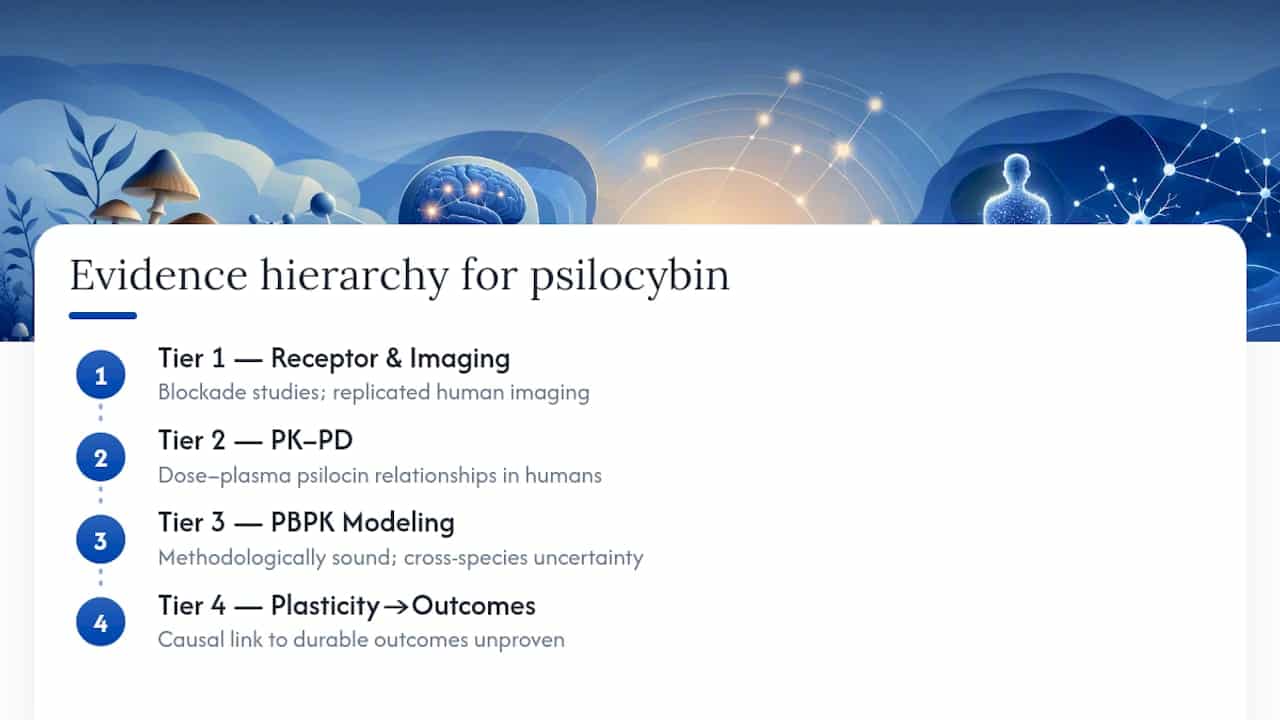
The strongest evidence sits at the receptor level. 5-HT2A agonism as the driver of acute effects is about as well established as pharmacology gets for a psychoactive compound, backed by blockade studies and decades of binding data. Human imaging showing DMN desegregation and increased network entropy is nearly as solid, replicated across multiple independent cohorts and imaging modalities.
The middle tier covers pharmacokinetics and PBPK modeling. PK-PD relationships linking dose to plasma psilocin and subjective intensity are well characterized in humans, and PBPK models predicting tissue-level exposure are methodologically sound but still carry the inherent uncertainty of cross-species extrapolation.
The weakest tier, and the most clinically important, is the causal chain connecting molecular plasticity markers to durable clinical outcomes in humans, and the question of whether hallucinogenic and therapeutic signaling can be cleanly separated. Priority research should focus on biased-signaling ligand development, longitudinal studies pairing PK sampling with repeated imaging in the same subjects, and standardized electrophysiological protocols that can be compared across labs rather than each using bespoke methods.
What the Evidence Actually Adds Up To
Three things stand out after working through this mechanism end to end. First, the chain from prodrug conversion to receptor binding to network disruption is genuinely well supported by human data, not just animal extrapolation dressed up as consensus. Second, the plasticity story, while biologically plausible and consistent with animal findings, is still the weakest empirical link when it comes to humans, and anyone treating BDNF-driven synaptogenesis as a settled explanation for lasting clinical benefit is overstating the evidence. Third, biased signaling research deserves more attention than it currently gets in public discussion, because it’s the one research direction that could eventually answer whether the trip and the treatment are actually the same thing.
If I were setting research priorities, paired PK-imaging designs and conservative medication screening protocols would sit at the top of the list, not because they’re novel, but because too much existing work still studies these pieces in isolation. Mechanistic claims about psilocybin move fast in public conversation; the underlying data should get equal scrutiny before those claims get translated into clinical promises.
— Alex
Key Studies and Reviews Worth Reading
For readers who want to verify the claims above directly, these sources carry the primary weight of the evidence discussed:
- Psilocybin desynchronizes the human brain: longitudinal MRI mapping of connectivity change and persistent hippocampus-DMN effects.
- Pharmacokinetics and Pharmacodynamics of Oral Psilocybin Administration in Healthy Participants: dose-proportional Cmax, Tmax, and half-life data.
- Pharmacokinetics of Psilocybin: A Systematic Review: metabolic enzyme pathways and interindividual variability.
- Development of a PBPK model of psilocybin/psilocin from Psilocybe cubensis in mice, rats, and humans: compartmental modeling and cross-species scaling.
- Biased signaling at 5-HT2A receptor: separating hallucinogenic and therapeutic pathways: emerging receptor-signaling research.
- Neural mechanisms underlying psilocybin’s therapeutic potential: review synthesizing receptor and plasticity mechanisms.
This article is general information, not a substitute for advice from a qualified doctor. Consult a qualified healthcare professional about your own circumstances before acting on anything here.
Sources
- Psilocybin desynchronizes the human brain
- Pharmacokinetics and Pharmacodynamics of Oral Psilocybin Administration in Healthy Participants
- Pharmacokinetics of Psilocybin: A Systematic Review
- Development of a PBPK model of psilocybin/psilocin from Psilocybe cubensis in mice, rats, and humans
- Biased signaling at 5-HT2A receptor: separating hallucinogenic and therapeutic pathways
Recommended
- Psilocybin Depression Treatment California: Your Complete Guide to Legal Mushroom Delivery Services and Therapeutic Options 2025
- Microdosing Psychedelics: Unveiling Remarkable Health Benefits and Therapeutic Potential 2026
- Can Psychedelic Mushrooms Help With Anxiety | Psychedelic Mushrooms For Sale 1 0z | Where to buy Mushrooms for sale online