Blog
How Long Does a Magic Mushroom Trip Last

How Long Does a Magic Mushroom Trip Last? Guide
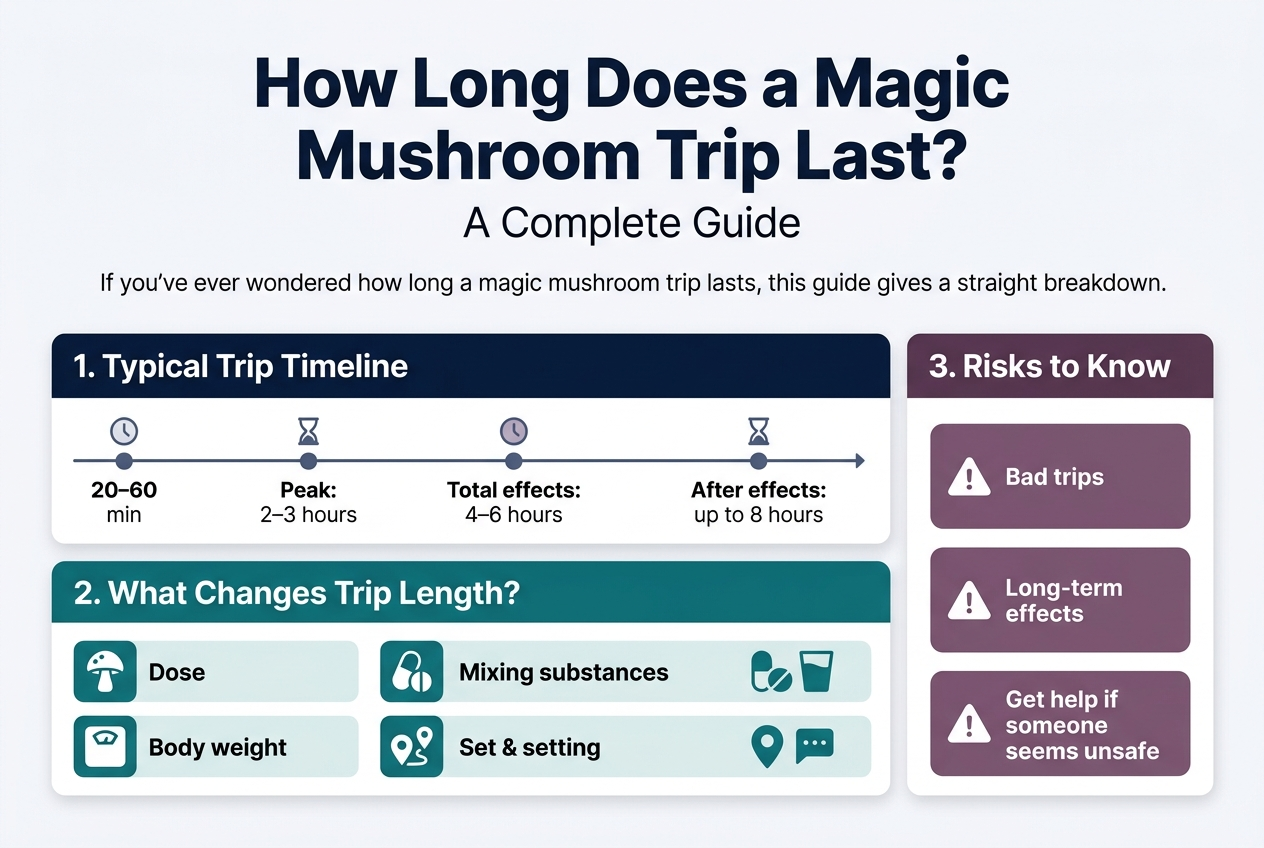
How Long Does a Magic Mushroom Trip Last? A Complete Guide
If you’ve ever wondered how long a magic mushroom trip lasts — or you’re worried about someone who uses them — you’re in the right place. This guide is for anyone who wants a straight, no-nonsense breakdown of what actually happens when someone takes psilocybin mushrooms, how long the effects stick around, and what can make a trip shorter, longer, or more intense.
Here’s what we’ll cover:
-
How long a magic mushroom trip typically lasts and what the timeline looks like from start to finish
-
The key factors that shape trip length and intensity, from dose and body weight to whether you mixed them with other substances
-
The real risks of mushroom use, including bad trips, long-term effects, and signs that someone may need help
Whether you’re looking for answers out of curiosity or genuine concern, knowing the facts can make a real difference.
The Role of Psilocybin and Psilocin in Psychoactive Effects
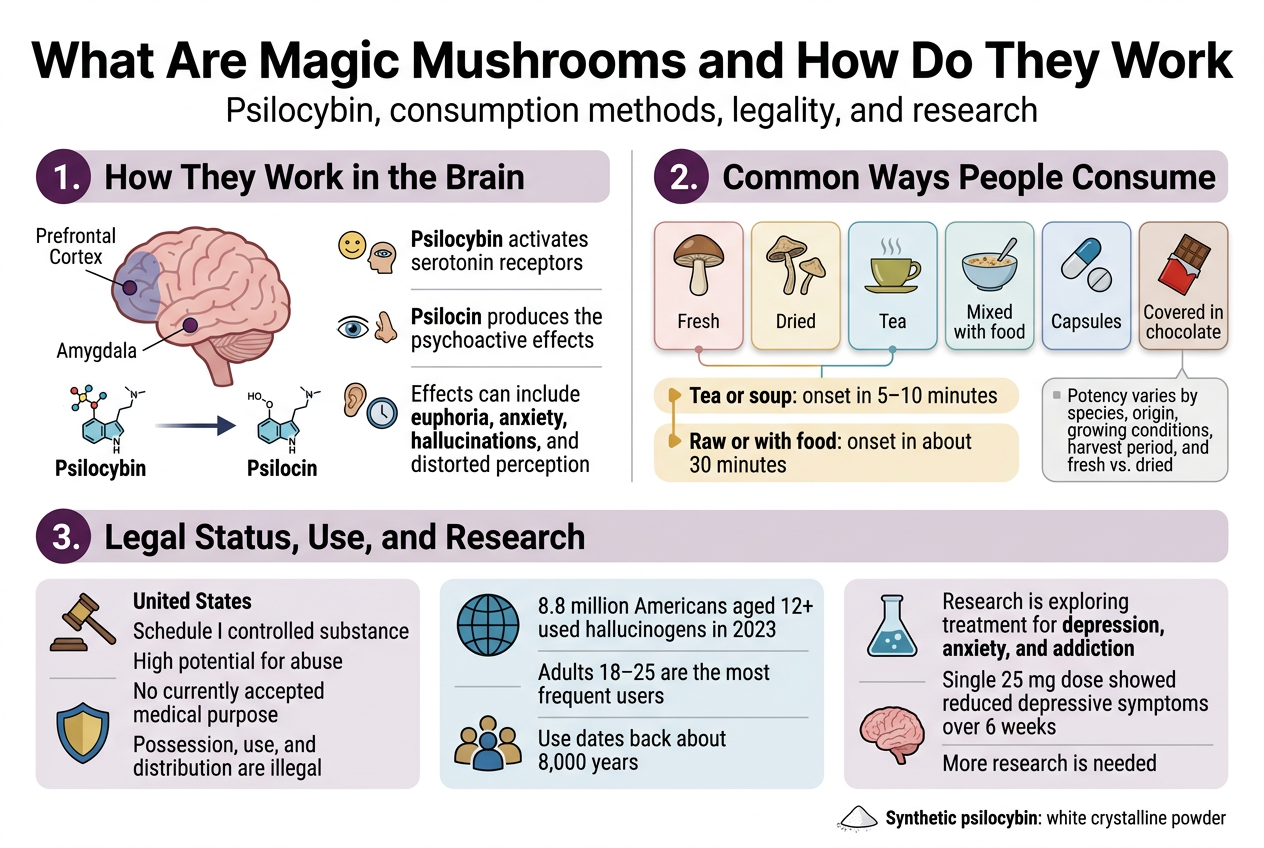
Magic mushrooms are naturally occurring fungi consumed for their powerful hallucinogenic properties. The key active compound responsible for these effects is psilocybin, a chemical classified as a hallucinogen that binds to and activates serotonin receptors in the brain — particularly in areas such as the prefrontal cortex and the amygdala.
These regions of the brain play a critical role in regulating mood, cognition, and perception. When psilocybin is ingested, the body converts it into psilocin, which is the compound that actually produces the psychoactive effects. This conversion is what triggers the cascade of sensory and emotional changes users experience during a trip.
Psilocybin also interacts with other brain regions that govern arousal and panic responses, which explains why the experience can swing between euphoria and intense anxiety depending on a number of variables. The drug may cause:
-
Visual or auditory hallucinations
-
Distorted perception of objects and people
-
Altered sense of time and space
-
Intense shifts in mood and emotion
A person’s reaction to psilocybin is not uniform. The quantity consumed, prior experiences with psychedelics, personal expectations, mental state, and even personality traits can all shape how the drug affects an individual. Higher doses have been associated with a greater risk of negative experiences, including psychological distress and short-term psychosis.
Understanding how psilocybin works at a neurological level is foundational to answering questions like how long does a magic mushroom trip last — because the duration and intensity of effects are directly tied to how the body metabolizes and responds to these compounds.
Common Ways People Consume Magic Mushrooms
With this in mind, it’s equally important to understand the various methods by which people consume magic mushrooms, as the method of ingestion can influence both the onset time and overall experience.
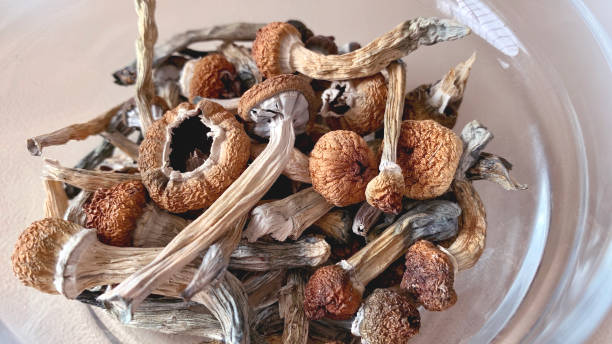
Magic mushrooms are small fungi, typically brown or tan in color, that can easily be mistaken for non-psychoactive or even poisonous varieties when found in the wild. They are consumed in several ways:
| Consumption Method | Description |
|---|---|
| Fresh | Eaten raw directly after picking |
| Dried | Most common form; reduces weight but concentrates potency |
| Brewed as tea | Mushrooms steeped in hot water; faster onset (5–10 minutes) |
| Mixed with food | Often combined with food to mask the bitter taste |
| Capsules | Dried mushrooms ground into powder and encapsulated |
| Covered in chocolate | Fresh or dried mushrooms coated in chocolate to disguise flavor |
The method of consumption matters significantly when it comes to onset and duration. For example:
-
Eaten as food or raw: Effects typically begin within 30 minutes
-
Consumed as tea or soup: Onset can occur within just 5 to 10 minutes
The potency of mushrooms also varies based on several factors, including:
-
Species of mushroom
-
Geographic origin
-
Growing conditions
-
Harvest period
-
Whether they are consumed fresh or dried
These variables mean two people consuming what appears to be the same dose may have markedly different experiences, both in terms of intensity and how long the trip lasts.
Legal Status and Growing Accessibility
Previously, psilocybin existed almost exclusively in the realm of recreational and countercultural use. Today, the conversation around magic mushrooms has shifted considerably — though significant legal restrictions remain in place in many parts of the world.
In the United States, psilocybin is classified as a Schedule I controlled substance by the Drug Enforcement Administration (DEA). This classification indicates the DEA considers it to have:
-
High potential for abuse
-
No currently accepted medical purpose
This federal status means that possession, use, and distribution of magic mushrooms remain illegal at the national level in the U.S. Similarly, Australian federal and state laws impose penalties for possessing, using, or selling magic mushrooms, as well as for driving under their influence.
Despite these restrictions, accessibility and cultural awareness have grown considerably. According to the National Survey on Drug Use and Health, approximately 8.8 million Americans aged 12 and older used hallucinogens — including psilocybin — in 2023. Adults aged 18 to 25 represent the most frequent users.
The growing accessibility is also reflected in history and global use. Psilocybin use spans multiple cultures and geographic locations, with evidence suggesting consumption may date back as far as 8,000 years ago. In modern contexts, use ranges from recreational settings such as dance clubs to spiritual or transcendent practices.
Perhaps the most significant development in recent years is the increasing body of medical research exploring psilocybin’s therapeutic potential. Studies and reviews have examined its possible role in treating:
-
Depression, including treatment-resistant forms
-
Anxiety, particularly related to end-stage cancer diagnoses
-
Addiction to other substances
A notable 2023 study found that a single 25 mg dose of psilocybin, administered alongside psychological support, led to clinically significant reductions in depressive symptoms over six weeks. A 2024 review further suggested psilocybin may have both short-term and long-term antidepressant effects, though researchers emphasize that more investigation is needed before it can be widely adopted as a medical treatment.
Synthetic psilocybin also exists in the form of a white crystalline powder that can be processed into tablets, capsules, or dissolved in water — further reflecting its growing presence in both research and illicit markets.
How Long Does a Magic Mushroom Trip Last
Typical Trip Duration: 3 to 6 Hours
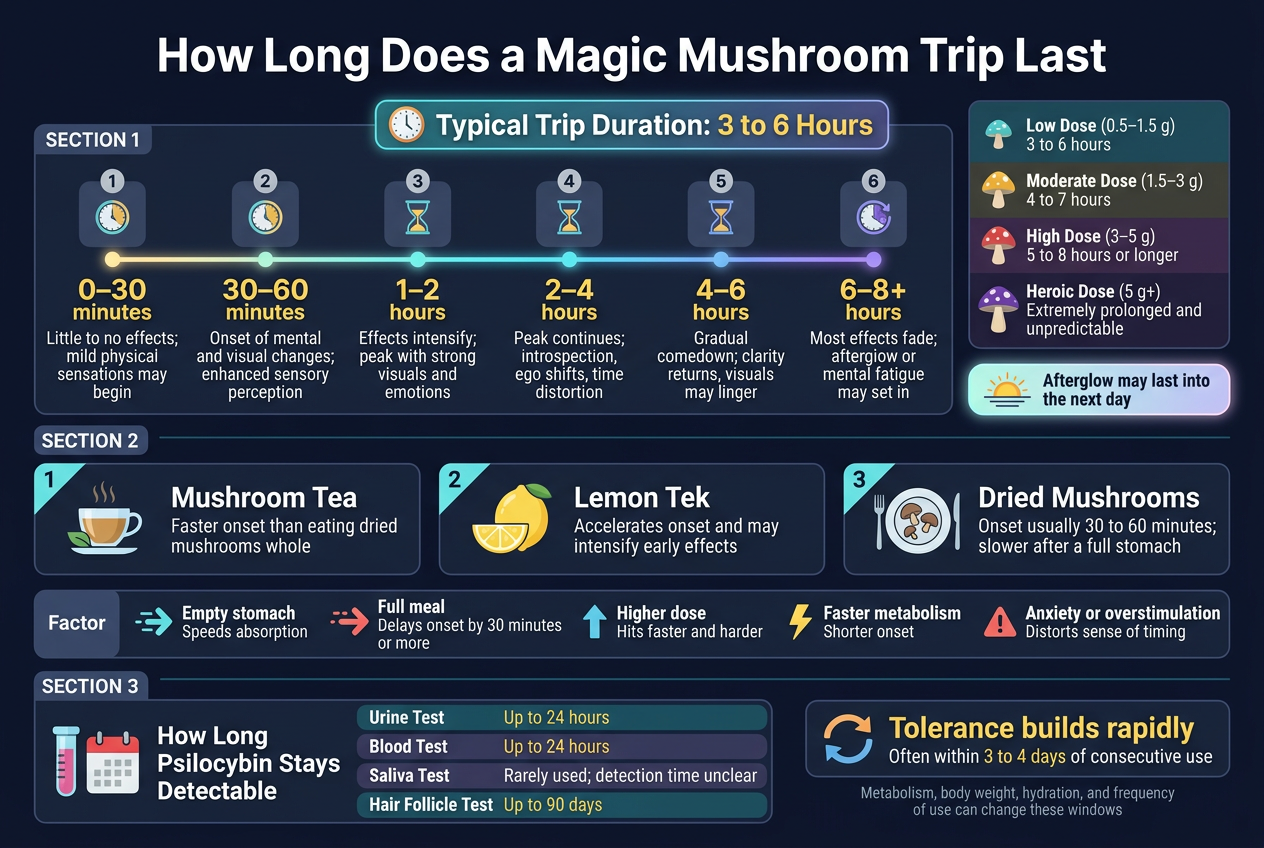
So, how long does a magic mushroom trip last? For most people, the full experience spans 3 to 6 hours, though this window can extend further depending on the dose consumed. The first three to four hours tend to be the most intense, with effects gradually softening as the body metabolizes psilocybin into psilocin and clears it from the system.
Here is a breakdown of the typical hour-by-hour timeline most users experience:
| Time After Ingestion | What’s Typically Happening |
|---|---|
| 0 – 30 minutes | Little to no effects; mild physical sensations may begin |
| 30 – 60 minutes | Onset of mental and visual changes; enhanced sensory perception |
| 1 – 2 hours | Effects intensify; trip reaches peak with strong visuals and emotions |
| 2 – 4 hours | Peak continues; introspection, ego shifts, and time distortion possible |
| 4 – 6 hours | Gradual comedown; mental clarity begins returning, though visuals may linger |
| 6 – 8+ hours | Most effects fade; afterglow or mental fatigue may set in |
It is important to note that dosage plays a significant role in shaping how long the experience runs. Here is how duration generally scales with dose:
-
Low Dose (0.5 – 1.5 grams): Effects typically last 3 to 6 hours
-
Moderate Dose (1.5 – 3 grams): Experience can stretch 4 to 7 hours
-
High Dose (3 – 5 grams): Duration may reach 5 to 8 hours or longer
-
Heroic Dose (5 grams and above): Effects can be extremely prolonged and unpredictable
Some users also report a lingering afterglow — a state of mental clarity, emotional relief, or mild fatigue — that can persist into the following day even after the primary effects have resolved.
How Consumption Method Affects Onset and Duration
With the overall timeline in mind, it is worth understanding that how you consume magic mushrooms has a direct impact on both when the trip begins and how long it lasts. The method of ingestion influences the speed at which psilocybin is absorbed into the bloodstream and converted into psilocin.
The most common consumption methods and their effects on onset and duration include:
-
Dried mushrooms (eaten whole or mixed into food): This is the most traditional method. Onset typically occurs within 30 to 60 minutes, though it can take over an hour — particularly if taken on a full stomach, which slows digestion and delays absorption.
-
Mushroom tea: Brewing dried mushrooms into tea generally produces a faster onset than eating dried mushrooms whole. Because the psilocybin is already partially extracted into liquid form, the body absorbs it more quickly.
-
Lemon tek (soaked in lemon juice): This method, like tea, is known to accelerate onset. The acidic environment is believed to begin converting psilocybin to psilocin before ingestion, potentially shortening the onset and intensifying the early effects.
Beyond method, stomach contents are a critical variable. An empty stomach significantly speeds up absorption, while consuming mushrooms after a full meal can delay the onset by 30 minutes or more. This delay is a common reason first-time users mistakenly believe the mushrooms aren’t working and redose early — a dangerous decision that can lead to an overwhelmingly intense experience.
The table below summarizes how various factors tied to consumption method influence the onset:
| Factor | Impact on Onset Time |
|---|---|
| Method of Consumption | Tea or lemon tek kicks in faster than dried mushrooms eaten whole |
| Stomach Contents | Empty stomach speeds absorption; full stomach delays it |
| Dosage and Strain | Higher doses and more potent strains tend to hit faster and harder |
| Individual Metabolism | Faster metabolism shortens onset; slower metabolism delays it |
| Mindset and Environment | Anxiety or overstimulation can heighten awareness or distort the sense of timing |
How Long Psilocybin Stays Detectable in Your System
Now that we have covered how long the subjective effects last and how consumption method shapes the experience, it is equally important to understand how long psilocybin remains detectable in the body after the trip has ended. The psychedelic effects may wear off within 6 to 8 hours, but the compound can still be identified through various drug testing methods well beyond that window.
Here is a summary of psilocybin detection times across different test types:
| Test Type | Detection Window |
|---|---|
| Urine Test | Up to 24 hours |
| Blood Test | Up to 24 hours |
| Saliva Test | Rarely used; detection time unclear |
| Hair Follicle Test | Up to 90 days |
Standard urine and blood tests detect psilocybin for up to 24 hours after use, meaning the compound clears relatively quickly through conventional testing methods. However, hair follicle tests are a significant exception — they can detect psilocybin for up to 90 days, making them the most sensitive long-term detection method available.
It is also worth noting that individual factors such as metabolism, body weight, hydration levels, and frequency of use can influence how quickly psilocybin is cleared from the body, meaning these detection windows represent approximations rather than fixed guarantees. Additionally, tolerance to psilocybin builds rapidly — often within 3 to 4 days of consecutive use — so repeated dosing in a short period produces significantly diminished effects even as the compound may still be present in the system.
Key Factors That Influence Trip Length and Intensity
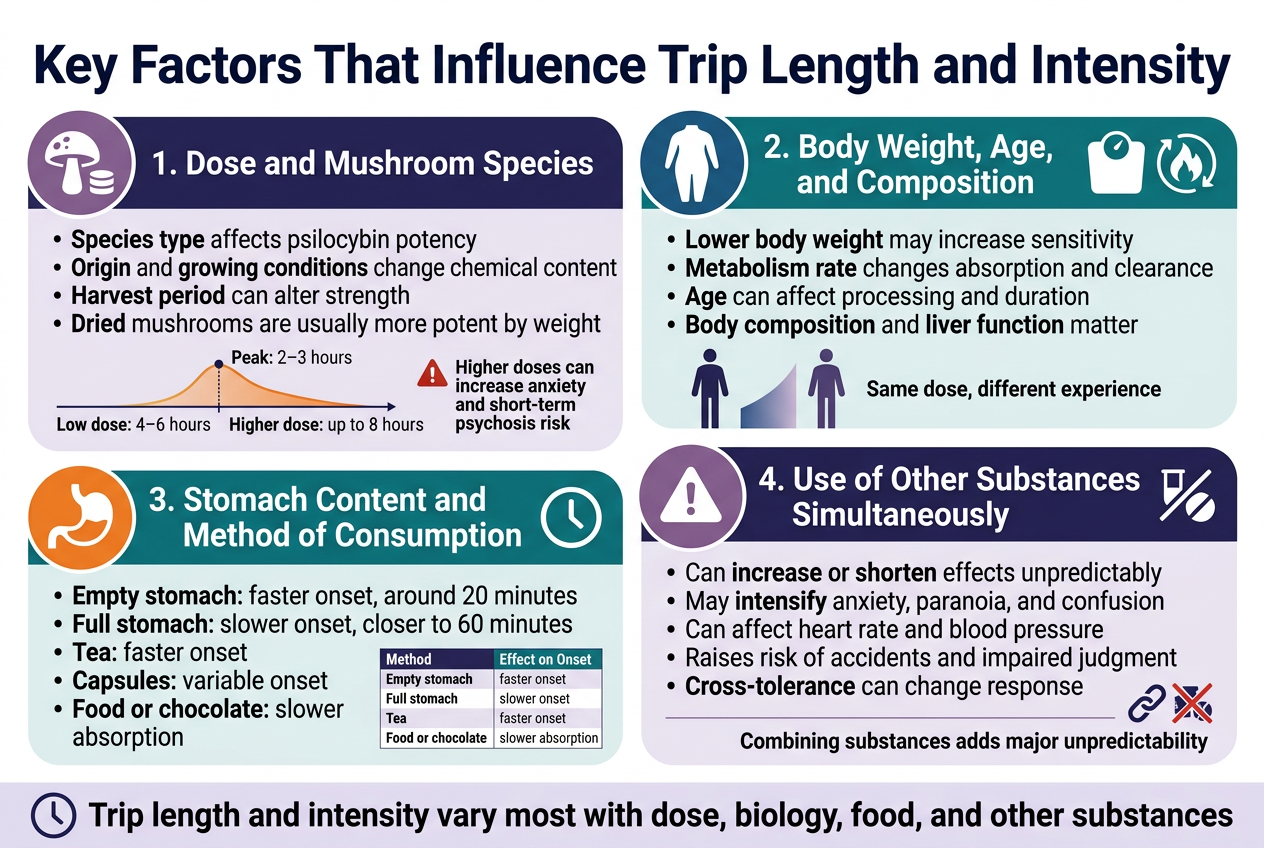
A. Dose and Mushroom Species
One of the most significant variables that determines how long a magic mushroom trip lasts — and how intensely it unfolds — is the dose consumed alongside the specific species of mushroom involved. Not all magic mushrooms are created equal. The potency of a given mushroom depends on several biological and environmental factors, including:
-
Species type — different species contain varying concentrations of psilocybin
-
Origin and growing conditions — where and how the mushrooms were cultivated directly affects their chemical content
-
Harvest period — mushrooms harvested at different growth stages can differ in potency
-
Fresh vs. dried — dried mushrooms are generally more potent by weight than fresh ones
A 2020 analysis referenced in the research suggests that higher doses of psilocybin significantly increase the risk of negative experiences, including severe anxiety and short-term psychosis. From a duration standpoint, larger doses tend to produce longer-lasting and more intense effects. A low dose may produce a milder experience lasting four to six hours, while a higher dose can push the overall trip closer to the eight-hour mark, with the peak phase at two to three hours after ingestion becoming especially overwhelming.
Understanding dose and species potency is critical for anyone trying to understand how long a magic mushroom trip lasts in practical terms. Misjudging potency — particularly with wild-harvested mushrooms — is one of the most common reasons people experience unexpectedly intense or prolonged trips.
B. Body Weight, Age, and Composition
Now that we have covered how dose and species play a role, it is equally important to recognize that individual biological characteristics also shape the experience. Body weight, age, and overall body composition all influence how psilocybin is processed, how quickly it takes effect, and how long those effects persist.
Psilocybin is converted in the body into psilocin, the active compound that binds to serotonin receptors in the brain. The rate at which this conversion happens — and how efficiently the body metabolizes psilocin — varies from person to person based on:
-
Body weight — generally, individuals with lower body weight may be more sensitive to the same dose
-
Metabolism rate — a faster metabolism can affect how quickly psilocybin is absorbed and cleared from the system
-
Age — older individuals may metabolize substances differently compared to younger users, potentially influencing both intensity and duration
-
Overall body composition — factors like body fat percentage and liver function can affect how the substance is processed
These biological differences explain why two people can consume the same dose of psilocybin mushrooms and have noticeably different experiences in terms of both intensity and how long the trip lasts. The research consistently notes that individual factors such as mental state, personality, and physical characteristics all contribute to the variation in psilocybin experiences.
C. Stomach Content and Method of Consumption
With this in mind, next we’ll examine how stomach content and the method of consumption can meaningfully alter both the onset timing and the overall duration of a magic mushroom trip.
Consuming psilocybin mushrooms on an empty stomach generally results in a faster onset, with effects beginning as quickly as 20 minutes after ingestion. When the stomach is full, digestion slows the absorption of psilocybin, potentially delaying the onset closer to the 60-minute mark and slightly altering the intensity of the peak experience.
The method by which mushrooms are consumed also matters. Common methods include:
| Method of Consumption | Effect on Onset | Notes |
|---|---|---|
| Eaten raw or dried | Standard onset (20–60 min) | Most common method |
| Brewed as a tea | Faster onset | Liquid absorbs more quickly |
| Capsule form (powdered) | Variable onset | Depends on capsule digestion |
| Mixed with food or chocolate | Slower onset | Food slows absorption |
Brewing magic mushrooms as a tea, for instance, may cause effects to begin more rapidly because the psilocybin is already partially dissolved and does not require the body to break down mushroom material first. Conversely, consuming mushrooms embedded in food — such as covered in chocolate — may delay absorption and shift the timing of when the trip peaks.
Understanding these nuances is particularly important in the context of how long a magic mushroom trip lasts overall, as the onset timing can influence when the peak occurs and, consequently, when the comedown phase begins.
D. Use of Other Substances Simultaneously
Previously, we’ve explored how individual biology and consumption methods shape the psilocybin experience. Another critical factor — and one that carries significant safety implications — is the concurrent use of other substances alongside magic mushrooms.
Combining psilocybin with other psychoactive substances can dramatically alter both the intensity and duration of a trip. The research notes that taking certain additional psychoactive drugs may reduce or completely end the effects of hallucinogens by counteracting their mechanisms in the brain. However, this practice introduces considerable additional risks that are not fully understood.
Key points regarding polydrug use with psilocybin include:
-
Cross-tolerance effects — regular psilocybin use can build tolerance that extends to other hallucinogens, including LSD and mescaline, meaning the body may respond differently when multiple substances are involved
-
Amplified psychological distress — combining substances can intensify anxiety, paranoia, confusion, or hallucinations beyond what either substance would produce alone
-
Unpredictable physical effects — mixing psilocybin with substances that affect heart rate or blood pressure can compound cardiovascular strain
-
Impaired judgment — the presence of multiple substances increases the risk of dangerous behavior, accidents, or inability to recognize a medical emergency
-
Variable trip duration — depending on the substances combined, the overall length of the psilocybin experience may be extended or shortened in unpredictable ways
The reference research emphasizes that more study is needed to fully understand the risks and potential interactions involved in combining psilocybin with other substances. What is clear, however, is that simultaneous use of other drugs introduces a layer of unpredictability that makes it significantly harder to anticipate how long a magic mushroom trip will last or how intense it will become. For individuals with underlying mental health conditions, this risk is compounded further.
Effects You Can Expect During a Magic Mushroom Trip
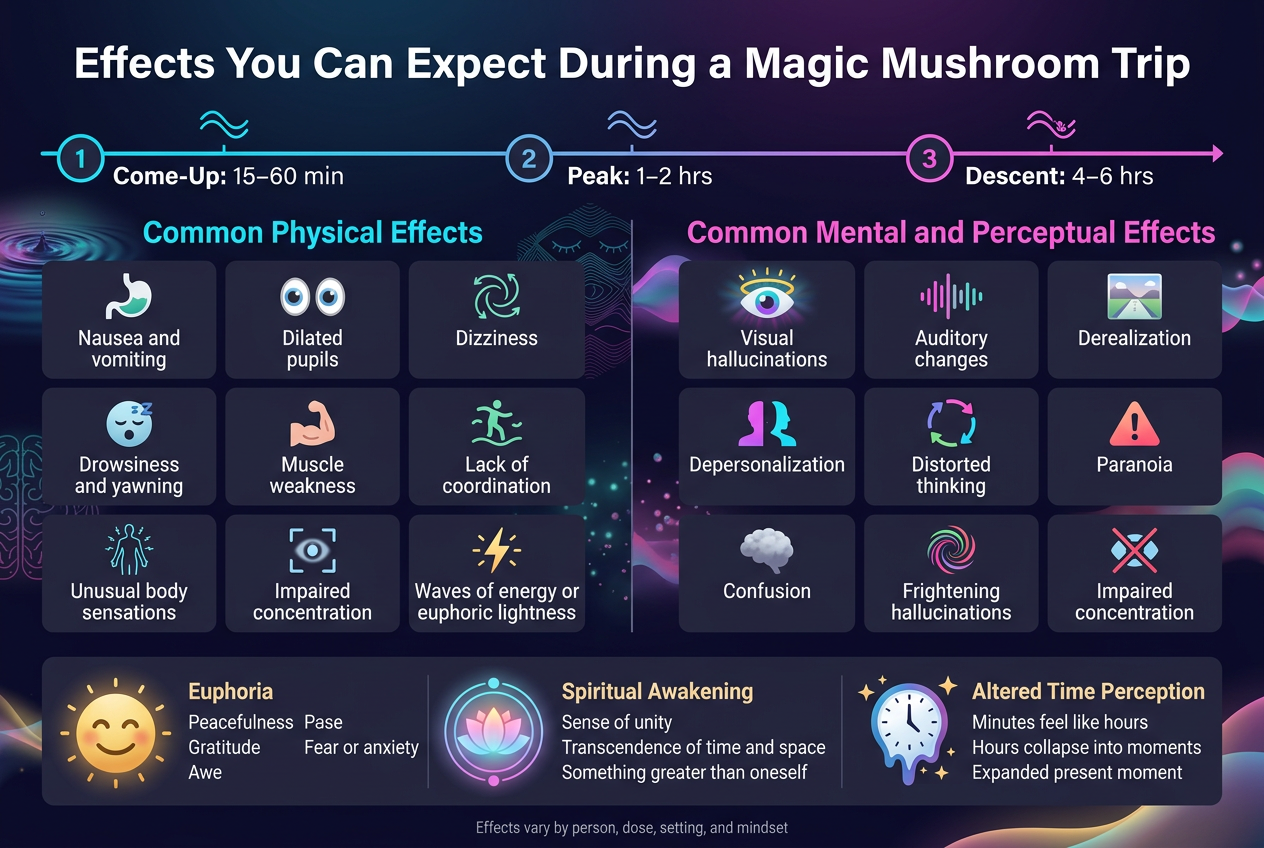
Common Physical Effects
When thinking about how long does a magic mushroom trip last, it helps to understand what actually happens to the body during that window. The physical effects of psilocybin begin relatively soon after ingestion — typically within 15 to 60 minutes — and can persist for the duration of the trip.
The body load, as it is commonly called, refers to the range of physical sensations that accompany the experience, particularly during the come-up phase. These sensations vary widely from person to person and can include:
-
Nausea and vomiting — especially during the onset phase
-
Dilated pupils — a classic and reliable physical marker
-
Dizziness — a frequent early-stage symptom
-
Drowsiness and yawning — often reported even alongside stimulating mental effects
-
Muscle weakness — a reduced sense of physical strength or coordination
-
Lack of coordination — movement can feel unfamiliar or clumsy
-
Unusual body sensations — ranging from tingling and warmth to pressure in the chest or stomach
-
Impaired concentration — difficulty focusing on tasks requiring sustained cognitive attention
-
Waves of energy or euphoric lightness — some users describe an urge to move or a sense of physical weightlessness
For some people, the physical come-up brings a fluttering in the chest or light stomach pressure. For others, it presents as a sudden rush of warmth coursing through the body. In either case, these physical sensations tend to peak during the first one to two hours and gradually subside as the trip moves toward its peak mental and perceptual phase.
Common Mental and Perceptual Effects
With the physical dimension established, it is equally important to examine what psilocybin does to the mind and the way a person perceives the world around them. These effects are often the most talked about and the most profoundly reported aspects of a magic mushroom experience.
Psilocybin works by binding to and activating serotonin receptors in key brain regions, including the prefrontal cortex and the amygdala — areas that govern mood, cognition, and perception. By quieting the brain’s default mode network, psilocybin creates space for entirely new sensory and cognitive patterns to emerge.
The mental and perceptual effects most commonly reported include:
| Effect | Description |
|---|---|
| Visual hallucinations | Seeing halos of light, vivid colors, patterns rippling on surfaces, closed-eye geometric visuals |
| Auditory changes | Sounds become more resonant and textured |
| Derealization | The feeling that one’s surroundings are not real |
| Depersonalization | A dream-like sense of disconnection from oneself and the environment |
| Distorted thinking | Thoughts may loop, fracture, or expand in unexpected directions |
| Paranoia | A heightened sense of threat or suspicion, particularly at higher doses |
| Confusion | Difficulty distinguishing internal thoughts from external reality |
| Frightening hallucinations | At higher doses, visual and auditory hallucinations may become intense or disturbing |
| Impaired concentration | Sustained logical focus becomes difficult |
During the peak — which typically arrives between one and two hours after ingestion and lasts for two to three hours — colors pulse with vibrancy, familiar surfaces come alive with shifting patterns, and closed-eye visuals can reveal vast, intricate geometries. The experience rarely maintains a single tone; rather, it moves in waves, swelling between intensity and calm.
Dr. Robin Carhart-Harris’s research notes that this phase correlates with the brain’s default mode network becoming quieter, which allows for new connections and sensory configurations to emerge. The result is a perceptual world that feels simultaneously alien and deeply personal.
Beyond the visual and auditory, the mind can undergo dramatic shifts in thought patterns. Distorted thinking may manifest as unusual associations or the dissolving of previously rigid mental frameworks. Some users experience confusion or short-term psychosis, particularly at higher doses or in the context of pre-existing mental health vulnerabilities.
Euphoria, Spiritual Experiences, and Altered Time Perception
Now that we have covered the physical and perceptual dimensions, it is worth exploring the effects that many people consider the most transformative and difficult to describe: the emotional, spiritual, and temporal distortions that define much of the magic mushroom experience.
Euphoria and Emotional Amplification
Psilocybin has a remarkable ability to amplify emotional states. During a trip, emotions do not merely surface — they can arrive in torrents. Joy, awe, grief, and love may all be felt in rapid succession or even simultaneously. For many users, this emotional intensity is not distressing but profoundly meaningful. Studies at Johns Hopkins University found that psilocybin experiences often rank among the most personally significant moments in participants’ lives, producing enduring shifts in mood, perspective, and purpose.
The emotional spectrum of a psilocybin experience includes:
-
Euphoria — a deep, all-encompassing sense of wellbeing and joy
-
Peacefulness — a calm that can feel unlike anything in ordinary daily life
-
Gratitude — frequently reported during the descent phase
-
Awe — a sense of encountering something vast and beyond comprehension
-
Fear or anxiety — particularly if the user resists the experience or has consumed a high dose
Spiritual Awakening and Mystical Experience
Perhaps the most profound dimension of a magic mushroom trip is what researchers call the mystical experience. The boundaries between self and world, between past and future, between personal identity and the broader universe can dissolve entirely. Many users describe encountering something vast, benevolent, and beyond the reach of ordinary language.
Psychologist Roland Griffiths, who conducted landmark research on psilocybin at Johns Hopkins University, found that participants who approached the experience with openness and curiosity were significantly more likely to report feelings of unity, transcendence, and lasting well-being. Philosopher William James described this as the “noetic quality” of mystical experience — the sense that what is revealed feels not like fantasy, but like truth.
Spiritual effects commonly reported include:
-
Spiritual awakening — a profound shift in how one relates to existence
-
A sense of unity — the dissolution of the boundary between self and universe
-
Transcendence of time and space — a feeling that ordinary temporal and physical limits no longer apply
-
Encounters with something greater than oneself — often described as benevolent or deeply meaningful
Altered Time Perception
One of the most disorienting and frequently reported effects of psilocybin is the distortion of time perception. Minutes can feel like hours, and hours may collapse into what seems like moments. The altered perception of time is not merely subjective in the ordinary sense — it reflects genuine changes in how the brain processes temporal information during a psilocybin experience.
This altered sense of time is closely tied to the broader category of altered perception of time and space that defines the psilocybin experience. During the peak of the trip, users may feel completely untethered from their ordinary sense of past and future, existing entirely within an expanded present moment. As the trip descends — typically after four to six hours — linear time gradually reasserts itself, often accompanied by a feeling of returning to, or reforming, the self.
Risks and Dangers of Magic Mushroom Use
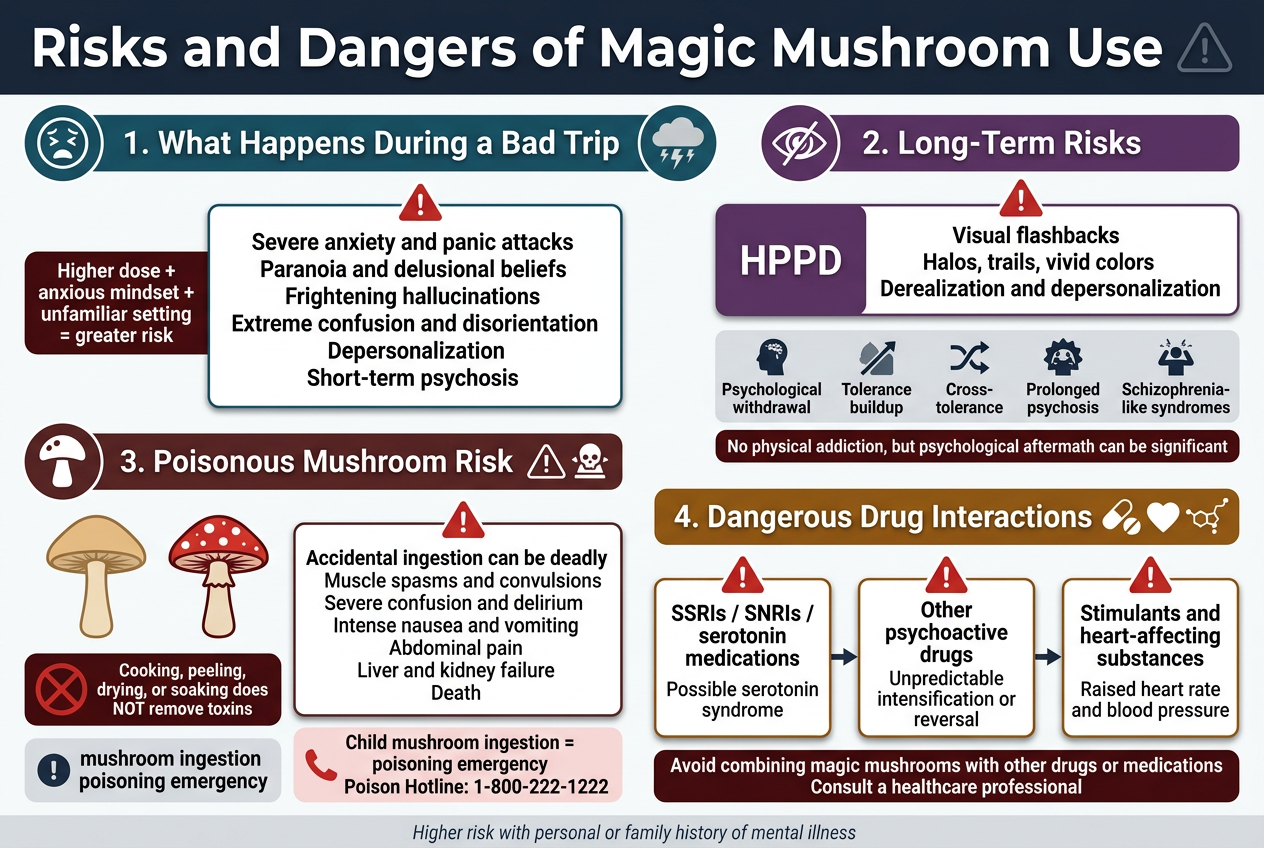
What Happens During a Bad Trip
Even when someone knows exactly how long a magic mushroom trip lasts, nothing fully prepares a person for a bad trip. A bad trip refers to an intensely negative psychological experience triggered by psilocybin, and it can occur even when a person takes a moderate dose.
During a bad trip, a person may experience:
-
Severe anxiety and panic attacks
-
Paranoia and delusional beliefs
-
Frightening hallucinations that feel completely real
-
Extreme confusion and disorientation
-
Depersonalization, or the feeling of being disconnected from one’s body
-
Short-term psychosis, where the person loses touch with reality
The risk of experiencing a bad trip increases significantly under certain conditions. According to research, higher doses of psilocybin raise the likelihood of negative experiences. Pre-existing mental health conditions, feelings of anxiety before taking the drug, and being in an unfamiliar or unsupervised environment can all make a bad trip far more likely.
It is also worth noting that the setting and the user’s mental state at the time of consumption play a powerful role. Someone who feels anxious, unsettled, or emotionally vulnerable before taking magic mushrooms is at a much higher risk of experiencing a distressing trip.
Psychosis triggered by a bad trip can be temporary, but in rare cases — particularly in individuals already predisposed to psychiatric conditions — it may extend beyond the duration of the drug’s effects. The only guaranteed way to avoid a bad trip is to not consume magic mushrooms at all.
Long-Term Risks Including Hallucinogen Persisting Perception Disorder
Now that we have covered the immediate dangers of a bad trip, it is important to look at what can happen long after the effects of psilocybin wear off. While many people assume the risks end when the trip does, some individuals face lasting consequences.
One of the most documented long-term risks associated with hallucinogen use is Hallucinogen Persisting Perception Disorder (HPPD). This condition involves persistent, distressing alterations in how a person perceives the world, even when they are no longer under the influence of any substance. These changes can take the form of:
-
Visual flashbacks — traumatic recalls of intensely upsetting experiences
-
Seeing halos, trails, or vivid colors without any drug present
-
Ongoing feelings of derealization or depersonalization
Beyond HPPD, long-term or repeated use of psilocybin carries additional risks:
| Long-Term Risk | Description |
|---|---|
| Psychological withdrawal | After several days of use, people may struggle to adjust to reality |
| Tolerance buildup | Regular use can cause the brain to become less responsive to psilocybin |
| Cross-tolerance | Tolerance can extend to other hallucinogens, including LSD and mescaline |
| Prolonged psychosis | Recreational use may elevate the risk of protracted psychosis in vulnerable individuals |
| Schizophrenia-like syndromes | Some individuals may develop symptoms resembling schizophrenia |
Importantly, while current research suggests psilocybin is not physically addictive and no physical withdrawal symptoms occur after stopping use, the psychological aftermath can be significant. Individuals with a personal or family history of mental illness face a considerably higher risk of developing these long-term complications.
Risk of Accidentally Consuming Poisonous Mushrooms
With this in mind, another serious danger that is often overlooked is the very real possibility of accidentally consuming a poisonous mushroom. This risk is particularly high for people who forage wild mushrooms rather than obtaining them through controlled sources.
Magic mushrooms are typically small and brown or tan in color, and in the wild, they closely resemble a number of other mushroom species — some of which are highly toxic. Mistaking a poisonous look-alike for a psilocybin-containing mushroom can have devastating consequences.
Symptoms of mushroom poisoning include:
-
Muscle spasms and convulsions
-
Severe confusion and delirium
-
Intense nausea and vomiting
-
Abdominal pain
-
Liver and kidney failure in severe cases
-
Death in the most extreme scenarios
A critical point to understand is that cooking, peeling, drying, or soaking poisonous mushrooms does not eliminate their toxins. Many people mistakenly believe that preparing wild mushrooms in these ways makes them safe to consume — this is not true.
Most accidental mushroom ingestions result in minor gastrointestinal illness, but the most severe cases require immediate emergency medical attention. Anyone who experiences muscle spasms, confusion, or delirium after eating wild mushrooms should go to an emergency room immediately.
To reduce this risk:
-
Never consume wild mushrooms unless they have been identified by a certified expert
-
Keep all mushroom products locked away and out of reach of children and pets
-
Regularly remove wild mushrooms from areas where children are present to prevent accidental ingestion
If a child has consumed any mushroom — wild or otherwise — it should be treated as a poisoning emergency. The California Poison Control System recommends contacting the Poison Hotline immediately at 1-800-222-1222 without waiting for symptoms to develop.
Dangerous Interactions With Other Drugs and Medications
Previously, we explored the risks that magic mushrooms pose on their own. However, the dangers can multiply significantly when psilocybin is combined with other substances.
Psilocybin works primarily by binding to and activating serotonin receptors in the brain. This mechanism creates a particularly dangerous interaction with any substance that also affects serotonin levels. One of the most important warnings concerns antidepressants and other serotonin-affecting medications. People who are taking these medications should not use magic mushrooms without explicit medical guidance, as the combination can lead to unpredictable and potentially dangerous outcomes.
Key drug interaction risks include:
-
Serotonin-based medications (e.g., SSRIs, SNRIs): These can interact with psilocybin in ways that are not fully understood, potentially reducing the drug’s effects or, in some cases, contributing to serotonin syndrome — a potentially life-threatening condition
-
Other psychoactive drugs: Taking additional psychoactive substances alongside psilocybin may counteract or intensify the hallucinogenic effects, producing highly unpredictable reactions
-
Stimulants and heart-affecting substances: Since psilocybin already increases heart rate and blood pressure, combining it with stimulants can pose serious cardiovascular risks — especially for individuals with underlying heart conditions
It is also important to understand that dried or processed magic mushroom products may contain additional unknown substances, further complicating their safety profile and making drug interactions even harder to predict.
The safest course of action is to avoid combining magic mushrooms with any other drugs or medications. Individuals on prescription medications, particularly those affecting serotonin, should consult a healthcare professional before using psilocybin in any form.
Recognizing and Treating Magic Mushroom Abuse
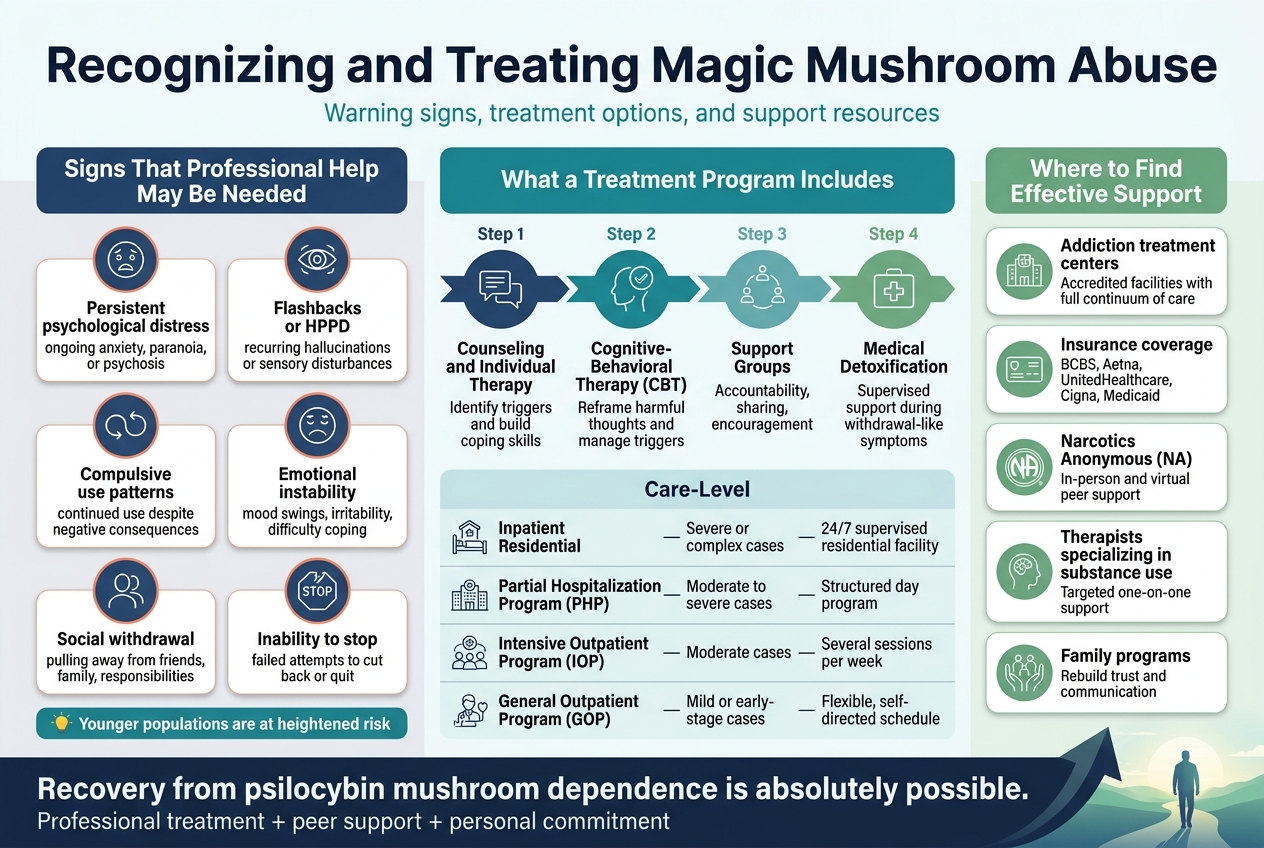
Signs That Professional Help May Be Needed
Now that we have covered the risks and dangers of magic mushroom use, it’s important to recognize when casual or experimental use has crossed into territory that requires professional intervention. While psilocybin mushrooms do not cause the same level of physical dependence as substances like opioids or alcohol, psychological dependence is a very real concern — and it can have serious consequences on a person’s personal and professional life.
Watch for these warning signs that suggest professional help may be needed:
-
Persistent psychological distress — ongoing anxiety, paranoia, or psychosis that continues well after the trip has ended
-
Flashbacks or Hallucinogen Persisting Perception Disorder (HPPD) — recurring hallucinations or sensory disturbances that appear days, weeks, or even years after last use
-
Compulsive use patterns — continuing to use mushrooms despite negative consequences at work, school, or in relationships
-
Emotional instability — mood swings, irritability, or difficulty coping with reality between uses
-
Social withdrawal — pulling away from friends, family, or responsibilities in favor of drug use
-
Inability to stop — repeated failed attempts to cut back or quit, even when the individual wants to
It’s also worth noting that younger populations are at heightened risk. Hallucinogen use among adults aged 19 to 30 reached historic highs in 2021 according to the Monitoring the Future panel study, making early recognition and intervention more important than ever. The false perception that mushrooms are a “natural” and therefore safe drug can delay people from seeking the help they genuinely need.
What a Mushroom Abuse Treatment Program Includes
With this in mind, it’s helpful to understand what a structured treatment program for psilocybin mushroom abuse actually looks like. Treatment is not one-size-fits-all — it is tailored to the severity of a person’s use and their individual needs. Here is a breakdown of the core components commonly found in effective programs:
Counseling and Individual Therapy
One-on-one counseling helps individuals identify the underlying triggers driving their mushroom use and develop practical coping skills to manage cravings and stress without relying on substances.
Cognitive-Behavioral Therapy (CBT)
CBT is one of the most widely used and evidence-based approaches for treating substance use disorders. A therapist trained in CBT works with the patient to:
-
Identify negative thought patterns linked to drug use
-
Challenge and reframe harmful beliefs
-
Build reliable, healthy strategies for managing stress, anxiety, and common triggers
Support Groups
Programs like Narcotics Anonymous (NA) offer a community of peers who understand the recovery journey firsthand. Support groups provide:
-
A sense of accountability
-
A safe space to share experiences without judgment
-
Ongoing encouragement from others in recovery
Digital support groups and mobile apps have also emerged as a valuable option, offering the same benefits of in-person groups with greater flexibility and accessibility.
Medical Detoxification
While physical dependence on psilocybin is not as pronounced as with other substances, withdrawal-like symptoms can emerge within 24 to 48 hours of stopping use. Supervised medical detox provides a safe, monitored environment to manage these symptoms — and research shows that medically supervised detox significantly increases the likelihood of successful long-term recovery.
Inpatient and Outpatient Rehabilitation Programs
Depending on the severity of use, a person may be placed in one of the following levels of care:
| Program Type | Best For | Setting |
|---|---|---|
| Inpatient Residential | Severe or complex cases | 24/7 supervised residential facility |
| Partial Hospitalization Program (PHP) | Moderate to severe cases | Structured day program |
| Intensive Outpatient Program (IOP) | Moderate cases | Several sessions per week |
| General Outpatient Program (GOP) | Mild or early-stage cases | Flexible, self-directed schedule |
Inpatient programs offer a structured, distraction-free environment that allows individuals to focus entirely on recovery. Outpatient options provide more flexibility while still delivering consistent therapeutic support.
Where to Find Effective Support and Recovery Resources
Previously, we’ve discussed what treatment involves — but knowing where to turn is equally critical. Effective support for psilocybin mushroom abuse is more accessible than many people realize, and reaching out is the most important first step.
Here are the primary avenues for finding help:
-
Addiction treatment centers — Many accredited facilities across the United States offer specialized programs for hallucinogen abuse. Look for centers that are Joint Commission accredited and offer a full continuum of care, from residential treatment through to outpatient support and alumni programs.
-
Insurance coverage — Many treatment programs are covered by major insurance providers, including BCBS, Aetna, UnitedHealthcare, Cigna, and Medicaid in applicable states. Verifying insurance coverage online or by phone is typically a straightforward first step.
-
Narcotics Anonymous (NA) — A widely available peer support network with both in-person and virtual meetings, NA can serve as an important resource both during and after formal treatment.
-
Therapists specializing in substance use — Licensed therapists who are trained in CBT and substance use disorders can provide targeted, one-on-one support for those who may not require a full residential program.
-
Family programs — Recovery is most effective when loved ones are part of the process. Many treatment centers offer dedicated family programs to help rebuild trust and communication.
Recovery from psilocybin mushroom dependence is absolutely possible. With the right combination of professional treatment, peer support, and personal commitment, individuals can reclaim a healthy, stable, and fulfilling life.
7 FAQ
How long does a magic mushroom trip last on average?
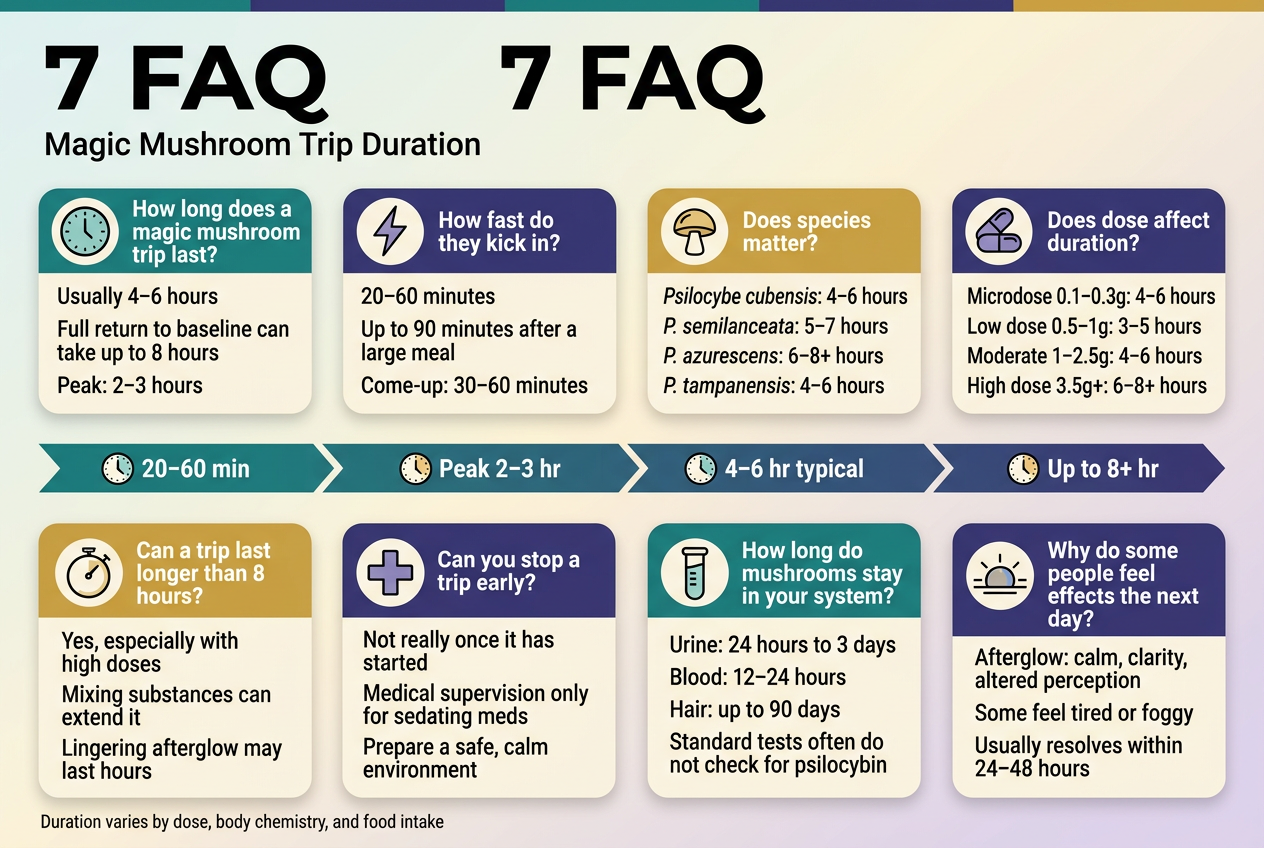
Most magic mushroom trips last between 4 and 6 hours, though the full experience — from the first effects kicking in to feeling completely back to baseline — can stretch closer to 8 hours for some people. The peak typically hits around the 2 to 3-hour mark and gradually winds down from there. A lot depends on the dose, your body chemistry, and whether you’ve eaten recently.
Can a magic mushroom trip last longer than 8 hours?
Yes, in some cases. High doses, combining mushrooms with other substances, or individual differences in metabolism can all push the experience past the 8-hour window. There are also reports of lingering perceptual effects — like mild visual distortions or a dreamlike feeling — that persist for several hours after the main trip ends. These afterglow effects are generally mild but worth knowing about ahead of time.
How long does it take for magic mushrooms to kick in?
Typically, you’ll start feeling something within 20 to 60 minutes of taking mushrooms. If you’ve eaten a large meal beforehand, it could take closer to 90 minutes. The come-up phase — the period where effects are building — usually lasts 30 to 60 minutes before you hit the peak.
Does the type of magic mushroom affect how long the trip lasts?
Yes, the species and strain can make a difference. Psilocybe cubensis is the most common variety and tends to produce trips lasting 4 to 6 hours. More potent species like Psilocybe azurescens or Psilocybe semilanceata (liberty caps) contain higher concentrations of psilocybin and psilocin, which can lead to longer, more intense experiences. Here’s a rough breakdown:
| Species | Relative Potency | Average Trip Duration |
|---|---|---|
| Psilocybe cubensis | Moderate | 4–6 hours |
| Psilocybe semilanceata | High | 5–7 hours |
| Psilocybe azurescens | Very High | 6–8+ hours |
| Psilocybe tampanensis | Moderate | 4–6 hours |
Does dose affect how long a magic mushroom trip lasts?
Absolutely. Dose is one of the biggest factors.
-
Microdose (0.1–0.3g): Sub-perceptual effects, typically lasting 4–6 hours with minimal noticeable changes
-
Low dose (0.5–1g): Mild effects, usually 3–5 hours
-
Moderate dose (1–2.5g): A full experience, typically 4–6 hours
-
High dose (3.5g+): Intense trip, often running 6–8 hours or longer
Higher doses don’t just make the trip more intense — they also tend to make it last longer because your body takes more time to metabolize the larger amount of psilocybin.
Can you stop a magic mushroom trip early?
Not really. Once psilocybin has been converted to psilocin in your body, the process is essentially underway and you can’t reverse it. Some people find that taking a benzodiazepine (like diazepam) under medical supervision can reduce the intensity of overwhelming experiences, but this isn’t something to self-administer casually. The best approach is to prepare ahead of time — set up a safe, comfortable environment, have a trusted sober person nearby, and avoid high doses if you’re inexperienced.
How long do magic mushrooms stay in your system for drug testing?
Psilocybin is metabolized fairly quickly compared to many other substances. In most cases:
-
Urine tests: Psilocybin and psilocin are typically undetectable within 24 hours, though some tests may pick up traces for up to 3 days
-
Hair follicle tests: Can potentially detect use for up to 90 days, though these tests are rarely used for psilocybin
-
Blood tests: Psilocin clears from blood within a few hours, making detection uncommon after 12–24 hours
It’s worth knowing that standard drug panels often don’t test for psilocybin at all, but specialized tests can be ordered if there’s a specific reason to look for it.
Why do some people feel effects the next day?
Some people report what’s often called an afterglow — a lingering sense of calm, clarity, or slightly altered perception that continues the day after a trip. This isn’t the active drug still in your system; it’s more of a neurological and psychological carryover from the experience itself. On the flip side, some people feel tired, emotionally drained, or even a bit foggy the day after a significant experience. Both reactions are common and generally resolve within 24–48 hours.
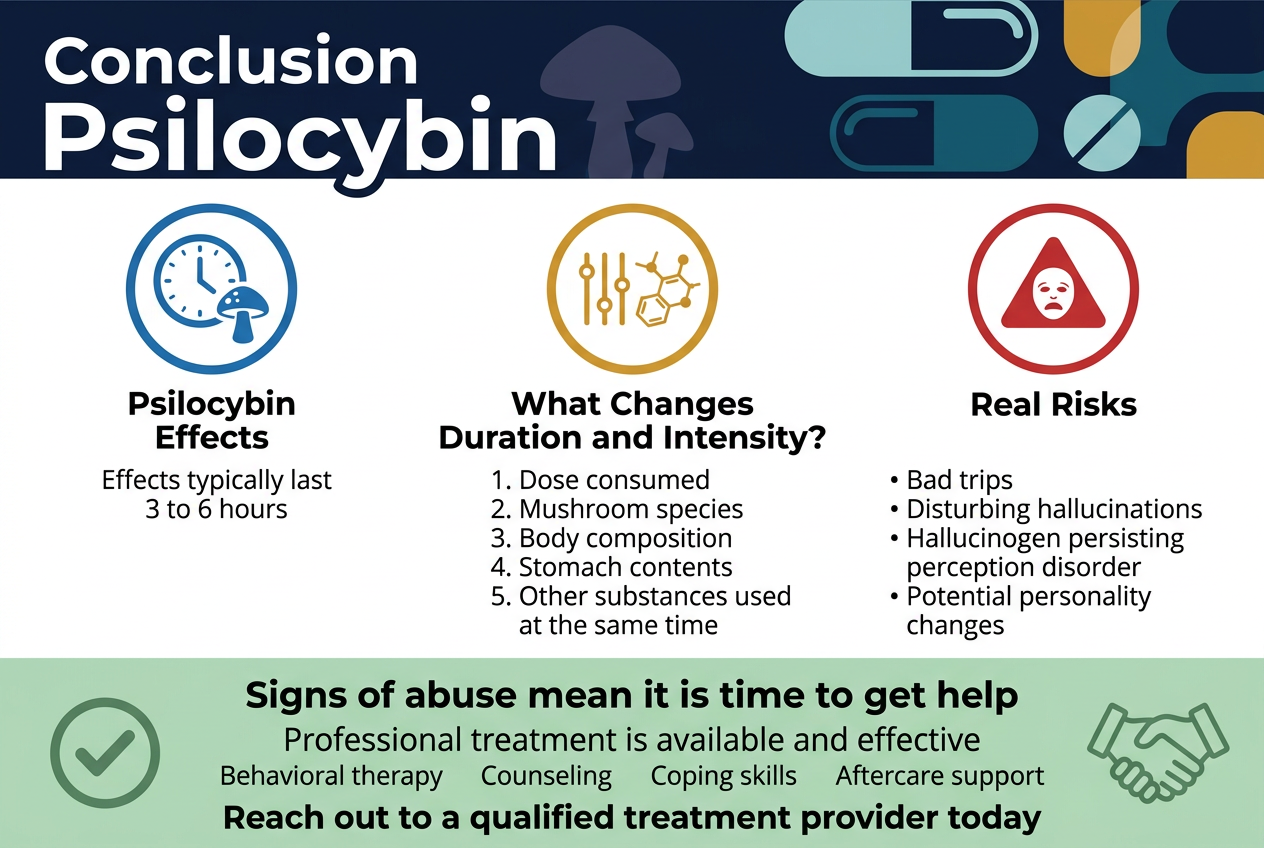
Magic mushrooms contain psilocybin, a psychoactive compound that typically produces effects lasting three to six hours, though several factors influence both the duration and intensity of a trip. These include the dose consumed, the mushroom species, body composition, stomach contents, and whether other substances were used at the same time. While some people may seek out these experiences, the risks are real — from bad trips and disturbing hallucinations to long-lasting effects like hallucinogen persisting perception disorder and potential personality changes.
Recognizing the signs of magic mushroom abuse is an important step toward getting help. If you or someone you love is struggling to stop using magic mushrooms, professional treatment is available and effective. A comprehensive program including behavioral therapy, counseling, coping skills, and aftercare support can make long-term recovery possible. Reach out to a qualified treatment provider as soon as possible to take the first step toward a healthier future.
Related Posts
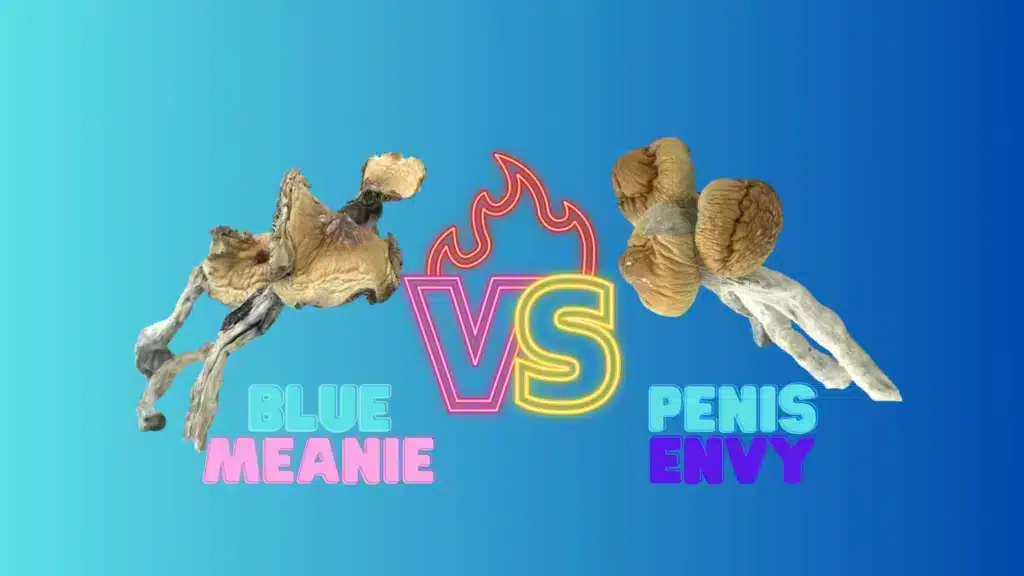
Blue Meanie vs Penis Envy Magic Mushrooms

Blue Meanie vs Penis Envy Magic Mushrooms: Which Works Best for Depression and Anxiety?
Magic mushrooms have fascinated researchers and psychonauts alike for decades. But as interest in psychedelics for mental health continues to rise, two strains have become the focus of attention: Blue Meanie and Penis Envy.
When comparing different strains, the focus often lands on Blue Meanie vs Penis Envy Magic Mushrooms. Understanding these strains can enhance your experience.
Both are known for their potent psilocybin content, mind-expanding effects, and potential therapeutic benefits. But which one works best for depression and anxiety? And what makes each unique in its effects, potency, and overall experience?
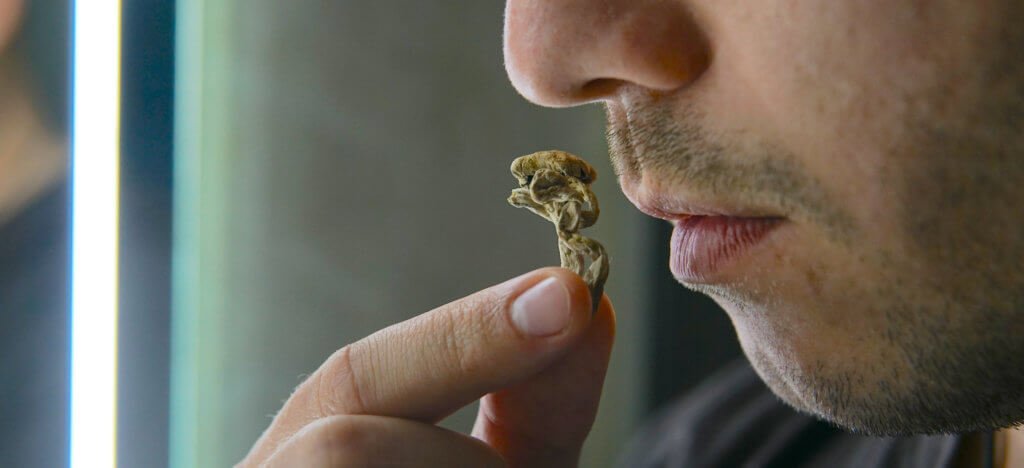
In this detailed guide, we’ll compare Blue Meanie and Penis Envy side-by-side — from their origins and chemical composition to their effects on the mind and body — and help you determine which might be the better fit for your wellness goals.
For anyone exploring the world of psychedelics, Blue Meanie vs Penis Envy Magic Mushrooms is an essential topic, as each strain has distinct qualities that cater to various experiences.
And if you’re ready to explore these strains safely and legally, Psychedelic Today is your go-to trusted shop for high-quality, lab-tested magic mushrooms online.
1. Understanding Psilocybin and Its Mental Health Potential
Before diving into strain differences, it’s important to understand the star compound behind both: psilocybin.
Psilocybin is a naturally occurring psychedelic compound found in over 180 mushroom species. Once ingested, the body converts it into psilocin, a molecule that binds to serotonin receptors in the brain — particularly the 5-HT2A receptor.
This action can cause profound shifts in perception, mood, and cognition, often leading to feelings of emotional release, connectedness, and insight.
Recent studies from institutions like Johns Hopkins and Imperial College London have shown that psilocybin therapy can significantly reduce symptoms of depression and anxiety, even in treatment-resistant cases.
That’s why strains like Blue Meanie and Penis Envy — both known for their high psilocybin content — are getting attention among individuals looking for natural ways to improve mental well-being.
Both strains, Blue Meanie vs Penis Envy Magic Mushrooms, are gaining popularity for their therapeutic effects.
2. Meet the Contenders: Blue Meanie and Penis Envy

Blue Meanie Mushrooms
-
Species: Psilocybe cubensis (not to be confused with Panaeolus cyanescens, another mushroom also called Blue Meanie)
-
Origin: Believed to have originated in Southeast Asia or Australia
-
Appearance: Golden-brown caps with bluish bruising (a sign of high psilocybin content)
-
Potency: Above average; can be very strong for a cubensis strain
-
Effects: Euphoric, energetic, and emotionally introspective
Blue Meanies are named for the distinct blue bruising that appears on the stem and cap when handled. This blue coloring signals a high level of psilocybin oxidation.
They are popular among psychonauts who seek spiritual insight and a balance of visual intensity and emotional depth — making them suitable for both beginners (in low doses) and experienced users.
Penis Envy Mushrooms
-
Species: Psilocybe cubensis
-
Origin: Allegedly discovered by Terence McKenna and later selectively cultivated
-
Appearance: Thick, phallic-shaped stems and smaller caps
-
Potency: Among the strongest known cubensis strains
-
Effects: Deeply introspective, euphoric, spiritually intense
Penis Envy mushrooms have achieved legendary status for one main reason — their extraordinary potency. Some lab analyses report up to 50% more psilocybin content than typical cubensis strains.
This makes them highly prized for therapeutic microdosing and breakthrough-level experiences, especially for those seeking emotional or psychological healing.
3. Blue Meanie vs Penis Envy: Chemical Composition and Potency

When assessing potency, consumers often debate Blue Meanie vs Penis Envy Magic Mushrooms, particularly when it comes to therapeutic benefits.
While both contain psilocybin and psilocin, Penis Envy consistently ranks higher in potency. Users often describe it as producing longer-lasting, more immersive trips.
For anxiety and depression relief, the higher potency of Penis Envy may help users access deeper emotional release and neuroplastic effects, but may be overwhelming for newcomers.
Choosing between them often leads to discussions about Blue Meanie vs Penis Envy Magic Mushrooms, especially regarding emotional relief.
Blue Meanies, on the other hand, often provide a more balanced psychedelic journey, with warmth, joy, and laughter that can lift mood without being overpowering.
4. Effects and Experience Comparison
Blue Meanie Experience
In the realm of psychedelics, the experience of Blue Meanie vs Penis Envy Magic Mushrooms is often shared among users based on their journeys.
Users often report:
-
A joyful and light-hearted euphoria
-
Enhanced creativity and emotional openness
-
Beautiful visual distortions (patterns, colors, motion)
-
Deep appreciation of music, nature, and social connection
For people using psychedelics to manage mild depression or social anxiety, Blue Meanies can provide an energetic, freeing experience that restores optimism and motivation.
Penis Envy Experience
The exploration of Blue Meanie vs Penis Envy Magic Mushrooms reveals insights into the depth of their effects.
Penis Envy offers:
-
Profound ego dissolution (loss of self-identity)
-
Intense emotional catharsis and self-reflection
-
Spiritual or mystical-type experiences
-
Long-lasting sense of clarity and inner peace
Because of its intensity, Penis Envy is often recommended for therapeutic settings or guided sessions, rather than casual recreational use.
Those seeking to break deep psychological blocks or trauma-linked depression often find this strain more effective for transformation.
5. Which Strain Helps Depression and Anxiety Most?
Ultimately, the discussion surrounding Blue Meanie vs Penis Envy Magic Mushrooms is crucial for those seeking mental health support.
Blue Meanie vs Penis Envy Magic Mushrooms
Both strains show potential benefits for mental health care when used responsibly, but the best choice depends on personal goals and tolerance.
Blue Meanie May Be Better If You Want:
-
A lighter, more social mood boost
-
Reduced anxiety and improved connectedness
-
Mild to moderate relief from depression
-
A creative spark for new perspectives
Penis Envy May Be Better If You Seek:
-
Profound emotional and spiritual healing
-
A powerful therapeutic breakthrough
-
Long-term relief from deep-seated depression
-
Effective microdosing potential due to high potency
In summary:
In summary, Blue Meanie vs Penis Envy Magic Mushrooms represents a comparison not just of strains, but of potential for healing and insight.
-
Blue Meanie is ideal for gentle healing and uplifting experiences.
-
Penis Envy suits deep therapeutic introspection and spiritual renewal.
6. Microdosing Comparison
For microdosers, Penis Envy requires careful adjustment due to its high psilocybin levels. A typical microdose of a standard cubensis strain (0.1–0.3g) should be reduced to around 0.05–0.1g for Penis Envy.
Blue Meanie allows easier control, making it a favorite for daily or alternate-day microdosing protocols aimed at:
-
Enhancing mood
-
Reducing anxiety
-
Increasing focus and creativity
Whether using for creativity or stability, always start small — microdosing is about subtlety, not tripping.
For many, the choice often comes down to personal experience with Blue Meanie vs Penis Envy Magic Mushrooms.
7. Safety, Set, and Setting
Regardless of the strain, preparation and mindset determine the outcome:
-
Choose a safe, comfortable environment
-
Have a trusted sitter or guide present for higher doses
-
Avoid mixing with alcohol or other drugs
-
Keep hydration and light food nearby
The mindset before and after a session — sometimes called “set and integration” — plays a massive role in how effectively psilocybin supports healing.
8. Where to Buy Blue Meanie and Penis Envy Online

Finding trusted, lab-tested mushroom products is crucial for safety and consistent quality.
That’s why Psychedelic Today is widely recognized as one of the best online shops specializing in premium Blue Meanie and Penis Envy strains.
At Psychedelic Today, you’ll find:
-
Ethically sourced and verified mushroom strains
-
Discreet shipping and secure packaging
-
Customer support for dosage and product guidance
-
Microdosing capsules, dried mushrooms, and mushroom chocolates
Buying from a reputable source ensures you’re getting pure, potent, and safe psilocybin products to support your mental wellness journey.
9. How to Choose the Right Strain for You
Ask yourself:
-
Do I want to explore creativity and joy (Blue Meanie)?
-
Or am I ready for a deep introspective journey (Penis Envy)?
If you’re new, start with Blue Meanie for a smoother initiation. For experienced users, Penis Envy can lead to profound breakthroughs that reshape your emotional and spiritual world.
10. Final Thoughts
Both Blue Meanie and Penis Envy represent the power and beauty of psilocybin mushrooms. Whether your goal is emotional healing, spiritual awakening, or mental clarity, the right strain can make a lasting difference.
Exploring the differences between Blue Meanie vs Penis Envy Magic Mushrooms can be enlightening for potential users.
-
Blue Meanie: balanced, uplifting, and socially connected
-
Penis Envy: intense, introspective, deeply transformative
Remember, integration — journaling, therapy, quiet reflection — is the key to turning psychedelic insight into real-life change.
Ready to experience their benefits firsthand?
Visit Psychedelic Today to buy authentic Blue Meanie and Penis Envy mushrooms online, shipped discreetly and safely to your doorstep.
If you’re curious about how Blue Meanie vs Penis Envy Magic Mushrooms can enhance well-being, consider giving them a try.
7 FAQs
Here are some FAQs to help you understand Blue Meanie vs Penis Envy Magic Mushrooms better.
1. What is the main difference between Blue Meanie and Penis Envy?
Blue Meanie provides a stimulating, euphoric experience, while Penis Envy is more intense and introspective due to its higher psilocybin content.
2. Which is stronger — Blue Meanie or Penis Envy?
Penis Envy is significantly stronger, often containing up to 50% more psilocybin than Blue Meanie.
3. Can both strains help with depression?
Yes. Both may promote emotional healing and neurochemical balance, but Penis Envy often offers deeper therapeutic experiences.
4. Are Blue Meanies suitable for beginners?
Yes, in small doses. They provide a balanced mix of visuals, energy, and euphoria without overwhelming intensity.
5. Is it safe to microdose Penis Envy?
Yes, but it requires caution — start with very small amounts (around 0.05g) because of high potency.
6. How long do effects last?
Blue Meanie trips usually last 4–6 hours, while Penis Envy can extend up to 8 hours.
7. Where can I buy high-quality Blue Meanie and Penis Envy mushrooms online?
You can safely and discreetly purchase both at Psychedelic Today, a trusted source for premium, lab-tested psilocybin products.
Blue Meanie vs Penis Envy Magic Mushrooms | Blue Meanie vs Penis Envy Magic Mushrooms
Psilocybin Depression Treatment California
Psilocybin depression treatment is changing how we think about mental health care in California. With new laws making access easier and research showing promising results, many people are turning to this natural approach for relief from depression and anxiety. This comprehensive guide covers everything you need to know about psilocybin therapy and how to safely access mushroom delivery services in California.
Understanding Psilocybin Depression Treatment
Psilocybin depression treatment works differently from traditional antidepressants. Instead of daily medication that needs to be taken for months or years, psilocybin offers a unique approach that can create lasting changes in brain function with just a few sessions.
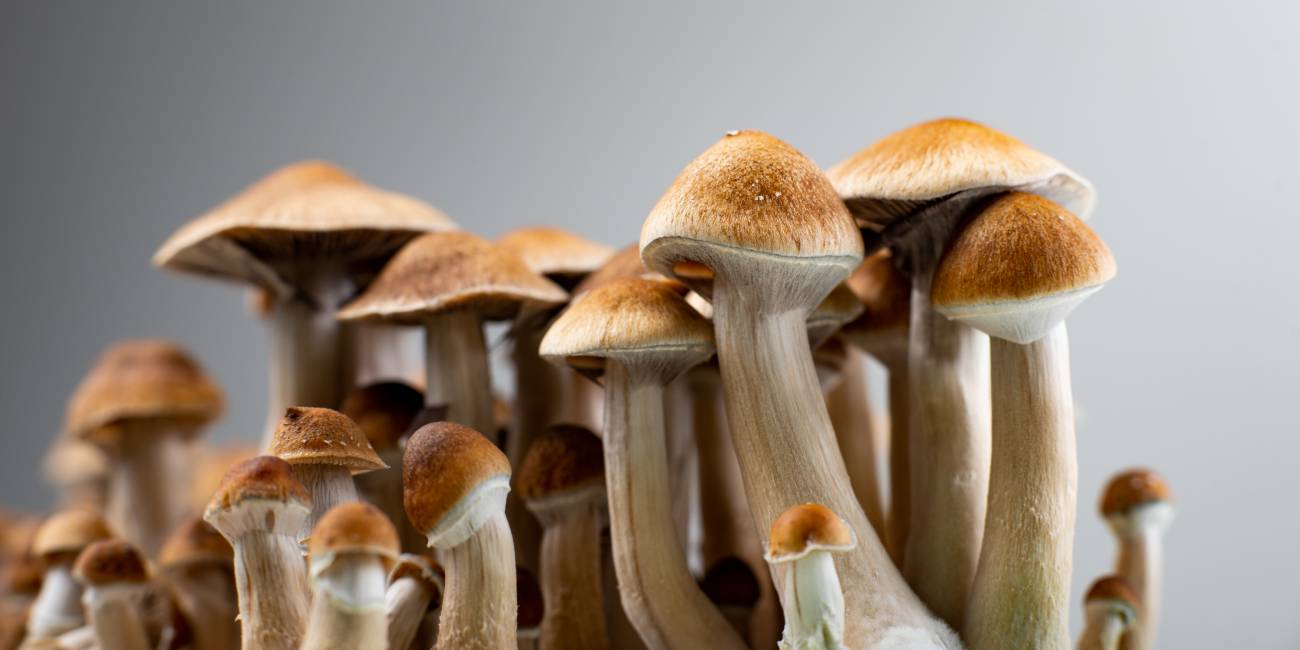
The active compound in magic mushrooms, psilocybin, converts to psilocin in your body and interacts with serotonin receptors in your brain. This interaction creates new neural pathways and helps break negative thought patterns that often keep people stuck in depression.
How Psilocybin Changes Depression Treatment
Recent studies show that psilocybin change depression treatment by addressing the root causes rather than just symptoms. Traditional antidepressants work by changing brain chemistry temporarily, but psilocybin appears to create lasting structural changes in the brain.

The default mode network is a brain network that’s often overactive in people with depression. This network is responsible for self-referential thinking and rumination. Psilocybin helps quiet this network, allowing for what researchers call a brain reset depression experience.
The Science Behind Psilocybin Therapy
Johns Hopkins psilocybin research has led the way in understanding how this treatment works. Their studies show that psilocybin therapy can be effective for people who haven’t found relief with traditional treatments.
Key Research Findings
The Johns Hopkins psilocybin trials have shown remarkable results:
- 70% of participants experienced significant reduction in depression symptoms
- Effects lasted for at least one month after treatment
- Many participants described lasting positive changes in their outlook on life
- The treatment was well-tolerated with minimal side effects when used in controlled settings
Depression clinical trials at other major universities have confirmed these findings. Studies at Imperial College London, NYU, and COMPASS Pathways have all shown similar positive results.
How the Brain Reset Works
The psilocybin brain reset happens through several mechanisms:
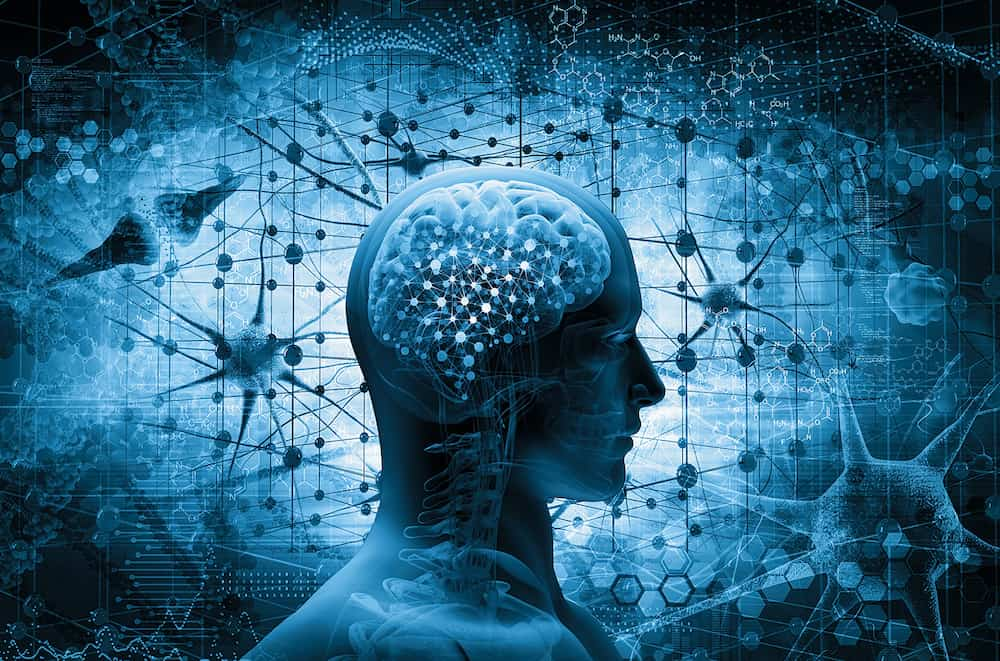
Neuroplasticity Enhancement: Psilocybin increases the brain’s ability to form new neural connections, helping people break out of negative thought patterns.
Default Mode Network Disruption: By temporarily shutting down the brain’s default mode network, psilocybin allows for new perspectives and reduced rumination.
Emotional Processing: The treatment helps people process difficult emotions and experiences in a new way, often leading to resolution of past trauma.
Treatment-Resistant Depression and Psilocybin
Treatment resistant depression affects millions of people who haven’t found relief from traditional medications. For these individuals, psilocybin treatment resistant depression offers new hope.
Who Might Benefit
People who might benefit from treat depression psilocybin approaches include those who:
- Haven’t responded to multiple antidepressant medications
- Experience severe side effects from traditional treatments
- Have depression linked to trauma or existential concerns
- Want a treatment that addresses root causes rather than just symptoms
Success Rates
Studies show that psilocybin therapy depression can be effective even for people who haven’t responded to other treatments. In clinical trials, many participants with treatment-resistant depression showed significant improvement after psilocybin therapy.
California’s Legal Landscape for Psilocybin
California has been at the forefront of psychedelic reform. While psilocybin remains federally illegal, the state has made significant moves toward decriminalization and regulated access.
Current Legal Status
Several California cities have decriminalized psilocybin, including:
- Oakland
- Santa Cruz
- Berkeley
- San Francisco (pending)
This means local law enforcement treats psilocybin as a low priority for prosecution. However, it’s important to understand that decriminalization doesn’t mean full legalization.
Future of Legal Access
California is working on legislation that would create a regulated system for psilocybin therapy, similar to what Oregon has implemented. This would allow licensed therapists to provide psilocybin treatment in clinical settings.
Mushroom Delivery Services in California
Mushroom delivery San Diego and other California cities has become more accessible as attitudes toward psilocybin shift. Several services now operate in legal gray areas or focus on education and harm reduction.
Types of Services Available
Mushroom delivery services San Diego and throughout California typically offer:
- Educational materials about psilocybin
- Preparation and integration support
- Access to therapeutic mushrooms through various legal frameworks
- Guidance on safe use practices
Popular Service Areas
Best mushroom delivery San Diego services often extend to other major California cities:
- Los Angeles
- San Francisco
- Oakland
- Berkeley
- Santa Cruz
Finding Reliable Services
When looking for services, research thoroughly and prioritize those that:
- Focus on education and safety
- Provide integration support
- Have knowledgeable staff
- Follow harm reduction principles
- Are transparent about their practices
How to Choose the Best Mushroom Delivery Service
Finding the best mushroom delivery San Diego service requires careful consideration of several factors:
Key Factors to Consider
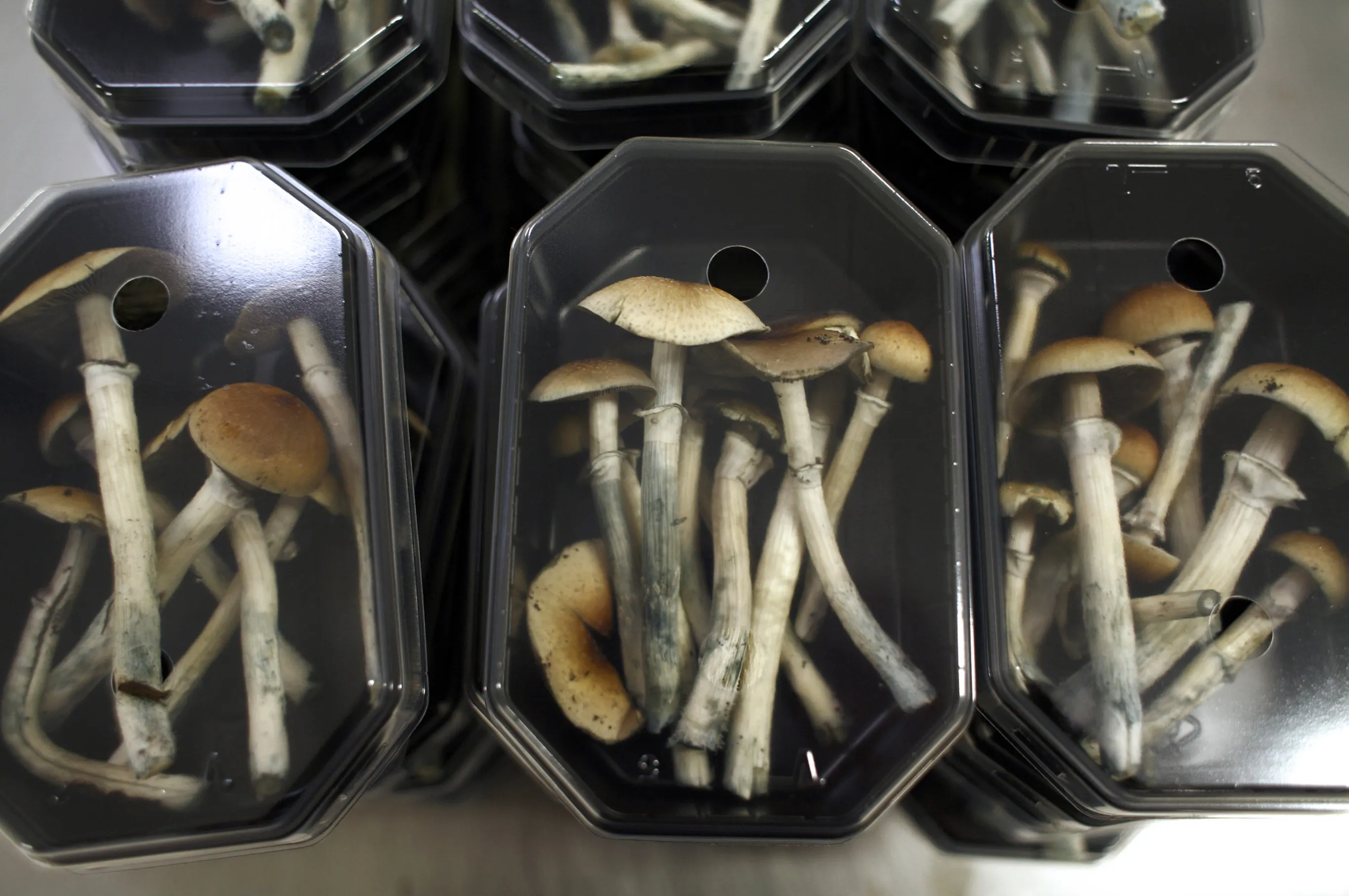
Safety and Quality: Look for services that prioritize product quality and safety testing. The best services will be transparent about their sourcing and quality control measures.
Educational Support: Quality services provide comprehensive education about psilocybin, including proper dosing, set and setting, and what to expect.
Integration Services: The best providers offer support before, during, and after your experience to help you integrate insights into daily life.
Legal Compliance: Choose services that operate within legal boundaries and are transparent about their legal status.
Questions to Ask
Before choosing a service, ask:
- What safety measures do you have in place?
- Do you provide integration support?
- What is your experience and training?
- How do you ensure product quality?
- What legal protections do you operate under?
Preparation for Psilocybin Depression Treatment
Proper preparation is essential for successful psilocybin therapy depression outcomes. This preparation phase, often called “set and setting,” can significantly impact your experience.
Mental Preparation
Set refers to your mindset going into the experience:
- Work with a therapist or guide to prepare mentally
- Address any major fears or concerns beforehand
- Set clear intentions for your experience
- Practice meditation or mindfulness techniques
- Ensure you’re in a stable mental state
Environmental Preparation
Setting refers to your physical and social environment:
- Choose a safe, comfortable location
- Have a trusted person nearby for support
- Remove potential stressors or distractions
- Create a calming atmosphere with music and lighting
- Have water and light snacks available
Medical Considerations
Before starting treatment:
- Consult with a healthcare provider
- Review any medications for potential interactions
- Discuss your mental health history
- Consider any physical health conditions
- Plan for time off work or responsibilities
Integration and Aftercare
The period after psilocybin depression treatment is crucial for lasting benefits. Integration helps you make sense of your experience and apply insights to daily life.
Integration Practices
Effective integration might include:

Journaling: Write about your experience and insights regularly to help process and remember important realizations.
Therapy: Work with a therapist experienced in psychedelic integration to help make sense of your experience.
Lifestyle Changes: Implement positive changes inspired by your experience, such as new habits, relationships, or perspectives.
Community Support: Connect with others who have had similar experiences through support groups or online communities.
Long-term Benefits
People who engage in proper integration often report:
- Lasting improvements in mood and outlook
- Better relationships with family and friends
- Increased sense of purpose and meaning
- Reduced anxiety and depression symptoms
- Greater emotional resilience
Alternative Mushrooms for Anxiety Support
While psilocybin gets most of the attention, other mushrooms for anxiety can provide valuable support for mental health:
Lion’s Mane for Cognitive Health
Lion’s Mane mushrooms support brain health through:
- Nerve Growth Factor: Promotes the growth and repair of nerve cells
- Neuroplasticity: Enhances the brain’s ability to adapt and change
- Cognitive function improvement
- Memory and focus enhancement
Reishi for Stress Relief
Reishi mushrooms, known as the “mushroom of immortality,” help with:
- HPA Axis regulation, which controls stress response
- Cortisol reduction to help manage chronic stress
- Improved sleep quality
- Immune system support
Cordyceps for Energy and Mood
Cordyceps mushrooms can help with:
- Energy levels and physical stamina
- Mood regulation through improved physical health
- Stress adaptation
- Overall vitality
How Functional Mushrooms Work
These functional mushrooms support mental health through various mechanisms:
Gut-Brain Axis: Many mushrooms support gut health, which directly impacts brain function and mood through the gut-brain axis.
Serotonin Support: Some mushrooms may influence serotonin production in the gut, which can affect mood and anxiety disorders.
Adaptogenic Properties: Functional mushrooms help the body adapt to stress more effectively.
Safety Considerations and Guidelines
Safety should always be the top priority when considering psilocybin depression treatment. Here are essential safety guidelines:
Medical Screening
Before treatment, ensure:
- No history of psychotic disorders
- Stable cardiovascular health
- No severe personality disorders
- Appropriate medication management
- Mental health stability
Interaction Warnings
Psilocybin can interact with:
- SSRIs and other antidepressants
- Blood pressure medications
- Heart medications
- Other psychoactive substances
During Treatment Safety
During your experience:
- Never drive or operate machinery
- Stay in a safe, controlled environment
- Have a sober person present
- Avoid alcohol and other substances
- Stay hydrated but don’t over-drink water
When to Seek Help
Contact medical professionals if you experience:
- Severe anxiety or panic that doesn’t subside
- Thoughts of self-harm
- Persistent psychological distress
- Physical symptoms like chest pain or difficulty breathing
- Any concerning changes in mental state
Legal Considerations
Remember that:
- Psilocybin remains federally illegal
- Local laws vary by city and county
- Legal status can change
- Consider legal risks carefully
- Consult with legal experts if needed
The landscape of psilocybin depression treatment in California continues to evolve rapidly. As research progresses and laws change, more people are finding relief from depression through this innovative approach. Whether you’re exploring mushroom delivery services San Diego options or researching psilocybin therapy depression benefits, the key is to prioritize safety, education, and proper support throughout your journey. Remember that while psilocybin shows great promise, it works best as part of a comprehensive approach to mental health that includes therapy, lifestyle changes, and ongoing support. Always consult with healthcare professionals and work with experienced guides to ensure the safest and most beneficial experience possible.
psilocybin depression | psilocybin depression | psilocybin depression | psilocybin depression | psilocybin depression | psilocybin depression | psilocybin depression | psilocybin depression
Where to Buy Psilocybin Mushroom Capsules USA
Where to Buy Psilocybin Mushroom Capsules USA
Where to Buy Psilocybin Mushroom Capsules USA is a common question from both newcomers and experienced users interested in exploring the benefits of psilocybin in a convenient capsule form. With evolving laws and the growing psychedelic wellness market in 2025, this guide offers clear, trusted advice on how and where to find genuine psilocybin mushroom capsules safely across the United States.
The Legal Landscape of Psilocybin Mushroom Capsules in the USA
Psilocybin remains federally classified as a Schedule I substance, making possession, sale, and transportation illegal under federal law. However, several states, including Oregon and Colorado, have decriminalized or regulated psilocybin for therapeutic and supervised personal use. Local cities also show variable enforcement priority.
Purchasing psilocybin capsules remains legally sensitive. Buyers must understand their state and city regulations, as possession without a valid license or exemption can lead to prosecution.
Finding Trusted Vendors for Psilocybin Capsules
Trusted vendors typically operate legally in states or countries with permissive legal frameworks. They offer lab-tested capsules, transparent sourcing, and secure payment options. Many provide educational resources on dosing, effects, and safety to ensure responsible use.
When buying online, prioritize:
-
Verification of vendor licenses and certifications
-
Positive customer reviews
-
Clear product information and third-party testing results
-
Secure ordering platforms with discreet shipping
Avoid sources that promise quick, prescription-free sales or undercut market prices as these often risk counterfeit or dangerous products.
How to Safely Purchase Psilocybin Mushroom Capsules in the USA
To purchase safely:
-
Verify your local laws and understand implications.
-
Consult healthcare professionals or legal advisors if unsure.
-
Use licensed dispensaries or platforms compliant with regulations.
-
Confirm product authenticity and lab testing.
-
Employ secure payment methods and track deliveries.
Why Choose Psilocybin Mushroom Capsules?
Capsules provide a measured, discreet, and consistent dose of psilocybin, preferred by many for ease of use compared to raw mushrooms. They minimize taste and allow better control over intake, especially for therapeutic or microdosing practices.
FAQs About Buying Psilocybin Mushroom Capsules USA
Q1: Are psilocybin mushroom capsules legal in the USA?
A1: Federally, no. Some states have decriminalized or created regulated therapeutic programs allowing legal use under supervision.
Q2: Where can I legally buy psilocybin mushroom capsules?
A2: Legal sales mainly occur in specific states with licensed dispensaries or via clinical trials.
Q3: How do I identify trustworthy vendors?
A3: Look for licensing, lab testing certificates, verified customer reviews, and transparent product details.
Q4: Can I buy psilocybin capsules online and have them shipped to the USA?
A4: It depends on your local laws; shipping controlled substances federally is illegal, so caution is essential.
Q5: What are the benefits of capsules versus raw mushrooms?
A5: Capsules allow precise dosing, ease of use, and eliminate unpleasant taste, ideal for microdosing or therapeutic use.
buy psilocybin mushroom capsules | buy psilocybin mushroom capsules | buy psilocybin mushroom capsules
The Complete Guide to Psilocybin Chocolate
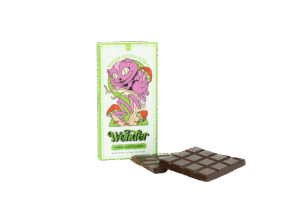
Mushrooms have been used for centuries for their healing and spiritual properties. In recent years, people have been finding creative, enjoyable, and safe ways to experience psilocybin, the natural compound found in certain mushrooms. One of the most exciting innovations in this space is the Wonder Psilocybin Chocolatea delicious blend of fine chocolate and carefully measured psilocybin.
This guide will help you understand everything you need to know about mushroom chocolates: from the benefits of a Dark Chocolate Psilocybin Bar, to how to buy psilocybin chocolate online, to understanding the unique psilocybin chocolate effects you can expect.
Why Wonder Psilocybin Chocolate Is So Popular
The Wonder Psilocybin Chocolate has quickly gained attention for combining indulgence with purpose. Instead of eating raw mushrooms, which can be bitter and difficult for some, you can enjoy a smooth, creamy chocolate bar while still experiencing the full effects of psilocybin. This makes the journey not only more enjoyable but also easier to dose.
People choose Wonder bars because they:
-
Provide consistent dosing in every square
-
Offer a delicious flavor that masks the earthy mushroom taste
-
Are portable and discreet
-
Deliver reliable psilocybin chocolate effects
The Beauty of a Dark Chocolate Psilocybin Bar
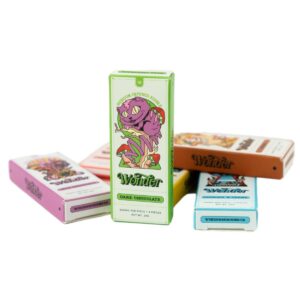
A Dark Chocolate Psilocybin Bar is not just about taste—it’s about balance. Dark chocolate contains natural antioxidants and compounds that support mood, focus, and overall well-being. When paired with psilocybin, it creates a smoother, more enhanced experience.
Many users report that dark chocolate helps soften the onset of psilocybin’s effects, allowing for a gentler transition into the journey. This makes it ideal for both beginners and experienced explorers.
Where to Buy Psilocybin Chocolate Online
With demand rising, it’s now easier than ever to buy psilocybin chocolate online. Online shops specializing in mushroom edibles provide a variety of options, including the Psilocybin Edible Bar 6g and other specialty chocolates.
When shopping online, always consider:
-
Verified customer reviews
-
Lab-tested products
-
Clear dosage information
-
Secure, discreet shipping
These factors ensure that when you purchase a Magic Mushroom Chocolate Bar, you’re getting a safe, premium product you can trust.
Magic Mushroom Chocolate Bar vs. Psychedelic Chocolate Edibles
What’s the difference between a Magic Mushroom Chocolate Bar and other psychedelic chocolate edibles?
-
Magic Mushroom Chocolate Bar: Typically comes in larger sizes (like 6g), designed for multiple sessions or shared experiences.
-
Psychedelic Chocolate Edibles: Can include smaller bars, truffles, or other treats with different flavors and dosages.
Both offer unique benefits, but chocolate bars remain the most popular choice because of their consistent dosing, long shelf life, and easy portion control.
Psilocybin Edible Bar 6g – Perfect for Every Occasion
The Psilocybin Edible Bar 6g has become a standard size in the community. Why? Because it gives you the flexibility to decide how much or how little you want. Break off a square for a microdose, or enjoy several for a deeper experience.
This flexibility makes it perfect for:
-
Relaxing evenings
-
Creative projects
-
Mindful meditation
-
Shared experiences with trusted friends
Finding a Shroom Chocolate Bar for Sale
If you’re searching for a shroom chocolate bar for sale, always prioritize quality over price. Not all bars are made with premium ingredients, and not all suppliers are trustworthy. Choosing a reputable source ensures your bar delivers safe, consistent effects every time.
Premium brands often use fine cocoa, transparent labeling, and exact psilocybin measurements—everything you need for the best psilocybin chocolate experience.
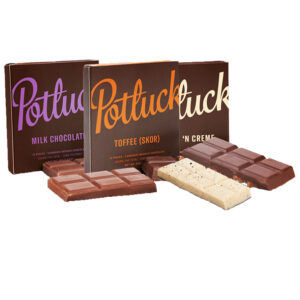
What Is the Best Psilocybin Chocolate Experience?
The best psilocybin chocolate experience is one that balances taste, dosage, and environment. Most users agree that premium products, like the Wonder Psilocybin Chocolate or other premium mushroom chocolate bars, create smoother and more enjoyable journeys.
Factors that enhance the experience include:
-
🍫 Choosing a premium mushroom chocolate bar
-
🌱 Consuming in a safe, comfortable space
-
🎶 Pairing with calming music or meditation
-
👥 Sharing with trusted friends
Psilocybin Chocolate Effects Explained
The psilocybin chocolate effects vary depending on dosage and individual sensitivity. At lower doses, users may feel relaxed, uplifted, and more creative. At higher doses, effects may include enhanced visuals, deep introspection, and a sense of connectedness.
Common effects include:
-
Improved mood and emotional balance
-
Heightened creativity and focus
-
Enhanced sensory perception
-
Deep feelings of relaxation and mindfulness
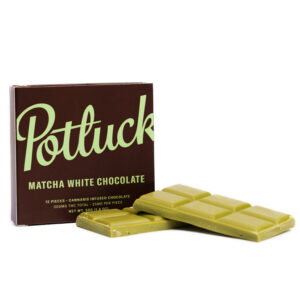
Final Thoughts
The world of psilocybin edibles is rapidly growing, and chocolate bars are leading the way. From the delicious Dark Chocolate Psilocybin Bar to the versatile Psilocybin Edible Bar 6g, these treats offer a perfect balance of flavor, effectiveness, and reliability.
Whether you’re searching for a shroom chocolate bar for sale, curious about the best psilocybin chocolate experience, or simply exploring the potential of psychedelic chocolate edibles, premium products like the Wonder Psilocybin Chocolate provide a safe, enjoyable, and transformative option.
Enjoy responsibly, choose quality, and let your journey begin with the sweet taste of chocolate and the natural power of psilocybin.