Tag Archives: psychedelic edibles
Psilocybin vs Psychedelics: Your USA Guide

Psilocybin vs Psychedelics: Your USA Guide
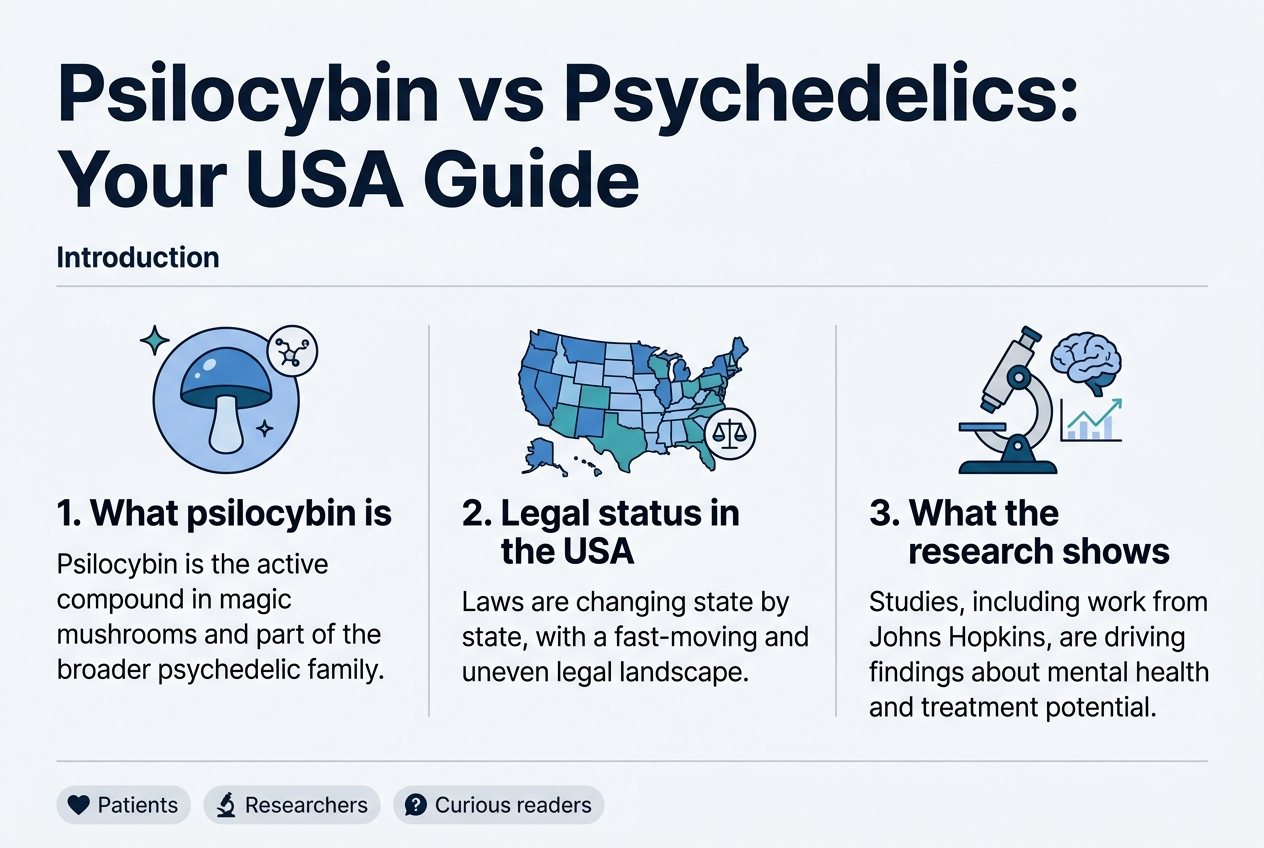
If you’ve been hearing a lot about magic mushrooms lately and wondering what’s actually going on with all of it — you’re not alone. Psilocybin vs psychedelics is one of the most searched topics right now, and for good reason. The science is moving fast, the laws are shifting state by state, and a lot of people are trying to separate fact from hype.
This guide is for anyone curious about where psilocybin fits into the broader world of psychedelics — whether you’re a patient exploring mental health options, a researcher tracking the field, or just someone who wants to understand what’s actually happening in the USA right now.
Here’s what we’ll cover:
-
What psilocybin actually is and how it differs from other psychedelics
-
Where it stands legally across the United States
-
What the research really shows — including the breakthroughs coming out of Johns Hopkins and what they mean for everyday people
No fluff, no scare tactics. Just a clear breakdown of what we know so far.
Understanding Psilocybin and Its Place Among Psychedelics
What Is Psilocybin and Where Does It Come From
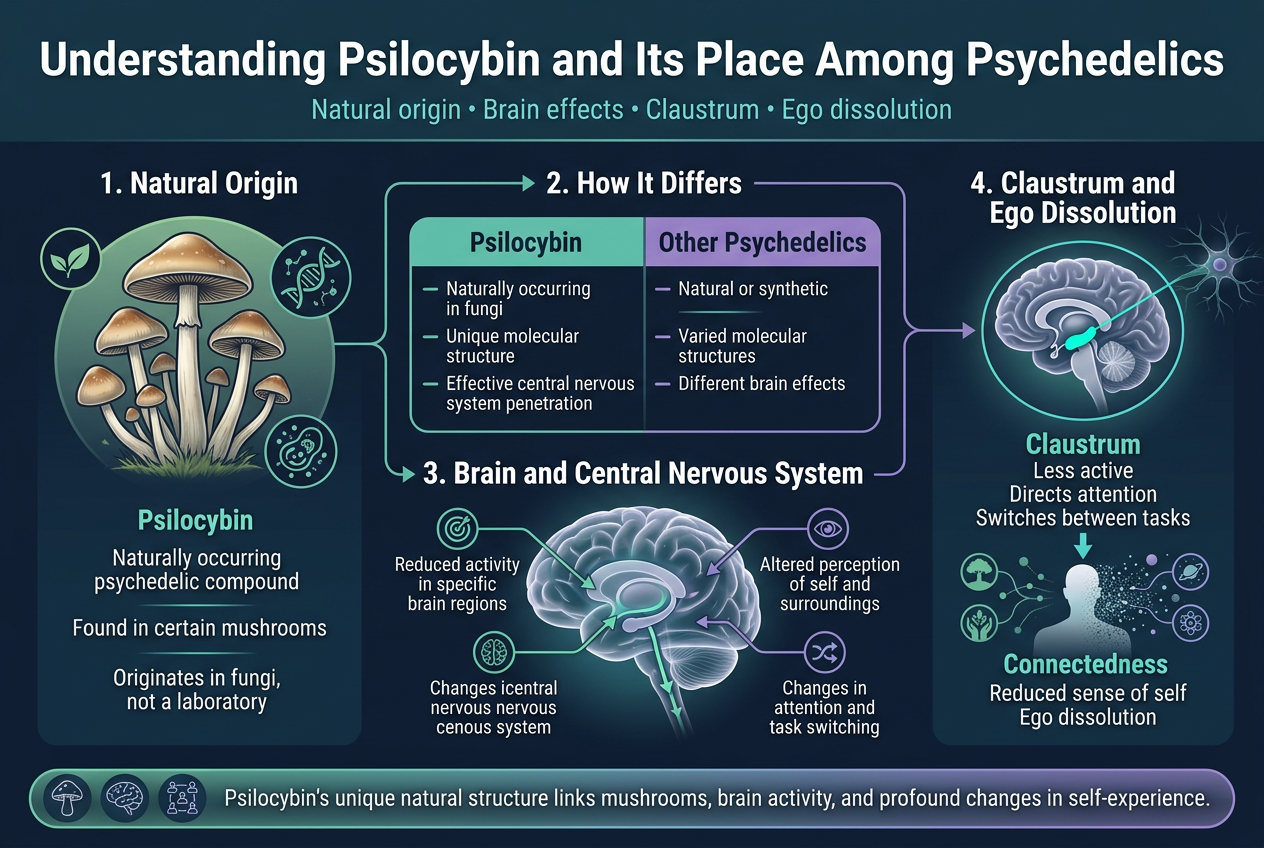
Psilocybin is a naturally occurring psychedelic compound found in what are commonly known as “magic mushrooms.” Unlike synthetic substances manufactured in laboratories, psilocybin has its origins in nature, embedded within the biological makeup of certain fungal species. This natural origin is a key part of what distinguishes psilocybin within the broader landscape of psychedelic substances and has contributed to its long history of use across various cultures.
The fact that psilocybin is naturally occurring does not diminish its potency or complexity. Its molecular structure is sophisticated enough to interact profoundly with human biology, particularly the central nervous system, making it one of the most pharmacologically significant compounds found in nature.
How Psilocybin Differs From Other Psychedelic Substances
Within the broad category of psychedelics, psilocybin occupies a distinctive position. While many psychedelic substances exist — both natural and synthetic — psilocybin stands apart due to several characteristics:
-
Natural origin: Psilocybin is derived directly from fungi, specifically certain species of mushrooms, rather than being synthesized chemically.
-
Molecular structure: The molecular structure of psilocybin is specifically designed, in a biological sense, to penetrate the central nervous system effectively.
-
Mechanism of action: Psilocybin targets specific regions and systems in the brain, producing effects that are characteristic yet distinct from those of other psychedelic compounds.
| Feature | Psilocybin | Other Psychedelics (General) |
|---|---|---|
| Origin | Naturally occurring in fungi | Can be natural or synthetic |
| CNS Penetration | Yes, via unique molecular structure | Varies by compound |
| Primary Brain Effects | Claustrum activity reduction, ego dissolution | Varies widely |
These distinctions matter considerably when discussing the Psilocybin vs Psychedelics conversation in the context of research, therapy, and legal status across the USA.
How Psilocybin Affects the Brain and Central Nervous System
Now that we have covered where psilocybin comes from and how it compares to other psychedelics, it is important to understand precisely how it operates within the human body — particularly the brain.
The molecular structure of psilocybin is a critical factor in its psychoactive effects. This structure allows psilocybin to effectively penetrate the central nervous system, gaining access to brain regions and neural pathways that govern perception, cognition, mood, and a sense of self. Once it crosses into the central nervous system, psilocybin begins to exert its influence on specific brain structures, leading to the vivid and often profound experiences that users report.
Key effects on the brain and central nervous system include:
-
Reduced activity in specific brain regions, most notably the claustrum
-
Altered perception of self and surroundings, tied directly to these neural changes
-
Changes in how the brain switches between tasks and allocates attention
These neurological effects are not random. They are the direct result of how psilocybin’s molecular structure interacts with the central nervous system, producing consistent patterns of experience that researchers have been able to study and document.
The Role of the Claustrum and Ego Dissolution in Psilocybin Experiences
With this in mind, next, we will explore one of the most fascinating neurological findings related to psilocybin: the role of the claustrum.
Psilocybin use has been shown to make the claustrum in the brain less active. The claustrum is a region of the brain believed to be responsible for two critical cognitive functions:
-
Setting and directing attention
-
Switching between tasks
When psilocybin reduces activity in the claustrum, these functions are significantly altered. The brain’s usual mechanisms for filtering attention and managing cognitive transitions become less dominant, which opens the door to a cascade of characteristic psychedelic effects.
This reduced claustrum activity is directly linked to some of the most commonly reported — and therapeutically relevant — effects of psilocybin, including:
-
Feelings of being deeply connected to everything around you, including other people, nature, and the universe at large
-
A reduced sense of self or ego, often described in clinical and research settings as ego dissolution
Ego dissolution, in particular, is a defining feature of psilocybin experiences that sets it apart within the psychedelic category. It refers to the temporary diminishment or complete dissolution of one’s ordinary sense of individual identity — a psychological state that researchers believe may be central to psilocybin’s potential therapeutic benefits.
Previously, understanding how psychedelics worked relied heavily on subjective user reports. The identification of the claustrum’s role provides a concrete, neurological basis for these experiences, bridging the gap between reported phenomenology and measurable brain activity. This scientific grounding is one reason psilocybin has attracted such serious academic and medical attention in recent years.
The Legal Status of Psilocybin in the USA
Current Federal Classification as a Schedule I Drug
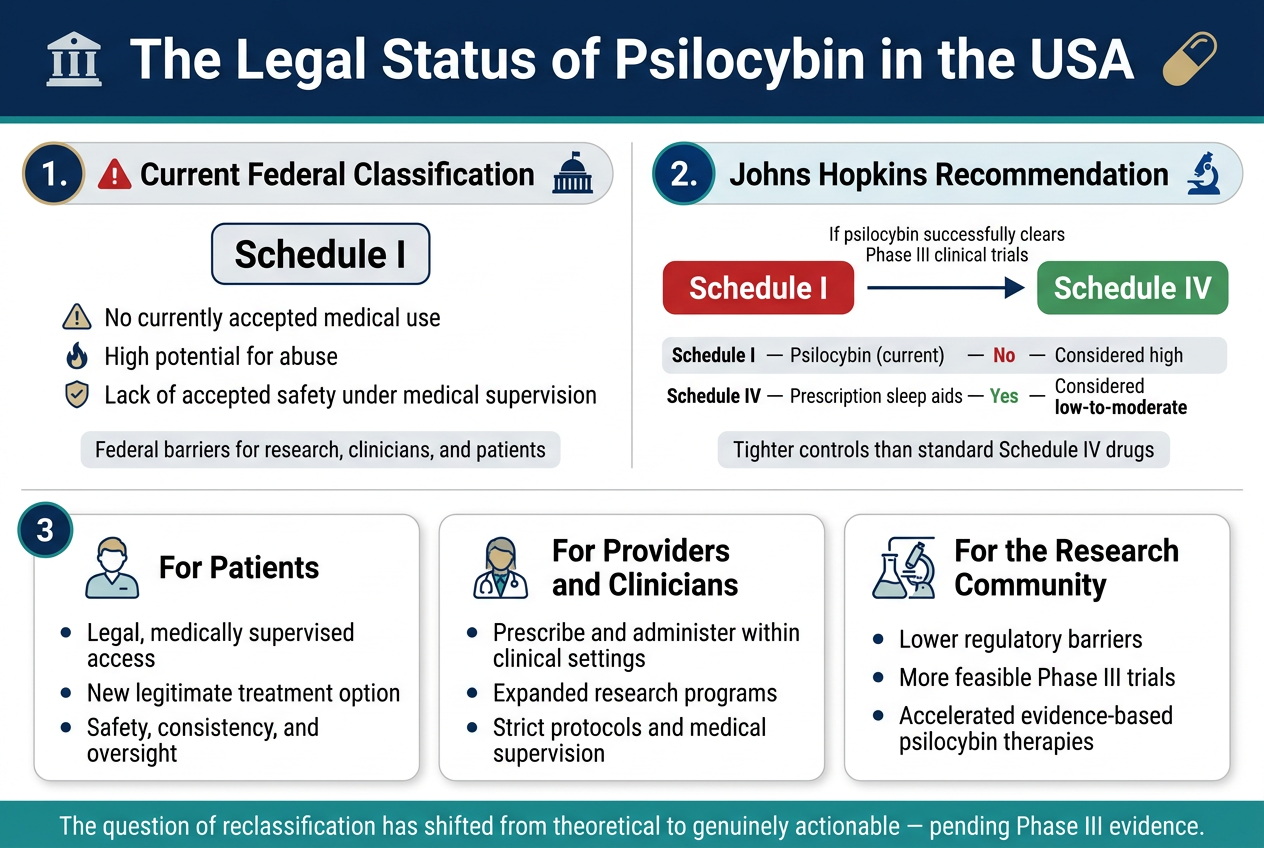
At the federal level, psilocybin remains classified as a Schedule I controlled substance under the Controlled Substances Act. This classification carries significant weight, as it places psilocybin in the same legal category as substances deemed to have:
-
No currently accepted medical use in the United States
-
A high potential for abuse
-
A lack of accepted safety for use under medical supervision
This federal standing creates substantial barriers for researchers, clinicians, and patients alike. Scientists seeking to study psilocybin must navigate layers of regulatory hurdles simply to obtain the substance for controlled research settings. For patients, the Schedule I designation means there is no legal pathway to access psilocybin through a licensed healthcare provider at the federal level — regardless of the growing body of evidence suggesting its therapeutic promise.
Understanding this classification is foundational to any honest discussion about psilocybin vs psychedelics in the broader USA guide context, because it shapes everything from research timelines to clinical access and provider liability.
Johns Hopkins Recommendation to Reclassify Psilocybin to Schedule IV
Now that we have covered the current legal landscape, it is important to highlight a pivotal recommendation that could reshape psilocybin’s future. Researchers at Johns Hopkins University, one of the most respected medical institutions in the world, have made a formal and evidence-backed recommendation: if psilocybin successfully clears Phase III clinical trials, it should be reclassified from a Schedule I drug to a Schedule IV controlled substance.
To understand the significance of this, consider how Schedule IV substances are treated under U.S. law:
| Classification | Examples | Medical Use Recognized? | Abuse Potential |
|---|---|---|---|
| Schedule I | Psilocybin (current) | No | Considered high |
| Schedule IV | Prescription sleep aids | Yes | Considered low-to-moderate |
A Schedule IV designation is typically reserved for medications that have accepted medical applications and a relatively lower potential for abuse compared to substances in higher schedules. The Johns Hopkins recommendation places psilocybin in the same category as certain prescription sleep aids, though notably with the suggestion that it be subject to tighter controls than those currently applied to standard Schedule IV drugs.
This distinction is critical. The Hopkins team is not advocating for open or recreational access. Rather, they are proposing a framework in which psilocybin could be prescribed and monitored within a structured, medically supervised environment — contingent on the drug first demonstrating consistent efficacy and safety through the rigors of Phase III trial protocols.
What Reclassification Could Mean for Patients and Providers
With this in mind, the implications of moving psilocybin from Schedule I to Schedule IV would be far-reaching, touching every corner of the healthcare ecosystem.
For Patients:
-
A reclassification would open the door to legal, medically supervised access to psilocybin-based treatments
-
Patients dealing with conditions where current therapies fall short could have a new, legitimate treatment option available through licensed providers
-
The pathway through a regulated medical system would offer greater safety, consistency, and oversight compared to unregulated use
For Providers and Clinicians:
-
Healthcare professionals could legally prescribe and administer psilocybin within appropriate clinical settings
-
Medical institutions could expand research programs without the current burden of Schedule I regulatory restrictions
-
The tighter controls proposed alongside the Schedule IV designation suggest that providers would still operate under strict protocols, ensuring that psilocybin is used responsibly and only where medically appropriate
For the Research Community:
-
Reclassification would significantly lower the regulatory barriers that currently slow clinical research
-
Phase III trials — the very milestone that would trigger reclassification under the Hopkins framework — would become more feasible as the legal environment evolves
-
A more permissive research classification could accelerate the development of evidence-based psilocybin therapies
Previously, the idea of reclassifying a psychedelic compound within the U.S. federal system would have seemed remote. Today, with institutions of the caliber of Johns Hopkins lending their credibility to the conversation, the question of reclassification has shifted from theoretical to genuinely actionable — pending the clinical evidence that Phase III trials are designed to provide.
Breakthrough Research Driving the Psychedelic Renaissance
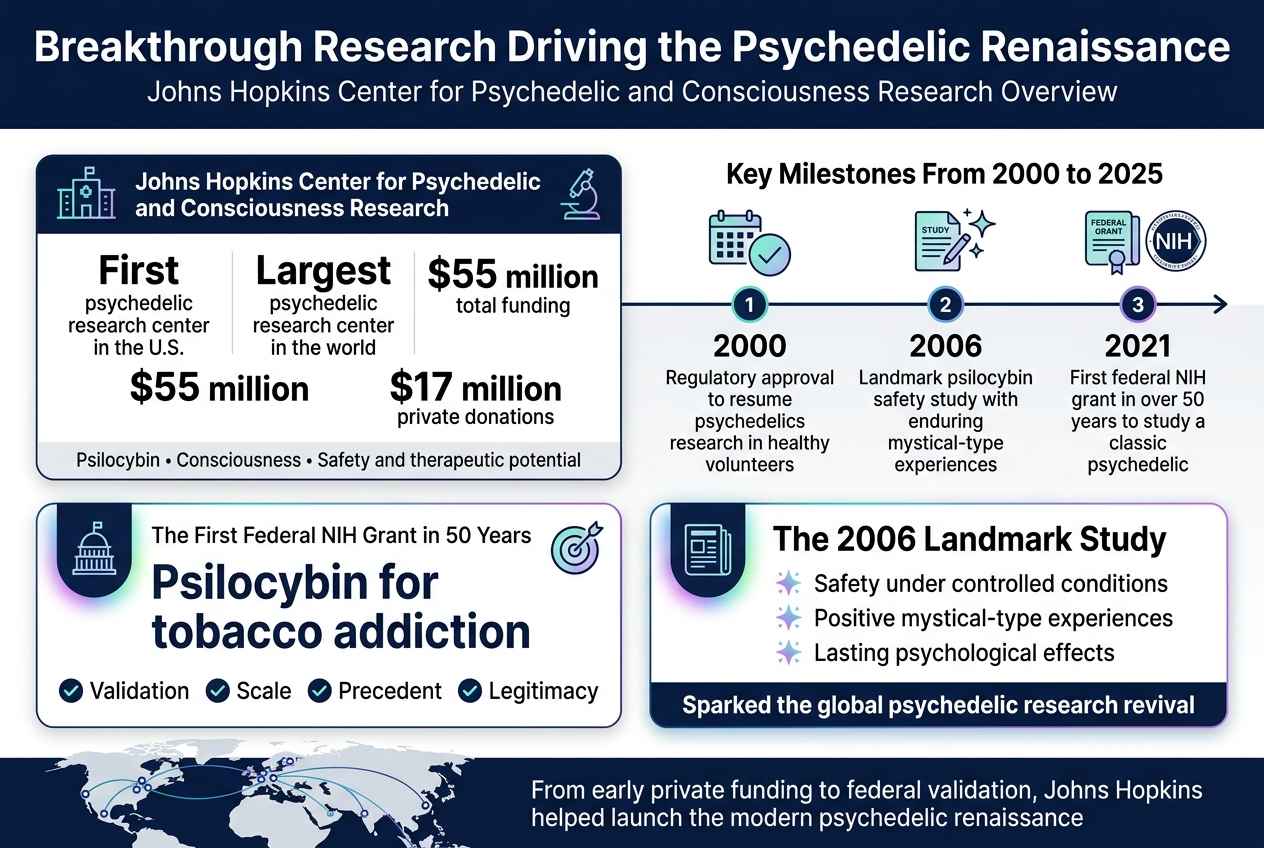
Johns Hopkins Center for Psychedelic and Consciousness Research Overview
When examining the forces behind the modern psychedelic renaissance, one institution stands head and shoulders above the rest: the Johns Hopkins Center for Psychedelic and Consciousness Research. This pioneering center holds the distinction of being both the first such research center in the United States and the largest psychedelic research center in the world — a remarkable combination that has positioned it at the absolute forefront of this rapidly evolving field.
The center operates with a total backing of $55 million in funding, a figure that reflects the extraordinary level of confidence researchers, philanthropists, and the broader scientific community have placed in this work. Its foundation was laid with $17 million in private donations, demonstrating that long before federal agencies were ready to invest, private individuals and organizations recognized the immense potential of psilocybin-assisted research. This grassroots financial momentum was essential in keeping the science alive during decades when government support was virtually nonexistent.
Key areas the center investigates include:
-
Innovative psilocybin treatments for a wide range of conditions
-
Consciousness research that examines how psychedelics alter human perception and awareness
-
The safety and therapeutic potential of classic psychedelics in controlled clinical settings
The center’s work has not only produced groundbreaking scientific findings but has also helped legitimize psychedelic research on a global scale, encouraging institutions worldwide to launch their own programs.
Key Milestones From 2000 to 2025 in Psilocybin Research
With this in mind, it is worth tracing the timeline of critical developments that have brought psilocybin research from the fringes of science to the center of mainstream medicine. The journey has been long, deliberate, and filled with hard-won victories at every stage.
Here is a structured overview of the key milestones:
| Year | Milestone |
|---|---|
| 2000 | Johns Hopkins receives regulatory approval to resume psychedelics research in healthy volunteers — a pivotal turning point after decades of restrictions |
| 2006 | Publication of a landmark study on psilocybin’s safety and its enduring positive effects on mystical-type experiences, widely credited with sparking a global revival of psychedelic research |
| 2021 | Johns Hopkins Medicine is awarded the first federal NIH grant in over 50 years to directly study the therapeutic effects of a classic psychedelic |
Each of these milestones represents far more than a bureaucratic checkpoint. They reflect a gradual but unmistakable shift in how governments, scientists, and the public perceive the therapeutic value of psilocybin and other psychedelics within the broader Psilocybin vs Psychedelics conversation shaping the USA today.
The First Federal NIH Grant for Psychedelic Research in 50 Years
Previously, federal funding for psychedelic research had been entirely absent for more than half a century — a gap that speaks volumes about how politically and socially contentious these substances had become following their prohibition. That changed in a significant way in 2021, when Johns Hopkins Medicine was awarded the first federal NIH grant in over 50 years to directly investigate the therapeutic effects of a classic psychedelic.
The focus of this landmark grant was psilocybin as a treatment for tobacco addiction — a specific, clinically meaningful application that underscores the seriousness with which the scientific community now views this research. Tobacco addiction is notoriously difficult to treat with conventional methods, making psilocybin’s potential in this area both exciting and practically significant.
Why does this federal grant matter so profoundly? Consider the following:
-
Validation: Federal NIH funding represents an institutional endorsement of the science, signaling that psilocybin research has met rigorous standards of credibility and promise.
-
Scale: NIH grants open the door to larger, more comprehensive clinical trials that private funding alone cannot always support.
-
Precedent: Once the federal government funds one psychedelic study, it becomes far easier to fund subsequent ones, creating a positive feedback loop for the field.
-
Legitimacy: For researchers, clinicians, and patients alike, federal backing removes much of the stigma that has historically surrounded psychedelic medicine.
This single grant, while representing just one study, carries enormous symbolic and practical weight for the entire trajectory of psychedelic medicine in the USA.
Landmark 2006 Study That Sparked Global Psychedelic Research Revival
Now that we have covered the institutional and funding milestones, it is essential to examine the specific scientific work that catalyzed so much of what followed. The 2006 publication from Johns Hopkins on psilocybin’s safety and its enduring positive effects on mystical-type experiences is widely regarded as one of the most consequential studies in the modern history of psychedelic science.
What made this study so remarkable was not just its findings, but its timing and credibility. After decades during which psychedelic research had been largely shut down and socially stigmatized, a rigorous, peer-reviewed study from one of the world’s most respected medical institutions delivered a clear and evidence-based message: psilocybin, when administered under controlled conditions, is safe and produces lasting positive psychological effects.
The key findings that gave this study its landmark status included:
-
Safety: The study provided compelling evidence that psilocybin does not carry the dangers that had been widely assumed in popular and political discourse.
-
Mystical-type experiences: Participants reported profound, meaningful experiences that were rated among the most significant of their lives — and these effects endured over time, not just in the immediate aftermath of the experience.
-
Rigorous methodology: The careful, controlled design of the study gave it the scientific credibility needed to be taken seriously by researchers, clinicians, and regulators worldwide.
The ripple effect of this publication cannot be overstated. It effectively gave researchers around the globe the scientific and institutional cover they needed to pursue their own psychedelic studies. Universities, medical centers, and research institutes in countries across the world began launching programs in the years that followed, creating the global psychedelic research community that exists today. In many ways, this single study was the spark that lit the fire of what is now commonly called the psychedelic renaissance.
Proven and Potential Therapeutic Benefits of Psilocybin
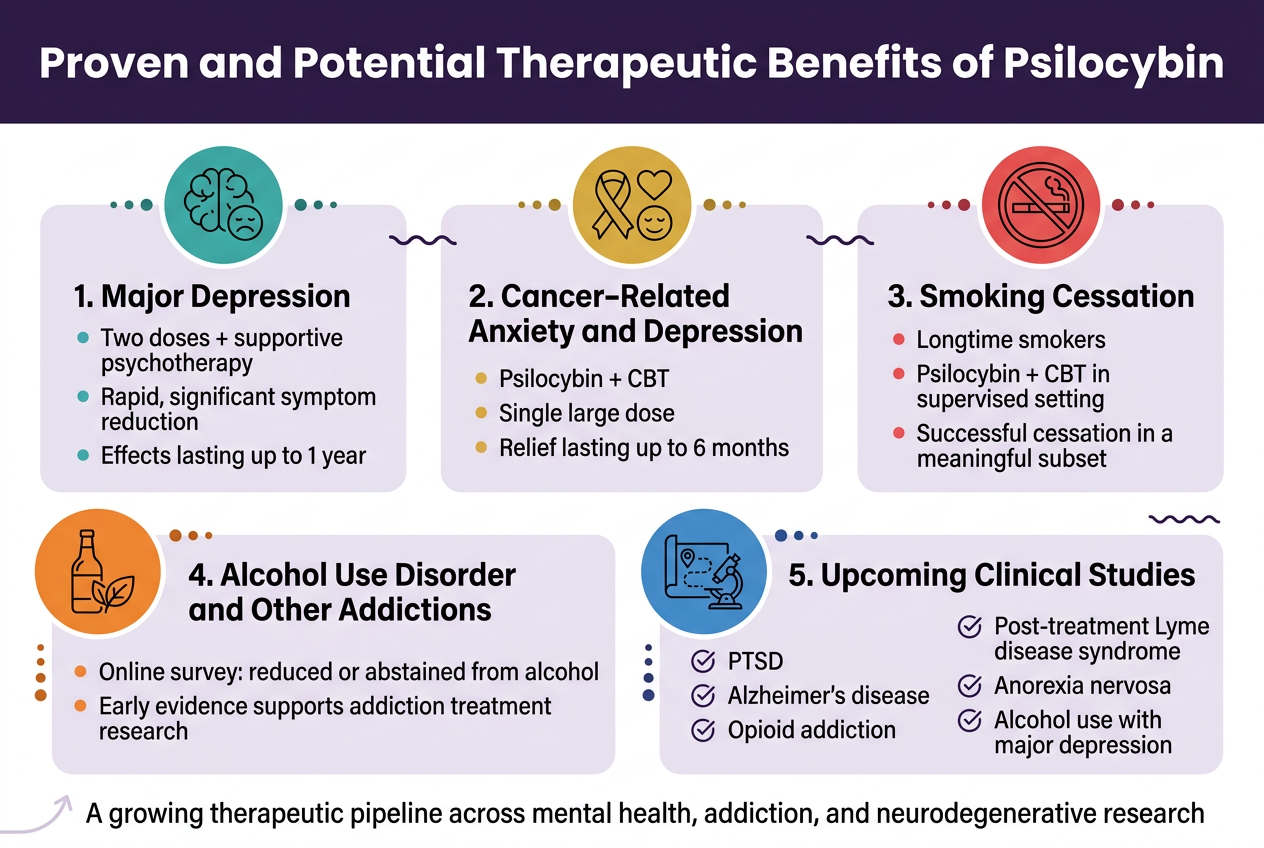
A. Psilocybin as a Treatment for Major Depression
Among the most compelling findings in the psychedelic renaissance is psilocybin’s potential to address one of the most widespread mental health conditions in the United States: major depressive disorder. Clinical research has demonstrated that just two doses of psilocybin, when combined with supportive psychotherapy, produced rapid and significant reductions in depressive symptoms in adults diagnosed with major depression. What makes this particularly remarkable is the durability of the results — for some patients, these therapeutic effects persisted for up to a full year following treatment.
This stands in stark contrast to conventional antidepressants, which typically require daily administration and can take weeks to produce noticeable effects. The depth and longevity of psilocybin’s impact on depression signals a fundamentally different mechanism of healing, one that is generating enormous excitement within both the psychiatric and research communities.
B. Reducing Anxiety and Depression in Cancer Patients
With this in mind, next, we’ll see how psilocybin has shown equally profound results in a deeply vulnerable population: individuals facing life-threatening cancer diagnoses. The psychological burden of a cancer diagnosis — including existential dread, anxiety, and depression — is well-documented and notoriously difficult to treat.
Research has shown that:
-
Psilocybin combined with cognitive behavioral therapy (CBT) can help reduce anxiety in cancer patients.
-
A single large dose of psilocybin offered considerable relief from cancer-related anxiety and depression for a substantial majority of patients studied.
-
Critically, this relief was not fleeting — effects lasted for up to six months following a single administration.
This ability to deliver sustained psychological relief from just one therapeutic session has enormous implications for palliative care and end-of-life mental health support. For patients who may not have the time, energy, or access to ongoing psychiatric treatment, a single psilocybin-assisted session could offer something that conventional medicine has long struggled to provide: lasting peace of mind.
C. Supporting Smoking Cessation Through Psilocybin-Assisted Therapy
Previously, smoking cessation has proven to be one of the most stubbornly resistant behavioral challenges in medicine. Nicotine addiction involves deep psychological and neurological pathways that most conventional treatments only partially address. Psilocybin-assisted therapy, however, has demonstrated a potentially transformative role in helping people break free from long-term tobacco use.
In a controlled clinical setting, psilocybin facilitated smoking cessation for a small number of longtime smokers who had previously failed multiple quit attempts. Importantly, the treatment was delivered alongside cognitive behavioral therapy (CBT), suggesting that the combination of a mystical or introspective psilocybin experience with structured psychological support may be key to achieving lasting behavioral change.
Key highlights from this area of research include:
| Factor | Detail |
|---|---|
| Target Population | Longtime smokers with previous failed cessation attempts |
| Setting | Controlled, supervised clinical environment |
| Therapeutic Pairing | Cognitive behavioral therapy (CBT) |
| Outcome | Successful smoking cessation in a meaningful subset of participants |
While the sample sizes in initial studies remain small, the results provide a compelling foundation for larger, more definitive trials.
D. Addressing Alcohol Use Disorder and Other Substance Addictions
Now that we have covered smoking cessation, it’s worth examining another critical domain where psilocybin and psychedelics more broadly are showing early promise: Alcohol Use Disorder (AUD) and substance addiction.
An online survey found that psychedelic use — including psilocybin specifically — may help individuals with Alcohol Use Disorder reduce or abstain from alcohol consumption. While survey-based evidence occupies a lower tier of scientific rigor compared to controlled clinical trials, it provides meaningful directional insight and helps justify the funding and design of more rigorous studies.
The implications for addiction medicine are considerable. Alcohol Use Disorder is a chronic, relapsing condition associated with severe health, social, and economic consequences. If psilocybin can interrupt the psychological patterns underpinning alcohol dependence — as early data suggests — it could represent a genuinely novel therapeutic pathway for a condition that has resisted many conventional approaches.
E. Upcoming Studies on PTSD, Alzheimer’s, Opioid Addiction, and Anorexia
The existing body of evidence is compelling, but researchers are only beginning to map the full therapeutic landscape of psilocybin. A robust pipeline of upcoming clinical studies is set to explore psilocybin’s effectiveness across a wide range of additional conditions, including:
-
Post-Traumatic Stress Disorder (PTSD)
-
Alzheimer’s disease
-
Opioid addiction
-
Post-treatment Lyme disease syndrome
-
Anorexia nervosa
-
Alcohol use in individuals also diagnosed with major depression
Each of these conditions represents a significant unmet medical need — areas where current treatments are either insufficient, inaccessible, or accompanied by serious drawbacks. The inclusion of Alzheimer’s disease in this research pipeline is particularly noteworthy, as it suggests scientists are exploring psilocybin’s potential neuroplasticity-related mechanisms beyond purely psychiatric applications.
Similarly, research into anorexia nervosa — a condition with one of the highest mortality rates among psychiatric disorders — highlights how broadly researchers believe psilocybin’s therapeutic reach may extend. And with the opioid crisis continuing to devastate communities across the United States, any effective adjunct to addiction treatment carries enormous public health relevance.
The breadth of these upcoming studies underscores a growing scientific consensus: psilocybin’s therapeutic potential is not limited to a single condition or mechanism, but may reflect a fundamental capacity to facilitate deep psychological and neurological healing across multiple domains of human suffering.
Risks, Side Effects, and Safety Considerations
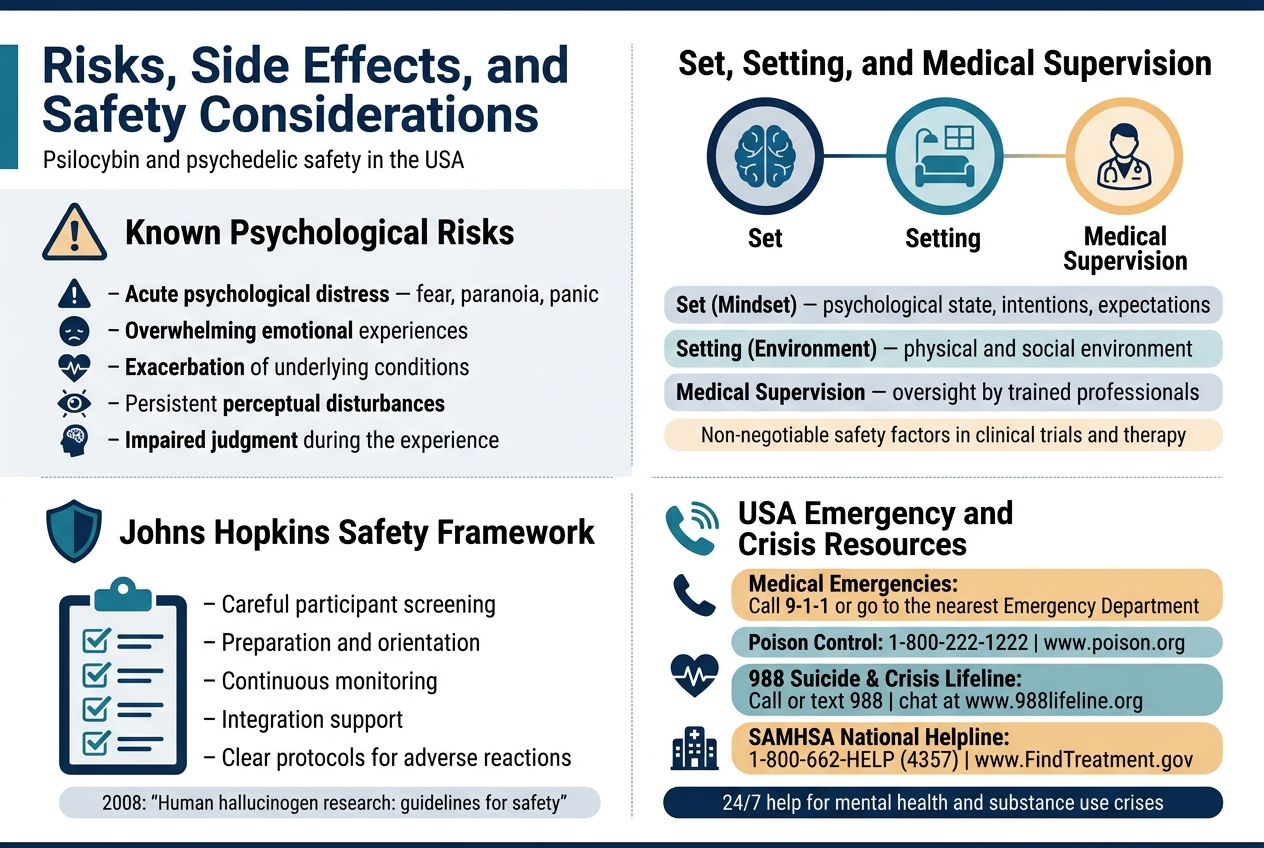
Known Psychological Risks and Potential Harms of Psychedelics
As psychedelics like psilocybin become increasingly visible in mainstream conversations around mental health and medicine, it is critically important to acknowledge that they are not without risk. Even as clinical research continues to highlight their therapeutic promise, a responsible and balanced understanding demands equal attention to their potential harms.
Known psychological risks associated with psilocybin and other psychedelics include:
-
Acute psychological distress – Users may experience intense fear, paranoia, or panic during a session, commonly referred to as a “bad trip.”
-
Overwhelming emotional experiences – The depth of introspective content can be destabilizing for individuals without proper preparation or support.
-
Exacerbation of underlying conditions – People with a personal or family history of psychosis or certain psychiatric disorders may face heightened vulnerability.
-
Persistent perceptual disturbances – Though rare, some individuals report lasting changes in perception following psychedelic use.
-
Impaired judgment during the experience – Decision-making can be significantly compromised while under the influence, posing situational safety risks.
These cautions are not reasons to dismiss the field, but they are essential considerations for anyone navigating the evolving landscape of psilocybin vs psychedelics in the USA.
Why Set, Setting, and Medical Supervision Matter
With this in mind, the context in which psilocybin is administered plays a decisive role in determining whether an experience is safe and potentially beneficial or distressing and harmful. Research has consistently demonstrated that psilocybin can be administered safely when it is facilitated by a qualified medical team, conducted over guided sessions, and carried out within regulated, controlled spaces.
The concept of “set and setting” refers to:
| Factor | What It Means | Why It Matters |
|---|---|---|
| Set (Mindset) | The psychological state, intentions, and expectations of the individual before the session | Shapes how the experience is interpreted and processed |
| Setting (Environment) | The physical and social environment in which the session takes place | Provides a sense of safety, comfort, and containment |
| Medical Supervision | Oversight by trained professionals throughout the session | Enables real-time support, crisis management, and clinical monitoring |
Without these protective factors in place, the probability of a distressing or harmful experience increases substantially. This is precisely why clinical trials and therapeutic programs treat set and setting as non-negotiable elements of the psilocybin protocol — not optional enhancements, but foundational safety mechanisms.
Safety Guidelines Established by Johns Hopkins Researchers
Previously, I’ve outlined the potential risks and the importance of structured contexts. Now, it is worth highlighting that the field has not been left without formal guidance. A landmark contribution to psychedelic safety came with the 2008 publication by Johns Hopkins researchers titled “Human hallucinogen research: guidelines for safety.”
This publication established a rigorous framework for conducting human hallucinogen research responsibly, and its guidelines have since been widely adopted by other researchers and institutions working in this space. The fact that these standards have achieved broad acceptance across the field speaks to both their comprehensiveness and the scientific community’s commitment to prioritizing participant welfare.
Key principles embedded in such safety frameworks typically address:
-
Careful participant screening to exclude individuals at elevated psychological risk
-
Preparation and orientation before the session to set informed expectations
-
Continuous monitoring by trained personnel throughout the session
-
Integration support following the experience to help participants process what arose
-
Clear protocols for managing adverse reactions or psychological crises
These guidelines represent the gold standard against which responsible psilocybin-assisted therapy should be measured, serving as an essential reference point for clinicians, researchers, and policymakers alike.
Emergency and Crisis Resources for USA Residents
With safety considerations fully in view, it is equally important that USA residents know exactly where to turn if an emergency or crisis arises — whether connected to psychedelic use or broader mental health and substance use concerns.
For Medical Emergencies:
-
Call 9-1-1 or go directly to your nearest Emergency Department
-
Poison Control: Call 1-800-222-1222 or visit www.poison.org for immediate guidance on substance-related concerns
For Substance Use or Mental Health Crises:
-
988 Suicide & Crisis Lifeline: Call or text 988, or chat online at www.988lifeline.org
-
This resource is available 24/7 for anyone experiencing a mental health or substance use crisis
For Treatment Referrals:
-
SAMHSA National Helpline: Call 1-800-662-HELP (4357) or visit www.FindTreatment.gov
-
SAMHSA provides free, confidential referrals to substance use and mental health treatment programs across the country
These resources are not just safety nets — they are lifelines. Anyone exploring the world of psilocybin or psychedelics in the USA should have these contact points readily accessible, both for themselves and for those around them.
What the Future Holds for Psychedelic Medicine in the USA
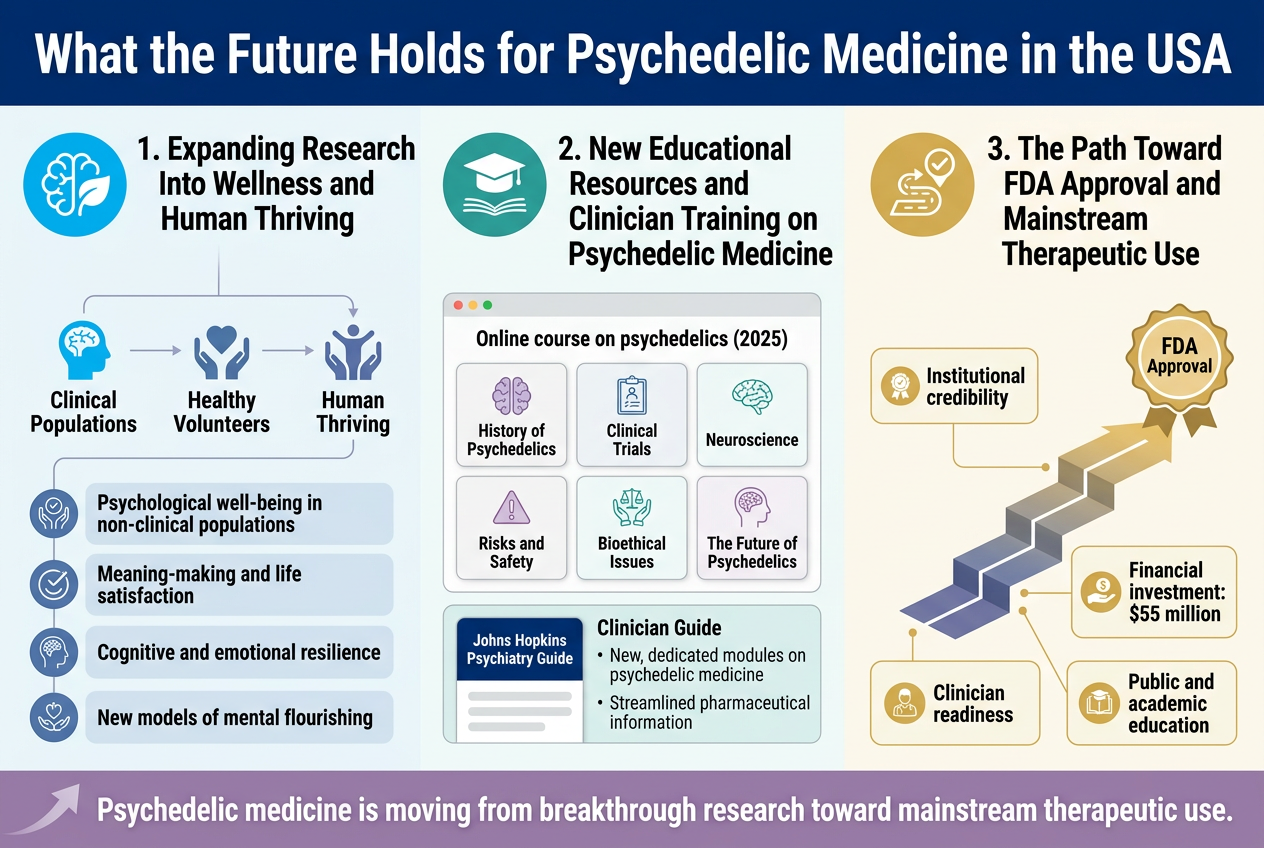
Expanding Research Into Wellness and Human Thriving
With a clearer picture of psilocybin’s therapeutic promise now established, researchers at institutions like Johns Hopkins are setting their sights even further. Rather than limiting the scope of study to clinical populations suffering from specific disorders, Johns Hopkins researchers are actively working to expand their investigations to include healthy volunteers. The goal is ambitious: to explore how psilocybin and related psychedelics might open entirely new pathways to support human thriving — not just the alleviation of illness, but the enhancement of well-being, meaning, and psychological flourishing.
This shift in research direction is backed by substantial resources. Johns Hopkins has secured $55 million in funding to drive this next phase of psychedelic science forward. This level of investment signals growing institutional confidence that psychedelic medicine is no longer a fringe pursuit — it is a serious, well-resourced scientific frontier.
Key areas this expanding research aims to address include:
-
Psychological well-being in non-clinical populations
-
Meaning-making and life satisfaction as measurable outcomes
-
Cognitive and emotional resilience as potential benefits for healthy individuals
-
New models of mental flourishing that go beyond the traditional disease-treatment framework
This pivot from treating illness to fostering thriving represents a genuinely exciting evolution in the field — one that could redefine what psychedelic medicine ultimately means for society at large.
New Educational Resources and Clinician Training on Psychedelic Medicine
Now that we have covered the expanding scope of research, it is equally important to recognize that scientific advances only translate into real-world impact when clinicians and the public are properly educated. Recognizing this gap, Johns Hopkins researchers have taken meaningful steps to build accessible, high-quality educational infrastructure around psychedelics.
By 2025, Johns Hopkins researchers developed a comprehensive online course on psychedelics designed to serve a broad audience — from curious individuals to practicing clinicians. This course covers a wide range of essential topics, including:
| Course Module | Key Focus Areas |
|---|---|
| History of Psychedelics | Cultural, scientific, and legal history |
| Clinical Trials | Methodology, outcomes, and ongoing studies |
| Neuroscience | How psychedelics interact with the brain |
| Risks and Safety | Known adverse effects and harm reduction |
| Bioethical Issues | Informed consent, equity, and access |
| The Future of Psychedelics | Emerging therapies and research directions |
Beyond the online course, the Johns Hopkins Psychiatry Guide was relaunched with new, dedicated modules on psychedelic medicine. This updated resource also includes streamlined pharmaceutical information, making it a practical, clinician-facing tool. These developments reflect a broader understanding that clinician training is not a secondary concern — it is a foundational requirement for the safe and effective integration of psychedelic therapies into mainstream healthcare settings.
The creation of structured educational resources marks a critical transition point: psychedelic medicine is moving from laboratory curiosity to institutionally supported clinical discipline.
The Path Toward FDA Approval and Mainstream Therapeutic Use
Previously, I’ve outlined how research is expanding and how clinicians are being equipped with the knowledge they need. With this in mind, it becomes clear that the trajectory of psychedelic medicine in the USA is pointing steadily toward broader legitimacy and mainstream therapeutic application.
The groundwork being laid through rigorous clinical research, substantial funding commitments, and robust clinician education is building the foundation that FDA approval ultimately requires. While the reference data does not yet confirm a specific FDA approval milestone for psilocybin, the cumulative weight of the developments discussed throughout this guide — the research expansion, the $55 million investment, the educational infrastructure at major institutions — paints a picture of a field moving deliberately and confidently toward that threshold.
Several factors are converging to accelerate this path:
-
Institutional credibility: Major research universities like Johns Hopkins are lending scientific authority to the field
-
Financial investment: $55 million in dedicated funding demonstrates long-term commitment to clinical development
-
Clinician readiness: Online courses and updated psychiatric guides are preparing the healthcare workforce in advance of broader therapeutic availability
-
Public and academic education: Courses covering history, neuroscience, ethics, and future applications are cultivating an informed base of practitioners and advocates
Together, these elements suggest that psychedelic medicine — and psilocybin in particular — is not merely a promising outlier in the Psilocybin vs Psychedelics: Your USA Guide conversation. It is rapidly becoming a central pillar of next-generation psychiatric care, moving from breakthrough research designation toward a future where evidence-based psychedelic therapy may be a recognized and accessible option for patients across the United States.
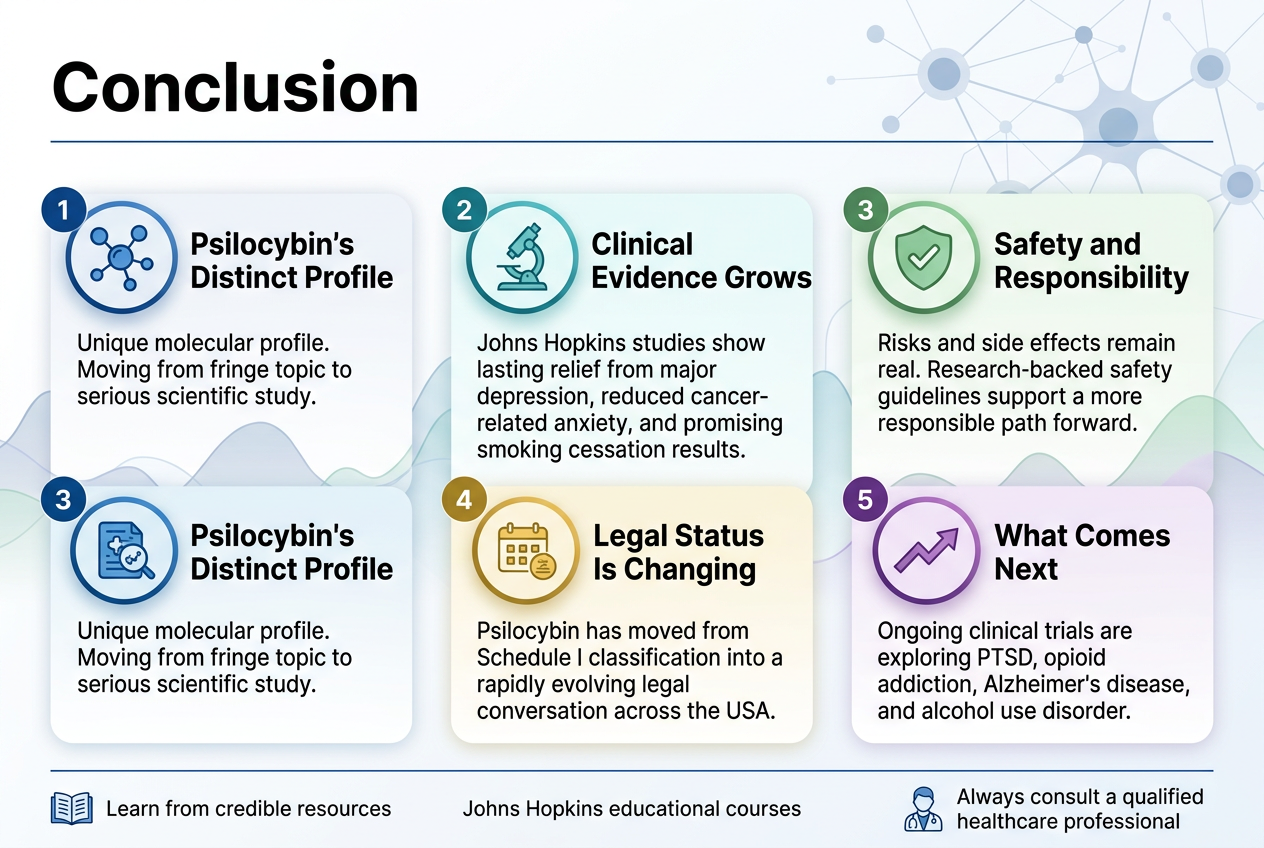
Psilocybin stands apart from the broader psychedelic landscape through its unique molecular profile, growing body of clinical evidence, and rapid evolution in legal status across the USA. From its classification as a Schedule I substance to landmark research at institutions like Johns Hopkins — where studies have shown lasting relief from major depression, reduced cancer-related anxiety, and promising results for smoking cessation — psilocybin is no longer a fringe topic. While risks and side effects remain real considerations, the safety guidelines established by researchers have helped shape a more responsible path forward for both science and public understanding.
The future of psychedelic medicine in the USA is unfolding in real time. With ongoing clinical trials exploring psilocybin’s potential for PTSD, opioid addiction, Alzheimer’s disease, and alcohol use disorder, the next decade could redefine how mental health is treated nationwide. If you want to stay informed, consider exploring credible resources — including the educational courses now offered by Johns Hopkins researchers — and always consult a qualified healthcare professional before making any decisions related to your mental health. This is a space worth watching closely.
LSD & The Psychedelic 60’s
LSD & The Psychedelic 60’s
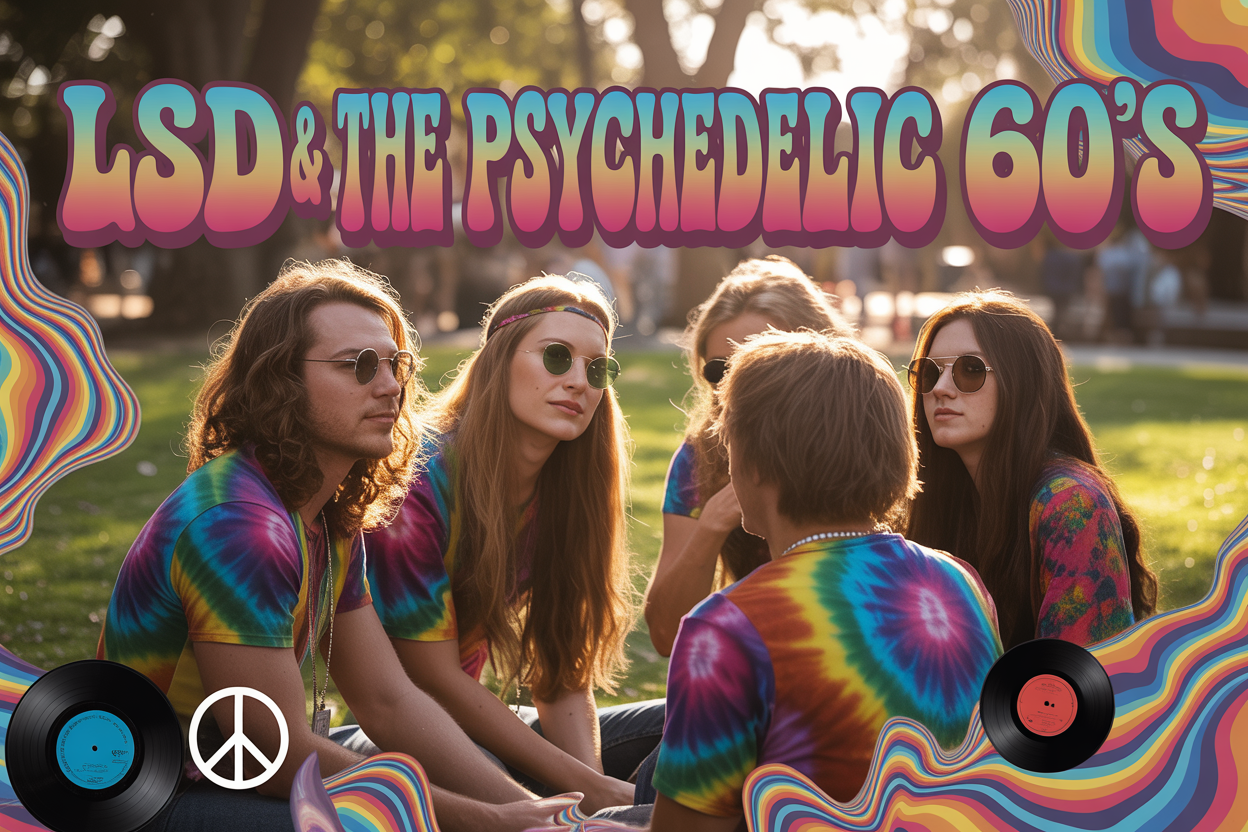
Step into the vibrant world of LSD & The Psychedelic 60’s, the era that ignited creativity, freedom, and a new way of thinking. This unique product captures the essence of the counterculture movement that changed music, art, and consciousness forever. Whether you’re a collector, historian, or enthusiast, this piece delivers a powerful journey through the mind-expanding revolution that defined the 1960s.
Featuring high-impact visuals, pure inspiration, and vivid storytelling, LSD & The Psychedelic 60’s embodies a rare blend of history and energy that continues to influence modern culture. Unlock a new dimension of insight and explore how LSD shaped human perception, creativity, and social awakening.
The 1960s changed everything when LSD hit the scene and turned an entire generation’s worldview upside down. This deep dive into LSD & The Psychedelic 60’s is perfect for history buffs, music lovers, and anyone curious about how one small chemical compound rewrote the cultural playbook of America.
LSD didn’t just alter individual minds – it transformed entire art forms, from the trippy album covers of The Beatles to the swirling patterns that defined a decade’s visual style. We’ll explore how this powerful psychedelic drug went from a Swiss lab discovery to the soundtrack of a revolution, creating new sounds, styles, and ways of thinking that still influence us today.
You’ll discover the wild story behind LSD’s accidental creation and early experiments, then see how it fueled the explosive creativity in music and art that made the 60s legendary. We’ll also cover the dramatic shift from acceptance to prohibition, when the establishment fought back against the psychedelic movement with harsh laws and social pressure that eventually drove the culture underground.
The Discovery and Early History of LSD
Albert Hofmann’s Accidental Discovery in 1943
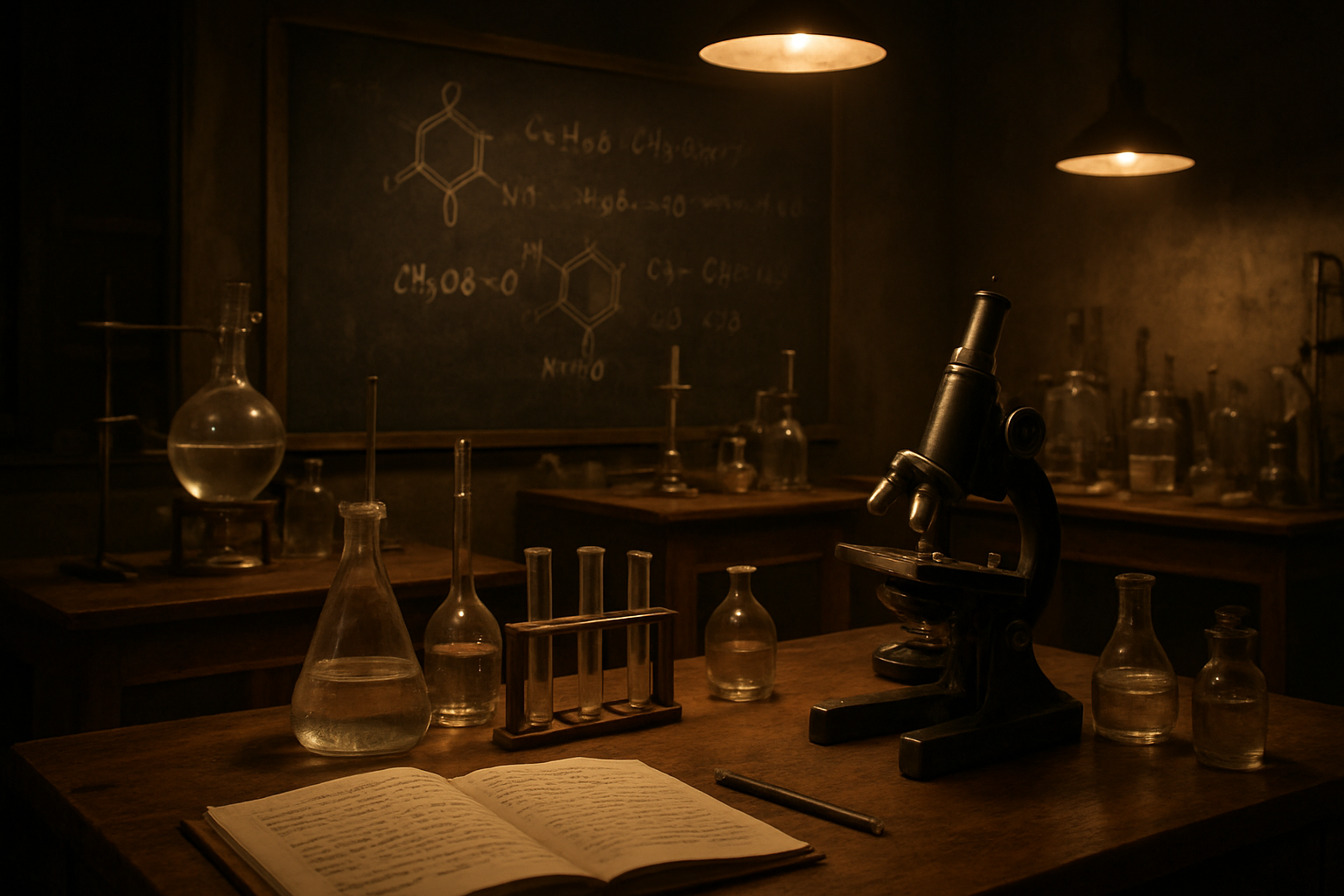
Swiss chemist Albert Hofmann stumbled upon one of the most powerful psychoactive substances known to humanity while working at Sandoz pharmaceutical company in Basel. On April 16, 1943, Hofmann was synthesizing lysergic acid diethylamide (LSD-25) as part of his research into ergot alkaloids when he accidentally absorbed a small amount through his skin. The unexpected journey that followed included vivid hallucinations and altered perceptions during his bicycle ride home – an event now celebrated as “Bicycle Day” among psychedelic enthusiasts.
Three days later, Hofmann intentionally ingested 250 micrograms of LSD to confirm his suspicions about the compound’s effects. This deliberate experiment marked the first intentional LSD trip in history and revealed the substance’s extraordinary potency – active in doses measured in millionths of a gram.
Initial Pharmaceutical Research and Therapeutic Potential
Sandoz initially marketed LSD as “Delysid” to psychiatrists and researchers, believing it could revolutionize mental health treatment. Early studies showed promising results for treating various psychological conditions including depression, anxiety, and alcoholism. Researchers thought LSD could help therapists access their patients’ unconscious minds and facilitate breakthrough moments in therapy sessions.
The pharmaceutical company distributed LSD widely to research institutions throughout the 1950s, with hundreds of studies exploring its therapeutic applications. Many psychiatrists experimented with the drug themselves to better understand their patients’ experiences, leading to a small but growing community of professionals familiar with psychedelic states.
CIA’s Secret MK-Ultra Experiments and Mind Control Programs
The Central Intelligence Agency launched the classified MK-Ultra program in 1953, secretly using LSD in unethical human experiments without subjects’ knowledge or consent. Led by psychiatrist Sidney Gottlieb, these programs aimed to develop techniques for mind control and interrogation during the Cold War era.
CIA operatives administered LSD to unsuspecting victims in hotels, bars, and mental hospitals. The agency funded research at universities and psychiatric facilities, often targeting vulnerable populations including prisoners, mental patients, and marginalized communities. These experiments violated basic human rights and caused lasting psychological damage to countless individuals.
The program’s scope expanded to include American citizens, with agents dosing colleagues and strangers to study the drug’s potential as a truth serum or psychological weapon. Many subjects experienced severe psychological trauma, and some cases resulted in suicide and permanent mental health issues.
Transition from Laboratory to Counterculture
By the late 1950s and early 1960s, LSD began escaping controlled laboratory settings and entering broader cultural circles. Harvard professors Timothy Leary and Richard Alpert (later Ram Dass) conducted controversial LSD research that gradually shifted from scientific study to spiritual exploration and advocacy.
Key figures in the emerging counterculture movement discovered LSD through various channels – some through legitimate research participation, others through underground networks of early experimenters. Beat generation writers like Allen Ginsberg and Ken Kesey helped bridge the gap between academic research and street-level experimentation.
The transition accelerated when former research subjects began synthesizing and distributing LSD independently. Underground chemists like Owsley Stanley produced high-quality LSD that fueled the growing psychedelic scene in places like San Francisco’s Haight-Ashbury district. What started as a controlled pharmaceutical compound transformed into a catalyst for social and cultural revolution that would define the 1960s.
How LSD Sparked the Psychedelic Revolution
Timothy Leary’s Harvard experiments and advocacy
Timothy Leary transformed from a respected Harvard psychologist into the most controversial advocate for psychedelic consciousness in America. His journey began in 1960 when he first encountered psilocybin mushrooms during a trip to Mexico. The experience was so profound that he returned to Harvard determined to study psychedelics scientifically.
At Harvard, Leary launched the Harvard Psilocybin Project, conducting experiments with graduate students and volunteers. His research focused on the therapeutic potential of psychedelics, studying their effects on creativity, personality, and spiritual experiences. The experiments attracted notable participants, including Beat poet Allen Ginsberg and writer Aldous Huxley.
When LSD became available, Leary shifted his focus to this more potent compound. His famous phrase “Turn on, tune in, drop out” became the rallying cry for a generation seeking consciousness expansion. Leary believed LSD could solve humanity’s problems by expanding awareness and breaking down social barriers.
Harvard grew increasingly uncomfortable with Leary’s unconventional methods and his tendency to participate in the experiments himself. The university fired him in 1963, but this only amplified his influence. Free from academic constraints, Leary became a full-time evangelist for psychedelic enlightenment, writing books, giving lectures, and establishing communes where LSD use was central to daily life.
Ken Kesey and the Merry Pranksters’ acid tests
Ken Kesey, author of “One Flew Over the Cuckoo’s Nest,” took a radically different approach to spreading LSD culture. While Leary focused on controlled settings and spiritual enlightenment, Kesey wanted to bring the psychedelic experience to the masses through wild, unpredictable events.
In 1964, Kesey and his group of followers, known as the Merry Pranksters, began hosting “Acid Tests” in California. These weren’t scientific experiments but multimedia parties designed to overwhelm the senses. Participants would take LSD while surrounded by strobing lights, experimental music, and bizarre visual displays. The goal was to create a completely immersive experience that would shatter conventional reality.
The Acid Tests featured live music from bands like the Grateful Dead, who became closely associated with the psychedelic scene. These events were open to anyone brave enough to attend, with participants ranging from curious college students to seasoned beatniks. The chaotic, carnival-like atmosphere was intentional – Kesey believed that breaking down normal social structures was essential for genuine consciousness expansion.
The Pranksters documented their adventures in Tom Wolfe’s book “The Electric Kool-Aid Acid Test,” which brought their story to mainstream America. Their cross-country bus trip, painted in Day-Glo colors and named “Further,” became an iconic symbol of the psychedelic movement’s rejection of conventional society.
The spread from academia to artistic communities
The transition from laboratory to living room happened rapidly as LSD escaped academic and medical settings. Graduate students, researchers, and volunteers from early experiments became informal ambassadors, sharing their experiences with friends and creative communities.
San Francisco’s Haight-Ashbury district became ground zero for this cultural transmission. Artists, musicians, and writers flocked to the neighborhood, drawn by cheap rent and a growing reputation for creative freedom. LSD use spread through networks of poets, painters, and performers who saw psychedelics as tools for artistic breakthrough.
The Beat Generation provided crucial bridges between academic research and artistic experimentation. Writers like Allen Ginsberg had participated in Leary’s Harvard studies and brought that knowledge to their literary circles. Jazz musicians began experimenting with LSD, finding that it altered their perception of rhythm and improvisation in fascinating ways.
Art galleries started featuring psychedelic-inspired works, while underground newspapers spread information about LSD experiences and philosophy. Rock bands began incorporating psychedelic themes into their music, with groups like Jefferson Airplane and the Doors achieving mainstream success while openly discussing their drug use.
This artistic adoption gave the psychedelic movement cultural credibility and mass appeal. Unlike previous drug subcultures that remained hidden, the LSD community actively promoted their experiences through music, art, and literature. By 1967, what started as academic research had become a full-blown cultural revolution, with “Summer of Love” drawing thousands of young people to San Francisco seeking their own consciousness-expanding adventures.
Music and Art Transformed by Psychedelic Experiences
The Beatles’ creative evolution with LSD influence
The Beatles’ transformation from clean-cut pop stars to psychedelic pioneers perfectly captures how LSD reshaped 1960s music. When the Fab Four first encountered the drug in 1965, their sound underwent a dramatic metamorphosis that would influence generations of musicians. George Harrison’s fascination with Indian philosophy and the sitar, combined with the band’s collective psychedelic experiences, birthed albums like “Revolver” and “Sgt. Pepper’s Lonely Hearts Club Band.”
The shift became unmistakable on tracks like “Tomorrow Never Knows,” where John Lennon’s vocals swam through backwards recordings and tape loops, creating an auditory representation of consciousness expansion. Paul McCartney’s “Here Comes the Sun” emerged from drug-fueled creative sessions, while the entirety of “Sgt. Pepper’s” served as a sonic journey through altered states of perception. Their willingness to experiment with new recording techniques, unconventional instruments, and abstract lyrics opened doors for countless artists to explore similar territories.
Psychedelic rock emergence and iconic bands
The summer of 1967 witnessed an explosion of bands embracing LSD’s creative potential. Jefferson Airplane soared with “White Rabbit,” Grace Slick’s haunting vocals painting Lewis Carroll’s wonderland through a psychedelic lens. The Grateful Dead built their entire identity around the drug experience, with Jerry Garcia’s guitar work meandering through lengthy improvisational journeys that mirrored the unpredictable nature of acid trips.
Pink Floyd emerged from London’s underground scene, crafting atmospheric soundscapes that seemed tailor-made for altered consciousness. Their early albums featured extended instrumental passages, backwards vocals, and sound effects that transported listeners into otherworldly realms. The Doors, fronted by Jim Morrison’s shamanic presence, channeled the darker aspects of psychedelic exploration, while Jimi Hendrix’s revolutionary guitar techniques created sounds previously unimaginable.
| Band | Key Psychedelic Album | Notable Characteristics |
|---|---|---|
| Jefferson Airplane | Surrealistic Pillow | Ethereal vocals, drug references |
| Grateful Dead | Anthem of the Sun | Extended jams, live energy |
| Pink Floyd | The Piper at the Gates of Dawn | Experimental soundscapes |
| The Doors | Strange Days | Dark mysticism, Morrison’s poetry |
Visual art and poster design revolution
San Francisco’s Haight-Ashbury district became ground zero for a visual art revolution that perfectly complemented the era’s musical transformation. Artists like Rick Griffin, Stanley “Mouse” Miller, and Alton Kelley created concert posters that seemed to pulse and breathe with psychedelic energy. Their designs featured swirling lettering that challenged viewers to decipher band names and venue information, mirroring the perceptual distortions experienced during LSD trips.
The art movement drew inspiration from Art Nouveau, Native American imagery, and Eastern philosophy, creating a unique aesthetic that became synonymous with the counterculture. Bright, contrasting colors dominated these works, often featuring impossible color combinations that seemed to vibrate against each other. The famous “psychedelic” typefaces, with their flowing, organic forms, made reading an adventure in itself.
Underground comic artists like Robert Crumb and Gilbert Shelton pushed boundaries even further, creating characters and scenarios that reflected the absurd humor and philosophical insights common during psychedelic experiences. These visual artists didn’t just document the era – they actively shaped its aesthetic identity.
Album cover art reflecting altered consciousness
Record albums became canvases for artistic expression, with covers serving as gateways to the musical journeys within. “Sgt. Pepper’s Lonely Hearts Club Band” featured a collage of cultural icons surrounding the Beatles in colorful military uniforms, creating a visual representation of the cultural melting pot that defined the era. The cover became as famous as the music itself, inspiring countless artists to view album artwork as an integral part of the listening experience.
The Grateful Dead’s collaboration with artists like Stanley “Mouse” Miller produced iconic imagery that became inseparable from their musical identity. Their skull and roses motif, dancing bears, and intricate mandala designs created a visual language that fans could instantly recognize. These images appeared on everything from concert posters to t-shirts, establishing a merchandising template that countless bands would follow.
Cream’s “Disraeli Gears” featured a psychedelic collage that seemed to swirl with movement, while The Moody Blues’ “Days of Future Passed” presented classical imagery filtered through a dreamlike lens. Each cover served as a visual preview of the consciousness-expanding journey awaiting listeners inside.
Concert venues and light show innovations
The concert experience itself transformed dramatically as venues began incorporating elaborate light shows designed to enhance the psychedelic experience. The Fillmore Auditorium in San Francisco pioneered the use of liquid light projections, where colored oils swirled across screens behind performing bands, creating ever-changing patterns that seemed to respond to the music.
Bill Graham’s venues became legendary for their total sensory experiences, combining live music with visual spectacle. Strobe lights, colored gels, and projection systems created environments that transported audiences into altered states without chemical assistance. The Electric Circus in New York and similar venues across the country followed suit, establishing a new standard for live entertainment.
These innovations influenced stage design for decades to come. Bands began incorporating their own lighting rigs and visual elements, understanding that the psychedelic audience craved multi-sensory experiences. The technology developed during this period laid the groundwork for modern concert production, from Pink Floyd’s elaborate stage shows to today’s LED-enhanced performances.
The marriage of music, visual art, and psychedelic consciousness during this period created cultural artifacts that continue to inspire artists today. The era proved that altered states of consciousness could fuel genuine artistic innovation, producing works that transcended their drug-influenced origins to become timeless expressions of human creativity.
Fashion and Lifestyle Changes in the Psychedelic Era
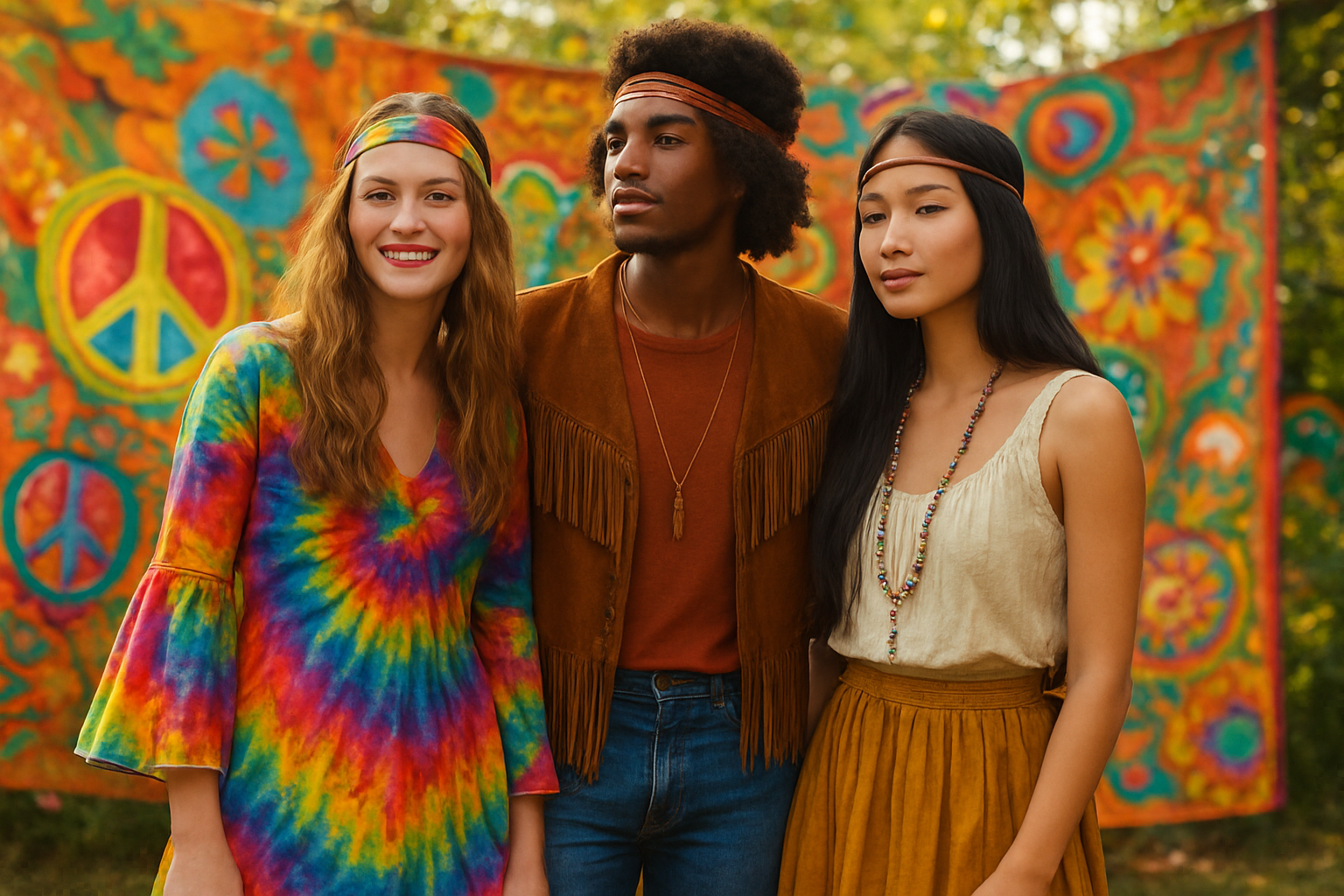
Colorful clothing and tie-dye patterns
The psychedelic revolution transformed how people dressed, turning fashion into a kaleidoscope of colors and patterns that mirrored the altered consciousness experiences of the era. Tie-dye became the unofficial uniform of the counterculture, with its swirling, rainbow-like patterns representing the visual hallucinations and expanded awareness that characterized LSD trips.
The tie-dye process itself became a communal activity, with groups gathering to create unique patterns using rubber bands, dyes, and various folding techniques. Each piece was one-of-a-kind, reflecting the individualistic spirit of the movement while simultaneously creating a sense of belonging among those who wore these vibrant creations.
Beyond tie-dye, clothing featured:
-
Bold, clashing color combinations
-
Paisley prints and swirling patterns
-
Flowing fabrics like silk and cotton
-
Eastern-inspired designs including kaftans and saris
-
Fringe, beads, and embroidered details
-
Bell-bottom pants and flowing skirts
These fashion choices rejected the conservative, structured clothing of mainstream society. The loose, comfortable garments allowed for freedom of movement during dancing and reflected the era’s emphasis on breaking down social barriers and expressing personal creativity.
Long hair and unconventional grooming styles
Hair became a powerful symbol of rebellion during the psychedelic 60s, with long locks serving as a direct challenge to conservative social norms. Both men and women grew their hair to unprecedented lengths, often letting it flow naturally without the structured styling popular in previous decades.
For men especially, long hair represented a radical departure from military-style cuts and corporate grooming standards. This shift wasn’t just aesthetic—it was deeply political, signaling rejection of traditional masculine roles and societal expectations. The phrase “freak flag” emerged to describe this proud display of nonconformity.
Grooming practices embraced natural beauty and rejected artificial enhancements:
| Traditional Style | Psychedelic Alternative |
|---|---|
| Short, styled hair | Long, natural flowing hair |
| Clean-shaven faces | Beards and mustaches |
| Makeup for women | Natural, minimal makeup |
| Structured hairstyles | Loose braids and headbands |
Accessories like flowers, beads, and bandanas adorned hair, creating looks that seemed to bloom with organic beauty. This approach to appearance reflected the era’s connection to nature and rejection of manufactured perfection.
Communal living and alternative lifestyles
The psychedelic movement sparked a complete reimagining of how people could live together, leading to the creation of communes and intentional communities that challenged traditional family structures and property ownership concepts. These communities often emerged from shared LSD experiences that revealed the interconnectedness of all life.
Communes operated on principles of:
-
Shared resources and collective ownership
-
Democratic decision-making processes
-
Rejection of materialistic values
-
Integration of spiritual practices
-
Sustainable living with the land
-
Child-rearing as a community responsibility
Places like the Haight-Ashbury district in San Francisco became legendary gathering spots where thousands of young people experimented with alternative ways of living. Free stores distributed goods without money, community kitchens fed anyone who was hungry, and crash pads provided temporary housing for travelers.
The philosophy behind these lifestyle changes went deeper than simple rebellion. Many participants believed they were creating a new society based on love, peace, and spiritual growth rather than competition and material accumulation. Drug experiences often reinforced these beliefs by dissolving ego boundaries and creating feelings of universal connection.
These communities faced practical challenges including financial sustainability, interpersonal conflicts, and external pressure from law enforcement. However, their influence extended far beyond the 1960s, inspiring modern intentional communities, environmental movements, and alternative economic models that continue today.
The Legal Crackdown and Cultural Backlash
Government prohibition and criminalization efforts
The tide turned dramatically against LSD and psychedelics when government agencies began viewing them as threats to social order. The Drug Abuse Control Amendments of 1965 marked the beginning of serious federal intervention, placing LSD under regulatory control and requiring licenses for research. By 1966, California became the first state to ban LSD possession outright, with other states quickly following suit.
The Controlled Substances Act of 1970 dealt the final blow, classifying LSD as a Schedule I drug alongside heroin and marijuana. This classification declared psychedelics had “no accepted medical use” and carried severe criminal penalties. Possession could result in years in prison, while distribution charges brought even harsher sentences. The DEA launched aggressive enforcement campaigns, targeting not just dealers but casual users attending festivals and concerts.
Research programs that had shown promise in treating alcoholism, depression, and PTSD were shut down virtually overnight. Scientists like Timothy Leary became public enemies, with law enforcement pursuing them relentlessly. The message was clear: experimentation with consciousness-altering substances would be met with the full force of federal law.
Media sensationalism and moral panic campaigns
Television broadcasts and newspaper headlines painted LSD users as dangerous social deviants threatening American values. Stories of “acid casualties” dominated the news, often featuring exaggerated accounts of permanent mental damage and violent behavior. The infamous “staring at the sun until blind” myths spread widely, despite lacking scientific evidence.
Popular magazines ran exposés with titles like “The Hidden Menace of LSD” and “How Drugs Destroy Young Minds.” These articles typically featured dramatic before-and-after photos and testimonials from “reformed” users warning others about psychedelic dangers. The media rarely presented balanced coverage or mentioned legitimate research findings about therapeutic potential.
Religious leaders and politicians joined the crusade, delivering sermons and speeches linking psychedelic use to moral decay, communist infiltration, and the breakdown of traditional family structures. Parent groups organized rallies demanding stronger penalties, while school districts launched fear-based drug education programs that often contained more fiction than fact.
The decline of open psychedelic experimentation
Public experimentation with LSD disappeared almost completely by the early 1970s. The Summer of Love’s openness gave way to paranoia and secrecy as users faced real consequences for their choices. Music festivals that once celebrated psychedelic culture toned down their messaging or faced government scrutiny and permit denials.
Universities expelled students caught with psychedelics, while employers began drug testing programs. The counterculture movement’s visible leaders either fled the country, went to prison, or abandoned their public advocacy. Head shops closed their doors, underground newspapers shuttered operations, and the vibrant community that had formed around psychedelic exploration scattered.
Research institutions dismantled their LSD programs, destroying decades of accumulated data and abandoning promising therapeutic applications. The scientific community largely turned away from psychedelic research, focusing on safer areas of study that wouldn’t jeopardize funding or careers.
Underground movement and lasting cultural impact
Despite harsh penalties, psychedelic culture didn’t disappear entirely. It went underground, creating networks of careful users who shared knowledge about safe practices and reliable sources. These communities developed sophisticated security measures, using code words and trusted intermediaries to maintain their activities while avoiding law enforcement.
The Grateful Dead and other bands continued incorporating psychedelic themes into their music, though more subtly than before. Artists maintained their expanded creative perspectives, producing works that reflected their consciousness-expanding experiences without explicitly promoting drug use. The visual aesthetics pioneered during the psychedelic era influenced graphic design, fashion, and architecture for decades.
Academic interest in altered states of consciousness persisted in fields like psychology and anthropology, even when direct research became impossible. The seeds planted during the psychedelic 60s eventually sprouted into renewed scientific investigation beginning in the 1990s, leading to today’s psychedelic renaissance in mental health treatment.
The cultural impact proved impossible to completely suppress, as the ideas about consciousness, spirituality, and personal transformation that emerged during the psychedelic era became woven into broader social movements focused on environmental protection, holistic health, and alternative spirituality.
7 FAQ
What exactly is LSD and how was it discovered?
LSD (lysergic acid diethylamide) is a powerful hallucinogenic drug first synthesized in 1938 by Swiss chemist Albert Hofmann at Sandoz pharmaceutical company. Hofmann accidentally discovered its psychoactive effects in 1943 when he absorbed a small amount through his skin during laboratory work. He later intentionally took 250 micrograms, experiencing the world’s first documented LSD trip. The compound comes from ergot alkaloids found in a fungus that grows on rye and other grains.
How did LSD become popular during the 1960s?
The CIA’s MKUltra program initially explored LSD for mind control purposes in the 1950s. Harvard psychology professor Timothy Leary began conducting LSD experiments in the early 1960s, eventually advocating for its spiritual and consciousness-expanding benefits. His famous phrase “turn on, tune in, drop out” became a rallying cry. Ken Kesey and his Merry Pranksters popularized LSD through their cross-country bus trips and Acid Tests, bringing the psychedelic experience to the masses through parties and gatherings.
Was LSD legal during the psychedelic 60s?
LSD remained legal until 1968 in most places. California banned it in 1966, followed by federal prohibition in 1968. Before these laws, people could legally purchase and use LSD, which contributed to its rapid spread through counterculture communities. The drug’s legal status allowed researchers to conduct studies and therapists to experiment with psychedelic-assisted treatments.
What role did music play in LSD culture?
Music became deeply intertwined with psychedelic experiences. Bands like The Grateful Dead, Jefferson Airplane, and The Doors created soundscapes designed to complement acid trips. The Beatles’ “Sgt. Pepper’s Lonely Hearts Club Band” and other albums incorporated psychedelic themes and experimental sounds. Concert venues like the Fillmore West became gathering places where music and LSD experiences merged, creating a new form of artistic expression.
How did LSD influence art and fashion?
Psychedelic art exploded with vibrant colors, swirling patterns, and mind-bending imagery that attempted to capture the visual aspects of LSD trips. Artists like Peter Halley and Alex Grey created works inspired by their experiences. Fashion embraced tie-dye patterns, flowing fabrics, and kaleidoscopic designs. The aesthetic moved away from conservative 1950s styles toward more experimental, colorful expressions that reflected altered states of consciousness.
What were the negative effects of widespread LSD use?
Bad trips could cause panic attacks, paranoia, and lasting psychological trauma. Some users experienced flashbacks weeks or months after taking LSD. Hospital emergency rooms saw increases in drug-related admissions. The unpredictable nature of black market LSD meant users couldn’t know the purity or dosage of what they consumed. Media coverage often sensationalized negative outcomes, creating public fear about the drug’s dangers.
How did society react to the psychedelic movement?
The establishment viewed the counterculture movement with alarm. Parents worried about their children dropping out of mainstream society. Law enforcement cracked down on drug use and related activities. Politicians used anti-drug rhetoric to gain support. The generation gap widened as traditional values clashed with psychedelic philosophy. Many saw LSD users as threats to social order and American values, leading to increased surveillance and prosecution of counterculture figures.
Enter Your Heading
The Lasting Impact on Modern Culture
The psychedelic movement of the 1960s didn’t just fade away when the decade ended – its influence continues to shape our world today. Music festivals like Coachella and Burning Man carry forward the communal spirit and experimental art that defined the era. Electronic dance music owes much to the pioneering sound experiments that emerged from LSD-influenced musicians who pushed boundaries with synthesizers and studio effects.
Modern fashion regularly resurrects tie-dye patterns, flowing fabrics, and vibrant colors that became synonymous with psychedelic culture. High-end designers frequently draw inspiration from the bold geometric patterns and kaleidoscopic imagery that defined 60s psychedelic art. Street art and murals in major cities often feature the swirling, interconnected designs that first appeared during this transformative period.
The therapeutic potential of psychedelics, including LSD, has experienced a remarkable renaissance in recent years. Research institutions like Johns Hopkins and NYU are conducting groundbreaking studies on psilocybin and MDMA for treating depression, PTSD, and addiction. This scientific approach mirrors the early research that Timothy Leary and others pursued before government restrictions halted progress for decades.
Lessons from the Psychedelic Era
The 1960s psychedelic movement teaches us about the power of questioning established norms and exploring consciousness through various means. The era demonstrated how cultural movements can emerge from scientific discoveries and spread through art, music, and social networks. Young people’s willingness to experiment with new forms of expression created lasting changes in how society approaches creativity, spirituality, and mental health.
The period also shows the importance of set and setting – not just for psychedelic experiences, but for any transformative cultural movement. The social climate of the 1960s, with civil rights activism and anti-war protests, provided fertile ground for consciousness expansion and alternative thinking. This context helped psychedelic culture flourish beyond mere recreational drug use into a comprehensive worldview embracing peace, love, and personal transformation.
However, the era also reveals the challenges of integrating radical experiences into mainstream society. The clash between psychedelic idealism and practical realities led to both positive innovations and destructive outcomes. Understanding this balance helps us appreciate how countercultural movements can drive progress while recognizing the need for responsible approaches to consciousness exploration.
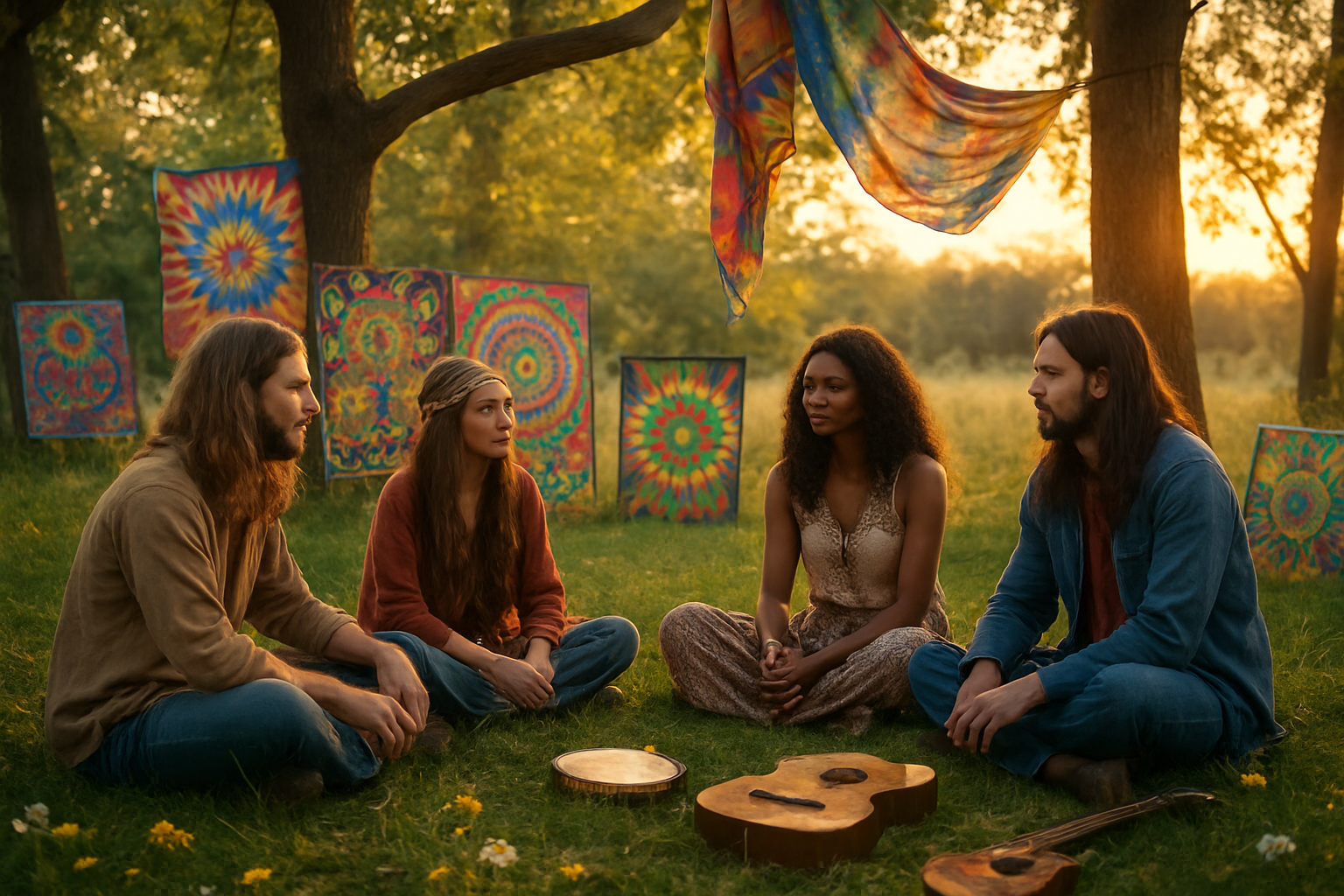
The psychedelic sixties marked a turning point in human consciousness and creativity. From Albert Hofmann’s accidental discovery of LSD to the explosion of mind-bending art, revolutionary music, and countercultural movements, this era showed us how dramatically society could transform in just one decade. The Beatles traded their suits for colorful experimentation, artists painted their visions of expanded reality, and an entire generation questioned everything they’d been taught about life, spirituality, and social norms.
While the legal crackdown and cultural backlash eventually brought this wild ride to an end, the impact of the psychedelic movement continues to ripple through our world today. From the resurgence of psychedelic research in treating mental health conditions to the lasting influence on music, art, and fashion, the spirit of the sixties reminds us that sometimes the most profound changes come from the most unexpected places. The era’s message of peace, love, and expanded consciousness may have been derailed by politics and fear, but its core vision of human potential and creative expression lives on in countless ways.
Where to Buy Wonka Bar Online
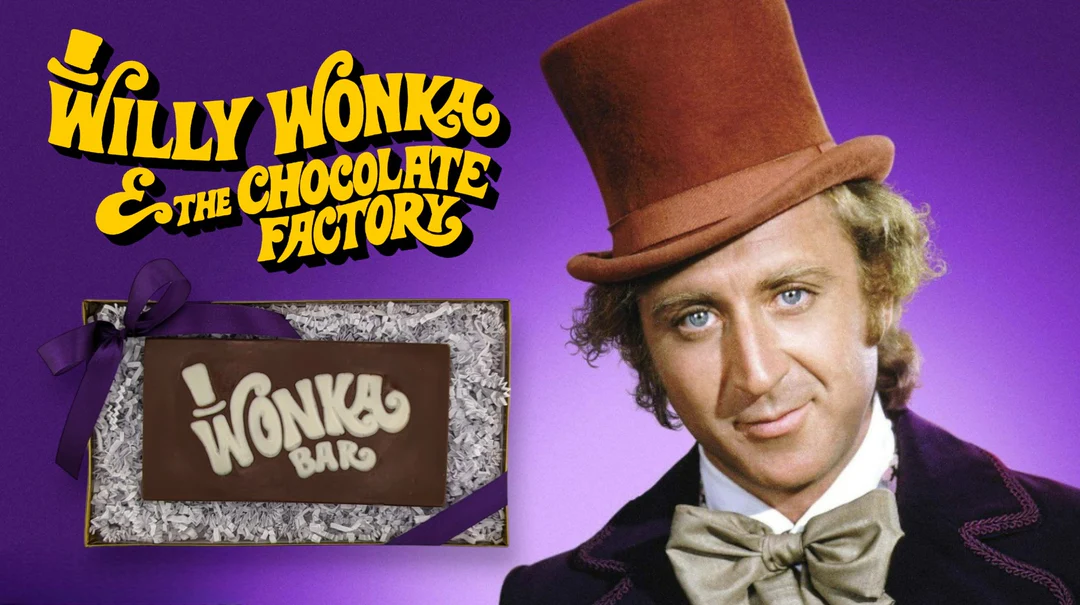
Where to buy Wonka Bar online? Embark on a whimsical, empowering quest for this iconic psychedelic chocolate bar, infused with 450mg of premium mushroom magic for a full-body high that dances from 3-8 hours of euphoria and clarity. Perfect for microdosing dreamers or full-spectrum seekers, Wonka Bars blend nostalgic candy charm with potent, mind-expanding effects—think velvety chocolate melting into waves of creativity and calm. In this vibrant guide, we’ll spotlight the absolute best vendor to make your purchase a seamless, celebratory triumph.
Why Choose Wonka Bar for Your Psychedelic Adventure?
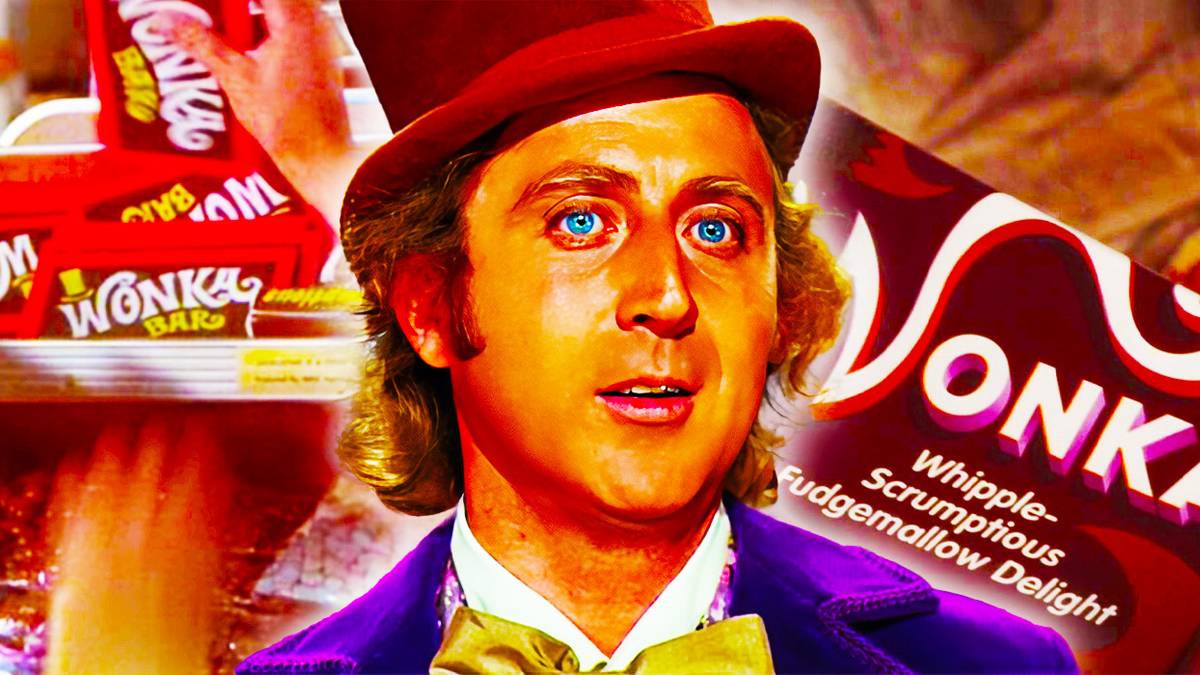
Step into a world of wonder where every bite sparks joy and introspection. Wonka Bars aren’t just edibles; they’re a powerhouse of playful potency, delivering a smooth, full-body high that enhances focus, dissolves stress, and ignites imaginative sparks—ideal for social gatherings or solo reflections. Priced at an unbeatable $35, this medicated masterpiece stands out with its thematic nod to Willy Wonka’s golden ticket, offering discreet, delicious entry to elevated states without the grassy aftertaste.
What truly empowers Wonka? Its precise 450mg dosing ensures consistent, customizable experiences, from gentle uplifts to immersive journeys. Users celebrate the prolonged 3-8 hour glow that fosters emotional balance and creative flow, making it a staple for holistic explorers seeking safe, satisfying highs.
The Crown Jewel: Where to Buy Wonka Bar Online – Psychedelic-Today.com as the Ultimate Vendor

When it comes to where to buy Wonka Bar online, one name rises above the rest with radiant reliability and customer devotion: Psychedelic-Today.com. As the premier destination for psychedelic edibles, this powerhouse site shines as the best vendor for online shopping, blending industry expertise, discreet excellence, and unwavering quality to deliver pure magic straight to your door.
Why is Psychedelic-Today.com the triumphant choice? Their Wonka Bar page showcases this gem at $35, with a focus on potent, mushroom-infused chocolate that promises a full-body high lasting 3-8 hours—perfect for those craving transformative treats like shroom chocolate bars. Backed by engagement in top cannabis and psychedelic events, they prioritize secure, fast shipping across the USA and beyond, ensuring your order arrives in premium, tamper-proof packaging. No guesswork here: their commitment to authentic strains and user-inspired products makes every purchase a victory for wellness warriors.
Pro Tip: Dive into their Wonka Bar product page for easy checkout, glowing testimonials, and bundle options that amplify your bliss. It’s not just shopping—it’s an empowered ritual.
Benefits of Indulging in Wonka Bar Magic
Unleash the golden ticket within! Wonka Bars empower your days with heightened sensory delight, sharper intuition, and a heart-opening high that lingers beautifully. From social euphoria at events to mindful microdosing for daily spark, these bars foster profound relaxation and joyful discovery— all wrapped in nostalgic, candy-coated fun. Embrace the 450mg potency for effects that evolve from giggles to galactic insights, supporting emotional resilience and creative breakthroughs without overwhelm.
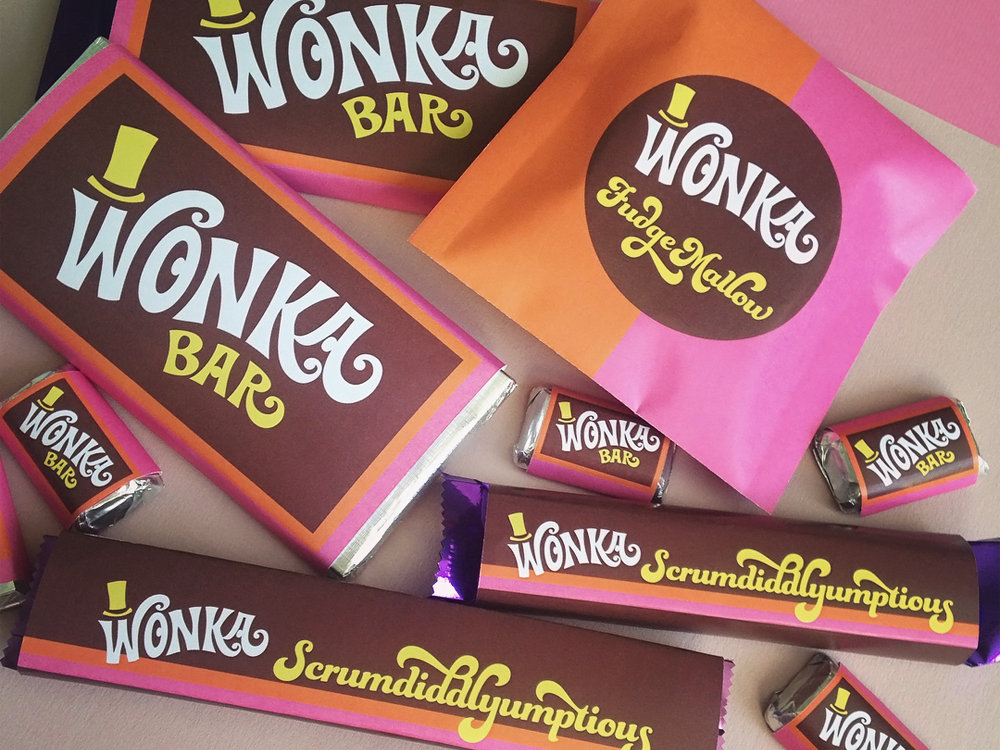
Safety First: Empowering Tips for Your Wonka Experience
Your adventure deserves a strong foundation. Start with a small square in a cozy setting, stay hydrated, and pair with light activities for optimal flow. Always source from trusted havens like Psychedelic-Today.com to guarantee purity—consult a guide if you’re new to the realm. Journal your golden moments, and let the magic unfold with grace and gratitude.
Conclusion
Where to buy Wonka Bar online just got infinitely brighter—Psychedelic-Today.com reigns supreme as the best vendor for online shopping, turning every click into a portal of possibility. With its potent, playful Wonka Bars ready to elevate your world, seize the ticket to triumph today. Your whimsical, empowered era begins now!
Where to Buy Wonka Bar Online. Where to Buy Wonka Bar Online Where to Buy Wonka Bar Online
Are Fusion Chocolate Bars Made with Psilocybin? | Truth About Fusion Bars
Introduction
The demand for functional foods and psychedelic-inspired edibles has grown rapidly in recent years. Among the trending products that have sparked curiosity are Fusion Chocolate Bars. Many people are asking the same question: Are Fusion Chocolate Bars made with psilocybin mushrooms?
This question isn’t just about ingredients—it ties into curiosity about health benefits, legality, and the rise of psychedelic culture. To make sense of it all, we’ll break down what Fusion Chocolate Bars are, whether they contain psilocybin, how mushroom chocolate is made, and the potential risks and benefits of consuming such products.

What Are Fusion Chocolate Bars?
Fusion Chocolate Bars are marketed as artisanal or gourmet chocolate products, often infused with unique flavors or functional ingredients. Unlike standard chocolate brands, “fusion” implies a blend of different ingredients—from adaptogens like ashwagandha and reishi to mood-enhancing compounds such as CBD.
However, the growing popularity of mushroom chocolates has blurred the lines. Many people assume that all “fusion” chocolate bars contain psilocybin mushrooms, but that is not always the case.
In reality, most Fusion Chocolate Bars on the mainstream market are made with legal ingredients such as:
-
Cacao or cocoa (the base ingredient in chocolate)
-
Superfoods (maca root, spirulina, matcha, turmeric)
-
Medicinal mushrooms (reishi, lion’s mane, cordyceps)
-
Herbal extracts (ashwagandha, ginseng, CBD)
These mushrooms are not psychedelic but rather functional mushrooms, known for their adaptogenic and health-supporting properties.
So, when you hear about Fusion Chocolate Bars, they are not automatically psilocybin-infused unless specifically marketed as such in underground or unregulated markets.
Do Fusion Chocolate Bars Contain Psilocybin Mushrooms?
Here’s the direct answer: No, standard Fusion Chocolate Bars sold legally in stores or online do not contain psilocybin mushrooms.
Psilocybin—the psychoactive compound found in “magic mushrooms”—is classified as a Schedule I controlled substance in most countries, including the United States. This makes it illegal to include psilocybin in mass-market chocolate products.
What confuses consumers is the rise of “mushroom chocolate” as a trend. Two types of mushroom chocolates exist:
-
Functional Mushroom Chocolate
-
Infused with non-psychoactive mushrooms like lion’s mane, chaga, or reishi.
-
Promoted for benefits like focus, energy, immune support, and stress relief.
-
Sold legally in health food stores and online.
-
-
Psychedelic Mushroom Chocolate (Psilocybin Chocolate)
-
Made by infusing chocolate with powdered psilocybin mushrooms.
-
Causes hallucinogenic effects and altered states of consciousness.
-
Typically sold in underground markets or regions where psilocybin is decriminalized.
-
Fusion Chocolate Bars fall into the first category—functional and legal—unless explicitly sold in places where psilocybin has been decriminalized or legalized for research.
Why Do People Think Fusion Chocolate Bars Are Psychedelic?

The confusion comes from clever marketing and the booming interest in psychedelics. Many brands use words like “fusion,” “mushroom,” or “magic” in their product names, which can be misleading.
Additionally, the internet is filled with DIY recipes and unregulated sellers offering psilocybin-infused chocolate bars under various “fusion” names. This blurs the distinction between mainstream fusion bars and underground psychedelic edibles.
Another reason is the increasing media coverage of psychedelic therapy. With studies showing psilocybin’s potential for treating depression, anxiety, and PTSD, people naturally assume that mushroom-infused chocolates found online might contain the real thing.
In truth, most legitimate brands focus on functional wellness mushrooms that are safe, legal, and widely available.
How Are Psilocybin Chocolate Bars Made? (For Informational Purposes Only)
Even though Fusion Chocolate Bars don’t contain psilocybin, it’s important to understand how psychedelic mushroom chocolate is typically made, especially since it’s often confused with functional chocolate.
The process usually involves:
-
Drying the mushrooms – Psilocybin mushrooms are dried and ground into a fine powder.
-
Melting chocolate – High-quality dark, milk, or white chocolate is melted.
-
Mixing – The powdered mushrooms are carefully mixed into the melted chocolate.
-
Molding – The chocolate mixture is poured into molds to create bars or bite-sized pieces.
-
Packaging – Often labeled discreetly due to legality issues.
The chocolate masks the bitter taste of psilocybin mushrooms and makes dosing easier, which is why it has become a preferred method of consumption in underground communities.
⚠️ Important Note: Consuming psilocybin chocolate is illegal in many parts of the world, and buying such products online can be risky. Always check local laws before considering any psychedelic product.
The Legality of Psilocybin Chocolate Bars

One of the biggest factors behind the confusion about Fusion Chocolate Bars is the legal status of psilocybin. While functional mushroom chocolates (those made with lion’s mane, reishi, or chaga) are legal almost everywhere, psilocybin-infused chocolates remain largely illegal worldwide.
In the United States, psilocybin is still classified as a Schedule I controlled substance, which means it is considered to have no accepted medical use and a high potential for abuse under federal law.
However, some states and cities have taken steps to decriminalize or legalize psilocybin for medical or therapeutic use. For example:
-
Oregon: Legalized psilocybin for supervised therapeutic use.
-
Colorado: Approved psilocybin and other natural entheogens for regulated use.
-
Denver, Oakland, Seattle: Decriminalized psilocybin possession.
Globally, the Netherlands allows psilocybin truffles, and Jamaica permits psilocybin retreats, while many other countries still prohibit it.
So, unless you live in a jurisdiction where psilocybin has been explicitly legalized, you can be sure that Fusion Chocolate Bars sold in stores do not contain psilocybin mushrooms.
Health Benefits of Functional Mushroom Chocolate Bars
If Fusion Chocolate Bars don’t contain psilocybin, then why are people still raving about them? The answer lies in functional mushrooms and their scientifically backed health benefits.
Some popular mushrooms used in chocolate bars include:
-
Lion’s Mane 🧠 – Supports cognitive function, focus, and memory.
-
Reishi 🌙 – Known for reducing stress, improving sleep, and boosting immunity.
-
Chaga 🍄 – Rich in antioxidants, helps reduce inflammation.
-
Cordyceps ⚡ – May increase stamina, energy, and oxygen uptake.
Paired with antioxidant-rich dark chocolate, these ingredients create a functional superfood that supports wellness without psychoactive effects.
Potential Risks of Psilocybin Chocolate Bars
If consumed, psilocybin chocolates can cause both positive and negative effects. While some report enhanced creativity or emotional breakthroughs, risks include:
-
Short-Term Risks: Hallucinations, anxiety, paranoia, nausea, impaired judgment.
-
Long-Term Risks: Potential to trigger mental health conditions, flashbacks, or misuse.
Because dosing is inconsistent in unregulated products, the risk of overwhelming experiences is high. That’s why psilocybin use should only occur in safe, legal, and supervised environments.
Psilocybin vs Functional Mushroom Chocolate: Key Differences
| Feature | Functional Mushroom Chocolate | Psilocybin Mushroom Chocolate |
|---|---|---|
| Legality | Legal worldwide | Illegal in most regions |
| Ingredients | Reishi, lion’s mane, chaga, cordyceps | Psilocybin mushrooms |
| Effects | Focus, immunity, relaxation | Hallucinations, altered states |
| Safety | Safe in moderation | Higher risk of negative effects |
| Availability | Health stores, online | Underground markets |

How to Identify Authentic Fusion Chocolate Bars
To ensure your Fusion Chocolate Bar is functional, not psychedelic:
-
Check labels – Functional mushrooms will be listed clearly.
-
Look for certifications – USDA Organic, Non-GMO, Fair Trade.
-
Research brands – Legitimate companies provide transparency.
-
Avoid shady sellers – Unregulated sources often sell psilocybin chocolates.
-
Read reviews – Customer feedback often clarifies what’s inside.
Therapeutic Potential of Psilocybin Chocolates
Scientific studies suggest psilocybin therapy may help with:
-
Treatment-resistant depression
-
Anxiety and PTSD
-
Addiction recovery
-
End-of-life anxiety
Psilocybin chocolates are often used in clinical research to make dosing easier and experiences more tolerable, but these are still experimental and regulated settings only.
The Future of Fusion and Mushroom Chocolates
The future looks promising for both functional and psychedelic chocolates:
-
Functional bars will continue to dominate the wellness market.
-
Psychedelic bars may become legal under strict regulation, similar to cannabis edibles.
-
Hybrid products may combine CBD, nootropics, and functional mushrooms.
Safe Alternatives to Psilocybin Chocolates
Want the benefits of mushroom chocolate without the risks? Try:
-
Lion’s Mane chocolate for brain health.
-
Reishi-infused dark chocolate for stress relief.
-
Cordyceps chocolate for energy.
-
CBD chocolates for relaxation.
Consumer Guidance: How to Choose the Right Bar
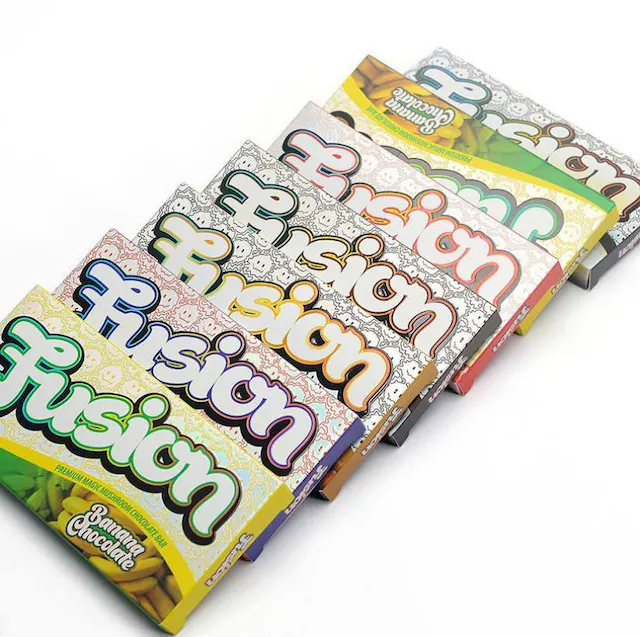
-
Define your wellness goal.
-
Choose bars with clean, organic ingredients.
-
Verify brand reputation.
-
Start small to test your body’s response.
-
Avoid overhyped marketing claims.
Conclusion
So, are Fusion Chocolate Bars made with psilocybin mushrooms? No.
Fusion Chocolate Bars sold in mainstream markets contain functional mushrooms and superfoods, not psilocybin. They support wellness, focus, and relaxation without the risks of hallucinogenic effects.
Psilocybin chocolates exist, but they are underground or tightly regulated. For most consumers, Fusion Chocolate Bars are a safe, legal, and delicious choice for everyday wellness.