
Tag Archives: psilocybin anxiety

Psilocybin Anxiety Relief: What the Evidence Actually Shows

Psilocybin Anxiety Relief has produced rapid, sustained results in clinical settings, according to the landmark 2016 Griffiths et al. randomized trial. A single supervised dose, combined with psychotherapy, delivered dramatic drops in anxiety among people facing serious illness. A later systematic review of mechanistic and clinical literature backs the same conclusion, and Johns Hopkins has built an entire research program around replicating and extending those psilocybin anxiety relief outcomes.
That is the real headline: this is not folk medicine dressed up in new language. It is a compound with actual trial data behind psilocybin anxiety relief, tested mostly in people facing cancer-related distress or treatment-resistant depression.
The caution matters just as much as the promise. Most of the strong evidence for psilocybin anxiety relief comes from small, tightly screened trials—not from someone buying mushrooms online and dosing alone in a bedroom. The research applies specifically to:
- Anxiety tied to a life-threatening diagnosis, particularly cancer
- Treatment-resistant depression with a significant anxiety component
- Patients who underwent psychiatric screening and received supervised, in-person sessions with trained clinicians
Roughly 60 to 80% of participants in the Griffiths trial maintained clinically significant psilocybin anxiety relief at 6.5 months. That is a striking number for psychiatry, where relapse is the norm rather than the exception. It is also a number earned inside a controlled clinical setting, with medical oversight and careful preparation—not a casual trip.
Key Takeaways
Psilocybin anxiety relief shows a consistent, replicated anxiolytic signal in supervised clinical trials for illness-related anxiety, but it is not a proven treatment for generalized anxiety disorder used outside medical supervision.
| Point | Details |
|---|---|
| Trial evidence is real but narrow | The Griffiths 2016 trial showed 60 to 80% of cancer patients maintained anxiety relief at 6.5 months, but the population was illness-specific. |
| Mechanism centers on the DMN | Psilocybin binds 5-HT2A receptors and appears to downregulate default mode network activity, which is linked to reduced rumination. |
| Acute anxiety is a real risk | The 2024 iScience study found psilocybin can trigger acute anxiety and amygdalar changes during the session itself. |
| Screening is non-negotiable | Personal or family history of psychosis, unstable bipolar disorder, and MAOI use are established contraindications requiring clinician review. |
| Fungipsilocybinmushroom supports informed use | The site offers lab-tested products and educational resources so readers researching psilocybin for anxiety can make better-informed decisions. |
Key Primary Sources and Further Reading
- NCCIH psilocybin overview: federal guidance on risks and research status
- Johns Hopkins Center for Psychedelic and Consciousness Research: ongoing clinical trial summaries
- PMC mechanistic review: neuroplasticity, serotonin, and microdosing evidence gaps
- University of Wisconsin School of Pharmacy explainer: academic framing of anxiolytic mechanisms
Does Psilocybin Help Anxiety? The Clinical Trial Evidence
The strongest data on psilocybin for anxiety comes from a small number of trials, most of them built around people facing serious illness rather than generalized anxiety disorder as most readers experience it. That distinction shapes everything else in this section.
The 2016 Griffiths trial at Johns Hopkins remains the reference point. Researchers gave a single moderate dose of psilocybin to patients with cancer-related psychological distress, paired with psychotherapy before and after the session. Anxiety and depression scores dropped fast, often within a day or two, and the effect held up at follow-up months later. A parallel trial at NYU used a similar design and found comparable results in a separate patient group, reinforcing that the Hopkins findings were not a fluke tied to one research team.
Systematic reviews since then have tried to pool this data and ask a harder question: how big is the effect, really, and how confident should we be in it? A comprehensive review of psilocybin’s neurobiological and clinical evidence found consistent signals for anxiolytic and antidepressant effects across the macrodose trials, while flagging that microdosing research remains thin, mostly self-reported, and not powered the same way. That gap between macrodose and microdose evidence quality comes up again and again in the literature, and it is worth holding onto as you read claims elsewhere.
Here is how the key trials compare on design and outcome:
| Trial | Year | Population | Design | Primary outcome | Follow-up |
|---|---|---|---|---|---|
| Griffiths et al. (Johns Hopkins) | 2016 | Cancer patients with anxiety/depression | Randomized, double-blind, crossover | Rapid, sustained drop in anxiety and depression scores | 6.5 months |
| NYU cancer-distress trial | 2016 | Cancer patients with existential distress | Randomized, double-blind, crossover | Reduced anxiety and depression, improved quality of life | 6.5 months |
| Open-label depression studies | Various | Treatment-resistant depression | Open-label, no placebo control | Reduced depressive symptoms, secondary anxiety improvement | Weeks to months |
| Systematic review synthesis | Ongoing | Pooled trial populations | Meta-analytic and narrative review | Consistent anxiolytic signal in macrodose studies | Varies by trial |
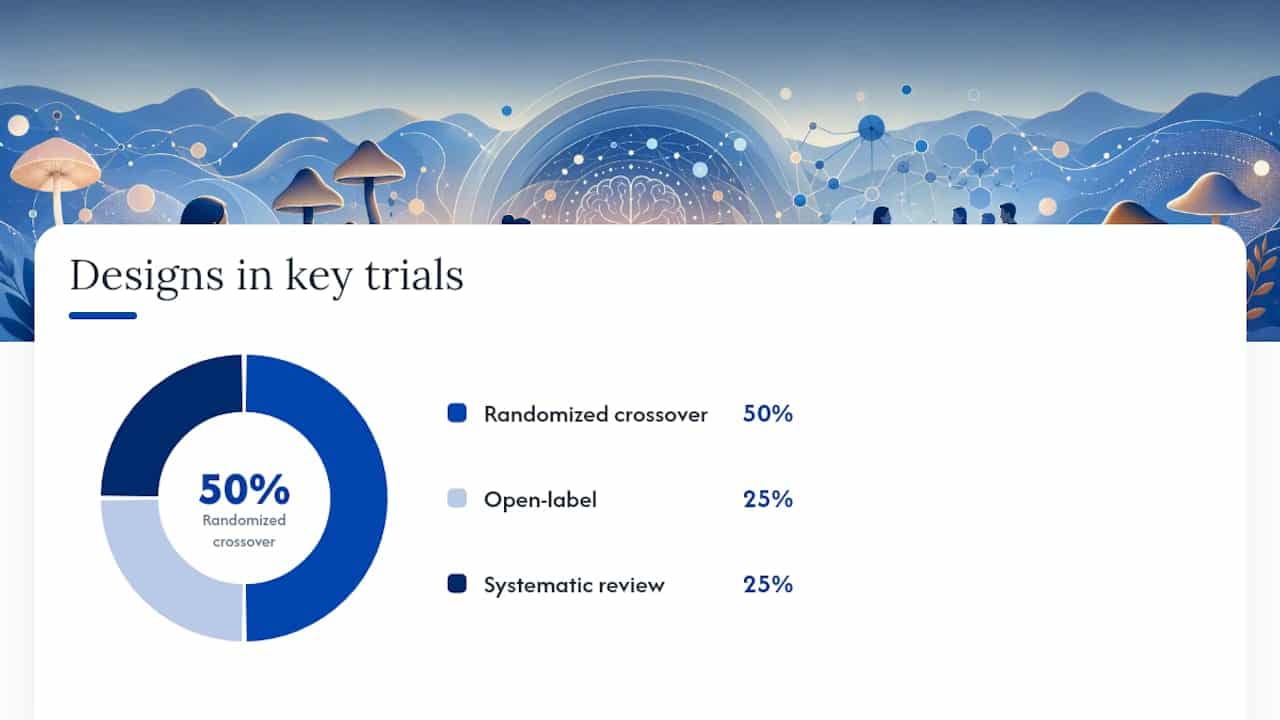
A few things jump out when you sit with that table. First, almost every rigorous trial uses a crossover or waitlist design rather than a true parallel-group placebo comparison, because blinding is nearly impossible when one group visibly experiences a psychedelic state and the other does not. Second, follow-up periods rarely extend past six or seven months, so claims about multi-year durability are not yet backed by the data. Third, populations skew heavily toward people already facing a life-threatening or treatment-resistant condition, which means results do not automatically generalize to someone with generalized anxiety disorder and no comorbid illness.
The limitations are not minor footnotes. They shape what a responsible reader should take from this evidence:
- Sample sizes in the landmark trials run from a few dozen to around a hundred participants, small by pharmaceutical standards.
- Nearly all rigorous data comes from people with cancer-related distress or treatment-resistant depression, not generalized anxiety in otherwise healthy adults.
- Blinding is compromised because participants and researchers can usually tell who received the active dose.
- Long-term data beyond six to twelve months is sparse, so claims about permanent remission outrun what trials have actually measured.
None of this erases the signal. It just means the honest claim is “promising and repeatedly replicated in narrow populations,” not “proven cure for anxiety.” You can read more about how these findings apply specifically to anxiety relief from psilocybin and how researchers frame the evidence for psychedelic mushrooms and anxiety more broadly.
How Does Psilocybin Reduce Anxiety in the Brain?
Psilocybin works by binding to the 5-HT2A serotonin receptor, which triggers a cascade of downstream effects tied to mood and cognition. Once metabolized into psilocin, it acts as a serotonin agonist that appears to increase neuroplasticity and quiet the default mode network, a network of brain regions associated with self-referential thought and rumination, according to a detailed mechanistic review.
Picture it this way: the default mode network (DMN) is the brain’s inner narrator, the voice that loops over worries, replays past mistakes, and rehearses future catastrophes. Anxiety disorders are, in part, a hyperactive version of that loop. Imaging research suggests psilocybin temporarily quiets DMN activity, and when that quieting happens inside a supportive, well-prepared session, patients often report a shift away from rigid, anxious thought patterns toward something more flexible. Reduced DMN chatter appears to translate into less rumination, which in turn seems to open space for the kind of emotional flexibility that anxious minds struggle to access.
The mechanisms researchers point to fall into a few overlapping categories:
- Serotonergic agonism at 5-HT2A receptors, which appears to be the primary trigger for psilocybin’s acute subjective and neurological effects.
- Increased neuroplasticity, giving the brain more capacity to form new associative patterns rather than defaulting to entrenched anxious ones.
- Default mode network downregulation, linked to reduced rumination and a looser grip on habitual, anxious self-narratives.
- Changes in amygdala reactivity, the brain’s threat-detection center, though a 2024 iScience study found some of these amygdalar molecular changes happen independently of 5-HT2A activation, meaning the full mechanistic picture is more tangled than a single-receptor story.
- Possible anti-inflammatory effects, an emerging area of interest that remains less established than the serotonergic and neuroplasticity pathways.
There is also a psychological layer that pure neuroscience cannot fully explain. Patients who experience what researchers call a “mystical” or peak experience, a sense of unity, ego dissolution, and transcendence during the session, tend to report stronger and longer-lasting anxiety relief. Patients who have a difficult or fragmented session, without that peak quality, often see weaker or shorter-lived benefit. This correlation between subjective experience and outcome is one reason clinicians treat the session itself, not just the molecule, as the active ingredient.
Microdosing sits outside almost all of this evidence because sub-perceptual doses do not typically produce the ego-dissolution experience linked to durable outcomes, and because microdosing research relies heavily on self-report rather than controlled trials, the mechanistic story above mostly does not apply to it. If you are curious how the two approaches diverge in evidence and intent, the microdosing psychedelics comparison breaks down where the data is thin.
What Are the Short-Term Risks of Taking Psilocybin?
Psilocybin sessions commonly produce nausea, headache, elevated heart rate and blood pressure, and in some cases a wave of transient anxiety or paranoia rather than the calm, insightful state people expect. The NCCIH lists these as recognized short-term effects, alongside a rare risk of persistent psychosis in vulnerable individuals.
The paradox here deserves attention: a substance studied for its anxiety-reducing potential can also cause acute anxiety during the experience itself. A 2024 study published in iScience documented exactly this, finding that psilocybin triggered acute anxiety in a subset of participants and identified molecular changes in the amygdala that help explain why. Some of these changes occurred independently of the 5-HT2A receptor pathway usually credited with psilocybin’s therapeutic effects, suggesting the anxiety-relief and anxiety-inducing pathways may not be as separable as clinicians would like.
Common short-term effects reported across trials and reviews include:
- Nausea and occasional vomiting, especially in the first 30 to 60 minutes
- Headache, both during and in the hours after the session
- Elevated heart rate and blood pressure, generally mild and self-limiting
- Transient anxiety, fear, or paranoia during the peak of the experience
- Perceptual distortions that can feel disorienting without proper preparation
Severity in supervised trials tends to be manageable. Clinicians trained in psychedelic-assisted therapy use grounding techniques, verbal reassurance, and a calm, low-stimulation environment to help a participant move through a frightening wave rather than escalate it. This is precisely why unsupervised use carries more risk: there is no trained person present to recognize a challenging reaction early and intervene before it spirals into panic or unsafe behavior.
Pro Tip: A “bad trip” during a clinical session is often managed successfully within the room through breathing, reassurance, and a change in music or lighting. Outside a supervised setting, that same reaction has no safety net.
Who Should Avoid Psilocybin for Anxiety?
Psilocybin is contraindicated for people with a personal or family history of psychosis or schizophrenia, and for those with unstable bipolar disorder, because the drug’s disruption of ordinary cognitive filtering can trigger or worsen psychotic symptoms. The NCCIH explicitly flags this population as higher risk.
Cardiovascular conditions matter too. Because psilocybin can raise heart rate and blood pressure, people with uncontrolled hypertension or certain heart conditions need clinician evaluation before considering a session, supervised or otherwise.
Medication interactions add another layer of complexity. Combining psilocybin with MAOIs can produce dangerous, unpredictable reactions, and mixing it with certain SSRIs or SNRIs may blunt the psychedelic effect or interact in ways that are not yet fully mapped out in the research. This is not a case where a quick internet search substitutes for a conversation with a prescribing clinician who knows the full medication history.
A responsible screening process, the kind used in clinical trials, typically covers:
- Full psychiatric history, including any personal or family history of psychosis, schizophrenia, or bipolar disorder
- Complete medication review, with particular attention to MAOIs, SSRIs, and SNRIs
- Cardiovascular assessment, including blood pressure and any history of heart disease
- Informed consent covering the nature of the experience, potential for acute anxiety, and the limits of what the research actually shows
- Assessment of current life stressors and readiness, since an unstable personal situation can amplify a difficult session
This is the part of the conversation that gets skipped in casual online discussion, and it is the part that separates a clinical protocol from a gamble.
How Is Psilocybin Delivered in a Therapeutic Setting?
Clinical psilocybin therapy follows a three-phase structure: preparation, the supervised dosing session, and integration afterward. Skipping any one of these phases is where most of the risk in “solo” psilocybin use for anxiety actually comes from.
- Preparation. Patients meet with a therapist beforehand to build rapport, discuss intentions, and get a clear picture of what the experience might involve. This phase is also where screening happens, ruling out contraindications and setting expectations honestly.
- The supervised session. Doses in trials for anxiety and depression have typically fallen in the range associated with a strong but manageable psychedelic effect, administered in a calm, controlled room with one or two trained sitters present throughout, often four to six hours.
- Integration. Follow-up sessions help patients process what happened, connect insights from the experience to daily life, and work through anything unresolved, including a difficult or frightening moment during the session itself.
Dosing in the landmark trials was deliberately conservative relative to recreational use, aimed at producing a meaningful psychedelic experience without pushing into territory more likely to cause overwhelming distress. Higher doses generally correlate with a stronger mystical-type experience and, per the correlational data mentioned earlier, potentially stronger anxiolytic outcomes, but they also raise the odds of a challenging psychological reaction. This is the tradeoff clinicians manage directly rather than leaving to chance. Readers curious about how these ranges compare to typical recreational use can review dosing guidance for magic mushrooms.
Microdosing takes a fundamentally different approach: small, sub-perceptual amounts taken on a schedule, often aiming for subtle mood or focus benefits rather than a full psychedelic experience. The evidence gap matters here. Full supervised doses have real randomized trial support behind their anxiety outcomes; microdosing has enthusiastic self-report but no equivalent controlled trial base. People drawn to microdosing chocolate formats, for example, are often chasing a gentler, everyday-life-compatible experience rather than the intensive clinical protocol described above, a distinction worth understanding before assuming the research applies equally to both.
What actually makes a session safe has less to do with the mushroom and more to do with who is in the room. Therapist training, a clear emergency protocol for medical or psychiatric complications, and a physically comfortable, low-stimulation environment are the three pillars every credible clinical program builds around, echoing what Johns Hopkins researchers describe as central to their protocol design.

Is Psilocybin Legal for Treating Anxiety?
Legal status varies enormously by country and even by region within a country, and nothing here should be read as legal advice for your specific location. Some places have decriminalized personal possession, a small number have regulated therapeutic or supervised-use programs, and in most of the world psilocybin remains a controlled substance with no legal therapeutic pathway at all.
Access generally falls into a few categories:
- Clinical trials, run through universities or research institutions, which offer supervised access but require meeting strict enrollment criteria
- Licensed therapy or supervised-use programs, available in a limited number of jurisdictions and typically requiring medical screening
- Private clinics, operating legally only where local law explicitly permits them
- Informal or unregulated access, which carries no medical oversight, no screening, and no emergency protocol if something goes wrong
Where legal supervised programs do exist, cost and availability are real barriers. A resource-intensive model involving trained therapists, extended session times, and follow-up integration care is expensive to run, which keeps many programs limited in capacity and out of reach for people without significant financial resources or trial access. Readers exploring regional programs, such as those covered in the California psilocybin treatment guide, should confirm current local law directly, since regulations shift.
How Can You Reduce Risk If You’re Exploring Psilocybin?
If you are researching psilocybin for anxiety outside a formal clinical trial, the gap between a safe experience and a dangerous one usually comes down to preparation, not the substance itself.
Start by evaluating any provider or facilitator with the same scrutiny you would apply to any other health decision:
- Confirm licensing or formal training in psychedelic-assisted therapy, not just general wellness credentials.
- Ask directly about medical oversight, including whether a physician reviews health history and current medications beforehand.
- Ask what the emergency protocol is if someone has a severe psychological or physical reaction.
- Confirm that informed consent covers realistic risks, including the chance of acute anxiety or a difficult psychological experience.
Beyond provider vetting, a handful of practical steps reduce risk regardless of setting:
- Review your current medications with a clinician, especially MAOIs, SSRIs, and SNRIs, before any session.
- Arrange for a sober, trusted person to be physically present the entire time.
- Control the environment: a quiet, comfortable, familiar space lowers the odds of a frightening reaction.
- Eat lightly beforehand and stay hydrated, since nausea is common in the first hour.
If a session takes a difficult turn, the immediate priorities are the same ones used in clinical settings: recognize the warning signs (severe confusion, chest pain, extreme agitation, or loss of physical control), keep the environment calm and low-stimulation, offer verbal reassurance rather than argument, and call emergency services without hesitation if physical symptoms suggest a medical emergency rather than a psychological one.
What Don’t We Know Yet About Psilocybin and Anxiety?
The honest answer is that researchers are still working out how far these findings generalize. Key open questions include:
- How psilocybin performs in generalized anxiety disorder specifically, separate from illness-related or existential anxiety
- Head-to-head comparisons against standard treatments like SSRIs or cognitive behavioral therapy, which barely exist yet
- Long-term relapse rates beyond the six to twelve month window most trials cover
- Optimal dosing schedules, including whether repeated sessions outperform a single high dose
- Whether microdosing has any measurable clinical effect beyond placebo, given the current lack of large double-blind trials
- Safety and efficacy in people with common comorbidities, such as substance use history or complex medication regimens
Future trials need larger sample sizes, better blinding strategies despite the inherent challenge of blinding a psychedelic experience, and follow-up windows stretching well past a year. Watch for Phase 3 trial results and any regulatory shifts tied to the FDA’s breakthrough therapy designations for psilocybin-assisted psychotherapy, which signal where the clinical pathway is likely headed next.
What the Landmark Cancer-Anxiety Trial Really Proved
The 2016 Griffiths trial remains the single most cited piece of evidence in this entire field, and it deserves a closer look on its own terms.
- A single moderate dose of psilocybin, combined with psychotherapy, produced rapid reductions in anxiety and depression among patients facing cancer-related distress.
- Between 60% and 80% of participants maintained clinically significant improvement at the 6.5-month follow-up mark, an unusually durable result for a single-session psychiatric intervention.
- The effect sizes reported were large by psychiatric research standards, though the sample size was modest, consistent with an early-phase trial rather than a large-scale confirmatory study.
What this trial does prove: a single supervised psilocybin session, embedded in psychotherapy, can produce a lasting reduction in anxiety tied to a life-threatening diagnosis. What it does not prove: that the same protocol works the same way for generalized anxiety disorder in someone without a serious illness, or that the benefit holds indefinitely beyond the studied window. Existential anxiety tied to mortality and illness is psychologically distinct from chronic, free-floating anxiety, and conflating the two is one of the more common misreadings of this research floating around online. The original trial data, available through Griffiths et al., 2016, remains the primary source anyone citing this study should actually read rather than paraphrase secondhand.
A Publisher’s Note on This Research
Fungipsilocybinmushroom approaches this topic from an evidence-first, harm-reduction stance: we would rather readers understand the real limits of the data than oversell what psilocybin can do. As a retailer of lab-tested Amazonian mushrooms and other psychedelics, we have a direct stake in this conversation, which is exactly why we point readers toward licensed clinicians and legitimate research before anything else. Nothing here replaces a conversation with a qualified medical or mental health provider.
Get Lab-Tested Psilocybin Products From Fungipsilocybinmushroom
Reading the clinical evidence is one thing. Finding a product you can actually trust is another problem entirely, and it is where most people researching psilocybin for anxiety hit a wall: sketchy sourcing, no lab verification, and zero transparency about potency. Fungipsilocybinmushroom solves that specific problem. Every product ships with lab testing behind it, discreet worldwide delivery, and a catalog built for both first-timers and people with years of experience, from milder Golden Teacher varieties to more intense options for experienced users.
If dosing precision matters to you, which it should given everything the research says about dose and outcome, the Seremoni psilocybin chocolate bar offers consistent, measurable dosing in an edible format, useful for anyone trying to replicate a controlled, deliberate approach rather than guessing at a dried mushroom’s potency. Pair that with our educational guides on strains suited to therapeutic use to match a product to your goals. Browse the current catalog and place an order through our secure checkout to get started.
Frequently Asked Questions
Does psilocybin actually help anxiety, or is that overstated online?
Clinical trials show real, measurable anxiety reduction, particularly in people facing cancer-related distress, but the strongest data comes from supervised sessions with psychotherapy, not casual use.
How long does psilocybin’s anxiety relief typically last?
In the Griffiths trial, most participants who improved held that improvement at 6.5 months. Data beyond that window remains limited.
Can psilocybin make anxiety worse instead of better?
Yes. Acute anxiety and paranoia during the session are recognized short-term risks, documented in both NCCIH guidance and a 2024 iScience study.
Is microdosing effective for anxiety?
The evidence is much weaker than for supervised full doses. Microdosing research relies mostly on self-report rather than controlled trials, according to a comprehensive mechanistic review.
Who should never take psilocybin for anxiety?
People with a personal or family history of psychosis or schizophrenia, unstable bipolar disorder, certain cardiovascular conditions, or those taking MAOIs should avoid it without direct clinician guidance.
How does psilocybin compare to SSRIs or CBT for anxiety?
Direct head-to-head trials against SSRIs or cognitive behavioral therapy are still lacking. Current evidence suggests psilocybin can work faster in specific populations, but standard treatments have far more long-term safety data.
This article is general information, not a substitute for advice from a qualified doctor. Consult a qualified healthcare professional about your own circumstances before acting on anything here.
Sources
- Mushrooms, microdosing, and mental illness: The effect of psilocybin on neurotransmitters, neuroinflammation, and neuroplasticity (PMC review)
- Psilocybin for mental health and addiction: What you need to know (NCCIH)
- Johns Hopkins Center for Psychedelic and Consciousness Research — summary page